Flavonoids
Flavonoids are a group of plant metabolites with antioxidant properties that contribute to the color of fruits and flowers. They play a significant role in protecting plants from UV radiation and pathogens. Flavonoids are studied for their potential health benefits, including anti-inflammatory, antiviral, and anticancer properties. They are widely researched in the fields of pharmacology, nutrition, and molecular biology.
Subcategories of "Flavonoids"
- Anthocyanidins(46 products)
- Anthocyanin(46 products)
- Catechin(88 products)
- Chalcones(237 products)
- Pterocarpan(28 products)
Found 2404 products of "Flavonoids"
Sort by
Purity (%)
0
100
|
0
|
50
|
90
|
95
|
100
3'-Prenylnaringenin
CAS:<p>3'-Prenylnaringenin is a potent phytoestrogen, a type of compound that is found in hops (Humulus lupulus), specifically in the female flowers or cones. This prenylflavonoid is particularly notable for its strong estrogenic activity attributed to its binding affinity to estrogen receptors. As such, it functions as an agonist, modulating estrogen receptor-mediated pathways and influencing gene expression related to estrogenic activity.</p>Purity:Min. 95%Baicalin 7-b-D-glucuronide
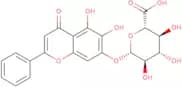
CAS:<p>Baicalin 7-b-D-glucuronide is a flavonoid metabolite, which is primarily derived from the root of the plant *Scutellaria baicalensis*, commonly known as Chinese skullcap. This compound occurs as part of the extensive array of flavonoids in traditional medicinal plants used in various ethnic medicine systems.</p>Formula:C21H18O11Purity:Min. 95 Area-%Color and Shape:White PowderMolecular weight:446.36 g/molFlavanone hydrazone, 93%
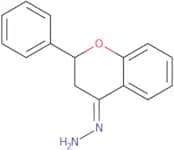
CAS:<p>Flavanone hydrazone (FH) is a natural compound that has been found to have antiviral activity against a number of viruses, including the papilloma virus and picornavirus. The antiviral activity of FH is due to its ability to inhibit the shikimate pathway, which is required for the synthesis of aromatic amino acids from chorismate. This inhibition prevents the production of viral proteins, leading to cell death. FH also has an inhibitory effect on hepatitis C virus and leukoplakia by inhibiting fatty acid synthesis. It may also be used in the treatment of inflammatory diseases such as rheumatoid arthritis and ulcerative colitis.</p>Formula:C15H14N2OPurity:(%) Min. 93%Color and Shape:PowderMolecular weight:238.28 g/molMorusin
CAS:<p>Morusin is a naturally occurring flavonoid compound, which is derived primarily from the root bark of Morus alba, commonly known as the mulberry tree. This bioactive substance is known for its various chemical properties and its ability to modulate several biological pathways. The compound acts primarily through the inhibition of key signaling pathways, such as the NF-κB and MAPK pathways, which are involved in inflammation and cancer progression.</p>Formula:C25H24O6Purity:Min. 95%Color and Shape:Yellow PowderMolecular weight:420.45 g/molQuercetin 3,4'-diglucoside
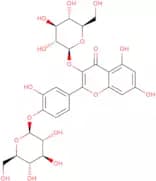
CAS:<p>Quercetin 3,4'-diglucoside is a flavonoid glycoside, which is a compound naturally derived from various plant sources, including certain fruits and vegetables. This compound is known for its significant role as an antioxidant. It operates by scavenging free radicals, thereby mitigating oxidative stress at the cellular level. This mode of action makes it a compound of interest in studies related to inflammation, aging, and chronic diseases.</p>Formula:C27H30O17Purity:Min. 95%Color and Shape:PowderMolecular weight:626.52 g/molKaempferol-3-O-glucorhamnoside
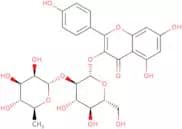
CAS:<p>Kaempferol-3-O-glucorhamnoside is a bioactive flavonoid glycoside, which is a naturally occurring compound found in a variety of plants. It serves as a significant molecule in the study of plant biochemistry and pharmacology. This compound is sourced from various plant species such as tea, broccoli, and other common vegetables and fruits, where it contributes to the plant's defense mechanisms against environmental stresses.</p>Formula:C27H30O15Purity:Min. 95%Color and Shape:PowderMolecular weight:594.52 g/molHinokiflavone
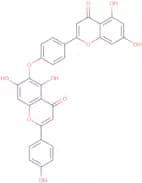
CAS:<p>A cytotoxic biflavonoid from Toxicodendron succedaneum, Juniperus sp., and Chamaecyparis obtusa (hinoki).</p>Formula:C30H18O10Purity:Min. 97 Area-%Color and Shape:PowderMolecular weight:538.46 g/molDemethylretusin
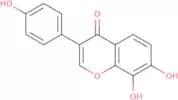
CAS:<p>Demethylretusin is a naturally occurring flavonoid, which is derived primarily from various plant sources, including soybeans and other legumes. It functions as a bioactive compound with the capability to modulate multiple biochemical pathways. The mode of action of Demethylretusin involves interacting with cellular receptors and enzymes, ultimately influencing cell signaling pathways and exhibiting antioxidative, anti-inflammatory, and potential anticancer properties.</p>Formula:C15H10O5Purity:Min. 95%Color and Shape:PowderMolecular weight:270.24 g/mol3,7-Dimethoxy-3',4',5-Trihydroxyflavone
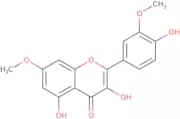
CAS:<p>3,7-Dimethoxy-3',4',5-Trihydroxyflavone is a flavonoid compound, which is derived from various plant sources known for their bioactive compounds. These plants are rich in polyphenolic substances, contributing to the compound's complex structure and functionality. The mode of action of 3,7-Dimethoxy-3',4',5-Trihydroxyflavone involves its ability to act as a potent antioxidant. It scavenges free radicals and reduces oxidative stress by neutralizing reactive oxygen species at the molecular level. Additionally, its molecular configuration allows for interactions with cellular signaling pathways, potentially influencing various biochemical processes.</p>Formula:C17H14O7Purity:Min. 95%Molecular weight:330.29 g/molVelutin
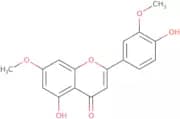
CAS:<p>Velutin is a natural flavonoid, which is derived from the leaves of certain plant species, specifically from the Asteraceae family. This compound demonstrates a unique mode of action by modulating various signaling pathways involved in inflammation and oxidative stress. Velutin effectively inhibits the activation of nuclear factor kappa-light-chain-enhancer of activated B cells (NF-κB) and reduces the expression of pro-inflammatory cytokines, contributing to its anti-inflammatory properties.</p>Formula:C17H14O6Purity:Min. 95%Color and Shape:PowderMolecular weight:314.29 g/mol6-Methoxyflavone
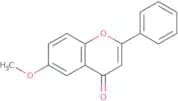
CAS:<p>6-Methoxyflavone is a flavonoid compound, which is a naturally occurring product found in certain plants. It is characterized by the presence of a methoxy group attached to the flavone backbone. This compound is typically extracted from plant sources such as citrus fruits and certain herbs that have a high content of polyphenolic compounds. Its mode of action involves modulating various biochemical pathways, including the inhibition of specific enzymes and interaction with cellular receptors, potentially affecting oxidative stress and inflammation pathways.</p>Formula:C16H12O3Purity:Min. 95%Color and Shape:White PowderMolecular weight:252.26 g/molIsoflavone - 40%
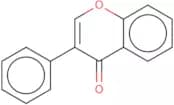
CAS:<p>Isoflavone - 40% is a phytochemical compound, specifically classified as a type of polyphenolic plant-derived compound. It is sourced primarily from soybeans and other legumes, where it naturally occurs as part of the plant's secondary metabolites. The mode of action of isoflavones involves their ability to mimic estrogen. Due to their structural similarity to estrogen, isoflavones can bind to estrogen receptors and exert weak estrogenic effects, which are particularly relevant in humans and animals.</p>Formula:C15H10O2Purity:Min. 95%Color and Shape:Off-White Clear LiquidMolecular weight:222.24 g/molQuercetin
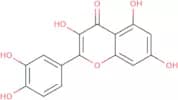
CAS:<p>Inhibitor of HSP70 and HSP27 expression</p>Formula:C15H10O7Purity:Min. 95 Area-%Color and Shape:Yellow PowderMolecular weight:302.24 g/molBiochanin A
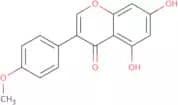
CAS:<p>Biochanin A is a naturally occurring isoflavone, which is derived from plants such as red clover and soy. This compound functions as a phytoestrogen, exerting its effects by modulating estrogen receptors, and showcases antioxidant capabilities through the scavenging of free radicals. As a result, Biochanin A holds significant interest for research in the modulation of hormonal pathways and in providing protection against oxidative stress.</p>Formula:C16H12O5Purity:Min. 95%Color and Shape:White PowderMolecular weight:284.26 g/mol5-Hydroxy-7,8-dimethoxyflavanone
CAS:<p>5-Hydroxy-7,8-dimethoxyflavanone is a naturally occurring flavanone, which is typically sourced from various plant species known for their bioactive compounds. This compound falls under the category of flavonoids and exhibits distinct structural features that contribute to its biochemical activities. The source plants for this flavanone are often part of traditional medicinal systems, owing to their rich profile of secondary metabolites.</p>Formula:C17H16O5Purity:Min. 95%Molecular weight:300.3 g/mol(+)-Pinocembrin
CAS:<p>(+)-Pinocembrin is a flavonoid compound, which is a naturally occurring phytochemical. It is predominantly sourced from propolis, a resinous substance produced by bees, and also found in various plants such as honey and ginger root. The mode of action of (+)-Pinocembrin involves its potent antioxidant and antimicrobial properties. It acts by scavenging free radicals, thereby protecting cells from oxidative stress, and it also interferes with microbial cell membranes, leading to antimicrobial effects.</p>Formula:C15H12O4Purity:Min. 98 Area-%Color and Shape:PowderMolecular weight:256.25 g/mol4'-Hydroxy-7-methoxyisoflavone
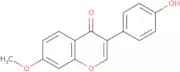
CAS:<p>4'-Hydroxy-7-methoxyisoflavone is a naturally occurring isoflavone, which is a type of phytoestrogen found in various plants. It is synthesized typically from plant sources and is part of a broader class of compounds known for their presence in legumes, especially soy and red clover. The mode of action of 4'-Hydroxy-7-methoxyisoflavone is primarily through its interaction with estrogen receptors, where it can exhibit weak estrogenic activity. This attribute allows it to modulate estrogenic signaling pathways, influencing cellular processes related to growth and metabolism.</p>Formula:C16H12O4Purity:Min. 95%Molecular weight:268.26 g/molLuteolin 7-diglucuronide
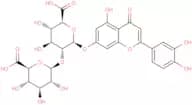
CAS:<p>Luteolin 7-diglucuronide is the major flavonoid isolated from Verbena officinalis and Aloysia triphylla.</p>Formula:C27H26O18Purity:98.24% - 98.44%Color and Shape:SolidMolecular weight:638.48(S)-Naringenin
CAS:<p>(S)-Naringenin is a naturally occurring flavonoid compound, which is found predominantly in citrus fruits, such as grapefruits and oranges. Its source lies within the plant secondary metabolites known for their diverse biological activities. As a flavanone, (S)-naringenin acts primarily as an antioxidant, effectively scavenging reactive oxygen species and thereby protecting cells from oxidative stress. Additionally, it exhibits anti-inflammatory actions by modulating various signaling pathways and inhibiting the production of pro-inflammatory cytokines.</p>Formula:C15H12O5Purity:Min. 95%Color and Shape:Grey SolidMolecular weight:272.25 g/molFluoxastrobin
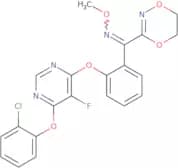
CAS:<p>Fluoxastrobin is a fungicide, which is a synthetic agricultural chemical developed primarily to combat fungal infections in crops. It belongs to the strobilurin class, derived from natural compounds produced by certain fungi. The mode of action of fluoxastrobin involves the inhibition of mitochondrial respiration in fungal cells. By targeting the cytochrome bc1 complex in the mitochondria, it effectively disrupts energy production within the pathogen, leading to its death.</p>Formula:C21H16CIFN4O5Purity:Min. 95%Molecular weight:562.29 g/mol