Flavonoids
Flavonoids are a group of plant metabolites with antioxidant properties that contribute to the color of fruits and flowers. They play a significant role in protecting plants from UV radiation and pathogens. Flavonoids are studied for their potential health benefits, including anti-inflammatory, antiviral, and anticancer properties. They are widely researched in the fields of pharmacology, nutrition, and molecular biology.
Subcategories of "Flavonoids"
- Anthocyanidins(46 products)
- Anthocyanin(46 products)
- Catechin(88 products)
- Chalcones(237 products)
- Pterocarpan(28 products)
Found 2408 products of "Flavonoids"
Sort by
Purity (%)
0
100
|
0
|
50
|
90
|
95
|
100
Vicenin III
CAS:<p>Vicenin III is a natural flavonoid compound, which is a type of polyphenolic metabolite commonly found in various plant species. It is primarily extracted from herbaceous plants and certain fruits and vegetables, where it acts as a secondary metabolite contributing to the plant's defense mechanisms. The compound exerts its effects through antioxidant properties, which involve scavenging free radicals and reducing oxidative stress at the cellular level. Additionally, it demonstrates anti-inflammatory activity by modulating key signaling pathways and inhibiting pro-inflammatory mediators.</p>Formula:C26H28O14Purity:Min. 95%Color and Shape:PowderMolecular weight:564.49 g/molAspalathin
CAS:<p>AntioxidantImage created by Dave Richardson sourced from <a href="https://www.inaturalist.org/photos/171407970" target="_blank" rel="noreferrer noopener">https://www.inaturalist.org/photos/171407970</a></p>Formula:C21H24O11Purity:Min. 97 Area-%Color and Shape:White PowderMolecular weight:452.41 g/mol3-Hydroxy-7,3'-dimethoxyflavone
CAS:<p>3-Hydroxy-7,3'-dimethoxyflavone is a naturally occurring flavonoid, which is a subclass of polyphenolic compounds found in various plants. As a flavonoid, it is characterized by its polyphenolic structure and the presence of hydroxyl and methoxy groups, which are integral to its biological activity. Originating from diverse plant sources, these compounds are often isolated for their potential health benefits and biological activities.</p>Formula:C17H14O5Purity:Min. 95%Molecular weight:298.29 g/mol2',3',6-Trihydroxyflavone
CAS:2',3',6-Trihydroxyflavone is a flavonoid compound, which is naturally derived from various plant sources such as fruits, vegetables, and certain herbs. It exists as a small molecule flavonoid within the polyphenolic family, known for its diverse biological activities. The compound acts primarily through antioxidant mechanisms, scavenging free radicals and reducing oxidative stress, which can mitigate cellular damage and inflammation.Formula:C15H10O5Purity:Min. 95%Molecular weight:312.32 g/molOrobol 5,7,3',4'-tetramethyl ether
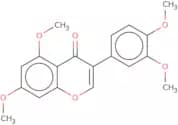
CAS:<p>Orobol 5,7,3',4'-tetramethyl ether is a flavonoid derivative compound, which is synthesized from natural flavonoid sources such as plants. This compound operates primarily through its antioxidant properties, scavenging free radicals and reducing oxidative stress, which may contribute to its potential therapeutic activities.</p>Formula:C19H18O6Purity:Min. 95%Color and Shape:PowderMolecular weight:342.34 g/molQuercetagetin
CAS:<p>Quercetagetin is a flavonoid compound, which is naturally sourced from the marigold plant, *Tagetes* species. This flavonoid is structurally related to other polyphenols and is synthesized in plants through the phenylpropanoid pathway. Quercetagetin primarily exerts its biological effects through the scavenging of reactive oxygen species (ROS) and modulating various signaling pathways associated with oxidative stress.</p>Formula:C15H10O8Purity:Min. 95 Area-%Color and Shape:PowderMolecular weight:318.24 g/mol6-O-Acetyldaidzin
CAS:<p>6-O-Acetyldaidzin is a chemical compound that serves as an isoflavone derivative, primarily obtained from the acetylation of daidzin. This compound is a naturally occurring glycoside found in soy products and other leguminous plants, acting as a bioactive constituent with diverse pharmacological properties.</p>Formula:C23H22O10Purity:Min. 95 Area-%Color and Shape:White PowderMolecular weight:458.41 g/molBryacarpene-2
CAS:<p>Bryacarpene-2 is a terpene compound, which is derived from natural sources, specifically marine bryozoans. Its mode of action involves interacting with specific biological pathways, potentially influencing cellular processes such as apoptosis and inflammation. This interaction suggests its potential as a therapeutic agent in various biomedical fields. The uses and applications of Bryacarpene-2 are currently under investigation, particularly its role in medical research related to anti-cancer, anti-inflammatory, and antimicrobial properties. The exploration of Bryacarpene-2 highlights its capacity as a candidate for drug development, offering a promising avenue for scientific exploration and potential clinical applications.</p>Formula:C18H16O6Purity:Min. 95%Molecular weight:328.32 g/molLeucocyanidin polymer
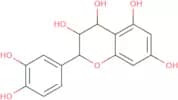
CAS:Leucocyanidin polymer is an oligomeric flavonoid compound, which is primarily sourced from plants, particularly abundant in certain fruits, seeds, and barks. These naturally occurring polymers belong to a class of compounds known as proanthocyanidins, which are part of the larger flavonoid family.Formula:(C15H14O7•C15H14O6)xPurity:Min. 95%Color and Shape:PowderKaempferol-3-glucoside-7-rhamnoside
CAS:<p>Kaempferol-3-glucoside-7-rhamnoside is a flavonoid glycoside, which is a natural compound found in several plant species, including tea, broccoli, and propolis. It is synthesized through glycosylation, where sugar moieties are enzymatically attached to the kaempferol backbone. This compound is known for its potent antioxidant activity, capable of scavenging free radicals and protecting cells from oxidative stress.</p>Formula:C27H30O15Purity:Min. 95%Color and Shape:PowderMolecular weight:594.52 g/molDillenetin
CAS:<p>Dillenetin is a flavonoid compound, which is derived from natural plant sources, particularly found in the genus Dillenia. It exhibits significant bioactivity with a mode of action primarily involving the modulation of cell signaling pathways. Dillenetin is known to bind to specific enzymes and receptors, influencing cellular processes such as proliferation, apoptosis, and oxidative stress responses.</p>Formula:C17H14O7Purity:Min. 95%Color and Shape:PowderMolecular weight:330.29 g/molRobustigenin
CAS:<p>Robustigenin is a naturally occurring compound, classified as a cardenolide, which is derived from plant sources, specifically from the Apocynaceae family. It is characterized by its distinct steroidal structure, which is integral to its biological activity. The mode of action of Robustigenin involves inhibition of the sodium-potassium ATPase enzyme, leading to increased intracellular sodium levels. This, in turn, affects calcium ion concentrations through sodium-calcium exchange mechanisms, impacting cellular processes, particularly in cardiac tissues.</p>Formula:C19H18O7Purity:Min. 95%Molecular weight:358.34 g/mol5-Hydroxy-3',4'-dimethoxyflavone
CAS:<p>5-Hydroxy-3',4'-dimethoxyflavone is a naturally occurring flavone, which is a type of polyphenolic compound found in various plants. It is derived from plant sources, specifically from certain species that are known for their rich phenolic content. The mode of action of this compound involves antioxidant activity, where it scavenges free radicals and reduces oxidative stress, which may contribute to its health-related properties.</p>Formula:C17H14O5Purity:Min. 95%Molecular weight:298.29 g/mol5,4'-Dimethoxyflavanone
<p>5,4'-Dimethoxyflavanone is a flavonoid compound, which is a type of polyphenolic product ubiquitously found in various plant sources. These flavonoids are synthesized by plants as secondary metabolites, which aid in plant defense against herbivores and pathogens, and also contribute to the plant's coloration. The mode of action of 5,4'-Dimethoxyflavanone involves the modulation of oxidative stress and inflammation pathways. It achieves this by scavenging free radicals and inhibiting pro-inflammatory enzymes, thus providing a protective effect at the cellular level.</p>Formula:C17H16O4Purity:Min. 95%Molecular weight:284.31 g/molVitexicarpin
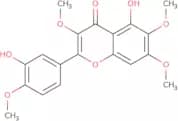
CAS:<p>Vitexicarpin is a type of flavonoid compound, which is derived from plants in the Vitex genus, commonly known as the chaste tree. This naturally occurring bioactive compound acts primarily through the inhibition of various signaling pathways involved in inflammation and cancer progression. Its mechanism often targets pathways such as NF-kB and MAPK, which play crucial roles in inflammatory responses and cellular proliferation.</p>Formula:C19H18O8Purity:Min. 95%Color and Shape:PowderMolecular weight:374.34 g/molHerbacetin-8-glucoside
CAS:<p>Herbacetin-8-glucoside is a flavonoid compound, which is a naturally occurring glucoside derived from various plant sources, predominantly found in flaxseed and some other plant species. The glycosidic linkage occurs at the 8th position on the herbacetin structure, contributing to its unique biochemical profile. Herbacetin-8-glucoside functions primarily through its potent antioxidant and anti-inflammatory mechanisms, effectively scavenging free radicals and modulating inflammatory pathways.</p>Formula:C21H20O12Purity:Min. 95%Molecular weight:464.38 g/molNaringin hydrate
CAS:<p>Naringin hydrate is a flavonoid compound, which is found predominantly in citrus fruits such as grapefruits. This compound is a glycoside, sourced primarily from the peels and seeds of these fruits, playing a role as a natural constituent of the fruit's phytonutrient profile. The mode of action of naringin hydrate involves its ability to modulate a variety of biological pathways. It exhibits antioxidant properties by scavenging free radicals and enhancing the body’s endogenous antioxidant enzymes. Additionally, naringin hydrate demonstrates anti-inflammatory actions through the inhibition of pro-inflammatory cytokines and the modulation of signaling pathways such as NF-kB and MAPK.</p>Formula:C27H32O14•H2OPurity:Min. 95%Color and Shape:PowderMolecular weight:598.55 g/molKaempferol-3-sophoroside-7-glucoside
CAS:<p>Kaempferol-3-sophoroside-7-glucoside is a flavonoid glycoside, which is a type of bioactive compound commonly found in various plant species. It is typically isolated from plant sources known for high flavonoid content, such as vegetables, fruits, and certain medicinal herbs. The compound's mode of action is primarily characterized by its ability to engage in redox reactions, thereby exerting antioxidative effects. This antioxidative action is facilitated via the scavenging of free radicals and reactive oxygen species, contributing to its role in cellular protection.</p>Formula:C33H40O21Purity:Min. 95%Molecular weight:772.66 g/mol7,2'-Dimethoxyflavone
CAS:<p>7,2'-Dimethoxyflavone is a naturally occurring flavone compound, which is a type of phytochemical widely distributed in the plant kingdom. It is derived from various plant sources, particularly within species known for traditional medicinal uses. The compound exhibits multiple modes of action, primarily interacting with cellular pathways related to oxidative stress and enzyme modulation. It acts as an inhibitor of specific enzymatic processes, contributing to its potential therapeutic effects.</p>Formula:C17H14O4Purity:Min. 95%Color and Shape:PowderMolecular weight:282.29 g/mol4'-Geranyloxyisoliquiritigenin
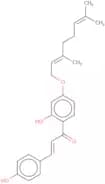
CAS:<p>4'-Geranyloxyisoliquiritigenin is a prenylated chalcone, which is naturally derived from certain plants, especially those belonging to the Fabaceae family. It is a bioactive compound that emerges from the prenylation of isoliquiritigenin, a chalcone found in licorice root. This modification enhances the lipophilicity and bioavailability of the molecule.</p>Formula:C25H28O4Purity:Min. 95%Molecular weight:392.49 g/mol