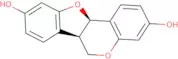
Pterocarpan
Found 27 products for "Pterocarpan".
8-Hydroxy-3,4,9,10-tetramethoxypterocarpan
CAS:8-Hydroxy-3,4,9,10-tetramethoxypterocarpan is a naturally occurring isoflavonoid, which is derived from the roots of certain plant species within the Fabaceae family. The compound is primarily isolated through extraction and purification processes that leverage its natural abundance in these botanical sources.Formula:C19H20O7Purity:Min. 95%Molecular weight:360.36 g/molMedicarpin-3-acetate
CAS:Medicarpin-3-acetate is an organic compound, classified as a modified flavonoid, which is derived from natural plant sources such as the Fabaceae family. Its derivation involves acetate functionalization of medicarpin, a pterocarpan phytoalexin. The mode of action of Medicarpin-3-acetate is primarily linked to its ability to interact with plant biological pathways, disrupting fungal cell wall synthesis, thus serving as a potential antifungal agent.
Formula:C18H16O5Purity:Min. 95%Molecular weight:312.32 g/mol(±)-Neorautenane
CAS:(±)-Neorautenane is an alkaloid compound, which is a naturally occurring product found in certain plant species. This product is derived from natural botanical sources, specifically plants that belong to particular genera known for their medicinal properties. The mode of action of (±)-Neorautenane involves interaction with specific biological pathways, potentially affecting neurobiological functions due to its structure and properties typical of alkaloids.Formula:C21H18O5Purity:Min. 95%Molecular weight:350.36 g/molTrifolirhizin
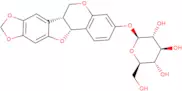
CAS:Trifolirhizin is a flavonoid compound, which is derived from the roots of licorice, an herb widely used in traditional medicine. This bioactive compound is known for its pharmacological properties, primarily acting through modulation of inflammatory pathways. Trifolirhizin exerts its effects by inhibiting the activity of pro-inflammatory cytokines and enzymes, thereby reducing oxidative stress and inflammation at the cellular level.Formula:C22H22O10Purity:Min. 95%Molecular weight:446.4 g/molIsophaseollin
CAS:Isophaseollin is a natural prenylated isoflavone, which is derived from soybeans and other legumes. It is a secondary metabolite associated with plant defense mechanisms. The compound functions primarily as an antioxidant by neutralizing free radicals, thus protecting cellular structures from oxidative stress. Furthermore, it exhibits antitumor potential through the modulation of signaling pathways that regulate cell proliferation and apoptosis.Formula:C20H22O4Purity:Min. 95%Molecular weight:326.39 g/mol2,10-Dihydroxy-3,4,8,9-tetramethoxypterocarpan
CAS:2,10-Dihydroxy-3,4,8,9-tetramethoxypterocarpan is a polyphenolic compound, specifically a type of pterocarpan. This compound is typically derived from certain plant sources, particularly those within the Fabaceae family. The structure and presence of multiple methoxy and hydroxy groups suggest potential interactions through hydrogen bonding and hydrophobic interactions, which could influence its biological activity.Formula:C19H20O8Purity:Min. 95%Molecular weight:376.36 g/molDemethylmedicarpin
CAS:Demethylmedicarpin is a phytoalexin, which is a naturally occurring antimicrobial compound. It is typically derived from leguminous plants, such as alfalfa and other species within the Fabaceae family. The plant synthesizes this compound as a defense mechanism in response to pathogen attack, environmental stress, or injury.
Formula:C15H12O4Purity:Min. 95%Color and Shape:PowderMolecular weight:256.25 g/mol