Backbone Sugars and Nucleobases
Backbone sugars and nucleobases are essential components of nucleic acids such as DNA and RNA. The backbone consists of sugar and phosphate groups, while nucleobases form the genetic code through base pairing. These compounds are crucial in the study of genetics and molecular biology. At CymitQuimica, you can find a variety of backbone sugars and nucleobases for research and laboratory use.
Found 1001 products of "Backbone Sugars and Nucleobases"
Sort by
Purity (%)
0
100
|
0
|
50
|
90
|
95
|
100
3’,5’-Bis-O-benzoyl-2’-Deoxy-2’-fluoro-4-deoxy-arabinouridine
CAS:<p>Please enquire for more information about 3’,5’-Bis-O-benzoyl-2’-Deoxy-2’-fluoro-4-deoxy-arabinouridine including the price, delivery time and more detailed product information at the technical inquiry form on this page</p>Purity:Min. 95%5-Benzyl-1-(2-hydroxyethoxymethyl)uracil
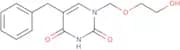
CAS:5-Benzyl-1-(2-hydroxyethoxymethyl)uracil is a cytostatic drug that has been shown to inhibit the growth of cancer cells by inhibiting the enzyme activities necessary for DNA replication and transcription. This compound has been found to be effective in treating metastatic colorectal cancer in experimental models, as well as skin cancers in mice. 5-Benzyl-1-(2-hydroxyethoxymethyl)uracil is also an inhibitor of HIV infection, which may be due to its ability to block the synthesis of uridine. The symptoms that are caused by this drug are not yet known.Formula:C14H16N2O4Purity:Min. 95%Color and Shape:PowderMolecular weight:276.29 g/mol1,3,9-Trimethylxanthine
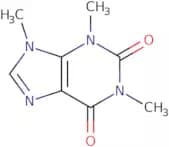
CAS:Controlled Product<p>1,3,9-Trimethylxanthine is a naturally occurring purine alkaloid that has been shown to have cytosolic calcium ion-antagonistic properties. It can also act as an antioxidant by donating electrons to free radicals and inhibiting lipid peroxidation. This compound is found in coffee beans and other sources of caffeine. It binds to the receptor for adenosine, which causes the antagonistic effects on intracellular calcium concentration. Trimethylxanthine can also be used to treat ventricular arrhythmias and increase locomotor activity in mammals. Trimethylxanthine has been shown to be effective in wastewater treatment as it removes organic pollutants from water by oxidizing them with hydrogen peroxide or chlorine gas.</p>Formula:C8H10N4O2Purity:Min. 95%Color and Shape:White PowderMolecular weight:194.19 g/mol6-Aminouracil
CAS:<p>6-Aminouracil is a hydroxylated form of uracil. It has inhibitory properties against protein synthesis in bacteria, acting as an inhibitor of the enzyme dihydroorotase. 6-Aminouracil has been shown to be effective against PC3 cells and has high resistance to hydrolysis by acid or alkali. The reaction mechanism for the conversion of uracil to 6-aminouracil is unclear; however, it may involve a nucleophilic attack on the hydroxyl group.</p>Formula:C4H5N3O2Purity:Min. 95%Color and Shape:PowderMolecular weight:127.1 g/mol3’-Azido-3’-deoxyguanosine
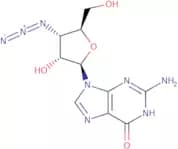
CAS:<p>Please enquire for more information about 3’-Azido-3’-deoxyguanosine including the price, delivery time and more detailed product information at the technical inquiry form on this page</p>Formula:C10H12N8O4Purity:Min. 95%Molecular weight:308.09815N2,9-Diacetylguanine
CAS:<p>N2,9-Diacetylguanine is a synthetic molecule that can be used to inhibit the replication of herpes simplex virus. It has been found to inhibit the growth of viruses in vitro by binding to the viral DNA and inhibiting viral RNA synthesis. N2,9-Diacetylguanine is also a substrate for acetylation and may undergo this reaction with acetyl coenzyme A to form N4,9-diacetylguanine. The acetylated form of guanine inhibits the virus by blocking its ability to replicate DNA. The potential mechanism for this drug's anti-viral activity includes inhibition of the enzyme ribonucleotide reductase, which converts ribonucleotides into deoxyribonucleotides.</p>Formula:C9H9N5O3Purity:Min. 95%Color and Shape:Off-White PowderMolecular weight:235.2 g/mol5-Aminouracil
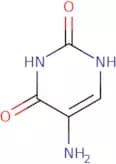
CAS:<p>5-Aminouracil is a pyrimidine nucleoside that is used in the treatment of cancer, psoriasis and other autoimmune disorders. 5-Aminouracil is a prodrug that undergoes intracellular transformation to become an inhibitor of DNA synthesis. It promotes apoptosis by inhibiting the production of RNA and protein synthesis, leading to cell death. 5-Aminouracil has been shown to be effective against malignant cells in tissue culture as well as various types of cancer cells. A study using hydrogen bonding interactions showed that 5-aminouracil binds to the ribosomal protein L10 and inhibits its function in the polymerase chain reaction (PCR). Molecular docking studies have also shown that this drug can bind with redox potentials in both the active site and ligand binding site of human topoisomerase II alpha, which may lead to inhibition of enzyme activity or cell death.</p>Formula:C4H5N3O2Purity:Min. 95%Color and Shape:White PowderMolecular weight:127.1 g/mol6-Methyluracil
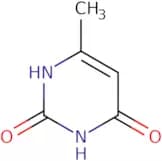
CAS:<p>6-Methyluracil is an antimetabolite that inhibits protein synthesis and is therefore used in the treatment of infectious diseases. 6-Methyluracil has two hydroxyl groups, which are located in adjacent positions on the ring. The optimum concentration for this drug is 3-10 μM, which can be achieved with a malonic acid buffer solution at pH 7.4. 6-Methyluracil reacts with sodium succinate to form an acid complex, which may have antiinflammatory activity. 6-Methyluracil has been shown to inhibit prostaglandin synthesis and exhibits a reaction with radiation to produce photoproducts that can be detected by analytical chemistry.</p>Formula:C5H6N2O2Purity:Min. 95%Color and Shape:PowderMolecular weight:126.12 g/mol1,3-Diethyl-5-nitroso-6-aminouracil
CAS:Controlled Product<p>Applications 1,3-Diethyl-5-nitroso-6-aminouracil (cas# 89073-60-9) is a compound useful in organic synthesis.<br></p>Formula:C8H12N4O3Color and Shape:NeatMolecular weight:212.213-Benzyladenine
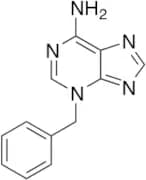
CAS:Controlled Product<p>Applications 3-BENZYLADENINE (cas# 7280-81-1) is a useful research chemical.<br></p>Formula:C12H11N5Color and Shape:NeatMolecular weight:225.259N-Trityl Guanine
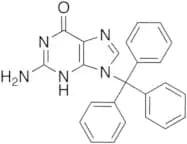
CAS:Controlled Product<p>Applications Protected Guanine.<br>References Hakimelahi, G., et al.: J. Med. Chem., 44, 3710 (2001),<br></p>Formula:C24H19N5OColor and Shape:NeatMolecular weight:393.44Uracil Lyxonucleoside-13C,15N2 5'-Phosphate
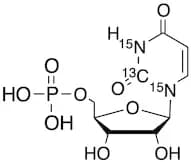
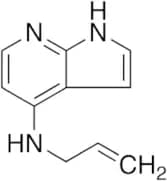
CAS:Controlled Product<p>Applications Uracil Lyxonucleoside 5'-Phosphate is an intermediate in the synthesis of Trilithium UDP-glucuronic Acid-13C1, 15N2 (T886287), which is an isotope labelled analog of Trisodium UDP-glucuronic Acid (T886285). Trisodium UDP-glucuronic Acid is a reactant used in the enzymatic preparation of β-glucuronides.<br>References Stevenson, D.E., et. al.: Collect Czech. Chem. C., 65, 117 (2000); Robotham, S.A., Brodbelt, J.S.: Biochem. Pharmacol., 82, 1764 (2011); Kren, V., et. al.: Drug Metab. Dispos., 28, 1513 (2000)<br></p>Formula:C813CH1315N2O9PColor and Shape:NeatMolecular weight:327.16N-Allyl-1,7-dideazaadenine
CAS:Controlled Product<p>Applications Used in the preparation of pyrrolotriazines.<br></p>Formula:C10H11N3Color and Shape:NeatMolecular weight:173.217-Deaza-6-hydroxypurine
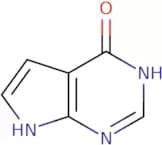
CAS:7-Deaza-6-hydroxypurine is a skeleton of nucleosides that inhibits enzymes. It has been shown to inhibit the activity of hydrochloric acid, a tumor metastasis promoter. The constant for this drug was determined using molecular modeling and inhibition constants. 7-Deaza-6-hydroxypurine has anticancer activity and can be used for the treatment of cancer. This drug is used as a noncompetitive inhibitor in which it binds to two different sites on the enzyme. It has also been shown to bind to subunits, which are parts of a protein that make up its structure, in biological studies.br> 7-Deaza-6-hydroxypurine is an inhibitor that binds to two different sites on an enzyme. It has been shown to have anticancer activity and can be used for the treatment of cancer. This drug is used as a noncompetitive inhibitor in which it binds to two different sites on the enzyme. ItFormula:C6H5N3OPurity:Min. 95%Color and Shape:PowderMolecular weight:135.12 g/mol2-Dimethylamino-6-hydroxypurine
CAS:<p>2-Dimethylamino-6-hydroxypurine is a biochemical that belongs to the group of purines. It is a methylated form of 2,6-diaminopurine and has been shown to be an antigenic product in wheat germ. 2,6-Diaminopurine is involved in the synthesis of protein and other biomolecules by transferring methyl groups from S-adenosyl methionine to amino acid side chains. This gene product is also involved in enzyme preparations and reactions that are related to the biochemical properties of mammalian cells. The methyltransferase enzyme catalyzes the reaction mechanism for 2,6-dimethylamino-purine. 2,6-Dimethylamino-purine has been shown to have anticancer effects on various types of cancer cells with modifications on their DNA.</p>Formula:C7H9N5OPurity:Min. 95%Color and Shape:Off-white to yellow solid.Molecular weight:179.18 g/mol8-Nitroguanine
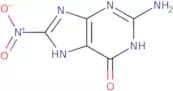
CAS:8-Nitroguanine is a reactive cell factor that can be found in the skin and other tissues. It is an endogenous product of nitric oxide, which can be formed by the reaction of nitric oxide with superoxide in the presence of peroxynitrite. 8-Nitroguanine has been shown to inhibit matrix metalloproteinase-9 activity and to have a protective effect on cells from UV radiation. 8-Nitroguanine also has been shown to be a potential biomarker for bowel disease and damage. The levels of 8-nitroguanine increase in chronic viral hepatitis and cancer tissues. This compound can also be used as an analytical method for detection of inflammation, oxidative stress, or DNA damage.Formula:C5H4N6O3Purity:Min. 95%Color and Shape:PowderMolecular weight:196.13 g/molEritadenine
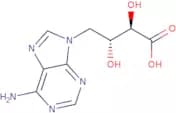
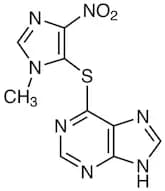
CAS:Eritadenine is a glycoside that has been found in the edible roots of plants belonging to the family Euphorbiaceae. Eritadenine is an inhibitor of malonic acid, which is a precursor for fatty acid synthesis. It has also been shown to have biological properties, such as inhibiting fat cell growth and reducing cholesterol levels in rats. Eritadenine can be detected with an analytical method that uses high-performance liquid chromatography coupled with a photodiode array detector. This method separates and identifies eritadenine from other compounds using polymerase chain reaction amplification on camp levels and sodium salts. Eritadenine can also be found in samples of liver cells or ethanolamine.Formula:C9H11N5O4Purity:Min. 95%Color and Shape:PowderMolecular weight:253.21 g/molAzathioprine
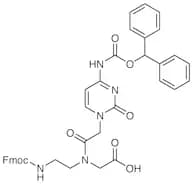
CAS:Formula:C9H7N7O2SPurity:>98.0%(T)(HPLC)Color and Shape:Light yellow to Yellow to Green powder to crystalMolecular weight:277.26Fmoc-PNA-C(Bhoc)-OH
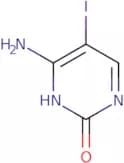
CAS:Formula:C39H35N5O8Purity:>98.0%(HPLC)(qNMR)Color and Shape:White to Light yellow powder to crystalMolecular weight:701.745-Iodocytosine
CAS:<p>5-Iodocytosine (5-IC) is an analog of cytosine that can be used as a precursor for the synthesis of thymine. 5-IC has been shown to cross-couple with DNA, which may contribute to its antiviral potency. 5-IC is also a potent inhibitor of dna replication and herpes simplex virus. The biochemical properties of 5-IC have been extensively studied, including its ability to react with hydrochloric acid to form the corresponding tautomers. The hydrolysis rate increases at higher pH values and decreases at lower pH values. Bioconjugate chemistry has been applied to synthesize a bioconjugated prodrug of 5-IC for cancer treatment.</p>Formula:C4H4IN3OPurity:Min. 95%Color and Shape:PowderMolecular weight:237 g/mol