Backbone Sugars and Nucleobases
Found 1002 products of "Backbone Sugars and Nucleobases"
1,3-Diethyl-5-nitroso-6-aminouracil
CAS:Controlled ProductApplications 1,3-Diethyl-5-nitroso-6-aminouracil (cas# 89073-60-9) is a compound useful in organic synthesis.
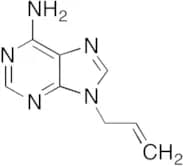
Formula:C8H12N4O3Color and Shape:NeatMolecular weight:212.219-(2-Propenyl)adenine
CAS:Controlled ProductApplications 9-(2-Propenyl)adenine is an N-substituted purine used in the preparation of mesityl dihydroisoxazolyl homo-N-nucleosides.
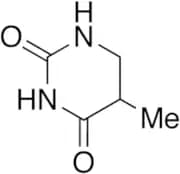
References Thalassitis, A. et al.: Bioorg. Med. Chem. Lett., 19, 6433 (2009); Chiacchio, U. et al.: Tetrahedron, 60, 441 (2004)Formula:C8H9N5Color and Shape:NeatMolecular weight:175.195,6-Dihydro Thymine
CAS:Controlled ProductApplications 5,6-Dihydrothymine is a derivative of Thymine, a nucleobase in the nucleic acid of DNA . 5,6-Dihydrothymine is a radiolysis product of DNA.
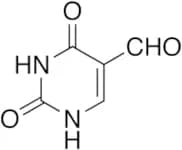
References Hubbard, K. et al.: Biochemistry, 28, 4382 (1989); Cadet, J. et al.: Int. J. Rad. Biol. Rel. Stud. Phys. Chem. Med., 39, 119 (1981);Formula:C5H8N2O2Color and Shape:NeatMolecular weight:128.135-Formyl Uracil
CAS:Controlled ProductApplications Nucleoside derivatives of 5-substituted uracil have been explored for their potential application as anti-viral agents and in the treatment of tumors.
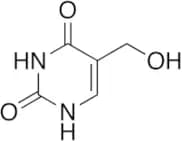
References Ressner, E.C., et al.: J. Med. Chem., 19, 1, 194 (1976)Formula:C5H4N2O3Color and Shape:NeatMolecular weight:140.15-Hydroxymethyluracil
CAS:Controlled ProductApplications 5-Hydroxymethyluracil (cas# 4433-40-3) is a compound useful in organic synthesis.
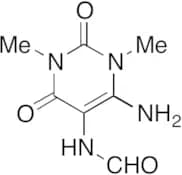
Formula:C5H6N2O3Color and Shape:NeatMolecular weight:142.116-Amino-5-1,3-dimethyl-5-(formamido)uracil
CAS:Controlled ProductApplications 6-Amino-5-1,3-dimethyl-5-(formamido)uracil is a substitued uracilic metabolite of methylxanthine and is also a metabolite of Theophylline (T343850). 6-Amino-5-1,3-dimethyl-5-(formamido)uracil has been used for the synthesis of 8-arylaminotheophyllines.
References Peri, G., et. al.: Toxicol. Lett., 18, 133 (1983); Celardo, A., et. al.: Eur. J. Drug Metab. Ph., 10, 279 (1985); Senga, K., et. al.: J. Heterocyclic Chem., 15, 641 (1978)Formula:C7H10N4O3Color and Shape:NeatMolecular weight:198.18Thymine
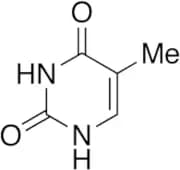
CAS:Controlled ProductImpurity Zidovudine EP Impurity C
Applications Thymine (Zidovudine EP Impurity C) is a nitrogenous base component in the nucleic acid of DNA.
References Keum, Y., et al.: App. Microbiol. Biotechnol., 80, 863 (2008); Redzic, Z., et al.: Neurochem. Res., 34, 566 (2009); Lanevskij, K., et al.: J. Pharm. Sci., 98, 122 (2009); Rajendar, B., et al.: Bioorg. Med. Chem., 17, 351 (2009);Formula:C5H6N2O2Color and Shape:WhiteMolecular weight:126.116-Phenyl-2-thiouracil
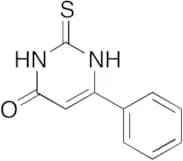
CAS:Applications 6-Phenyl-2-thiouracil is a reagent used in the synthesis of antifungal agents.
References Gullapelli, K. et al.: Int. J. Pharm. Biol. Sci., 4, 59 (2014);Formula:C10H8N2OSColor and Shape:Off-WhiteMolecular weight:204.2482-Thiouracil
CAS:Applications Reagent used in the preparation of Antithyroid agents.
References Toropov, A., et al.: Eur. J. Med. Chem., 45, 3581 (2010), Daniels, C., et al>.: J. Bacteriol., 192, 2169 (2010), Castillo-Garit, J., et al.: Eur. J. Pharm. Sci., 39, 30 (2010),Formula:C4H4N2OSColor and Shape:ColourlessMolecular weight:128.15Guanine
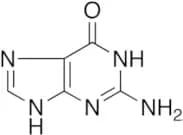
CAS:Impurity Aciclovir EP Impurity B
Applications Guanine is one of the five nucleobases incorporated into biological nucleic acids. Guanine, along with adenine and cytosine, is present in both DNA and RNA, whereas thymine is usually seen only in DNA, and uracil only in RNA. Aciclovir EP Impurity B.
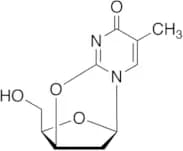
References Geslain, R., et al.: J. Biol. Chem., 284, 27760 (2009); Manini, P., et al.: Toxicol. Lett., 190, 41 (2009); Gong, B., et al.: Biochem., 48, 11961 (2009); Sugimoto, M., et al.: J. Agric. Food Chem., 58, 374 (2010);Formula:C5H5N5OColor and Shape:White To Off-WhiteMolecular weight:151.132,3’-Anhydrothymidine
CAS:Controlled ProductApplications An intermediate in the preparation of thymidine derivatives
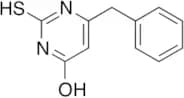
References el Kouni, M., et al.: Biochem. Pharmacol., 51, 1687 (1996),Formula:C10H12N2O4Color and Shape:NeatMolecular weight:224.216-Benzyl-2-thiouracil
CAS:Controlled ProductApplications 6-Benzyl-2-thiouracil (cas# 6336-50-1) is a useful research chemical.
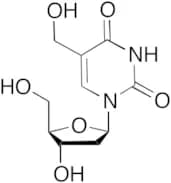
Formula:C11H10N2OSColor and Shape:Off-WhiteMolecular weight:218.275-Hydroxymethyl-2’-deoxyuridine
CAS:Controlled ProductStability Hygroscopic
Applications 5-Hydroxymethyl-2’-deoxyuridine acts as a biomarker for the diagnosis for oxidative stress in humans. Used as a diagnostic to for propensitiy for the development of breast cancer.
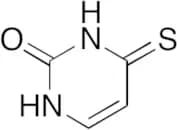
References McAnulty, L. et al.: App. Physiol. Nutr. Metab., 36, 976 (2011); Djuric Z. et al.: Cancer Epidemiol. Biomarkers. Prev., 10, 147 (2001); Frenkel, K. et al.: 7, 49, (1998);Formula:C10H14N2O6Color and Shape:White To Off-WhiteMolecular weight:258.2284-Thiouracil
CAS:Applications 4-Thiouracil is a derivative of Uracil (U801000), which is a nitrogenous base in RNA nucleic acid. 4-Thiouracil is used for tagging in cell type-specific RNA isolation from intact complex tissues.
References Miller, M., et al.: Nat. Methods, 6, 439 (2009); Seth, P., et al.: J. Med. Chem., 53, 8309 (2010); Cui, H., et al.: Eur. J. Med. Chem., 45, 5140 (2010);Formula:C4H4N2OSColor and Shape:NeatMolecular weight:128.1525,6-Dimethylthiouracil
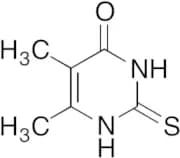
CAS:Applications 5,6-Dimethylthiouracil is a heterocyclic building block.
Formula:C6H8N2OSColor and Shape:Off-WhiteMolecular weight:156.216-Chloro-9-(tetrahydro-2H-pyran-2-yl)purine
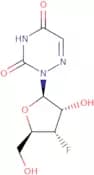
CAS:6-Chloro-9-(tetrahydro-2H-pyran-2-yl)purine is a nucleoside analog that is used to treat various types of cancer. It is a c–h bond regiospecific nucleophile that forms the 6-chloro 9-(tetrahydro-2H-pyran-2-yl)purine intermediate. The chloride ion acts as a nucleophile in the first step of this process, which results in the formation of an organocuprate and glyoxylate. 6CPP binds to DNA and inhibits RNA synthesis, leading to cell death by apoptosis or necrosis. This drug has been shown to be effective for treating human cell lines. 6CPP is also known for its antitumor effects, which may be due to its ability to inhibit phosphonates and cross-coupling reactions.Formula:C10H11ClN4OPurity:Min. 95%Color and Shape:SolidMolecular weight:238.67 g/mol3’-Deoxy-3’-fluoro-6-azauridine
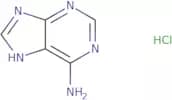
CAS:Please enquire for more information about 3’-Deoxy-3’-fluoro-6-azauridine including the price, delivery time and more detailed product information at the technical inquiry form on this pagePurity:Min. 95%Adenine hydrochloride
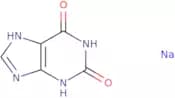
CAS:Purine nucleobase; component of nucleic acids and coenzymesFormula:C5H6ClN5Purity:Min. 98 Area-%Color and Shape:Off-White PowderMolecular weight:171.59 g/molXanthine sodium salt monohydrate
CAS:Xanthine sodium salt monohydrate is a dietary supplement that is used to treat metabolic disorders such as hyperuricemia and gout. It also has antiviral effects against herpes simplex virus-1 (HSV-1) and type-2 (HSV-2). Xanthine sodium salt monohydrate inhibits the production of viral DNA polymerase, which causes cell death by inhibiting the synthesis of proteins vital for cell division. Xanthine sodium salt monohydrate can be used to inhibit the growth of cancer cells in vitro. The mechanism of action is not yet fully understood, but it is thought that xanthine may inhibit phosphodiesterase activity or have a direct effect on the cell membrane.Formula:C5H3N4NaO2•H2OPurity:Min. 95 Area-%Color and Shape:PowderMolecular weight:192.11 g/molN6-Ethenoadenine
CAS:N6-Ethenoadenine is a nucleoside that is generated during DNA repair. It is formed by the enzymatic activity of the enzyme N6-adenosyltransferase in the presence of ATP and S-adenosylmethionine. It has been shown to be a potent inducer of DNA damage and mutagenesis, as well as an inhibitor of polymerase chain reaction (PCR) and DNA replication. N6-Ethenoadenine is also an agonist for P2Y receptors, which are important in chemical biology. This nucleoside may serve as a potential biomarker for genotoxic events, such as chemotherapy treatments or exposure to ionizing radiation.Formula:C7H5N5Purity:Min. 95%Color and Shape:White PowderMolecular weight:159.15 g/mol