Nucleotides
Subcategories of "Nucleotides"
Found 2637 products of "Nucleotides"
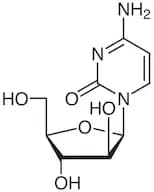
Cytarabine
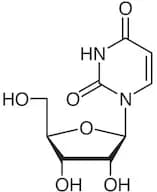
CAS:Formula:C9H13N3O5Purity:>98.0%(T)(HPLC)Color and Shape:White to Almost white powder to crystalMolecular weight:243.22Uridine
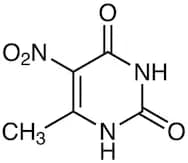
CAS:Formula:C9H12N2O6Purity:>98.0%(T)(HPLC)Color and Shape:White powder to crystalMolecular weight:244.206-Methyl-5-nitrouracil
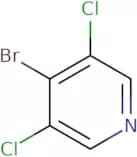
CAS:Formula:C5H5N3O4Purity:>95.0%(T)(HPLC)Color and Shape:Light orange to Yellow to Green powder to crystalMolecular weight:171.114-Bromo-3,5-dichloropyridine
CAS:4-Bromo-3,5-dichloropyridine is a reactive intermediate that is used as a reagent in organic synthesis. It has low basicity and reacts with lithium to form the lithium salt. The salt can be deprotonated to form the bromide anion, which is more reactive than the chloride anion. 4-Bromo-3,5-dichloropyridine can also be used for the selective isomerization of ketones and related compounds. Bromine is added to prevent side reactions with oxygen. The intermediates are generated at the site of reaction by using an excess of diisopropylamide over bromination agent.
Formula:C5H2BrCl2NPurity:Min. 95%Molecular weight:226.89 g/molPolycytidylic acid
CAS:Polycytidylic acid is a single stranded RNA analog which is combined with Polyinosinic acid to form a stable duplex structure known as Polyinosinic acid-polycytidylic acid (Poly I:C). PolyI:C stimulates the secretion of pro-inflammatory cytokines and type I interferon through its interaction with endosomal Toll-like receptor 3 (TLR-3) and the cytoplasmic receptors melanoma differentiation-associated gene 5 (MDA-5) and retinoic acid-inducible gene I (RIG-I). This immunostimulant activity makes Poly I:C a useful vaccine adjuvant and is used in vaccine formulations. Poly I:C and its stabilized analogs (e.g., poly-ICLC) are also being actively researched for their dual role in oncology: directly targeting tumors and acting as immune potentiators. For example Poly I:C can induce apoptosis in tumor cells and stimulate immunogenic cell death and is therefore being explored alongside chemotherapy, radiotherapy, and checkpoint inhibitors, helping to overcome resistance mechanisms and strengthen treatment outcomes. We can supply PolyI:C to all stages of your project - from R&D and preclinical phases right up to GMP commercial manufacture. Contact our team for custom Poly I:C products.
For more on poly I:C read out blog 'Poly I:C: A Vaccine Adjuvant With Oncological Potential.'Purity:Min. 95%Cytidine 5'-triphosphate disodium dihydrate
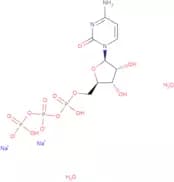
CAS:Cytidine 5'-triphosphate (CTP) disodium dihydrate prevents the action of aspartate carbamoyltransferase, an enzyme involved in pyrimidine biosynthesis. CTP serves as a molecule of high energy and acts as a coenzyme in glycerophospholipid biosynthesis and protein glycosylation.Formula:C9H16N3O14P3•(H2O)2•Na2Purity:Min. 95%Color and Shape:PowderMolecular weight:565.17 g/molN3-Methylthymidine
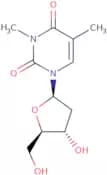
CAS:N3-Methylthymidine is a metalloprotease inhibitor that has been shown to inhibit the activity of epidermal growth factor (EGF). N3-Methylthymidine is also an effective inhibitor of HIV infection. The inhibitory effect on HIV infection is due to the competitive inhibition of viral protease and subsequent degradation of viral proteins. N3-Methylthymidine inhibits the synthesis and release of infectious herpes simplex virus particles. This drug also inhibits the growth of human tumor cells in culture by inhibiting cell proliferation, most likely due to its ability to inhibit EGF. An analytical method for determining the concentration of this drug in plasma using chemical ligation has been developed.Formula:C11H16N2O5Purity:Min. 95%Color and Shape:White PowderMolecular weight:256.26 g/mol2'-Deoxy-N2-phenoxyacetylguanosine
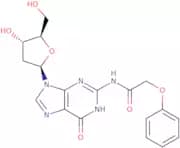
CAS:2'-deoxy-N2-phenoxyacetylguanosine is a synthetic nucleoside that is used as a substrate in experiments to study the properties of guanine. The compound can be synthesized by the reaction of 2'-deoxy-N2-phenoxyacetaldehyde with guanine. The synthesis starts with the condensation of 2'-deoxyribose and N2-phenoxyacetaldehyde, followed by the oxidation of the resulting anhydride to give aldehyde, which reacts with guanine to form a Schiff base. This then undergoes hydrolysis to yield 2'-deoxy-N2-phenoxyacetylguanosine.Formula:C18H19N5O6Purity:Min. 95%Molecular weight:401.38 g/moldNTP pre-mixes, 10 mM aqueous solution
CAS:dATP, dTTP, dCTP and dGTP pre-mixed in a single vialFormula:C10H16N5O12P3Purity:Min. 95%Color and Shape:Clear LiquidMolecular weight:491.18 g/mol2'-Deoxycytidine-5'-diphosphate trisodium salt hydrate
CAS:2'-Deoxycytidine-5'-diphosphate trisodium salt hydrate is a nucleoside that is used as an antiviral agent in the treatment of herpes zoster and varicella zoster. This drug also has anticancer properties, which may be due to its ability to inhibit DNA synthesis. 2'-Deoxycytidine-5'-diphosphate trisodium salt hydrate is a novel nucleotide analogue that has been modified to improve its stability, solubility and bioavailability. It can be used as a starting material for the synthesis of phosphoramidites by reacting with phosphorous pentoxide at elevated temperatures and pH. CAS No. 151151-32-5Formula:C9H12N3O10P2·Na3Purity:Min. 95%Color and Shape:White Off-White PowderMolecular weight:453.12 g/mol2'-Amino-2'-deoxyadenosine-5'-triphosphate sodium salt - aqueous solution
CAS:2'-Amino-2'-deoxyadenosine-5'-triphosphate sodium salt - aqueous solution is a modified ATP analog, where the ribose has a 2'-amino substitution. This compound has potential research applicationsFormula:C10H17N6O12P3·xNaPurity:Min. 95 Area-%Color and Shape:PowderMolecular weight:506.2 g/mol2'-O-Methyluridine
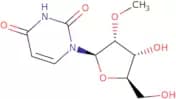
CAS:2'-O-Methyluridine is a chemical compound that is used in the synthesis of RNA. It is an analog of uridine and has been shown to have antiviral and anticancer properties. 2'-O-Methyluridine inhibits protein synthesis by competing with uridine for the active site of the enzyme ribonucleotide reductase, which converts ribonucleotides to dNMPs. This compound also inhibits RNA synthesis by disrupting the pairing of adenine and cytosine residues in RNA strands. 2'-O-Methyluridine has been shown to inhibit growth in some types of cancer cells, including colorectal adenocarcinoma cells. It may also be useful as a chemotherapeutic agent against HIV, as it inhibits virus replication by inhibiting reverse transcription and DNA synthesis.
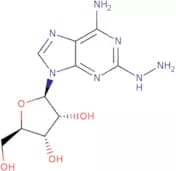
Formula:C10H14N2O6Purity:Min. 98 Area-%Color and Shape:White Off-White PowderMolecular weight:258.23 g/mol2-Hydrazinoadenosine
CAS:2-Hydrazinoadenosine is an active analogue of adenosine. It is a potent agonist for the adenosine receptor subtypes A1 and A2A with high affinity. 2-Hydrazinoadenosine has been shown to inhibit cardiac contractility in animal models, as well as to produce hypotension, bradycardia, and bronchodilation in humans. This drug also has a functional effect on the heart by binding to adenosine receptors, which leads to the inhibition of catecholamine release. This drug is used clinically as an antiarrhythmic agent and a vasodilator in coronary artery disease.
Formula:C10H15N7O4Purity:Min. 95%Color and Shape:PowderMolecular weight:297.27 g/mol9-(2'-Deoxy-2'-fluoro-β-D-arabinofuranosyl)guanine
CAS:9-(2'-Deoxy-2'-fluoro-b-D-arabinofuranosyl)guanine is a nucleoside phosphorylase inhibitor that is used to treat inflammatory bowel disease. It has been shown to be effective in treating women with inflammatory bowel disease, and has no significant side effects. 9-(2'-Deoxy-2'-fluoro-b-D-arabinofuranosyl)guanine inhibits the bacterial enzyme nucleoside phosphorylase, which is responsible for the conversion of guanosine triphosphate (GTP) to guanosine diphosphate (GDP). This inhibition prevents the synthesis of DNA and RNA by blocking the conversion of GTP and GDP into AMP and GMP. The drug binds to the active site of nucleoside phosphorylase, which is located in the bacterial cytoplasmic membrane. 9-(2'-Deoxy-2'-fluoroFormula:C10H12FN5O4Purity:Min. 97 Area-%Color and Shape:PowderMolecular weight:285.24 g/molN2,7-Dimethylguanosine
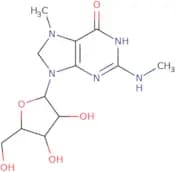
CAS:N2,7-Dimethylguanosine is a modified nucleotide that is an intermediate in the biosynthesis of guanine. This modification is catalyzed by an enzyme called methyltransferase, which transfers a methyl group from S-adenosylmethionine to the guanine base. N2,7-dimethylguanosine has been shown to be involved in epigenetic regulation and translation regulation as well as having a biological function as an acceptor for aminoacylation. N2,7-dimethylguanosine can be detected with mass spectrometry and can also be immobilized onto solid supports for use in biochemical pathways. br> N2,7-dimethylguanosine is synthesized from S-adenosylmethionine (SAM) and 5'-methylthioadenosine (MTA) by a series of reactions involving methyltetrahydrofolate reductase and methyFormula:C12H18N5O5Purity:Min. 95%Color and Shape:White PowderMolecular weight:312.3 g/mol2'-Deoxy-4-thiouridine
CAS:2'-Deoxy-4-thiouridine is a pyrimidine nucleoside for a range of applications
Formula:C9H12N2O4SPurity:Min. 98 Area-%Color and Shape:PowderMolecular weight:244.27 g/mol2'-Deoxyadenosine 5'-O-thiophosphate sodium salt
CAS:2'-Deoxyadenosine 5'-O-thiophosphate sodium salt is a synthetic nucleotide that has antiviral, anticancer and antitumor properties. It is a modified deoxyribonucleoside and it activates the synthesis of DNA by acting as an activator. This drug is not found in nature and it has shown to inhibit the growth of human breast cancer cells in cell culture.Formula:C10H14N5O5PSPurity:Min. 95%Molecular weight:347.29 g/mol2-Chloroadenosine hemihydrate
CAS:2-Chloroadenosine hemihydrate is a synthetic purine nucleoside analog, closely related to adenosine, with a chlorine atom substituted at the 2-position on the adenine ring. This molecule has potential application in research.Formula:C10H12ClN5O4H2OPurity:Min. 95%Color and Shape:PowderMolecular weight:310.69 g/mol4-Amino-2,6-dihydroxy-5-nitrosopyrimidine
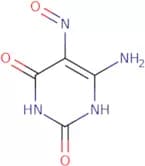
CAS:4-Amino-2,6-dihydroxy-5-nitrosopyrimidine is a molecule that has been shown to be an effective inhibitor of the enzyme tyrosinase in the oxidation of tyrosine to DOPA, which is a precursor of melanin. It is believed that vibrational and structural changes during these reactions are responsible for the inhibitory effects. 4-Amino-2,6-dihydroxy-5-nitrosopyrimidine has also been shown to have anti cancer effects on glioma cells. This molecule binds to copper ions, forming a chelate ring that can stabilize reactive intermediates and terminate free radicals. The chlorine atom on this molecule may be responsible for its cytotoxic effects by reacting with nucleophilic sites on proteins. The functional groups on this molecule react with acid catalysts, such as protonation or dehydration reactions.Formula:C4H4N4O3Purity:Min. 98 Area-%Color and Shape:PowderMolecular weight:156.1 g/mol2'-Azido-2'-deoxyuridine
CAS:Formula:C9H11N5O5Purity:>98.0%(HPLC)Color and Shape:White to Almost white powder to crystalMolecular weight:269.22