Nucleotides
Subcategories of "Nucleotides"
Found 2637 products of "Nucleotides"
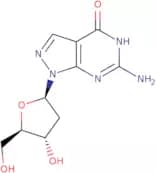
8-Aza-7-deaza-2'-deoxyguanosine
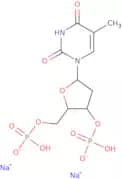
CAS:8-Aza-7-deaza-2'-deoxyguanosine is an alkynylated, cross-linked, single stranded nucleic acid. It has been shown to be effective at cross-linking and cross-linking nucleic acids. 8-Aza-7-deaza-2'-deoxyguanosine binds to the 7 deazapurine residues in DNA, forming a covalent bond between the two strands of the helix. This binding prevents the strand from unwinding and prevents the replication of DNA. The thermodynamic data for this compound shows that it is stable in both hot and cold water, which makes it a good candidate for use in research as well as in clinical settings.Formula:C10H13N5O4Purity:Min. 95%Color and Shape:PowderMolecular weight:267.24 g/molThymidine-3',5'-diphosphate disodium salt
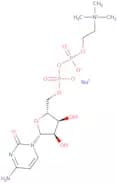
CAS:Thymidine-3',5'-diphosphate disodium salt is an antiviral and anticancer drug. It is a modified nucleoside which is synthesized from thymidine-3',5'-diphosphate and sodium bicarbonate (NaHCO3). This drug inhibits the synthesis of DNA and RNA, thereby inhibiting viral replication. Thymidine-3',5'-diphosphate disodium salt also has an antitumor effect by preventing the production of DNA in tumor cells.Formula:C10H14N2Na2O11P2Purity:Min. 95%Color and Shape:PowderMolecular weight:446.15 g/molCiticoline sodium
CAS:Citicoline is a complex organic molecule, a form of B-vitamin choline that acts as an intermediate in many biosynthetic pathways, for example, in the biosynthesis of cell membrane phospholipids. As a dietary supplement, citicoline is a source of choline and cytidine, two components that are quickly absorbed in the intestine and across the blood-brain barrier. The neuroprotective properties of citicoline improves mental performance increasing the levels of other brain-related chemicals like dopamine and norepinephrine, helping with recovery in stroke patients, reducing memory loss due to aging and improving vision in patients with glaucoma.Formula:C14H26N4O11P2•NaPurity:Min. 98.0 Area-%Color and Shape:White To Off-White SolidMolecular weight:511.31 g/mol5′-O-DMT-LNA N-Bz 5-Me cytidine
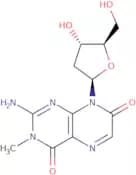
CAS:5′-O-DMT-LNA N-Bz 5-Me cytidine is a protected LNA cytidine nucleoside.Formula:C39H37N3O8Purity:Min. 95%Molecular weight:675.73 g/mol3-Methyl-8-(2-deoxy-b-D-ribofuranosyl)isoxanthopterin
CAS:3-Methyl-8-(2-deoxy-b-D-ribofuranosyl)isoxanthopterin is a nucleoside analog that is used as an activator of phosphoramidite. It can be used as a building block in the synthesis of modified phosphoramidites and it has antiviral, anticancer, and antiinflammatory properties. 3-Methyl-8-(2-deoxy-b-D-ribofuranosyl)isoxanthopterin is a novel nucleoside analog that can be used to synthesize DNA or RNA. It is also an inhibitor of deoxyribonucleoside kinase, preventing the conversion of deoxyribonucleosides into diphosphate monophosphates.
Formula:C12H15N5O5Purity:Min. 95%Color and Shape:PowderMolecular weight:309.28 g/mol5-Bromo-2'-deoxycytidine
CAS:5-Bromo-2'-deoxycytidine is a synthetic nucleoside analogue that is used to treat diabetic neuropathy. It is structurally similar to cytidine, and inhibits the enzyme DNA polymerase by intramolecular catalysis. This causes deamination of the 5-bromo group, which prevents further synthesis of DNA. 5-Bromo-2'-deoxycytidine has been shown to be effective in vivo in a mouse model for inflammatory bowel diseases, including colitis and eosinophilic enteritis. The drug was also found to inhibit the production of Eosinophil peroxidase from HL-60 cells in vitro.Formula:C9H12BrN3O4Purity:Min. 95%Color and Shape:Off-White PowderMolecular weight:306.11 g/mol5'-O-DMT-thymidine-3'-succinyl CPG 2000 Å
5'-O-DMT-thymidine-3'-succinyl CPG 2000 Å is a synthetic nucleoside that contains an acetyl group at the 5' position. The succinyl group has been added to the 3' position of the nucleoside and is bonded to a carrier molecule (2000 Å). This product is used as an activator in DNA synthesis, it also has antiviral and anticancer activities.Color and Shape:Powder2'-Deoxy-3',5'-O-(1,1,3,3-tetraisopropyl-1,3-disiloxanediyl)uridine
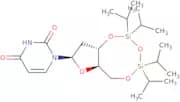
CAS:2'-Deoxy-3',5'-O-(1,1,3,3-tetraisopropyl-1,3-disiloxanediyl)uridine is a novel and synthetic nucleoside analog with antiviral activity. It inhibits the synthesis of DNA by binding to the enzyme ribonucleotide reductase. This compound has been shown to be an activator of PPARs in vitro.Formula:C21H38N2O6Si2Purity:Min. 95%Molecular weight:470.72 g/mol2-Chloroadenosine
CAS:2-Chloroinosine is an adenosine receptor agonist; metabolically stable analog of adenosineFormula:C10H12ClN5O4Purity:Min. 95%Color and Shape:PowderMolecular weight:301.69 g/molGuanosine 5'-diphosphate sodium
CAS:Pyruvate kinase substrate
Formula:C10H15N5O11P2•Na2Purity:Min. 95%Color and Shape:PowderMolecular weight:466.19 g/molGuanosine5'-diphosphate
CAS:Pyruvate kinase substrateFormula:C10H15N5O11P2Purity:Min. 95%Color and Shape:PowderMolecular weight:443.2 g/molPolyoxin B
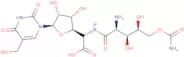
CAS:Polyoxin B is a natural product that is produced by the fungus Polyporus umbellatus. It is a synthetase inhibitor that specifically inhibits the enzyme malic acid synthetase in bacteria and fungi. Polyoxin B has been shown to have antifungal activity in vitro and to inhibit the growth of Cryptococcus neoformans, which may be due to its ability to inhibit terminal residues, such as acetate extract, bacterial strain, and synthase enzyme.Formula:C17H25N5O13Purity:Min. 70%Color and Shape:Yellow PowderMolecular weight:507.41 g/molFludarabine phosphate
CAS:Fludarabine phosphate is an antileukemic drug that inhibits DNA polymerase α and β, as well as other enzymes in the nucleotide synthesis pathway. It is used to treat patients with chronic myelogenous leukemia (CML) who have developed resistance to other treatments. Fludarabine phosphate has been shown to induce a cytotoxic effect against tumor cells by binding to ATP-binding cassette transporter proteins on the cell membrane and inhibiting intracellular targets such as DNA, RNA, and protein synthesis. Fludarabine phosphate has also been shown to inhibit the growth of tumor cells through synergistic interactions with other anticancer drugs such as hydroxyurea or busulfan, which may be due to its ability to inhibit enzyme activities such as erythrocyte alkaline phosphatase.
Formula:C10H13FN5O7PPurity:Min. 98 Area-%Color and Shape:PowderMolecular weight:365.21 g/mol3'-Deoxyadenosine-5'-triphosphate sodium salt - 10mM aqueous solution
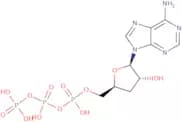
CAS:3'-Deoxyadenosine-5'-triphosphate sodium salt is a nucleotide that has been shown to be effective in chemotherapy. It is a substrate for the synthesis of DNA, RNA, and ATP. 3'-Deoxyadenosine-5'-triphosphate sodium salt is also a building block for DNA polymerase, which is an enzyme that synthesizes DNA from a template. It has been shown to have anticancer activity in drug-resistant cells and can be used as an alternative to purine analogs such as 6-mercaptopurine or cladribine. 3'-Deoxyadenosine-5'-triphosphate sodium salt has been shown to inhibit the production of nucleotides by blocking their conversion into triphosphates, which are necessary for DNA replication and repair. This inhibition leads to apoptosis in cells with high levels of nucleotide turnover such as cardiac and myeloid cells. The drug interactions may depend on theFormula:C10H16N5O12P3Purity:Min. 95%Color and Shape:Colorless PowderMolecular weight:491.18 g/mol2-Phenylaminoadenosine
CAS:2-Phenylaminoadenosine (2-PA) is a potent and selective inhibitor of the P2Y receptor. 2-PA has been shown to reduce myocardial infarct size in vivo in mice, which may be due to its ability to inhibit the release of dopamine from the brain. In addition, 2-PA binds to LPS receptors on endothelial cells, reducing the production of proinflammatory cytokines and preventing platelet aggregation. 2-PA also inhibits the activation of toll-like receptor 4 (TLR4) in human monocytes, leading to reduced expression of proinflammatory cytokines and increased expression of anti-inflammatory cytokines. 2-PA is an agonist that binds with high affinity to P2Y receptors on erythrocytes. This binding results in decreased adenosine triphosphate (ATP) production by adenosine deaminase, which leads to decreased intracellular calcium levels and inhibition of neutrophFormula:C16H18N6O4Purity:Min. 95%Color and Shape:PowderMolecular weight:358.35 g/molN6-Benzyladenosine 5'-diphosphate sodium salt - 10 mM aqueous solution
CAS:N6-Benzyladenosine 5'-diphosphate sodium salt is a modified nucleoside that has a high purity, which is suitable for synthesis of DNA or RNA. It can be used in the modification of deoxyribonucleosides, ribonucleosides, and phosphoramidites. N6-Benzyladenosine 5'-diphosphate sodium salt has been shown to have anticancer effects and antiviral effects. This drug also has novel properties such as an ability to inhibit the proliferation of cancer cells.Formula:C17H21N5O10P2Purity:Min. 95%Color and Shape:Colorless PowderMolecular weight:517.32 g/mol2'-Deoxyinosine-5'-triphosphate sodium,100mM aqueous solution
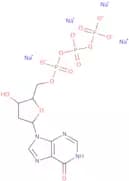
CAS:2'-Deoxyinosine-5'-triphosphate sodium (2'-dITP) is a modified nucleotide that has antiviral and anticancer properties. It has been shown to be an activator for ribonucleosides, deoxyribonucleosides, and DNA. 2'-DITP has also been shown to inhibit the growth of human breast cancer cells in vitro.
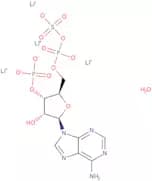
Formula:C10H11N4Na4O13P3Purity:Min. 95%Color and Shape:Clear LiquidMolecular weight:580.09 g/mol3'-Phosphoadenosine-5'-phosphosulfate lithium salt hydrate
CAS:Universal sulfonate donor for in vivo sulfonation by sulfotransferasesFormula:C10H15N5O13P2S·xLi·yH2OPurity:Min. 60 Area-%Color and Shape:White PowderMolecular weight:507.27 g/mol3'-Deoxy-5-methyluridine
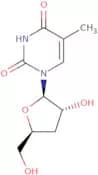
CAS:3'-Deoxy-5-methyluridine (3'-DMAU) is a synthetic nucleoside that is used in the treatment of viral infections. 3'-DMAU has antiviral and anticancer activity, and it has been used to synthesize DNA for genetic engineering. It has shown promising results in the treatment of HIV as well as in the prevention of cancer metastasis. 3'-DMAU inhibits DNA synthesis by binding to the enzyme RNA polymerase, which blocks its interaction with ribonucleosides, thus inhibiting RNA synthesis. In addition, 3'-DMAU causes cell death by inhibiting protein synthesis. The drug is activated by phosphorylation to form 5'-triphosphate and 5'-diphosphate derivatives, which inhibit DNA and RNA synthesis at multiple sites within the cell.Formula:C10H14N2O5Purity:Min. 95%Color and Shape:PowderMolecular weight:242.23 g/molMalonyl coenzyme A lithium salt - 90%
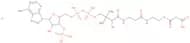
CAS:Malonyl coenzyme A lithium salt - 90% is a fatty acid that is involved in the biosynthesis of fats. It is also involved in the synthesis of prostaglandins, which are hormone-like substances that have a wide variety of effects on many different tissues. Malonyl coenzyme A lithium salt - 90% may be useful for the treatment of insulin resistance and obesity due to its ability to stimulate glucose uptake by fat cells and increase insulin sensitivity. The following product details are for a supplement:Formula:C24H38N7O19P3S·xLiPurity:Min. 95%Molecular weight:853.58 g/mol