Nucleotides
Subcategories of "Nucleotides"
Found 2637 products of "Nucleotides"
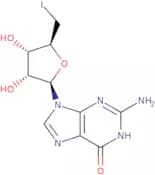
5'-Deoxy-5'-iodoguanosine
CAS:5'-Deoxy-5'-iodoguanosine is a synthetic nucleoside that is used as a molecular probe to study the biochemical and physiological effects of UV irradiation. It has been shown to be reactive under in vitro conditions, and to have functionalities in vivo. 5'-Deoxy-5'-iodoguanosine has been used as a polymerase inhibitor, and it can also be used for the synthesis of oligonucleotides.Formula:C10H12IN5O4Purity:Min. 95%Color and Shape:Yellow PowderMolecular weight:393.14 g/mol2'-Deoxy-5'-O-DMT-N6-methyladenosine
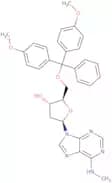
CAS:2'-Deoxy-5'-O-DMT-N6-methyladenosine is a mutant of the natural nucleoside adenosine which has been synthesized as a model for the study of the enzyme ribonucleotide reductase. The mutant has a frameshift mutation, and the resulting protein is unable to catalyze DNA synthesis. It can be complemented by adding wild type nucleotides to regenerate the original sequence. 2'-Deoxy-5'-O-DMT-N6-methyladenosine inhibits the synthetase activity of ribonucleotide reductase and also inhibits polymerization of erythromycin B and styrene. 2'-Deoxy-5'-O-DMT-N6-methyladenosine has been shown to inhibit dehydrogenase activity in auxotrophs of Escherichia coli.Formula:C32H33N5O5Purity:Min. 98 Area-%Color and Shape:Off-White PowderMolecular weight:567.64 g/mol5-Chloro-5'-deoxyuridine
5-Chloro-5'-deoxyuridine is a nucleoside that is used as an antiviral agent and anticancer drug. It inhibits the viral DNA polymerase by acting as a phosphoramidite in the synthesis of viral DNA. 5-Chloro-5'-deoxyuridine is also used in the treatment of leukemia cells, which are resistant to other anticancer drugs. The high purity and modified nucleosides make this product highly desirable for research purposes. The novel syntheses of this product make it a desirable choice for many researchers.Formula:C9H11ClN2O5Purity:Min. 95%Color and Shape:PowderMolecular weight:262.65 g/mol2'-Deoxy-N2-DMF-guanosine
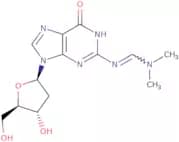
CAS:2'-Deoxy-N2-DMF-guanosine is a synthetic nucleoside that is used as a primer in DNA sequencing and hybridization experiments. It binds to the 5' end of single-stranded DNA and is complementary to guanosine. The 2'-deoxy group on the sugar moiety prevents the formation of hydrogen bonds with other bases, which increases stability. In addition, it has a high affinity for dna binding proteins. This synthetic nucleoside has been shown to be useful in clinical diagnostics and can be used as a probe for detecting diazirine residues in DNA sequences.Formula:C13H18N6O4Purity:Min. 97 Area-%Color and Shape:White Off-White PowderMolecular weight:322.33 g/mol3'-Amino-2',3'-dideoxyguanosine
CAS:3'-Amino-2',3'-dideoxyguanosine's lack of a 3'-hydroxyl group makes it a chain terminator for DNA polymerase, a key application in Sanger sequencing. Additionally, the 3'-amino group serves as a functional handle for modifying the 3' end of oligonucleotides with various labels or conjugates, expanding their utility in research and diagnostics.Formula:C10H14N6O3Purity:(%) Min. 95%Color and Shape:Off-White PowderMolecular weight:266.26 g/mol2-Thiouridine
CAS:2-Thiouridine is a uridine derivative that acts as a precursor for protein synthesis. It is synthesized from 2-amino-5-thiazole carboxylic acid and uracil in two steps, first with the formation of 2-thiouridine monophosphate and then with the conversion to 2-thiouridine diphosphate. The synthesis of 2-thiouridine is catalyzed by the enzyme uridine phosphorylase, which converts it to uridine monophosphate. 2-Thiouridine has been shown to have immunomodulatory effects in cell culture systems and animal models. These effects are believed to be due to its ability to act as an inhibitor of fatty acid synthase, which generates fatty acids from acetyl CoA. This process prevents the production of prostaglandins and leukotrienes, thereby reducing inflammation.Formula:C9H12N2O5SPurity:Min. 98 Area-%Color and Shape:White PowderMolecular weight:260.27 g/molXanthosine 5'-monophosphate disodium salt
CAS:Xanthosine 5'-monophosphate disodium salt is a nucleotide that has been shown to react with nitrite in aqueous solution to form xanthosine 5'-monophosphate. The reaction system can be prepared by adding nitrite to a solution of xanthosine 5'-monophosphate disodium salt and deionized water. The crystallization process can be done by adding ethanol dropwise to the reaction system under controlled conditions. Impurities may result from the preparation process, such as sodium chloride, sodium sulfate, and sodium hydroxide.Formula:C10H11N4Na2O9PPurity:Min. 95%Color and Shape:White Slightly Yellow PowderMolecular weight:408.17 g/mol2'-Deoxy-N3-methyluridine
CAS:2'-Deoxy-N3-methyluridine is a nucleoside analog that is used as a substrate in the synthesis of DNA. It can be incorporated into the DNA strand by enzymes called thymidylate synthases. 2'-Deoxy-N3-methyluridine has been shown to inhibit bacterial growth in cell cultures, and it is also active against marine sponges. The protonation state of the molecule determines its hydrophobicity and can be altered by adding a test compound to the solution. Hydrophobic molecules are more likely to bind with water molecules than hydrophilic molecules, which are more soluble in water.Formula:C10H14N2O5Purity:Min. 95%Color and Shape:White PowderMolecular weight:242.23 g/mol2',3'-Dideoxyuridine
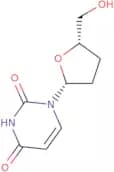
CAS:Research tool for anti-viral and anti-cancer studies
Formula:C9H12N2O4Purity:Min. 98 Area-%Color and Shape:White PowderMolecular weight:212.21 g/molN4,N4-Dimethylcytidine
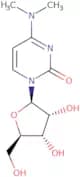
CAS:N4,N4-Dimethylcytidine is a nucleoside that is an analog of cytidine. It has antiviral potency against influenza virus and inhibits the RNA-dependent DNA polymerase. N4,N4-Dimethylcytidine can be used to treat influenza and other viruses that are resistant to other antiviral drugs. This drug can be used in cell culture to inhibit the production of mismatched DNA strands, which is important for the replication of RNA viruses such as influenza. N4,N4-Dimethylcytidine also has been shown to be an inhibitor of miRNA activity in mammalian cells.
Formula:C11H17N3O5Purity:(%) Min. 95%Color and Shape:White PowderMolecular weight:271.27 g/molN4-Benzoyl-2'-O-methylcytidine
CAS:N4-Benzoyl-2'-O-methylcytidine is a triester of cytidine that is used in various biochemical research applications. It is enzymatically synthesized from cytidine and benzoyl chloride. N4-Benzoyl-2'-O-methylcytidine has been shown to have the same electrophoretic mobility as 5-hydroxyl cytidine, but it does not react with hydroxylamine to produce the corresponding hydroxylated product. This compound has also been used to study nucleic acid structure and function.
Formula:C17H19N3O6Purity:Min. 95%Color and Shape:PowderMolecular weight:361.35 g/molCoenzyme A hydrate
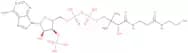
CAS:Coenzyme A hydrate is essential in the metabolism of fatty acids and the synthesis of acetyl-CoA. It is also employed in pharmaceutical applications, especially in drug development and formulation. Its distinctive properties improve drug solubility and bioavailability, making it an essential component in the creation of therapeutic agents.Formula:C21H36N7O16P3S·xH2OPurity:(Enzymatic) Min. 75%Color and Shape:White Off-White Slightly Yellow PowderMolecular weight:767.54 g/mol2'-Deoxy-2-methoxyadenosine
CAS:2'-Deoxy-2-methoxyadenosine is a nucleoside that has been isolated from the sponge Spongospora. It is a glycosylated nucleoside that contains a formamidine chromophore and an amino function. The molecule has been synthesized by solid-phase synthesis, which involves the use of phosphoramidite chemistry to attach a series of building blocks onto an oligonucleotide template. 2'-Deoxy-2-methoxyadenosine was found to have thermal stability in phosphate buffer solutions and low reactivity with nucleophiles such as ammonia or methylamine. This nucleoside can be used as a substituent in synthetic organic chemistry and has been shown to inhibit the growth of bacteria such as Clostridium perfringens.Formula:C11H15N5O4Purity:Min. 95%Color and Shape:PowderMolecular weight:281.27 g/mol2'-Deoxypseudouridine
CAS:2'-Deoxypseudouridine is a nucleotide that is synthesized from the sugar ribose-5-phosphate and uracil. It is used in biological systems to transfer phosphate groups, which are vital to the metabolism of energy. 2'-Deoxypseudouridine also binds to DNA, forming stable complexes with enzymes and other molecules. This nucleotide is often found in oligodeoxynucleotides, which are used as antiviral agents. 2'-Deoxypseudouridine has been shown to have antimicrobial activity against various viruses, including hepatitis B virus (HBV). It has also been tested for its ability to inhibit replication of HIV-1 in vitro. The enzyme glycosylase catalyzes the reaction of 2'-deoxypseudouridine with water, producing an unstable intermediate that spontaneously converts into dUMP and pyrophosphate.Formula:C9H12N2O5Purity:Min. 95%Color and Shape:White PowderMolecular weight:228.21 g/mol5'-O-Benzoyl-2'-deoxyinosine
5'-O-Benzoyl-2'-deoxyinosine is an antiviral agent that inhibits the replication of certain viruses. It is a nucleoside analog that contains a benzoyl group at the 5' position and a 2'-deoxyribose sugar moiety. It has been shown to inhibit the growth of cancer cells in vitro and to produce cytotoxic effects on human lymphocytes. This compound is synthesized by reacting an appropriate ribonucleotide with phosphoramidite reagents, which are used as starting materials for DNA synthesis.Purity:Min. 95%7-Cyano-7-deaza-2'-deoxyadenosine
CAS:7-Cyano-7-deaza-2'-deoxyadenosine is a nucleoside analog that inhibits the growth of virus by competing with deoxyadenosine for incorporation into DNA and RNA. 7-Cyano-7-deaza-2'-deoxyadenosine also stabilizes dna duplexes and prevents them from breaking down. It has been shown to be effective against herpes simplex virus, which causes painful blisters on the skin or genitals. This drug has been used in clinical trials as an antiviral agent. 7-Cyano-7-deaza-2'-deoxyadenosine is synthesized from 2',3'-didehydrocytidine under the following conditions:
Formula:C12H13N5O3Purity:Min. 95%Color and Shape:PowderMolecular weight:275.26 g/molUridine-5-oxyacetic acid
CAS:Uridine-5-oxyacetic acid is a molecule that is synthesized from uridine and 5-oxo-4-pyrone. It is an intermediate in the synthesis of pyrimidine nucleotides, which are important for DNA replication, repair, and transcription. Uridine-5-oxyacetic acid has been shown to form stable complexes with subtilisin. These complexes have been determined by X-ray crystallography to be glycosidic bond between the uridine and the enzyme. The enzymatic activity of subtilisin can be inhibited by these complexes, which may lead to frameshifting during bacterial translation. This inhibition leads to a less efficient protein synthesis process and a decrease in the production of gene products.
Formula:C11H14N2O9Purity:Min. 98 Area-%Color and Shape:PowderMolecular weight:318.24 g/molMalonyl coenzyme A lithium salt - 97%
CAS:Malonyl-CoA is a metabolite that regulates the storage of fat and the production of energy in adipose tissue. Malonyl coenzyme A lithium salt is a fatty acid, which has been shown to reduce insulin resistance in response to diet in mice. It also has an anti-obesity effect by lowering body weight and reducing fat mass accumulation. The mechanism for this is not fully understood but may involve regulation of tnf-α activity and adipocyte hypertrophy.Formula:C24H37N7O19P3S·xLiPurity:Min. 95%Color and Shape:PowderMolecular weight:852.57 g/mol2',3'-Dideoxyguanosine
CAS:2',3'-Dideoxyguanosine is a nucleoside for use in research applicationsFormula:C10H13N5O3Purity:Min. 95%Color and Shape:PowderMolecular weight:251.25 g/mol4'-Thioadenosine
CAS:4'-Thioadenosine is a nucleoside that has been shown to inhibit the growth of leukemia cells by binding to adenosine receptors. It is also able to inhibit the activity of the mammalian phosphodiesterase PDE4, which is responsible for hydrolyzing cAMP. The cellular effects of 4'-thioadenosine can be seen in HL-60 human cells, and this drug has also shown promising results in animal models of kidney fibrosis and liver cirrhosis. 4'-Thioadenosine has been shown to have anti-inflammatory properties, which may be due to its ability to inhibit prostaglandin synthesis.Formula:C10H13N5O3SPurity:Min. 95 Area-%Color and Shape:PowderMolecular weight:283.31 g/molThymidylyl-3'-5'-thymidine ammonium
CAS:Thymidylyl-3'-5'-thymidine ammonium is a cytotoxic drug that belongs to the class of thymidylate synthase inhibitors. It inhibits enzymes responsible for DNA synthesis and repair by binding to the active site of these enzymes and forming covalent bonds with amino acid residues. Thymidylyl-3'-5'-thymidine ammonium can be used as a therapeutic agent in radiation therapy because it is more effective than other drugs at inhibiting cell growth. Thymidylyl-3'-5'-thymidine ammonium has been shown to inhibit the activity of carcinogenic compounds, such as benzo[a]pyrene and benzene, in a model system. Thymidylyl-3'-5'-thymidine ammonium also has the ability to form covalent bonds with dna duplexes and change their conformational properties.
Formula:C20H27N4O12P·NH3Purity:Min. 98 Area-%Color and Shape:White PowderMolecular weight:563.45 g/molN2-DMF-5'-O-DMT-2'-O-methylguanosine
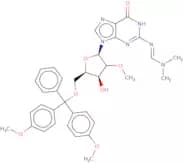
CAS:N2-DMF-5'-O-DMT-2'-O-methylguanosine is a novel nucleoside analog that has antiviral, anticancer and immunomodulating properties. It is synthesized from 2′,3′-dideoxyadenosine 5′-monophosphate by the condensation of 2,6-dimethylaniline with methylguanosine 5′-monophosphate and 5,6-dimethylaniline. The modification of the guanine base in N2-DMF-5'-O-DMT-2'-O-methylguanosine to an O6 -methyl group results in increased affinity for the ribonucleotide reductase enzyme (RNR) and inhibition of DNA synthesis.
Formula:C35H38N6O7Purity:Min. 95%Molecular weight:654.71 g/mol6-(β-D-2-Deoxyribofuranosyl)-3,4-dihydro-8H-pyrimido[4,5-c][1,2]oxazin-7-one
CAS:6-(β-D-2-Deoxyribofuranosyl)-3,4-dihydro-8H-pyrimido[4,5-c][1,2]oxazin-7-one is a novel nucleoside that has been shown to have anticancer and antiviral properties. In vitro studies have shown the compound to activate both DNA and RNA synthesis in cells. The compound also inhibits the replication of HIV viruses. 6-(β-D-2-Deoxyribofuranosyl)-3,4-dihydro-8H-pyrimido[4,5-c][1,2]oxazin-7-one is synthesized from ribonucleosides or deoxyribonucleosides through phosphoramidite chemistry. This product is available in high purity and high quality.Formula:C11H15N3O5Purity:Min. 95%Color and Shape:PowderMolecular weight:269.25 g/molGuanosine 5'-diphosphate disodium salt
CAS:Guanosine 5'-diphosphate (GDP) disodium salt is a nucleoside dipsphate and a pyruvate kinase substrate, which converts GDP to GTP.Formula:C10H13N5O11P2·2NaPurity:Min. 90 Area-%Color and Shape:White PowderMolecular weight:487.17 g/mol5-Fluorouridine
CAS:5-Fluorouridine, also called 1-(b-D-ribofuranosyl)-5-fluorouracil and 5-fluoro-D-uridine (FUrd), is a modified uridine nucleoside with a fluorine atom at position 5 of the uracil. 5-Fluorouridine is a highly cytotoxic metabolite of 5-fluorouracil, a drug used to treat a variety of cancers, on the market with the trade name Adrucil. Prodrugs of 5-fluorouridine have been investigated for anti-tumour properties in their own right and are close structural analogues of 5'-deoxy-5-fluorouridine, a cytostatic agent in chemotherapy.Formula:C9H11FN2O6Purity:Min. 95%Color and Shape:White PowderMolecular weight:262.2 g/mol1-(3'-5'-Di-O-benzoyl-2'-deoxy-2'-fluoro-alpha-L-arabinofuranosyl)thymine
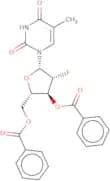
1-(3`-5`-Di-O-benzoyl-2`-deoxy-2`-fluoro-alpha-L-arabinofuranosyl)thymine is a nucleoside analog with modifications that influence its biological activity. It is made up of a thymine base, benzoyl groups that protect hydroxyl functionalities during chemical synthesis and a α-L-linkage, which impacts its biological interactions compared to β-L-nucleosides. This molecule also contains the sugar 2'-Deoxy-2'-fluoro-α-L-arabinofuranose which has a L-arabinose configuration, an α-Anomeric linkage and a 2'-Fluoro substitution. The latter modification has the potential to increase the molecule's metabolic stability and resistance to enzymatic degradationFormula:C24H21FN2O7Purity:Min. 95%Molecular weight:484.89 g/molThymidine
CAS:Thymidine is a nucleoside that is found in cells and is involved in the synthesis of DNA. Thymidine has been shown to inhibit the growth of tumor cells through apoptosis. In addition, thymidine can be used for the treatment of bowel disease by reducing inflammation and increasing the production of mucin. The mechanism by which thymidine exerts its effects on tumor cells is not well understood, but it may involve interactions with dna binding activity and enzyme activities.
Formula:C10H14N2O5Purity:Min. 99 Area-%Molecular weight:242.23 g/molRef: 3D-Q-201829
-Unit-kgkgTo inquire1kgTo inquire5kgTo inquire250gTo inquire500gTo inquire2500gTo inquire2'-Deoxy-6-thioguanosine
CAS:2'-Deoxy-6-thioguanosine is a purine nucleoside analog that inhibits the activation of transcription factors such as nuclear factor kappa-B (NF-κB) and activator protein 1 (AP-1). It also inhibits the synthesis of proinflammatory cytokines, such as IL-1β, IL-6, and TNFα. The matrix effect is an important factor in the prevention of tumor progression. 2'-Deoxy-6-thioguanosine has been shown to inhibit cell proliferation and induce apoptosis in squamous cell carcinoma cells by modulating the expression of HLA class II molecules on tumors. It also prevents invasion by blocking matrix metalloproteinase activity. 2'-Deoxy-6-thioguanosine has been found to be effective against bowel diseases such as ulcerative colitis and Crohn's disease, as well as infectious diseases such as HIV/AIDS.Formula:C10H13N5O3SPurity:Min. 97 Area-%Color and Shape:PowderMolecular weight:283.31 g/mol5'-O-DMT-α-thymidine
5'-O-DMT-a-thymidine is a modified nucleoside that is used in the synthesis of DNA and RNA. This product is a high quality and pure monophosphate, which has been modified to reduce its potential for activation by phosphatases. It is suitable for use in anticancer drugs and antiviral agents.
Formula:C31H32N2O7Purity:Min. 95%Molecular weight:544.6 g/mol2'-Deoxy-L-cytidine
CAS:2'-Deoxy-L-cytidine is a nucleoside that is naturally found in the cells of E. coli K-12. It is an antioxidant compound that prevents lipid peroxidation and scavenges free radicals, which are generated by certain chemical reactions. 2'-Deoxy-L-cytidine has been shown to have antiviral potency in vitro, but its antiviral activity has not been evaluated in vivo. This compound also inhibits the growth of bacteria that are resistant to tetracycline, such as Mycobacterium tuberculosis and Helicobacter pylori. 2'-Deoxy-L-cytidine may cause drug interactions with other medications because it is metabolized by the CYP450 system and inhibits the activity of cytochrome P450 enzymes.
Formula:C9H13N3O4Purity:Min. 98 Area-%Color and Shape:PowderMolecular weight:227.22 g/mol8-Oxoguanosine
CAS:8-Oxoguanosine is an oxidative DNA lesion that has been shown to be a potential biomarker for the detection of cancer cells. 8-Oxoguanosine is produced by a number of pharmacological agents and reactive oxygen species, such as hydrogen peroxide and nitric oxide. It has been shown to bind to DNA duplexes, inhibiting their replication and repair, which may lead to cancer development. The electrochemical detector can detect 8-oxoguanosine at concentrations as low as 1 μM in biological samples.Formula:C10H13N5O6Purity:Min. 98 Area-%Color and Shape:White Off-White PowderMolecular weight:299.24 g/mol3'-Deoxyguanosine
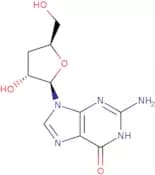
CAS:3'-Deoxyguanosine is a nucleic acid that is involved in the synthesis of polysaccharides and proteins. It has been shown to have an inhibitory effect on the synthesis of collagen, which may be due to its ability to increase hydrogen bonding between the nitrogen atoms and oxygen atoms. 3'-Deoxyguanosine has also been shown to have a protective effect on wheat germ extract, which may be due to its ability to inhibit oxidation reactions. The chemical structure of 3'-deoxyguanosine can be synthesized by reacting deoxyribose with sodium nitrate in the presence of sulfuric acid. This reaction can be monitored using electrochemical impedance spectroscopy (EIS).Formula:C10H13N5O4Purity:Min. 95%Color and Shape:White Off-White PowderMolecular weight:267.25 g/mol2'-Deoxy-5-fluorocytidine
CAS:2'-Deoxy-5-fluorocytidine is a methyltransferase inhibitor that inhibits the activity of DNA methyltransferases. It has been shown to inhibit the activity of DNA methyltransferases in vitro and in vivo, leading to tumor cell death. 2'-Deoxy-5-fluorocytidine has been shown to target intracellular targets, such as histones and ribosomes, which are involved in cancer development. The toxicity of this drug has been studied extensively and it has been shown to have low toxicity in mice. This drug is not toxic for normal cells or animals when administered at high doses.
Formula:C9H12FN3O4Purity:Min. 98 Area-%Color and Shape:White PowderMolecular weight:245.21 g/mol2',3',5'-Tri-O-acetyl-5-bromouridine
CAS:2',3',5'-Tri-O-acetyl-5-bromouridine is a nucleoside analog of uridine, a basic building block of RNA. It has the addition of a bromine atom and three acetyl groups. 2',3',5'-Tri-O-acetyl-5-bromouridine can be used in researchFormula:C15H17BrN2O9Purity:Min. 90%Molecular weight:449.21 g/mol2'-Deoxy-5'-O-DMT-inosine
CAS:2'-Deoxy-5'-O-DMT-inosine is a chain congener of uridine and cytidine. It is an analog of guanosine, which is found in DNA. 2'-Deoxy-5'-O-DMT-inosine has shown to have cytotoxic effects on the cardiovascular system, as well as inflammatory properties. This drug can also inhibit nitric oxide production and chloride transport. The nitro group in 2'-deoxy-5'-O-DMT-inosine can be removed by ammonolysis or debenzoylation and glycosylation can be added to the molecule with the addition of glucose.Formula:C31H30N4O6Purity:Min. 95%Color and Shape:White PowderMolecular weight:554.61 g/mol2-Amino-2'-O-methyladenosine
CAS:2-Amino-2'-O-methyladenosine is a modified nucleoside based on adenosine with a 2-amino group on the base, and a 2'-O-methyl group on the sugar.
Formula:C11H16N6O4Purity:Min. 97 Area-%Color and Shape:White PowderMolecular weight:296.28 g/mol(E)-5-(2-Carboxyvinyl)-2'-deoxyuridine
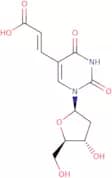
CAS:(E)-5-(2-Carboxyvinyl)-2'-deoxyuridine is a nucleoside for a range of applicationsFormula:C12H14N2O7Purity:Min. 97 Area-%Color and Shape:White PowderMolecular weight:298.25 g/molGuanosine 2',3'-cyclic monophosphate sodium
CAS:Guanosine 2',3'-cyclic monophosphate sodium is a novel antiviral agent that has been shown to be effective against HIV, herpesviruses, and vaccinia virus. It is an activator of guanosine 3'-5' cyclic monophosphate (cGMP) and can be used as a substitute for the nucleoside guanosine 5'-triphosphate (GTP). Guanosine 2',3'-cyclic monophosphate sodium inhibits DNA synthesis by inhibiting the activity of ribonucleotide reductase and DNA polymerase. This drug also has anticancer properties, which may be due to its ability to inhibit the production of tumor necrosis factor-α (TNF-α) in mice with lung cancer.Formula:C10H11N5NaO7PPurity:Min. 97 Area-%Color and Shape:PowderMolecular weight:367.19 g/molAdenosine 5'-diphosphate
CAS:Adenosine 5'-diphosphate (ADP) is a nucleoside that is an important component of the cell's energy pathways. ADP plays a role in platelet activation and nitrate reductase, which are enzymes that maintain the integrity of bacterial DNA. Adenosine 5'-diphosphate also has been shown to inhibit neural cell injury and protein oxidation.
Formula:C10H15N5O10P2Purity:Min. 95 Area-%Color and Shape:White Off-White PowderMolecular weight:427.2 g/mol8-Bromo-2'-deoxyadenosine
CAS:8-Bromo-2'-deoxyadenosine (8-BrdA) is a reactive chemical that can be used in the study of DNA. It is used to measure the kinetics of oxidative dna damage and to study glycosidic bond cleavage reactions. 8-BrdA reacts with eosinophil peroxidase to yield an oxidant, which can then react with dna duplexes. This reaction has been shown to affect both intramolecular and intermolecular hydrogen bonds. 8-BrdA also has been shown to induce cell death in vitro by apoptosis.Formula:C10H12BrN5O3Purity:Min. 98 Area-%Color and Shape:PowderMolecular weight:330.14 g/mol3'-Deoxy-3'-fluorothymidine
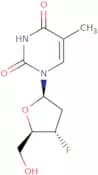
CAS:3'-Deoxy-3'-fluorothymidine is a nucleoside analog that is used to diagnose and treat cancer. It is a prodrug that is metabolized intracellularly by deoxycytidine kinase to the 3'-deoxy-3'-fluoro derivative of thymidine, which competes with natural thymidine for incorporation into DNA. Uptake of 18F-flouride (18F-FDG) in tumor cells has been shown to be proportional to the rate constant (k) of cellular uptake. This process can be quantified using positron emission tomography imaging. The cell cycle inhibitor activity of 3'-deoxy-3'-fluorothymidine has also been demonstrated in vitro and in vivo, inhibiting the proliferation of tumor cells and normal cells in culture, respectively.Formula:C10H13FN2O4Purity:Min. 97 Area-%Color and Shape:White Off-White PowderMolecular weight:244.22 g/mol5-Chloro-2-pyridinecarboxylic acid methyl ester
CAS:5-Chloro-2-pyridinecarboxylic acid methyl ester is a monophosphate nucleoside that can be used in the synthesis of DNA and RNA. It is also an antiviral, anticancer, and anticoagulant agent. 5-Chloro-2-pyridinecarboxylic acid methyl ester has been shown to inhibit DNA replication and transcription by inhibiting the activity of enzymes involved in these processes. It can be used as a building block for the synthesis of DNA and RNA. The purity of this product is high, with no detectable impurities at levels above 0.1%.Formula:C7H6ClNO2Purity:Min. 95%Color and Shape:PowderMolecular weight:171.58 g/molGuanylyl-3'-5'-cytidine ammonium salt
CAS:Guanylyl-3'-5'-cytidine ammonium salt is a nucleoside that is classified as a diphosphate. It has high quality and novel, anticancer and cytotoxic effects. Guanylyl-3'-5'-cytidine ammonium salt is synthesized from guanosine monophosphate (GMP) and cytidine monophosphate (CMP).Formula:C19H25N8O12P·NH3Purity:Min. 95 Area-%Color and Shape:PowderMolecular weight:605.46 g/mol9-(2'-Deoxy-2'-fluoro-β-D-arabinofuranosyl)hypoxantine
CAS:9-(2'-Deoxy-2'-fluoro-β-D-arabinofuranosyl)hypoxantine is a synthetic nucleoside that can be phosphorylated to form 9-(2'-Deoxy-2'-fluoro-β-D-arabinofuranosyl)hypoxantine 5'-triphosphate. This compound has been shown to have antitumor and antiviral activities. It inhibits DNA synthesis by inhibiting the activity of DNA polymerase and RNA polymerase, which are enzymes necessary for the replication of cellular DNA and RNA, respectively. 9-(2'-Deoxy-2'-fluoro-β-D-arabinofuranosyl)hypoxantine is high quality, novel, and CAS No. 98983-40-5.Formula:C10H11FN4O4Purity:Min. 95%Color and Shape:White Off-White PowderMolecular weight:270.22 g/molIsocytidine
CAS:Isocytidine, also known as 2-amino-1-β-D-ribofuranosyl-4(1H)-pyrimidinone, have broad antitumor activity targeting indolent lymphoid malignancies.Formula:C9H13N3O5Purity:Min. 95%Color and Shape:PowderMolecular weight:243.22 g/molN7-Methylguanosine
CAS:N-7-Methylguanosine is a nucleotide that has potent anti-viral activity. It inhibits viral replication by binding to the effector proteins of a virus and preventing translation, transcriptional regulation, and other biochemical processes. N7-Methylguanosine also binds to the x-ray crystal structures of the viral genome and blocks the binding of RNA polymerase to DNA. This drug can be used as an antiviral agent for the treatment of HIV infection and hepatitis B infection. N7-Methylguanosine is not active against some viruses such as herpes simplex virus type 1 or 2, influenza virus type A/B, or rhinovirus type 2. N7-Methylguanosine has been shown to have an effect on body mass index in humans by reducing weight gain in patients with metabolic syndrome. It also has an enzyme form that can be used for therapeutic use in human serum.Formula:C11H15N5O5Purity:Min. 95%Color and Shape:White PowderMolecular weight:297.27 g/molOrotidine 5'-monophosphate trisodium salt
CAS:Ribonuclesides is a novel nucleoside that contains the 2'-deoxyribose phosphate moiety. It is an anticancer drug that inhibits DNA synthesis and blocks viral replication. Ribonucleosides are phosphoramidites and can be used for the synthesis of DNA or RNA, which are important for cellular metabolism. Ribonucleosides also have antiviral properties and can inhibit protein synthesis by blocking the enzyme ribonucleotide reductase.Formula:C10H10N2O11PNa3Purity:Min. 95%Color and Shape:White PowderMolecular weight:434.14 g/mol2'-Deoxy-N6-(2-hydroxyethyl)adenosine
CAS:2'-Deoxy-N6-(2-hydroxyethyl)adenosine is a synthetic nucleoside that is used as a building block for the chemical synthesis of oligonucleotides. It is also an antiviral agent and has been shown to have anticancer properties. 2'-Deoxy-N6-(2-hydroxyethyl)adenosine is used in the manufacture of phosphoramidites, deoxyribonucleosides, and ribonucleosides. This product can be synthesized at high purity and quality, with CAS No. 137058-94-7.Formula:C12H17N5O4Purity:Min. 95%Molecular weight:295.29 g/mol2'-Deoxy-2'-fluorouridine
CAS:2'-Deoxy-2'-fluorouridine is a nucleoside analog that inhibits the replication of wild-type viruses by binding to the viral RNA.Formula:C9H11FN2O5Purity:Min. 95%Color and Shape:White Off-White PowderMolecular weight:246.2 g/mol2'-O-Methylguanosine-5'-triphosphate sodium salt - 100mM aqueous solution
CAS:2'-O-Methylguanosine-5'-triphosphate sodium salt is a nucleotide that is synthesized by the phosphorylation of guanosine at the 5' position. It has been shown to have significant activation of cardiac protein synthesis and translation. This nucleotide has also been shown to stabilize RNA in vitro, which may be due to its ability to activate adenylate cyclase activity. 2'-O-Methylguanosine-5'-triphosphate sodium salt is a potent inhibitor of hepatitis B virus replication, but does not inhibit the replication of other viruses.Formula:C10H18N3O14P3·NaPurity:Min. 95%Color and Shape:Clear LiquidMolecular weight:520.17 g/mol







![6-(β-D-2-Deoxyribofuranosyl)-3,4-dihydro-8H-pyrimido[4,5-c][1,2]oxazin-7-one](/_next/image/?url=https%3A%2Fstatic.cymitquimica.com%2Fproducts%2F3D%2Fthumb-webp%2FND145587.webp&w=3840&q=75)