Vitamins
Found 1118 products of "Vitamins"
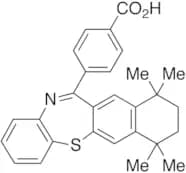
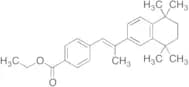
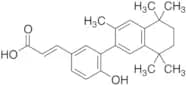
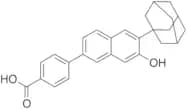
Arotinoid Ethyl Ester
CAS:Controlled ProductApplications Arotinoid ethyl ester is a retinoid with a similar structure to vitamin A (R252000), and inhibits human epidermal keratinocyte RNase P activity, as well as tRNA biogenesis.
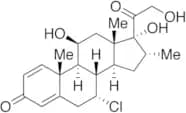
References Liao, W.; et al.: Zhongguo Linchuang Yaolixue Yu Zhiliaoxue, 19, 112 (2014); Papadimou, E.; et al.: Biol. Chem., 384, 457 (2003); Papadimou, E.; et al.: Skin Pharmacol. Physiol., 13, 345 (2000).Formula:C26H32O2Color and Shape:NeatMolecular weight:376.5317α-Chloro-16α-methyl Prednisolone
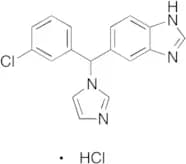
CAS:Controlled ProductFormula:C22H29ClO5Color and Shape:NeatMolecular weight:408.92Liarozole Hydrochloride
CAS:Controlled ProductFormula:C17H13ClN4·ClHColor and Shape:NeatMolecular weight:345.226(3R)-β-Cryptoxanthin
CAS:Controlled ProductFormula:C40H56OColor and Shape:NeatMolecular weight:552.879-cis-13,14-Dihydro 13-Methylretinoic Acid (>80%)
CAS:Controlled ProductStability Light and Temperature Sensitive
Applications 9-cis-13,14-Dihydroretinoic Acid, is a derivative of Retinal (R240000), corotenoid component of the visual pigments.
References Ball, et al.: Biochem. J., 42, 516 (1948), O’Brien, D.F., et al.: Science, 218, 961 (1982),Formula:C20H30O2Purity:>80%Color and Shape:NeatMolecular weight:302.451(24S)-24,25-Epoxycholesterol
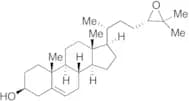
CAS:Controlled ProductApplications (24S)-24,25-Epoxycholesterol is a derivative of 4β-Hydroxy Cholesterol (H917980), a metabolite of Cholesterol. It is formed from Cholesterol by the drug-metabolizing enzyme cytochrome P 450 3A4. A potential ligand for the nuclear receptor LXR and also a new endogenous CYP3A marker.
References Breuer, O., et al.: J. Lipid Res., 36, 2275 (1995), Pikuleva, I., et al.: J. Biol. Chem., 273, 18153 (1998), Chawla, A., et al.: Science, 294, 1866 (2001), Bodin, K., et al.: J. Biol. Chem., 276, 38685 (2001),Formula:C27H44O2Color and Shape:NeatMolecular weight:400.637MRL-871
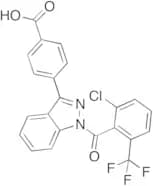
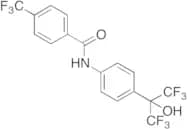
CAS:Controlled ProductApplications MRL-871 is a novel RORγt inhibitor, binding to a previously unidentified allosteric pocket in the RORγt LBD.
References Scheepstra, Marcel., et al.:Nat. Commun., 6, 8833/1 (2015); Fauber, Benjamin P., et al.: Bioorganic Med. Chem. Lett., 25, 2907 (2015);Formula:C22H12ClF3N2O3Color and Shape:NeatMolecular weight:444.79O1-(ABM-14 ether), O4-(Methylcarboxamide with AHPC) Butanediol
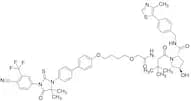
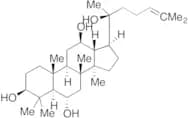
CAS:Controlled ProductFormula:C53H56F3N7O7S2Color and Shape:NeatMolecular weight:1024.18(20S)-Protopanaxatriol (~91% HPLC)
CAS:Controlled ProductApplications (20S)-Protopanaxatriol acts as an inhibitor in the production of corticosteroids in fasciculata cells. Used in the clinical treatment of heart diseases.
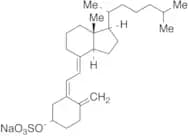
References Hasegawa, E. et al.: Life Sci., 92, 687 (2013); Wang, X. et al.: Pathobiol., 79, 285 (2012);Formula:C30H52O4Color and Shape:NeatMolecular weight:476.732Vitamin D3 Sulfate Sodium Salt (Technical Grade)
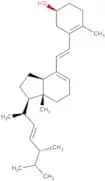
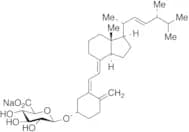
CAS:Controlled ProductFormula:C27H43O4S·NaColor and Shape:NeatMolecular weight:486.68Vitamin D2 β-D-Glucuronide Sodium Salt
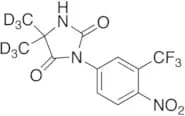
CAS:Controlled ProductFormula:C34H51O7·NaColor and Shape:NeatMolecular weight:594.754Nilutamide-d6
CAS:Controlled ProductFormula:C12D6H4F3N3O4Color and Shape:NeatMolecular weight:323.258CDDO Imidazolide
CAS:Controlled ProductStability Light Sensitive
Applications CDDO Imidozolide (CDDO-Im) is a synthetic triterpenoid CDDO-Im inhibits fatty acid synthase expression and has antiproliferative and proapoptotic effects in human liposarcoma cells. Studies show that CDDO-Im is highly active in suppressing cellular proliferation of human leukemia and breast cancer cell lines as well as being an effective therapeutic agent in the treatment of other types of cancers.
References Hughes, D.T. et al.: Cancer Invest., 26, 118 (2008); Place, A.E. et al.: Clin. Cancer Res., 9, 2798 (2003); Samudio, I. et al.: J. Biol. Chem., 280, 36273 (2005);Formula:C34H43N3O3Color and Shape:NeatMolecular weight:541.72Echinenone (Technical Grade)
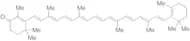
CAS:Stability Light Sensitive, Temperature Sensitive
Applications Echinenone is a protective carotenoid. Echinenone is an analogue of β-Carotene (C184250), the most important of the provitamins A. Widely distributed in the plant and animal kingdom. In plants it occurs almost always together with chlorophyll. Vitamin A precursor. Ultraviolet screen.
References Karrer, et al.: Helv. Chim. Acta, 12, 1142 (1929); Fischli, M., et al.: Helv. Chim. Acta, 58, 1584 (1975); Desmet, J., et al.: Biochem. Biophys. Acta, 912, 211 (1987); Tan, C., et al.: Food Chem., 92, 661 (2005); Chu, B., et al.: J. Agric. Food Chem., 55, 6754 (2007)Formula:C40H54OColor and Shape:NeatMolecular weight:550.8624,25-Dihydroxy Vitamin D2 (Mixture of Diastereomers)
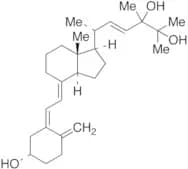
CAS:Controlled ProductApplications Α hydroxylated metabolite of Vitamin D2 (V676040); a synthetic analog of Vitamin D.
Not a dangerous good if item is equal to or less than 1g/ml and there is less than 100g/ml in the package
References Matsuoka, M. et al.: J. Nutrit. Sci. Vitaminol., 35, 253 (1989); Jones, G. et al.: Arch. Biochem. Biophys., 202, 450 (1980); Goff, J. et al.: J. Nutrit., 112, 1387 (1982);Formula:C28H44O3Color and Shape:NeatMolecular weight:428.65SR 1078
CAS:Controlled ProductApplications SR 1078 is a selective agonist of RORα and RORγ that stimulates ROR transcriptional activity in HEK293 cell reporter assays.
References Wang, Y., et al.: ACS Chem. Biol., 5, 1029 (2010); Wang, Y., et al.: PLoS One, 7, 1 (2012)Formula:C19H21NO4Color and Shape:NeatMolecular weight:327.374GW 3965 Hydrochloride
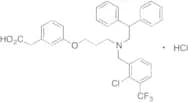
CAS:Controlled ProductApplications GW3965 Hydrochloride, is a potent, selective liver X receptor (LXR) agonist for hLXRα and hLXR. GW3965 has shown potent anti-inflammatory activity in both irritant and allergic contact models of dermatitis, requiring the participation of both LXRα and LXRβ.
References Fowler, A.J., et. al.: J. Invest. Dermatol., 120, 246 (2003)Formula:C33H31ClF3NO3•HClColor and Shape:NeatMolecular weight:582.053646SC-58236
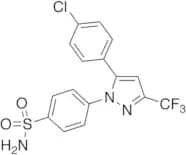
CAS:Controlled ProductApplications SC-58236 is a highly selective and potent cyclooxygenase-2 inhibitor which has been shown to induce apoptosis in gastric cells via down-regulation of Akt and then release of cytochrome c. Its anti-inflammatory effects allows for potential use in therapy for inflammatory allergic diseases.
Not a dangerous good if item is equal to or less than 1g/ml and there is less than 100g/ml in the package
References Fan, X.M. et al.: Digestion, 2, 75 (2006); Kim, S. et al.: Life Sci., 81, 863 (2007); Kim, S. et al.: J. Pharmacol. Exp. Therap., 313, 27 (2005);Formula:C16H11ClF3N3O2SColor and Shape:NeatMolecular weight:401.79AC 55649
CAS:Controlled ProductApplications AC 55649 is a potent and selective RARβ2 receptor agonist (1). RARβ2 receptor agonists are potential drug candidates for developing treatment for type 2 diabetes and hepatic steatosis (2).
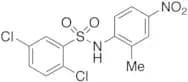
References (1) Lund, B. W., et al.: J Med Chem. 48, 7517 (2005) (2) Trasino, S. E., et al.: Diabetes Obes Metab. 18, 142 (2016)Formula:C21H26O2Color and Shape:NeatMolecular weight:310.43N-(2-Methyl-4-nitrophenyl)-2,5-dichlorobenzenesulfonamide
CAS:Controlled ProductApplications Antagonizes Wnt/β-catenin/Tcf-mediated transcription as well as PPARγ and δ activity. Able to inhibit the recruitment of the co-activators β-catenin and GRIP1, both of which are activators for both pathways.
References Handeli, S., et al.: Mol. Cancer Ther., 7, 521 (2008),Formula:C13H10Cl2N2O4SColor and Shape:NeatMolecular weight:361.21-O-Hexadecyl-sn-glycerol
CAS:Controlled ProductApplications 1-O-Hexadecyl-sn-glycerol restores plasmalogen levels in Chinese hamster ovary (CHO) cells and human pulmonary arterial endothelial cells (PAEC). Plasmalogen may play a role in protecting animal cells against photosensitized killing.
References Zoeller, R., et al.: J. Biol. Chem., 263, 11590 (1988); Zoeller, R., et al.: Am. J. Physiol., 283, H671 (2002)Formula:C19H40O3Color and Shape:NeatMolecular weight:316.51917beta-Estradiol-16,16-d2
CAS:Controlled ProductApplications 17beta-Estradiol-16,16-d2 (CAS# 3188-46-3) is a useful isotopically labeled research compound.
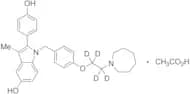
Formula:C18D2H22O2Color and Shape:NeatMolecular weight:274.394Bazedoxifene-d4 Acetate
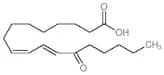
CAS:Controlled ProductFormula:C30H30D4N2O3Color and Shape:NeatMolecular weight:474.62713-OxoODE
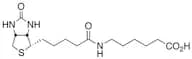
CAS:Controlled ProductFormula:C18H30O3Color and Shape:White To Off-WhiteMolecular weight:294.4Biotin X
CAS:Controlled ProductStability Hygroscopic! Store Under Inert Atmosphere.
Applications An active Biotinylation reagent.
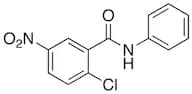
References Giubellino, A., et al.: J. Med. Chem., 51, 7459 (2008), Wang, Z., et al.: Nat. Chem. Biol., 4, 557 (2008),Formula:C16H27N3O4SColor and Shape:NeatMolecular weight:357.472-Chloro-5-nitro-N-4-phenylbenzamide
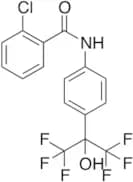
CAS:Controlled ProductApplications A cell-permeable, selective and irreversible PPARγ antagonist (IC50 = 3.3 nM, 32 nM, and 2 µM for PPARγ, PPARα, and PPARδ, respectively). Reported to covalently modify a cysteine residue in the binding site of PPAR. At a concentration of 10 µM, also acts as an agonist of human pregnane X receptor (PXR) and farnesoid X receptor (FXR). Does not activate liver X receptor-a (LXRa), retinoic acid receptor (RAR), retinoid X receptor-a (RXRa) and thyroid receptors a and b (TRa and TRb
References Huang, J.T., et al.: Nature, 400, 378 (1999), Wilson, T.M., et al.: J. Med. Chem., 43, 527 (2000), Leesnitzer, L.M., et al.: Biochemistry, 41, 6640 (2002)Formula:C13H9ClN2O3Color and Shape:NeatMolecular weight:276.684-[[trans-4-(2-methoxyethoxy)cyclohexyl]amino]-1-methyl-6-(5-thiazolyl)-2(1H)-Quinolinone
CAS:Controlled ProductFormula:C22H27N3O3SColor and Shape:NeatMolecular weight:413.533Tachysterol
CAS:Tachysterol is a sterol derivative that serves as a vitamin D analog, primarily sourced from the photochemical isomerization of ergosterol or lumisterol. Tachysterol undergoes further conversion processes to become active vitamin D metabolites that play crucial roles in calcium and phosphorus homeostasis. Though not biologically active in its original form, tachysterol is a precursor in the metabolic pathway, with conversion into active forms such as calcitriol occurring in the body.Formula:C28H44OPurity:90% MinColor and Shape:PowderMolecular weight:396.65 g/molVitamin K
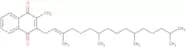
CAS:Vitamin K is a fat-soluble vitamin, which is primarily sourced from leafy green vegetables, and is also synthesized by gut microbiota. Its mode of action involves functioning as a crucial cofactor for the enzyme gamma-glutamyl carboxylase, which catalyzes the carboxylation of specific glutamic acid residues on proteins required for blood coagulation. This modification enables the calcium-binding capacity of these proteins, facilitating essential physiological processes such as coagulation, bone metabolism, and vascular biology.Formula:C31H46O2Purity:Min. 95%Molecular weight:450.7 g/molCalcipotriol monohydrate
CAS:Calcipotriol monohydrate, a Vitamin D3 analog, binds well to the vitamin D receptor, used in psoriasis research.Formula:C27H42O4Purity:99.95%Color and Shape:SolidMolecular weight:430.62Riboflavin
CAS:Riboflavin is a water-soluble vitamin, which is primarily sourced from dietary intake, including milk, eggs, lean meats, green vegetables, and nuts. It acts as a precursor to the coenzymes flavin mononucleotide (FMN) and flavin adenine dinucleotide (FAD), essential for redox reactions in cellular metabolism. These coenzymes play a critical role in the electron transport chain and oxidative phosphorylation, facilitating the conversion of nutrients into energy via ATP production.Formula:C17H20N4O6Purity:Min. 98 Area-%Molecular weight:376.36 g/molRef: 3D-W-104132
1kgTo inquire5kgTo inquire10kgTo inquire25kgTo inquire2500gTo inquire-Unit-kgkgTo inquire3-Butyl-1,10-ethylidenealloxazinium chloride
CAS:3-Butyl-1,10-ethylidenealloxazinium chloride is a synthetic organic compound, which is a cationic dye derived from the alloxazinium class of compounds. Its molecular structure is characterized by the presence of an alloxazine core, which serves as the electron-releasing moiety, coupled with ethylidene and butyl groups that contribute to its solubility and electron-density properties.Formula:C16H17N4O2·ClPurity:Min. 95%Molecular weight:332.78 g/molMaxacalcitol
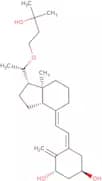
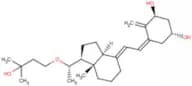
CAS:Maxacalcitol (22-Oxacalcitriol) is a ligand of VDR-like receptors and a non-serum calcium vitamin D3 analogue.Formula:C26H42O4Purity:≥98%Color and Shape:SolidMolecular weight:418.61Vitamin D3 - 0.5m IU/g=500000 IU/g
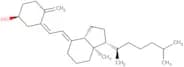
CAS:Vitamin D3 is a fat-soluble vitamin that can be obtained from some fish, mushrooms, and dairy products. The most common form of the vitamin is cholecalciferol (vitamin D3) which can be converted in the liver to calcidiol (25-hydroxycholecalciferol) and in the kidneys to calcitriol (1,25-dihydroxycholecalciferol). Vitamin D3 has been shown to have a positive effect on calcium absorption and bone mineralization. It also has important physiological functions such as regulation of cell growth and differentiation. The solubility of vitamin D3 is dependent on the presence of a hydroxy group at position 3' or 25'. This liquid chromatography method uses an experimental solubility data set for the determination of solubility data for compounds with a hydroxy group at position 3'.
Formula:C27H44OPurity:Min. 95%Color and Shape:PowderMolecular weight:384.64 g/molβ-Tocopherol
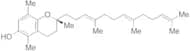
CAS:β-Tocopherol is a type of product known as a naturally occurring form of vitamin E, which is a crucial lipid-soluble antioxidant. This compound is sourced primarily from plant-based oils, such as those derived from nuts, seeds, and vegetables. As an antioxidant, β-Tocopherol plays a pivotal role in the biological systems by scavenging free radicals. It interrupts the propagation of free radical chain reactions, thereby protecting cell membranes from oxidative damage. This is achieved through the donation of hydrogen atoms, which neutralize harmful free radicals.Formula:C28H48O2Purity:Min. 95%Molecular weight:416.68 g/mol











![4-[[trans-4-(2-methoxyethoxy)cyclohexyl]amino]-1-methyl-6-(5-thiazolyl)-2(1H)-Quinolinone](/_next/image/?url=https%3A%2Fstatic.cymitquimica.com%2Fproducts%2FTR%2Fthumb-webp%2FM349560.webp&w=3840&q=75)