Nucleosides
Found 3569 products of "Nucleosides"
6-Amino-4-hydroxyamino-2-(b-D-ribofuranosyl)-2H-pyrazolo[3,4-d]pyrimidine
6-Amino-4-hydroxyamino-2-(b-D-ribofuranosyl)-2H-pyrazolo[3,4-d]pyrimidine is a novel synthetic ribonucleotide that inhibits the growth of tumor cells by interfering with DNA synthesis. This compound has been shown to inhibit the replication of HIV and herpes simplex virus type 1. The phosphoramidite monomer is readily available and can be synthesized in high purity and high quality. 6-Amino-4-hydroxyamino-2-(b-D-ribofuranosyl)-2H-pyrazolo[3,4-d]pyrimidine is a modified nucleoside that is activated by phosphorylation at the 5' position. CAS No.: 10266890
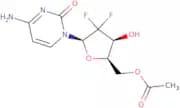
Purity:Min. 95%5'-O-Acetyl-2'-deoxy-2',2'-difluorocytidine
5'-O-Acetyl-2'-deoxy-2',2'-difluorocytidine is a novel nucleoside that can be used as an antiviral and anticancer agent. It has shown to be more potent than other nucleosides in inhibiting the synthesis of viral DNA and RNA, which makes it a potential candidate for treating HIV infection and cancer. This drug can also act as an activator by stimulating the production of deoxyribonucleotides and ribonucleotides. 5'-O-Acetyl-2'-deoxy-2',2'-difluorocytidine has been shown to have high purity and quality, making it a good candidate for use in various fields of research.
Formula:C11H13F2N3O5Purity:Min. 98 Area-%Color and Shape:PowderMolecular weight:305.23 g/molRef: 3D-NA10690
Discontinued product2'-Deoxy-5-propynyluridine
CAS:2'-Deoxy-5-propynyluridine is a nucleoside that is naturally synthesized in the body. It is an intermediate in the synthesis of pyrimidine nucleotides and has been shown to be useful for the treatment of cardiac arrhythmias. 2'-Deoxy-5-propynyluridine has also been found to have a stabilizing effect on RNA, enhancing its biological relevance. This compound can be used as a fluorescent probe and can be used to study transcriptional regulation mechanisms.
Formula:C12H14N2O5Purity:Min. 95%Color and Shape:PowderMolecular weight:266.26 g/molRef: 3D-ND02838
Discontinued product7-Deaza-2'-deoxy-7-iodoadenosine
CAS:7-Deaza-2'-deoxy-7-iodoadenosine (7DADI) is a modified nucleoside that has antiviral and anticancer properties. It is synthesized by the reaction of 2'-deoxyadenosine with iodine in the presence of an activator such as sodium hypochlorite. 7DADI binds to ribonucleosides, forming a phosphoramidate bond at the 3' position, which leads to inhibition of viral RNA synthesis and DNA replication. This drug also inhibits the growth of cancer cells by inhibiting DNA synthesis and protein synthesis. 7DADI is novel because it is not found in nature or produced by any other organism.
Formula:C11H13IN4O3Purity:Min. 98 Area-%Molecular weight:376.16 g/molN2-Isobutyryl-N-trityl-morpholino guanine
CAS:N2-Isobutyryl-N-trityl-morpholino guanine is a synthetic nucleoside analogue. It has been shown to be an activator of ribonucleotide reductase, and it is a potential anticancer agent. N2-Isobutyryl-N-trityl-morpholino guanine has also been shown to inhibit the replication of DNA and RNA viruses. This compound is being studied for its possible use in the treatment of HIV infection, as well as other viral infections that affect the central nervous system.
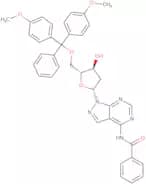
Purity:Min. 95%8-Aza-N6-benzoyl-7-deaza-2'-deoxy-5'-O-DMT-adenosine
CAS:8-Aza-N6-benzoyl-7-deaza-2'-deoxy-5'-O-DMT-adenosine is a nucleoside analog that has been modified by replacing the ribose moiety with deoxyribose. This modification increases its stability in vivo and in vitro. 8-Aza-N6-benzoyl-7-deaza-2'-deoxy-5'-O-DMT adenosine is an activator of DNA polymerase, which can be used to synthesize DNA. It is also an antiviral agent, active against herpes simplex virus type 1 and 2, vaccinia virus, and cytomegalovirus. This compound has shown promising anticancer activity against human breast cancer cells grown in culture.
Formula:C38H35N5O6Purity:Min. 95%Molecular weight:657.71 g/mol5'-O-DMT-5-(furan-2-yl)-2'-O-methylcytidine
5'-O-DMT-5-(furan-2-yl)-2'-O-methylcytidine is a novel nucleoside that can be used as a drug for the treatment of cancers. It is an analog of cytidine, which inhibits the synthesis of DNA and RNA, thereby preventing the replication of cancer cells. 5'-O-DMT-5-(furan-2-yl)-2'-O-methylcytidine has been shown to have antiviral activity against HIV and hepatitis B virus in vitro. The compound also has anticancer activity and is a phosphoramidite monophosphate. This compound is soluble in water and is available at high purity with CAS No. 89937-60-4.
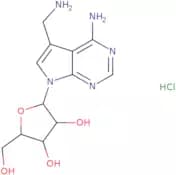
Purity:Min. 95%7-(Aminomethyl)-7-deazaadenosine
CAS:7-(Aminomethyl)-7-deazaadenosine is a nucleoside that has antiviral and anticancer properties. It is a novel compound, and its synthesis involves the use of activated 2′-deoxyribonucleosides. This compound is synthesized by reacting 7-amino-7-deazaguanine with an appropriate phosphoramidite at room temperature in the presence of an activator such as ammonium hydroxide or pyridine. The product can be purified by recrystallization from methanol, followed by chromatography on silica gel using a gradient elution system. The purity of this compound can be determined by HPLC analysis with UV detection at 254 nm.
br>br>Formula:C12H17N5O4Purity:Min. 95%Molecular weight:295.29 g/mol7-Deaza-2'-deoxy-7-iodoguanosine
CAS:The phosphoramidite 7-Deaza-2'-deoxy-7-iodoguanosine is a modified nucleotide that is used in the synthesis of DNA. This compound has antiviral and anticancer properties, as it inhibits viral replication by preventing the synthesis of viral RNA or DNA. It also prevents the production of cancer cells by inhibiting ribonucleotide reductase, an enzyme that reduces ribonucleotides to deoxyribonucleotides for DNA synthesis. The purity of this product is high and the novel nature of this product makes it a valuable reagent for research.
Formula:C11H13IN4O4Purity:Min. 97 Area-%Molecular weight:392.16 g/molN′-[9-(2-Deoxy-2-fluoro-β-D-arabinofuranosyl)-6,9-dihydro-6-oxo-1H-purin-2-yl]-N,N-dimethylmethanimidamide
CAS:Please enquire for more information about N′-[9-(2-Deoxy-2-fluoro-β-D-arabinofuranosyl)-6,9-dihydro-6-oxo-1H-purin-2-yl]-N,N-dimethylmethanimidamide including the price, delivery time and more detailed product information at the technical inquiry form on this page
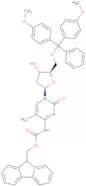
Formula:C13H17FN6O4Purity:Min. 95%Molecular weight:340.31 g/mol2'-Deoxy-5’-O-DMT-N4-Fmoc-5-methylcytidine
CAS:2'-Deoxy-5'O-DMT-N4-Fmoc-5-methylcytidine is a modified nucleoside that is used to synthesize antiviral ribonucleosides and deoxyribonucleosides. It can be used to synthesize novel anticancer drugs, which are effective against tumor cells.
Purity:Min. 95%5-(3-Hydroxypropyn-1-yl)uridine
5-(3-Hydroxypropyn-1-yl)uridine is a modified nucleoside that can be used as an antiviral or anticancer drug. It is an activator of the enzyme ribonucleotide reductase, which converts ribonucleotides to deoxyribonucleotides. 5-(3-Hydroxypropyn-1-yl)uridine has been shown to inhibit the growth of various cancer cells in vitro and in vivo. This drug has also been shown to have antiviral activity against herpes simplex virus type 1 (HSV-1).
Purity:Min. 95%6-O-Methyl-5’(R)-C-methylinosine
6-O-Methyl-5’(R)-C-methylinosine is a modified nucleoside that is an antiviral agent. It inhibits the synthesis of viral DNA and RNA by inhibiting the activity of ribonucleotide reductase. 6-O-Methyl-5’(R)-C-methylinosine has been shown to inhibit the growth of certain cancer cells and may be useful in treating prostate cancer. This drug has been synthesized from deoxyribonucleosides and diphosphate, which are phosphoramidites that were used as starting materials. 6-O-Methyl-5’(R)-C-methylinosine was first described in a patent in 1979, with CAS number 827076.
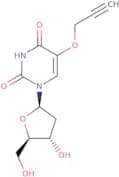
Purity:Min. 95%2'-Deoxy-5-propargyloxyuridine
CAS:2'-Deoxy-5-propargyloxyuridine is a synthetic compound that inhibits the herpes simplex virus by inhibiting thymidylate synthase, an enzyme in the synthesis of DNA. It is used to study the growth rate of herpes virus and has been shown to inhibit murine leukemia L1210 and human l1210 cells at concentrations of 10-20 μg/mL. 2'-Deoxy-5-propargyloxyuridine has also been shown to have inhibitory activities against other viruses, such as polio virus and influenza virus. 2'-Deoxy-5-propargyloxyuridine inhibits biosynthesis by binding to enzymes involved in the synthesis of nucleic acids. The inhibitory dose for this compound is not yet known, but it has been shown to have an inhibitory effect on cell culture when preincubated with cells before infection with herpes simplex virus.
Formula:C12H14N2O6Purity:Min. 95%Color and Shape:PowderMolecular weight:282.26 g/molRef: 3D-ND08234
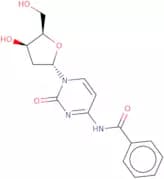
Discontinued productN4-Benzoyl-2'-deoxy-a-cytidine
CAS:N4-Benzoyl-2'-deoxy-a-cytidine is a novel, modified nucleoside that has shown anticancer and antiviral activity. It is synthesized by the enzymatic oxidation of 2'-deoxyadenosine with benzoyl chloride and sodium bicarbonate. N4-Benzoyl-2'-deoxy-a-cytidine has been shown to activate transcription, increase DNA synthesis, and inhibit virus replication. It also inhibits bacterial growth, but does not appear to have any effect on mammalian cells.Formula:C16H17N3O5Purity:Min. 95%Color and Shape:PowderMolecular weight:331.32 g/molRef: 3D-NB08374
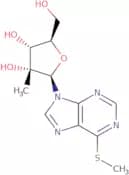
Discontinued product2'-C-Methyl-6-S-methyl-6-thioinosine
CAS:2'-C-Methyl-6-S-methyl-6-thioinosine is a modified nucleoside that can be used as an antiviral and anticancer agent. It has been shown to activate the immune system by inducing cytokine production, which leads to increased cytotoxicity against tumor cells. 2'-C-Methyl-6-S-methyl-6-thioinosine has also been shown to inhibit DNA synthesis and induce apoptosis in cancer cells. This product is of high purity and quality, with a CAS number of 172722-76-8.
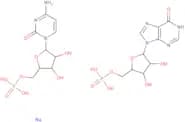
Purity:Min. 95%Polyinosinic-polycytidylic acid sodium salt
CAS:Polyinosinic acid-polycytidylic acid (Poly I:C), an agonist of TLR3 toll-like receptors, is a synthetic double-stranded RNA analog, consisting of polyinosinic acid (poly I) paired with polycytidylic acid (poly C), forming a stable duplex structure. PolyI:C stimulates the secretion of pro-inflammatory cytokines and type I interferon through its interaction with endosomal Toll-like receptor 3 (TLR-3) and the cytoplasmic receptors melanoma differentiation-associated gene 5 (MDA-5) and retinoic acid-inducible gene I (RIG-I). This immunostimulant activity makes Poly I:C a useful vaccine adjuvant and is used in vaccine formulations. Poly I:C and its stabilized analogs (e.g., poly-ICLC) are also being actively researched for their dual role in oncology: directly targeting tumors and acting as immune potentiators. For example Poly I:C can induce apoptosis in tumor cells and stimulate immunogenic cell death and is therefore being explored alongside chemotherapy, radiotherapy, and checkpoint inhibitors, helping to overcome resistance mechanisms and strengthen treatment outcomes. We can supply PolyI:C to all stages of your project - from R&D and preclinical phases right up to GMP commercial manufacture. Contact our team for custom Poly I:C products.
For more on poly I:C read out blog 'Poly I:C: A Vaccine Adjuvant With Oncological Potential.'Formula:(C10H13N4O8P)x•(C9H14N3O8P)x•NaxColor and Shape:White PowderRef: 3D-TP36521
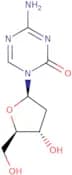
Discontinued productDecitabine
CAS:A synthetic cytosine analogue that incorporates into DNA and prevents DNA methylation via DNA (cytosine-5)-methyltransferase 1 (DNMT1) inhibition. Demonstrated potent anti-leukaemic effects attributed to cell cycle arrest and induction of apoptosis. Has anti-growth effects on solid tumor cell lines.
Formula:C8H12N4O4Purity:Min. 98 Area-%Color and Shape:White PowderMolecular weight:228.21 g/mol3,N6-Dimethyl-2-deoxyadenosine
3,N6-Dimethyl-2-deoxyadenosine is a synthetic nucleoside that is an activator of DNA polymerase. It has been shown to inhibit the growth of cancer cells and has antiviral properties.
Purity:Min. 95%2'-Deoxyguanosine-5'-carboxylic acid
CAS:2'-Deoxyguanosine-5'-carboxylic acid is a synthetic nucleoside that has antiviral and anticancer properties. It is an activator of DNA polymerase, which is used in the synthesis of DNA. 2'-Deoxyguanosine-5'-carboxylic acid also inhibits the activity of ribonucleotide reductase and deoxyribonucleotide reductase, which are enzymes that catalyze the conversion of ribose-5-phosphate to deoxyribose-5-phosphate. This substance also blocks viral replication by inhibiting RNA synthesis in cells infected with HIV or herpes simplex virus type 1.
Formula:C10H11N5O5Purity:Min. 95%Molecular weight:281.23 g/mol
![6-Amino-4-hydroxyamino-2-(b-D-ribofuranosyl)-2H-pyrazolo[3,4-d]pyrimidine](/_next/image/?url=https%3A%2Fstatic.cymitquimica.com%2Fproducts%2F3D%2Fthumb-webp%2FNA162982.webp&w=3840&q=75)





![N′-[9-(2-Deoxy-2-fluoro-β-D-arabinofuranosyl)-6,9-dihydro-6-oxo-1H-purin-2-yl]-N,N-dimethylmethani…](/_next/image/?url=https%3A%2Fstatic.cymitquimica.com%2Fproducts%2F3D%2Fthumb-webp%2FNF183584.webp&w=3840&q=75)