Nucleosides
Found 3569 products of "Nucleosides"
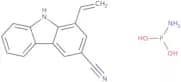
3-Cyanovinylcarbazole phosphoramidite
CAS:3-Cyanovinylcarbazole phosphoramidite is a novel compound that has not been previously described. It is a deoxyribonucleoside monophosphate and can be used as an anticancer agent. 3-Cyanovinylcarbazole phosphoramidite is also an antiviral, which can inhibit the synthesis of viral DNA. The modified nucleosides in this compound are synthesized by modifying the ribonucleotide with a cyanovinyl group at the C-3 position, which can be used as phosphoramidites for DNA synthesis.
Formula:C50H53N4O6PPurity:Min. 95%Color and Shape:PowderMolecular weight:836.95 g/molRef: 3D-PC31915
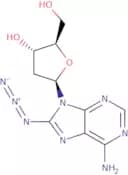
Discontinued product8-Azido-2'-deoxyadenosine
CAS:8-azido-2-deoxyadenosine is an azide funcationalised nuceleoside
Formula:C10H12N8O3Purity:Min. 95%Color and Shape:PowderMolecular weight:292.25 g/molRef: 3D-NA44903
Discontinued product5'-O-Trityluridine
CAS:5'-O-Trityluridine is a nucleoside analogue that has been prepared as an oriented, oxidized, hydrogenated, xylene derivative of uridine. It is composed of ribofuranoside and uridine. The orientation is controlled by the use of trityl groups on the 5' and 3' hydroxyl groups. The alkali metal salt isomers are analysed using HPLC and GC. This compound interacts with phosphotriesters and cyclic phosphodiesters.
Formula:C28H26N2O6Purity:Min. 95%Color and Shape:White Off-White PowderMolecular weight:486.52 g/molRef: 3D-NT06665
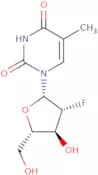
Discontinued productClevudine
CAS:Clevudine is a synthetic pyrimidine analogue effective against the hepatitis B virus (HBV). Once inside the cell, it is converted into its active forms, clevudine monophosphate and clevudine triphosphate. The triphosphate form competes with thymidine to be incorporated into viral DNA, leading to DNA chain termination and inhibition of the HBV DNA polymerase (reverse transcriptase). Due to its long half-life, clevudine significantly reduces covalently closed circular DNA (cccDNA), making relapse less likely after treatment ends.
Formula:C10H13FN2O5Purity:Min. 95%Color and Shape:White PowderMolecular weight:260.22 g/molRef: 3D-NC09470
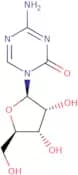
Discontinued product5-Azacytidine
CAS:An azanucleoside and epigenetic modulator that interferes with nucleic acid metabolism. The compound gets incorporated into RNA and inhibits ribonucleotide reductase subunit RRM2 in leukemia cell lines. Intracellularly, 5-azacytidine can get converted into 2′-deoxy-5-azacytidine (decitabine) and subsequently incorporated in DNA, where it irreversibly inhibits DNMT1 methyltransferase. In human epithelial cell lines, this compound decreases Src-activated expression of a histone chaperone CAF1 and inhibits cell motility and invasiveness.
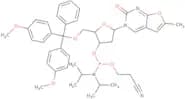
Formula:C8H12N4O5Purity:Min. 95%Color and Shape:White Off-White PowderMolecular weight:244.21 g/molFurano-dt cep
CAS:Furano-dt cep is a novel antiviral drug that has been shown to inhibit the production of viral nucleic acid and to activate the immune system. Furano-dt cep is a phosphoramidite compound that is synthesized from ribonucleosides and deoxyribonucleosides, which are modified with 2,2-dithiobis(propionitrile). Furano-dt cep binds to the 5'-terminal phosphate group on the DNA strand, preventing RNA synthesis. Furano-dt cep also inhibits tumor growth by causing cell death through apoptosis.
Formula:C42H49N4O8PPurity:Min. 95%Molecular weight:768.8 g/mol3’-Azido-3’-deoxy-2-thiouridine
CAS:3’-Azido-3’-deoxy-2-thiouridine is an antiviral agent that is used to synthesize phosphoramidites for the preparation of modified oligonucleotides. 3’-Azido-3’-deoxy-2-thiouridine has been shown to inhibit cancer growth and induce apoptosis in cancer cells, suggesting that it may have anticancer properties. It is also a novel deoxyribonucleoside that can be used as a building block for the synthesis of ribonucleosides. 3’-Azido-3’-deoxy-2-thiouridine is a high quality product with high purity and excellent activator properties. This product has CAS No. 2305416–00–4 and can be used in pharmaceuticals, biotechnology, and other chemical applications.
Formula:C9H11N5O4SPurity:Min. 95%Molecular weight:285.28 g/mol9-(3'-O-Methyl-b-D-xylofuranosyl)adenine
9-(3'-O-methyl-β-D-xylofuranosyl)adenine is a synthetic nucleoside that is an activator of viral DNA polymerase. 9-(3'-O-methyl-β-D-xylofuranosyl)adenine is a novel nucleoside that has been shown to be active against both DNA and RNA viruses. This compound also has anticancer activity. 9-(3'-O-methyl-β-D-xylofuranosyl)adenine is the phosphorylated form of adenine and has high purity and quality. The CAS number for this product is 53110-86-2.
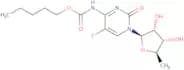
Purity:Min. 95%Capecitabine
CAS:Pro-drug of 5-FU; anti-cancer agent
Formula:C15H22FN3O6Purity:Min. 95%Color and Shape:PowderMolecular weight:359.35 g/molRef: 3D-ND09160
Discontinued productFmoc morpholino adenosine monomer
Fmoc-morpholino adenosine monomer is a synthetic nucleoside that is used in the synthesis of oligonucleotides for use as antiviral and anticancer agents. Fmoc-morpholino adenosine monomer has been synthesized by modifying the deoxyribonucleosides, which are then phosphoramidite derivatives of ribonucleosides. This novel chemical compound has shown high activity against DNA-dependent RNA polymerase, suggesting that it may be an effective antiviral agent.
Formula:C34H32ClN7O7PPurity:Min. 95%Color and Shape:PowderMolecular weight:717.09 g/mol(2R,3R,4S,5R)-2-(4-Aminothieno[3,4-d]pyrimidin-7-yl)-5-(hydroxymethyl)tetrahydrofuran-3,4-diol
CAS:(2R,3R,4S,5R)-2-(4-Aminothieno[3,4-d]pyrimidin-7-yl)-5-(hydroxymethyl)tetrahydrofuran-3,4-diol is a nucleoside analog for research purposesFormula:C11H13N3O4SPurity:Min. 95%Color and Shape:PowderMolecular weight:283.3 g/molRef: 3D-FA165910
Discontinued productThymidine-5'-triphosphate trisodium
CAS:Thymidine-5'-triphosphate or dTTP, is a nucleotide used by the cell to synthesize DNA molecules. Thymidine-5'-triphosphate is used in molecular biology techniques and assays as a substrate of the enzyme DNA polymerase, e.g. polymerase chain reaction (PCR), DNA sequencing, pyrosequencing reactions. Salt form of thymidine-5'-triphosphate has been used in a newly developed detection system for SARS-CoV-2 that combines bioluminescence in real-time (BART) with reverse-transcriptase loop-mediated amplification (RT-LAMP).Formula:C10H17N2O14P3•Na3Purity:(%) Min. 90%Color and Shape:White PowderMolecular weight:551.14 g/molRef: 3D-NT05748
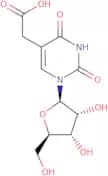
Discontinued product5-(Carboxymethyl)uridine
CAS:5-(Carboxymethyl)uridine is an uridine compound that has been shown to inhibit protein synthesis in cultured cells. It binds to the ribosome and inhibits protein synthesis by inhibiting the formation of peptide bonds. 5-Carboxymethyl-uridine has been shown to be effective against two strains of bacteria, Escherichia coli and Staphylococcus aureus, in cell culture experiments. The inhibition of bacterial protein synthesis was shown to be dose-dependent for both strains. The mechanism of action is believed to be due to its binding to the ribosome and inhibiting the formation of peptide bonds.
Formula:C11H14N2O8Purity:Min. 95 Area-%Color and Shape:White Off-White PowderMolecular weight:302.24 g/molRef: 3D-NC159474
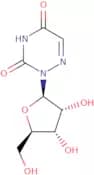
Discontinued product6-Azauridine
CAS:Inhibitor of uridine monophosphate synthase
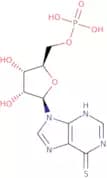
Formula:C8H11N3O6Purity:Min. 95%Color and Shape:White PowderMolecular weight:245.19 g/mol6-Thioinosine 5'-monophosphate
CAS:6-Thioinosine 5'-monophosphate (6TIMP) is a hydrogen bond donor that possesses inhibitory properties against protein synthesis. It has been shown to have an anti-inflammatory effect and can be used for the treatment of inflammatory bowel disease. 6TIMP is also able to inhibit the bcr-abl kinase, which is implicated in the development of renal cell cancer. 6TIMP can be administered intravenously or orally and penetrates tissues well. The rate at which it enters cells is dependent on the transport rate, which is determined by its acidity. 6TIMP has been shown to cause DNA damage, leading to apoptosis and cell death in carcinoma cell lines. The mechanism of action appears to involve inhibition of cellular protein synthesis, acid formation, and DNA damage.
Formula:C10H13N4O7PSPurity:Min. 95%Color and Shape:PowderMolecular weight:364.27 g/molRef: 3D-NT10843
Discontinued product2'-Deoxy-5-iodocytidine
CAS:2'-Deoxy-5-iodocytidine is a modified monophosphate of deoxyribonucleosides. It is used as an activator in the synthesis of phosphoramidites and nucleosides, as well as in antiviral and anticancer drug development. This product has been shown to have high purity and quality. 2'-Deoxy-5-iodocytidine has also been shown to be active against HIV, hepatitis B, herpes simplex virus type 1, and cytomegalovirus.
Formula:C9H12IN3O4Purity:Min. 98 Area-%Molecular weight:353.11 g/molRef: 3D-W-203284
Discontinued product1-(2'-Deoxy-5'-O-DMT-b-D-xylofuranosyl)cytosine
1-(2'-Deoxy-5'-O-DMT-b-D-xylofuranosyl) cytosine is a modified nucleoside that is phosphoramidite activated by the addition of a diphosphate. The diphosphate group on the sugar moiety may be hydrolyzed to form 1-(2'-deoxy-5'-O-DMT-b-D-xylofuranosyl)cytosine monophosphate. Cytidine is an antiviral and antifungal agent that is used in the treatment of herpes zoster, chronic myeloid leukemia, and other cancers. It has been shown to inhibit DNA synthesis and viral replication in vitro.
!--More-->
Cytidine is an antiviral and antifungal agent that is used in the treatment of herpes zoster, chronic myeloid leukemia, and other cancers. It has been shown to inhibit DNAPurity:Min. 95%1-(3'-Deoxy-3'-fluoro-b-D-xylofuranosyl)cytosine
1-(3'-Deoxy-3'-fluoro-b-D-xylofuranosyl)cytosine is a novel nucleoside that has been synthesized and characterized as a phosphoramidite monophosphate. It is a high purity, synthetic, DNA nucleoside that has shown antiviral and anticancer activities in vitro. 1-(3'-Deoxy-3'-fluoro-b-D-xylofuranosyl)cytosine is an activator of DNA polymerase δ and can be used as a modified nucleotide in nucleic acid synthesis. This compound has the CAS number 4384802-52-5.
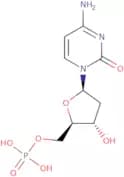
Purity:Min. 95%2'-Deoxycytidine-5'-monophosphate
CAS:2'-Deoxycytidine-5'-monophosphate (dCMP) is a nucleotide that is synthesized by the enzyme cytidine monophosphate synthetase. It has been shown to inhibit the activity of many enzymes, including those involved in DNA synthesis and repair. The incorporation of dCMP into DNA can be used as a probe for studying various biological processes, such as radiation damage and cellular physiology. In addition, it has been shown that dCMP inhibits the growth of human osteosarcoma cells. This drug is also used in combination preparations with other drugs, such as with 5-fluorouracil and doxorubicin, to treat cancer tumors.Formula:C9H14N3O7PPurity:Min. 99 Area-%Color and Shape:White PowderMolecular weight:307.2 g/molRef: 3D-ND02993
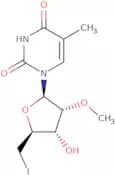
Discontinued product5’-Deoxy-5’-iodo-2’-O-methyl-5-methyluridine
CAS:5’-Deoxy-5’-iodo-2’-O-methyl-5-methyluridine is a monophosphate nucleoside. It is an antiviral and anticancer agent that inhibits viral replication by inhibiting the synthesis of viral DNA. It also has been shown to have antitumor activity, but it can only be used in cancer treatments when combined with other drugs such as 5FU. The chemical formula for 5’-Deoxy-5’-iodo-2’O methyl -5 methyl uridine is C10H14N4O8P.
Purity:Min. 95%





![(2R,3R,4S,5R)-2-(4-Aminothieno[3,4-d]pyrimidin-7-yl)-5-(hydroxymethyl)tetrahydrofuran-3,4-diol](/_next/image/?url=https%3A%2Fstatic.cymitquimica.com%2Fproducts%2F3D%2Fthumb-webp%2FFA165910.webp&w=3840&q=75)