


Nucleosides
Found 3569 products of "Nucleosides"
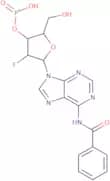
N-Benzoyl-2'-deoxy-2'-fluoroadenosine, 3'-(hydrogen phosphonate)
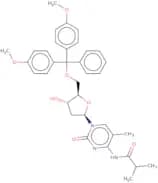
CAS:N-Benzoyl-2'-deoxy-2'-fluoroadenosine, 3'-(hydrogen phosphonate) is a novel nucleoside that inhibits the replication of virus by binding to viral RNA. It is synthesized by reacting 2'-deoxy-2'-fluoroadenosine with pentafluorophenyl phosphate in the presence of an activator such as dicyclohexylcarbodiimide or N-hydroxysuccinimide. The synthesis of N-benzoyl-2'-deoxy-2'-fluoroadenosine, 3'-(hydrogen phosphonate) can be accomplished using commercially available nucleosides and phosphoramidites.Purity:Min. 95%2'-Deoxy-5'-O-DMT-N4-isobutyryl-5-methylcytidine
CAS:The chemical compound 2'-deoxy-5'-O-dimethyltryptophan 4-isobutyryl-5-methylcytidine is an antiviral and anticancer agent. It is a nucleoside analog that inhibits the synthesis of DNA, RNA, and proteins by inhibiting the activity of various enzymes in the cell. This agent also acts as an activator that binds to DNA, preventing transcription of genes. The modified nucleotide has been used in research to study the effects on cancer cells and HIV cells.Purity:Min. 95%6-Amino-1-(2'-deoxy-b-D-ribofuranosyl)-4-hydrazino-1H-pyrazolo[3,4-d]pyrimidine
6-Amino-1-(2'-deoxy-b-D-ribofuranosyl)-4-hydrazino-1H-pyrazolo[3,4-d]pyrimidine (6ADRP) is a synthetic nucleoside that is used as an activator of ribonucleosides and diphosphates in DNA synthesis. 6ADRP has antiviral activity against HIV and herpes simplex virus type 1. It binds to the viral DNA polymerase and prevents the addition of nucleotides to the growing DNA strand. 6ADRP is phosphorylated by T7 kinase to form the active metabolite, 6-amino-1-(2'-deoxy-[alpha]-D-ribofuranosyl)-5'-triphosphate (6ATP), which inhibits viral replication by preventing the formation of RNA primers.Purity:Min. 95%8-Benzyloxy-2'-deoxyguanosine
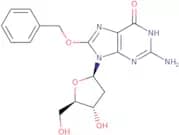
CAS:8-Benzyloxy-2'-deoxyguanosine is a dinucleoside that is synthesised from uracil and hydrogenated 8-hydroxyquinoline. The synthesis of 8-benzyloxy-2'-deoxyguanosine was achieved by cyclic photocyclization of 2,4,6-trichlorobenzaldehyde with 2,4,6-trimethoxyphenylacetone in the presence of sodium nitrite. This compound has been used for the quantification of DNA damage caused by irradiation or sodium chloride. 8-Benzyloxy-2'-deoxyguanosine has also been shown to inhibit the polymerase chain reaction (PCR) amplification of oligodeoxynucleotides.Formula:C17H19N5O5Purity:Min. 95%Color and Shape:Off-White To Brown SolidMolecular weight:373.36 g/molCoenzyme A trilithium salt
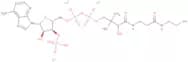
CAS:Coenzyme A trilithium salt is a synthetic cofactor that is used in the synthesis of long-chain fatty acids. It is membrane permeable and has minimal toxicity, making it an attractive candidate for treating hepatic steatosis. Coenzyme A trilithium salt also activates human mitochondrial beta-oxidation by increasing the availability of substrate and enhancing the expression of genes involved in beta-oxidation. This molecule has been shown to be effective in improving the symptoms of X-linked adrenoleukodystrophy (X-ALD) by stimulating creatine kinase activity and suppressing lysosomal accumulation of long chain fatty acids.
Formula:C21H33Li3N7O16P3SPurity:Min. 80%Color and Shape:White Off-White PowderMolecular weight:785.33 g/molN4-Methylcytidine 5'-triphosphate triethylammonium salt
N4-Methylcytidine 5'-triphosphate triethylammonium salt is a novel nucleoside analog that inhibits the growth of tumor cells. It is synthesized by reacting N4-methylcytidine with phosphoramidite in an amine base, and then treated with triethylamine to produce a triethylammonium salt. This nucleoside analog inhibits DNA synthesis by inhibiting the enzyme ribonucleotide reductase, which converts ribonucleotides to deoxyribonucleotides. The resulting monophosphate compound has been shown to be effective in cancer treatment and may also be used as an antiviral agent.Formula:C10H18N3O14P3Purity:Min. 95%Molecular weight:497.18 g/molGuanosine 5'-monophosphate calcium salt
CAS:guanosine 5'-monophosphate calcium salt is a dietary supplement that contains calcium carbonate and guanosine 5'-monophosphate. This product is a light-exposed supplement that contains phenolic acids, polycarboxylic acids, and cyclic nucleotide phosphodiesterases. It is used to maintain ATP levels in the body. Guanosine 5'-monophosphate calcium salt should not be taken by people with a history of kidney stones or those taking other supplements containing calcium. This product may contain preservatives, excipients, or pharmaceutical ingredients for potency and stability purposes.
Formula:C10H12CaN5O8PPurity:Min. 95%Molecular weight:401.28 g/mol3'-O-Methylguanosine 5'-triphosphate lithium
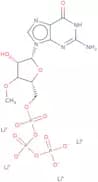
CAS:3'-O-Methylguanosine 5'-triphosphate lithium is a nucleotide that has been synthesized and characterized. It is a biochemical regulatory molecule that is involved in the synthesis of DNA, RNA, and proteins. 3'-O-Methylguanosine 5'-triphosphate lithium binds to the guanine nucleotide binding protein G, which acts as an allosteric activator of the enzyme ribonucleotide reductase. The reconstituted enzyme system containing 3'-O-methylguanosine 5'-triphosphate lithium has demonstrated a high level of fidelity in the replication of dna templates.
Formula:C11H18N5O14P3•Li4Purity:Min. 95%Color and Shape:PowderMolecular weight:564.97 g/mol8-Hydroxyadenosine
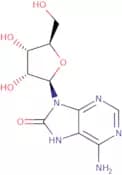
CAS:8-Hydroxyadenosine (8-OHdG) is a purine nucleoside that is formed as a result of oxidative DNA damage. It is not an essential metabolite because it can be synthesized de novo. 8-OHdG has been shown to have potent anti-tumor activity in vitro and in vivo, which may be due to its ability to inhibit DNA replication. The biological effects of 8-OHdG are attributed to its ability to form hydrogen bonds with guanine residues in the double helix, and electrochemical detectors have been developed for its detection.Formula:C10H13N5O5Purity:Min. 98 Area-%Color and Shape:PowderMolecular weight:283.25 g/molN6-([6-Aminohexyl]carbamoylmethyl)adenosine 5'-triphosphate lithium salt
CAS:N6-([6-Aminohexyl]carbamoylmethyl)adenosine 5'-triphosphate lithium salt is a monophosphate nucleoside that has been modified with a 6-aminohexylaminocarbonyl group. It is an antiviral and anticancer agent that inhibits the synthesis of DNA, RNA, and proteins. N6-[(6-Aminohexyl)carbamoylmethyl]adenosine 5'-triphosphate lithium salt is novel and high quality.Formula:C18H32N7O14P3·xLiPurity:Min. 95%2'-O-tert-Butyldimethylsilyl-5'-O-DMT-N3-methylcytidine 3'-CE phosphoramidite
2'-O-tert-Butyldimethylsilyl-5'-O-DMT-N3-methylcytidine 3'-CE phosphoramidite is a modified nucleoside that is synthesized by the reaction of 2'-deoxycytidine with bis(2,4,6-trichlorophenyl)carbonate in the presence of a base. 2'-O-tert-Butyldimethylsilyl-5'-O-DMT-N3 methylcytidine 3'-CE phosphoramidite has been shown to have anticancer activity and is used as an activator in the synthesis of oligonucleotides. This product is available as a white powder and can be used for research purposes only.Purity:Min. 95%6-Amino-9-(2',3'-dideoxy-2'-fluoro-β-D-arabinofuranosyl)purine
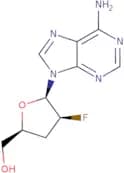
CAS:6-Amino-9-(2',3'-dideoxy-2'-fluoro-β-D-arabinofuranosyl)purine is a nucleoside analog that is used to treat HIV. It is a prodrug that undergoes phosphorylation by host cell kinases to form its active form, 2'-deoxycytidine monophosphate (2'DCPM). This drug has been shown to inhibit the replication of HIV in vitro and in vivo. 6-Amino-9-(2',3'-dideoxy-2'-fluoro-β-D-arabinofuranosyl)purine has antiviral potency against both group M and N HIV isolates. It also enhances polymerase chain reaction amplification of HIV DNA and can be used in tissue culture experiments to study the effects of drugs on the virus. Clinical trials have shown that 6-amino 9-(2',3'-dideoxy-2Formula:C10H12FN5O2Purity:Min. 95%Color and Shape:White PowderMolecular weight:253.24 g/mol2'-Deoxy-4'-thioadenosine
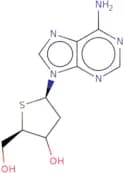
CAS:2'-Deoxy-4'-thioadenosine is a purine nucleoside that is synthesized from 4-thiouridine and phosphorylase. It is cytotoxic and has significant cytotoxicity against cultured cells. The cytotoxicity of 2'-deoxy-4'-thioadenosine was found to be due to its conversion to the triphosphate form in the cells, which inhibits both DNA synthesis and RNA synthesis. This drug also has an inhibitory effect on the growth of tumor cells by inhibiting ribosomal protein synthesis.Formula:C10H13N5O2SPurity:Min. 95%Molecular weight:267.31 g/mol2'-Deoxy-N6-DMF-5'-O-MMT-adenosine 3'-CE phosphoramidite
CAS:2'-Deoxy-N6-DMF-5'-O-MMT-adenosine 3'-CE phosphoramidite is a high purity, diphosphate nucleotide analog. It is an anticancer drug that inhibits DNA synthesis and can be used to treat cancer. The 2'-deoxy-N6-DMF moiety has been shown to inhibit the activity of DNA polymerase and other enzymes involved in DNA replication. This compound also has a novel mechanism of action that is not present in any other known anticancer drugs. CAS No. 195375-66-7.br>br>2'-Deoxy-N6-DMF 5'-O-MMT adenosine 3'-cephosphoramidite is often used as a building block for oligonucleotide synthesis because it is resistant to the removal of phosphate groups by alkaline phosphatases. The lack of phosphate groups makes this compound more stable than standard nucleotidesFormula:C42H51N8O5PPurity:Min. 95%Molecular weight:778.9 g/mol2'-C-Methyluridine
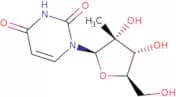
CAS:2'-C-Methyluridine is a synthetic nucleoside analog derived from uridine, modified with a methyl group at the 2'-carbon of the ribose sugar. This small chemical change has important implications for RNA biology, antiviral drug development, and biochemical research, especially in targeting RNA viruses.Formula:C10H14N2O6Purity:Min. 95%Color and Shape:PowderMolecular weight:258.23 g/molN6-Benzoyl-5'-O-benzoyl-2'-deoxyadenosine
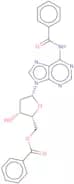
CAS:N6-Benzoyl-5'-O-benzoyl-2'-deoxyadenosine is an antiviral and anticancer compound. It has been shown to be active against a number of viruses, including human immunodeficiency virus type 1 (HIV-1), herpes simplex virus type 1, and influenza A virus. It also inhibits DNA polymerase α and β by competitive inhibition, preventing the incorporation of ribonucleotides into DNA. This compound may be used for the treatment of AIDS or as a cytostatic agent for the treatment of leukemia or lymphoma.Formula:C24H21N5O5Purity:Min. 95%Molecular weight:459.47 g/mol5'-O-Benzyl-D3-thymidine 3'-CE phosphoramidite
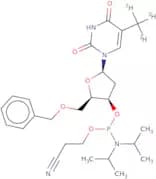
Controlled Product5'-O-Benzyl-D3-thymidine 3'-CE phosphoramidite is a novel 5'-O-benzyl modified nucleoside. It has antiviral, anticancer and monophosphate properties. It is also an activator of the diphosphate moiety and has been used in DNA synthesis and in the preparation of oligonucleotides. This compound has been shown to be an efficient inhibitor of HIV reverse transcriptase and human T cell leukemia virus type 1 (HTLV-1) replication. 5'-O-Benzyl-D3-thymidine 3'-CE phosphoramidite is an analogue of thymidine 3'-CMP that has been synthesized with a benzyl group on the 5' position.Formula:C26H34N4O6PD3Purity:Min. 95%Molecular weight:535.6 g/mol(R)-5',P'-Ester with thiodiphosphoric acid ((HO)2P(O)OP(S)(OH)2) adenosine
CAS:(R)-5',P'-Ester with thiodiphosphoric acid ((HO)2P(O)OP(S)(OH)2) adenosine is a nucleoside monophosphate. It has been shown to be an activator of the enzyme adenylate cyclase, which converts ATP into cyclic AMP, a second messenger in cell signaling. (R)-5',P'-Ester with thiodiphosphoric acid ((HO)2P(O)OP(S)(OH)2) adenosine does not have anticancer properties and does not inhibit the production of ribonucleotides or deoxyribonucleotides. This compound is synthesized using novel methods and is of high purity and quality.Formula:C10H12N5Na3O9P2SPurity:Min. 95%Molecular weight:509.21 g/mol5-Bromo-7-(2-C-methyl-b-D-ribofuranosyl)-7H-pyrrolo[2,3-d]pyrimidin-4-amine
CAS:5-Bromo-7-(2-C-methyl-b-D-ribofuranosyl)-7H-pyrrolo[2,3-d]pyrimidin-4-amine is a chemical compound that has antiviral and anticancer properties. It is synthesized by the reaction of 5,5'-dibromoimidazole with 4,4'-dimethoxytrityl chloride. This product is used as a building block in the synthesis of deoxyribonucleosides, modified phosphoramidites, and nucleosides. It also has high purity and high quality.Purity:Min. 95%8-Bromoguanosine 3',5'-cyclic monophosphate sodium salt
CAS:Activator of cGMP-dependent protein kinasesFormula:C10H10BrN5NaO7PPurity:Min. 95%Color and Shape:PowderMolecular weight:446.08 g/mol

![6-Amino-1-(2'-deoxy-b-D-ribofuranosyl)-4-hydrazino-1H-pyrazolo[3,4-d]pyrimidine](/_next/image/?url=https%3A%2Fstatic.cymitquimica.com%2Fproducts%2F3D%2Fthumb-webp%2FNA162940.webp&w=3840&q=75)


![N6-([6-Aminohexyl]carbamoylmethyl)adenosine 5'-triphosphate lithium salt](/_next/image/?url=https%3A%2Fstatic.cymitquimica.com%2Fproducts%2F3D%2Fthumb-webp%2FNA73270.webp&w=3840&q=75)



![5-Bromo-7-(2-C-methyl-b-D-ribofuranosyl)-7H-pyrrolo[2,3-d]pyrimidin-4-amine](/_next/image/?url=https%3A%2Fstatic.cymitquimica.com%2Fproducts%2F3D%2Fthumb-webp%2FNB14095.webp&w=3840&q=75)
