Nucleosides
Nucleosides are fundamental building blocks of nucleic acids, composed of a nitrogenous base attached to a sugar molecule. In this section, you can find a wide variety of nucleosides essential for research in molecular biology, biochemistry, and pharmacology. These compounds play crucial roles in the synthesis of DNA and RNA, and are also vital in various metabolic processes. Nucleosides are used in studying genetic material, developing antiviral and anticancer therapies, and understanding cellular mechanisms. At CymitQuimica, we provide high-quality nucleosides to support your research and development needs, ensuring purity and reliability for your experimental applications.
Found 3569 products of "Nucleosides"
Sort by
Purity (%)
0
100
|
0
|
50
|
90
|
95
|
100
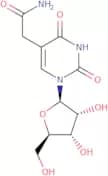
5-Carbamoylmethyluridine
CAS:5-Carbamoylmethyluridine is a nucleoside that is structurally related to uridine. It is synthesized from uridine by methyl esterification with carbamic acid and methoxycarbonyl chloride. 5-Carbamoylmethyluridine interacts with actin filaments and has been shown to alter the expression of messenger RNA in eukaryotes. 5-Carbamoylmethyluridine also acts as a competitive inhibitor of the formation of a ternary complex, which includes ATP, GTP, and UTP, at the level of ribonucleotide reductase. This inhibition leads to decreased synthesis of messenger RNA in cells.Formula:C11H15N3O7Purity:Min. 95 Area-%Color and Shape:White PowderMolecular weight:301.25 g/molBBQ-650-DT CEP
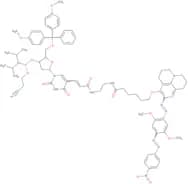
CAS:BBQ-650-DT CEP is an antiviral compound that is a phosphoramidite derivative of cytidine. BBQ-650-DT CEP has been shown to inhibit the replication of human immunodeficiency virus type 1 (HIV-1) and other retroviruses in vitro, and to inhibit tumor cell proliferation in vivo. BBQ-650-DT CEP also inhibits the synthesis of RNA and DNA, which may have anticancer properties. This compound has been shown to be active against leukemia cells, lymphoma cells, and various breast cancer cell lines. It has also been shown to induce apoptosis in leukemia cells.Formula:C76H89N12O15PPurity:Min. 95%Molecular weight:1,441.6 g/mol1-(2’-Deoxy-2’-fluoro-b-D-arabinofuranosyl)-N3-(2S)-(2-amino-3-carbonyl]propyluracil
CAS:1-(2’-Deoxy-2’-fluoro-β-D-arabinofuranosyl)-N3-(2S)-(2-amino-3-carbonyl]propyluracil is a novel, anticancer drug. It is active against both RNA and DNA viruses, such as HIV, influenza virus and herpes virus. 1-(2’-Deoxy-2’-fluoro-β-D-arabinofuranosyl)-N3-(2S)-(2-amino-3-carbonyl]propyluracil has been shown to be an activator for phosphoramidites in aqueous solution. This compound is of high purity with CAS No. 2072145–25–4. It is also a synthesized, monophosphate nucleoside that can be used in the production of modified nucleosides for therapeutic purposes or as antiviral agentsPurity:Min. 95%2,4,6-Trichloro-5-methylpyrimidine
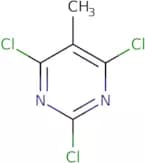
CAS:2,4,6-Trichloro-5-methylpyrimidine is a nucleoside for use in research applicationsFormula:C5H3Cl3N2Purity:Min. 95%Color and Shape:PowderMolecular weight:197.45 g/mol3'-O-Acetyl-5'-O-DMT-5-iodo-2'-O-methyuridine
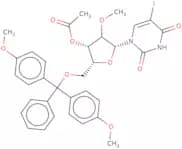
CAS:3'-O-Acetyl-5'-O-DMT-5-iodo-2'-O-methyuridine is a novel nucleoside analog with antiviral and anticancer activities. It is an activator that binds to the ribonucleotide reductase enzyme, which is essential for the production of RNA and DNA. This compound has been shown to inhibit the growth of several cancer cells in vitro.Purity:Min. 95%Cytarabine hydrochloride
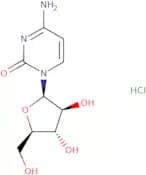
CAS:Anti-viral; anti-neoplasticFormula:C9H13N3O5·HClPurity:Min. 98 Area-%Color and Shape:White PowderMolecular weight:279.68 g/mol5'-O-p-Anisoyl-2'-deoxyuridine 3'-CE phosphoramidite
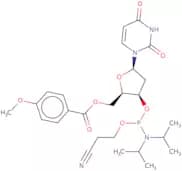
5'-O-p-Anisoyl-2'-deoxyuridine 3'-CE phosphoramidite is an anticancer nucleoside analog that inhibits viral replication. It is a modified nucleoside with a 5' anisoyl group and a 2' deoxyuridine moiety. This compound is synthesized by reacting the 5'-O-p-anisoyl-2'-deoxyuridine 3'-cyclohexylphosphate with phosphorus oxychloride to form the 5'-O-p-anisoyl-2'-deoxyuridine 3'-cyanoethyl phosphoramidite, which can be used for the synthesis of DNA or RNA. The phosphoramidite can also be used as an activator in polymerase chain reactions (PCR).Formula:C26H35N4O8PPurity:Min. 95%Molecular weight:562.55 g/molN4-Acetyl-5'-O-DMT-2'-O-methylcytidine
CAS:N4-Acetyl-5'-O-DMT-2'-O-methylcytidine is a cytidine analogue that has been synthesized to be used as an enzyme-linked probe. It is labelled with biotin and can be detected by binding to an antibody which has been labelled with a fluorescent tag. Cytidine analogues are synthesized on a solid phase and then cleaved from the support material. The spacer arm is added to the 5' end of the nucleotide and the 3'-OH group is modified with 2'-O-methyl groups. N4-Acetyl-5'-O-DMT-2'-O-methylcytidine has been shown to be sensitive in techniques such as solid phase synthesis, nucleic acid research, and immunoassays.Formula:C33H35N3O8Purity:Min. 95%Color and Shape:Off-White PowderMolecular weight:601.65 g/mol2'-Deoxy-5'-O-pixyluridine
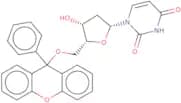
2'-Deoxy-5'-O-pixyluridine (2DPU) is a novel, synthetic nucleoside that is an active ingredient in antiviral and anticancer drugs. 2DPU has been shown to inhibit the replication of human immunodeficiency virus type 1 (HIV-1) by inhibiting the viral enzyme HIV reverse transcriptase. The phosphoramidite form of 2DPU is used as a building block for DNA synthesis and for the synthesis of other nucleosides. The monophosphate form of 2DPU is used in the synthesis of antiviral drugs, including acyclovir, zidovudine, and ribavirin.Formula:C28H24N2O6Purity:Min. 95%Molecular weight:484.51 g/mol2,8-Dimethyladenosine
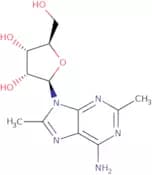
CAS:2,8-Dimethyladenosine is a methylated derivative of the purine nucleoside adenosine, in which methyl groups are added at the 2-position and 8-position of the adenine base.Formula:C12H17N5O4Purity:Min. 95%Color and Shape:White PowderMolecular weight:295.29 g/mol5'-O-DMT-thymidine 3'-O-succinate triethylammonium salt
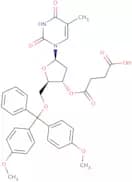
CAS:5'-O-DMT-thymidine 3'-O-succinate triethylammonium salt is a novel antiviral agent that inhibits viral replication by competing with natural nucleosides for incorporation into the viral DNA or RNA. The 5'-O-DMT group prevents the elimination of thymidine from the monophosphate form. This product has a high purity and quality, as well as potent antiviral activity against HIV and other viruses.Formula:C35H36N2O10·xC6H15NPurity:Min. 95%Color and Shape:PowderMolecular weight:745.86 g/mol3’-Deoxy-5-fluoro-3’-methyluridine
CAS:3’-Deoxy-5-fluoro-3’-methyluridine is a nucleoside that has antiviral and anticancer properties. It is synthesized from 5-fluorouracil, which is a prodrug that is activated by 3’-deoxy-5-fluoro-3’-methyl uridine to produce 5′,6′ difluorodeoxyadenosine. This compound can be used in the treatment of hepatitis B virus and hepatitis C virus infections. 3’-Deoxy-5-fluoro-3’ methyluridine has also been shown to inhibit the growth of cancer cells in vitro.Purity:Min. 95%1-(2'-O-4-C-Methylene-b-D-ribofuranosyl)adenine
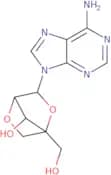
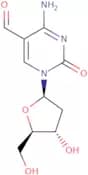
CAS:1-(2'-O-4-C-Methylene-b-D-ribofuranosyl)adenine is an important compound in the field of nucleoside chemistry and has potential applications in researchFormula:C11H13N5O4Purity:Min. 95%Color and Shape:White PowderMolecular weight:279.25 g/mol2'-Deoxy-5-formylcytidine
CAS:2'-Deoxy-5-formylcytidine is a nucleoside analog that is used as a chemotherapeutic agent. It is cytotoxic to cells by binding to DNA and preventing the synthesis of DNA, RNA, and protein. The drug has been shown to induce cellular senescence in human fibroblasts, which can be reversed by the addition of deuterium. 2'-Deoxy-5-formylcytidine also inhibits the production of reactive oxygen species (ROS) by inducing the expression of antioxidant enzymes such as superoxide dismutase 2 and glutathione peroxidase 1. The oxidation products are misincorporated into DNA strands, leading to intramolecular hydrogen bonds with cytosine bases. These modifications lead to denaturation of DNA and inhibition of transcription and replication. 2'-Deoxy-5-formylcytidine also interacts with oligodeoxynucleotides, which leads to misincFormula:C10H13N3O5Purity:Min. 97 Area-%Color and Shape:White PowderMolecular weight:255.23 g/mol7-Deaza-2'-deoxyxanthosine
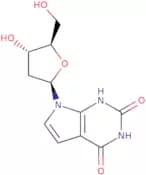
CAS:7-Deaza-2'-deoxyxanthosine is an oligodeoxynucleotide that is a substrate for the enzyme dUTPase. The allyl group on 7-deaza-2'-deoxyxanthosine is used to attach it to the 3' end of DNA, where it acts as a competitive inhibitor of RNA synthesis. The ethyl group at the end of the molecule is used to attach it to the 5' end of DNA, where it inhibits transcription and replication by binding with RNA polymerase. 7-Deaza-2'-deoxyxanthosine has been shown to be effective in preventing stenosis following coronary bypass surgery, as well as in treating heart disease by reducing levels of xanthosine.
Formula:C11H13N3O5Purity:Min. 95%Color and Shape:Beige PowderMolecular weight:267.24 g/mol5-Methoxycarbonylmethyluridine
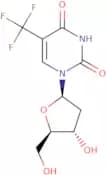
CAS:5-Methoxycarbonylmethyluridine is a nucleoside that is a precursor in the synthesis of other nucleotides. It has been shown to have potential as a biomarker for various diseases, such as metabolic disorders and hepatic steatosis. 5-Methoxycarbonylmethyluridine also inhibits the activity of methyltransferases, which are enzymes that catalyze the transfer of methyl groups from S-adenosylmethionine to substrates. It is also used as a model system for polymerase chain reaction in cancer research, because it has been shown to inhibit DNA replication by blocking the incorporation of uracil into DNA. 5-Methoxycarbonylmethyluridine has been found at high levels in fetal bovine serum and eukaryotic cells, but not in prokaryotes or cancerous tissues.Formula:C12H16N2O8Purity:Min. 95%Color and Shape:PowderMolecular weight:316.26 g/molTrifluorothymidine
CAS:Treats herpes-associated keratitis and keratoconjunctivitis; antineoplasticFormula:C10H11F3N2O5Purity:Min. 95%Color and Shape:PowderMolecular weight:296.2 g/molN4-Acetyl-2'-deoxy-5'-O-DMT-5-methylcytidine 3'-CE phosphoramidite
CAS:N4-Acetyl-2'-deoxy-5'-O-DMT-5-methylcytidine 3'-CE phosphoramidite is a novel nucleoside and deoxyribonucleoside that has been synthesized by the chemical modification of cytidine. It is an anticancer drug and antiviral agent, which has been shown to activate DNA polymerase, inhibit RNA synthesis and have antiviral activities against HIV, HSV, CMV, and VZV. N4-Acetyl-2'-deoxy-5'-O-DMT-5-methylcytidine 3'-CE phosphoramidite has high purity with low impurities (0.1% DMSO), making it a valuable nucleoside for use in synthesis of ribonucleotide analogues.Formula:C42H52N5O8PPurity:Min. 97 Area-%Color and Shape:White Off-White PowderMolecular weight:785.86 g/mol1-(2'-Deoxy-2'-fluoro-b-D-arabinofuranosyl)-5-ethyluracil
CAS:1-(2'-Deoxy-2'-fluoro-b-D-arabinofuranosyl)-5-ethyluracil is a nucleoside analog with modifications to alter its biological activity. It contains a β-D-arabinofuranose sugar instead of the standard β-D-deoxyribose in natural nucleosides and the fluorine (F) at the 2'-position increases resistance to enzymatic degradation and alters its biological activity. The 5-ethyl modification on the uracil ring enhances its interaction with viral polymerases.Formula:C11H15FN2O5Purity:Min. 95%Color and Shape:White PowderMolecular weight:274.25 g/mol1-(b-D-Xylofuranosyl)-2-thiouracil
CAS:1-(b-D-Xylofuranosyl)-2-thiouracil is a synthetic nucleoside that inhibits viral and cancer cell growth. It is an analog of the natural nucleoside thymidine, with an extra oxygen atom at position 2. The molecule forms a monophosphate, which is converted to a diphosphate by phosphoramidate synthase. This diphosphate is then incorporated into DNA, where it inhibits the activity of DNA polymerase and deoxyribonucleases, leading to inhibition of DNA synthesis. 1-(b-D-Xylofuranosyl)-2-thiouracil also has antiviral properties as it can inhibit viral replication by blocking the incorporation of nucleotides into the growing DNA strand.Formula:C9H12N2O5SPurity:Min. 95%Molecular weight:260.27 g/mol

![1-(2’-Deoxy-2’-fluoro-b-D-arabinofuranosyl)-N3-(2S)-(2-amino-3-carbonyl]propyluracil](/_next/image/?url=https%3A%2Fstatic.cymitquimica.com%2Fproducts%2F3D%2Fthumb-webp%2FND162854.webp&w=3840&q=75)