Nucleosides
Found 3569 products of "Nucleosides"
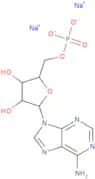
L-Adenosine 5'-monophosphate disodium
CAS:L-Adenosine 5'-monophosphate disodium is a high quality, novel, modified phosphoramidite used for the synthesis of deoxyribonucleosides and nucleosides. It is also used as an antiviral agent and has anti-cancer properties. L-Adenosine 5'-monophosphate disodium is an activator of ribonucleoside activities and inhibits viral replication by inhibiting the enzyme RNA polymerase. It has been shown to be effective against HIV, herpes simplex virus (HSV), cytomegalovirus (CMV), Epstein-Barr virus (EBV), influenza A virus, and influenza B virus.Formula:C10H12N5Na2O7PPurity:Min. 98 Area-%Color and Shape:PowderMolecular weight:391.18 g/mol3’-b-C-Methylcytidine
CAS:3’-b-C-Methylcytidine is a nucleoside analog that inhibits the viral enzyme reverse transcriptase and is used as an antiviral agent. 3’-b-C-Methylcytidine binds to DNA and prevents RNA synthesis, which is essential for viral replication. It has been shown to inhibit the growth of cultured cells from human breast cancer and melanoma, suggesting that it also has anticancer activity. 3’-b-C-Methylcytidine can be synthesized in high purity and at high yield using phosphoramidites. This nucleoside analog may be useful in clinical applications due to its ability to activate transcription, which may lead to novel therapeutic strategies.Purity:Min. 95%L-Cytidine
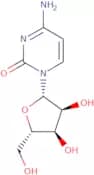
CAS:L-Cytidine is a nucleoside that is found in the body, and is also used as a drug. It is a precursor to other nucleosides, such as cytidine triphosphate, which is involved in DNA synthesis and repair. L-Cytidine has been shown to be effective against HIV infection by inhibiting the activity of the enzyme ns3 protease. This inhibition prevents viral proteins from being released from cells and infecting other cells. L-Cytidine has also been shown to be an inhibitor of creatine kinase and glycosidation, two enzymes that are necessary for cell metabolism. L-Cytidine has also been shown to be reactive with halides, which may lead to unwanted side effects.
Formula:C9H13N3O5Purity:Min. 95%Color and Shape:PowderMolecular weight:243.22 g/mol2-Chloro-2',3'-O-isopropylideneadenosine
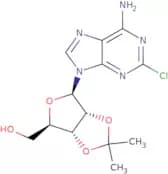
CAS:2-Chloro-2',3'-O-isopropylideneadenosine is a novel, anti-cancer drug that inhibits the synthesis of DNA. It is a phosphoramidite monophosphate with a molecular weight of 288.08 g/mol and an empirical formula C6H12ClNO5PS. The chemical name for this compound is 2-chloro-N-(2,3-diisopropyl)adenine diphosphate. This product has not yet been approved by the FDA for use in humans or animals.Formula:C13H16ClN5O4Purity:Min. 95%Color and Shape:PowderMolecular weight:341.75 g/molClofarabine
CAS:Clofarabine is FDA-approved for treating relapsed or refractory acute lymphoblastic leukaemia (ALL) in children after at least two other types of treatment have failedFormula:C10H11ClFN5O3Purity:Min. 98 Area-%Color and Shape:White Off-White PowderMolecular weight:303.68 g/mol3'-Deoxy-2'-O-methyladenosine
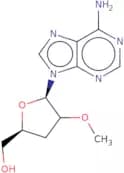
CAS:3'-Deoxy-2'-O-methyladenosine is a nucleoside that has antiviral and anticancer activity. It is a novel chemical compound with a unique structure, which makes it highly reactive. 3'-Deoxy-2'-O-methyladenosine induces DNA synthesis and cell proliferation in cancer cells. It also inhibits the production of viral DNA and RNA in infected cells by inhibiting the enzyme ribonucleotide reductase, which converts ribonucleotides to deoxyribonucleotides. 3'-Deoxy-2'-O-methyladenosine can be used as an antiviral agent against herpes simplex virus type 1 (HSV1), herpes simplex virus type 2 (HSV2) and human cytomegalovirus (CMV).
Formula:C11H15N5O3Purity:Min. 95%Color and Shape:Off-White PowderMolecular weight:265.27 g/mol2'-Deoxy-5-ethyluridine
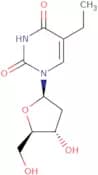
CAS:2'-Deoxy-5-ethyluridine is a nucleoside analog that is used in cancer gene therapy. It is an analog of the natural pyrimidine base uracil and inhibits RNA synthesis by competing with natural nucleosides for incorporation into the growing RNA chain. 2'-Deoxy-5-ethyluridine is cytotoxic to cervical cancer cells, inhibiting cell growth and proliferation at inhibitory doses of 0.1 μM. This drug has also been shown to have synergistic effects with other drugs such as trifluoroacetic acid, monoclonal antibody, tissue culture, glycosidic bond, biological properties, cancer tissues, and polymerase chain reaction (PCR).Formula:C11H16N2O5Purity:Min. 95%Color and Shape:PowderMolecular weight:256.26 g/mol2'-O-(2-Methoxyethyl)uridine
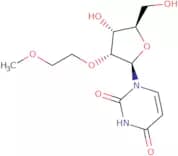
CAS:2'-O-(2-Methoxyethyl)uridine is a nucleoside analog that inhibits the synthesis of DNA, RNA and protein. It can be used as an antimetabolite to treat cancer and prevents tumor growth by interfering with cell division. 2'-O-(2-Methoxyethyl)uridine is often used in combination with other chemotherapeutic drugs. This drug is not active against bacteria and does not inhibit the growth of bacteria. The major disadvantage of this drug is its lack of efficacy against tumors, which may be due to the lack of penetration through the cell membrane or damage to DNA caused by radiation, abiotic factors, or malfunctioning enzymes. 2'-O-(2-Methoxyethyl)uridine has been shown to cause damage to cells by altering their metabolism and affecting the function of their mitochondria. Damage can cause cells to die through apoptosis or necrosis.Formula:C12H18N2O7Purity:Min. 95 Area-%Color and Shape:PowderMolecular weight:302.28 g/mol3'-O-Aminothymidine
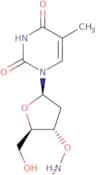
CAS:3'-O-Aminothymidine is an isomer of thymidine, a nucleoside that is found in DNA and RNA. It has a neutral charge and belongs to the category of nucleosides. 3'-O-Aminothymidine is synthesized by the coupling of an amino group with a hydroxyl group. This reaction is efficient and can be used to produce dimers. 3'-O-Aminothymidine can also be used as a precursor for other nucleotides or as a synthetic intermediate in other chemical reactions.Formula:C10H15N3O5Purity:Min. 95%Color and Shape:PowderMolecular weight:257.24 g/mol5-b-D-Ribofuranosyl-2(1H)-pyridinone
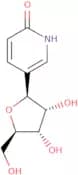
CAS:5-b-D-Ribofuranosyl-2(1H)-pyridinone is a phosphoramidite that is used in the synthesis of DNA. It is also an antiviral and anticancer agent. 5-b-D-Ribofuranosyl-2(1H)-pyridinone may be modified to include deoxyribonucleosides or ribonucleosides, which are important for DNA synthesis. 5-b-D-Ribofuranosyl-2(1H)-pyridinone is a novel chemical compound with a high purity and quality. 5 b D Ribofuranosyl 2 1 H Pyridinone CAS No 188871 50 3 Activator monophosphate High purity High quality DNA Synthetic Deoxyribonucleosides Novel Modified Ribonuclesides NucleosidesPurity:Min. 95%1-(2’-Deoxy-2’-fluoro-b-D-arabinofuranosyl)-N3-[3-(tert-butoxycarbonyl)amino]propyluracil
CAS:1-(2’-Deoxy-2’-fluoro-b-D-arabinofuranosyl)-N3-[3-(tert-butoxycarbonyl)amino]propyluracil is a nucleoside with antiviral and anticancer properties. It is an activator of DNA synthesis and has been shown to inhibit the proliferation of cancer cells. 1-(2’-Deoxy-2’-fluoro-b-D-arabinofuranosyl)-N3-[3-(tert-butoxycarbonyl)amino]propyluracil is a modified nucleoside that has been synthesized by modifying the sugar moiety of ribonucleosides or deoxyribonucleosides. It contains a 2'-deoxypyrimidine base, which can be substituted with different atoms or groups to produce different drugs. The drug inhibits viral replication by inhibiting the growth ofPurity:Min. 95%3'-O-Methyladenosine
CAS:3'-O-Methyladenosine (3'OMeA) is a monomethylated adenosine that belongs to the group of nucleosides. It has been found to inhibit the activity of adenosine receptors, which are important for the regulation of blood pressure and central nervous system function. 3'OMeA also inhibits virus replication in human lymphocytes. 3'OMeA is synthesized by reaction with methylamine and purification by column chromatography. The molecule is a potential therapeutic target for HIV/AIDS, as it can be used as a specific agonist in order to block viral entry into cells.
Formula:C11H15N5O4Purity:Min. 95%Color and Shape:White PowderMolecular weight:281.27 g/mol6-Amino-2,5-dihydro-2-(b-D-ribofuranosyl)-4H-pyrazolo[3,4-d]pyrimidin-4-one
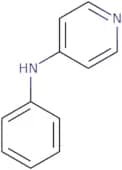
CAS:6-Amino-2,5-dihydro-2-(b-D-ribofuranosyl)-4H-pyrazolo[3,4-d]pyrimidin-4-one is a novel chemical. It is a nucleoside analog that has been shown to inhibit the growth of cancer cells in vitro and in vivo. 6-Amino-2,5-dihydro-2-(b-D ribofuranosyl)-4H pyrazolo[3,4 d]pyrimidin 4 one has also been shown to inhibit viral replication. It is phosphoramidites that are modified with bifunctional linkers for coupling to DNA or RNA molecules. 6 amino 2 5 dihydro 2 (b D ribofuranosyl) 4 H pyrazolo 3 4 d pyrimidine 4 one has high purity and high quality.Purity:Min. 95%N-Phenylpyridin-4-amine
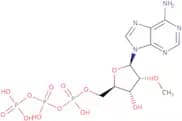
CAS:N-Phenylpyridin-4-amine is a tautomeric compound that has been shown to inhibit the growth of cancer cells. It is able to bind to tyrosine kinase and inhibit its activity, which affects the proliferation of cancer cells. N-Phenylpyridin-4-amine also inhibits mitochondrial functions by inhibiting cytochrome c oxidase. This drug also has an anti-inflammatory effect, inhibiting the production of cytokines such as IL1β, IL6, and TNFα. The biological function of N-Phenylpyridin-4-amine is not yet fully understood. It may be due to the inhibition of protein tyrosine phosphatases (such as PTP1B), which are involved in insulin signalling pathways.Formula:C11H10N2Purity:Min. 95%Color and Shape:White Off-White PowderMolecular weight:170.21 g/mol2'-O-Methyladenosine-5'-triphosphate sodium salt - 100mM aqueous solution
CAS:2'-O-Methyladenosine-5'-triphosphate sodium salt is a novel nucleoside phosphoramidite. It is an activator and it can be used in the synthesis of DNA and RNA. The compound has antiviral properties and has been shown to inhibit DNA replication, protein synthesis, and RNA transcription. The compound also inhibits the growth of cancer cells by inducing apoptosis.Formula:C11H18N5O13P3·xNaPurity:Min. 95%Color and Shape:PowderMolecular weight:521.21 g/mol1-(4’-Azido-3’,5’-di-O-benzoyl-2’-deoxy-2’-fluoro-b-D-arabinofuranosyl)uracil
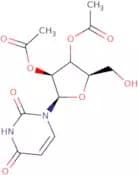
CAS:1-(4’-Azido-3’,5’-di-O-benzoyl-2’-deoxy-2’-fluoro-b-D-arabinofuranosyl)uracil is a synthetic antiviral agent that inhibits the activity of DNA and RNA polymerases. It also has anticancer properties. The compound is an analogue of 2'-deoxycytidine monophosphate (dCMP). This compound binds to the phosphate group of nucleoside triphosphates and prevents their incorporation into DNA or RNA. 1-(4’-Azido-3’,5’-di-O-benzoyl-2’-deoxy) -2′ fluoro -b D arabinofuranosyl) uracil has been shown to inhibit the growth of cancer cells in vitro.Purity:Min. 95%2',3'-Di-O-acetyl-D-uridine
CAS:2',3'-Di-O-acetyl-D-uridine is a nucleoside for use in research applicationsFormula:C13H16N2O8Purity:Min. 98 Area-%Color and Shape:White PowderMolecular weight:328.27 g/mol3'-O-Aminoacetoxy-2'-deoxyadenosine
amino functionalised nucleosideFormula:C13H22N6O3Purity:Min. 98 Area-%Color and Shape:PowderMolecular weight:310.36 g/molN6-Benzoyl-7-deaza-2'-deoxy-7-iodoadenosine
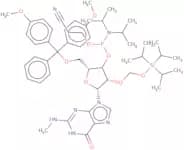
CAS:N6-Benzoyl-7-deaza-2'-deoxy-7-iodoadenosine is an antiviral compound that inhibits the synthesis of DNA and RNA. It is a synthetic, modified nucleoside with antiviral properties. The compound has been shown to be active against both animal and human tumor cells, as well as being effective in the treatment of viral infections.N6-Benzoyl-7-deaza-2'-deoxy-7-iodoadenosine is water soluble and biologically stable.Purity:Min. 95%5'-O-DMT-2'-O-triisopropylsilyloxymethyl-N2-methylguanosine 3'-CE phosphoramidite
5'-O-DMT-2'-O-triisopropylsilyloxymethyl-N2-methylguanosine 3'-CE phosphoramidite is a novel monophosphate nucleotide analog of guanosine, which has been modified to include an additional methyl group on the 2' position. It exhibits antiviral activity and is a potent activator of RNA polymerase II, with a Km of ∼0.05 μM. 5'-O-DMT-2'-O-triisopropylsilyloxymethyl-N2-methylguanosine 3'-CE phosphoramidite is used in the synthesis of ribonucleosides and deoxyribonucleosides for DNA and RNA experiments. The compound has also been shown to be active against some cancers, such as leukemia, breast cancer, prostate cancer, and colon cancer. 5'-O-DMT-2'-O-Formula:C51H72N7O9PSiPurity:Min. 95%Molecular weight:986.22 g/mol



![1-(2’-Deoxy-2’-fluoro-b-D-arabinofuranosyl)-N3-[3-(tert-butoxycarbonyl)amino]propyluracil](/_next/image/?url=https%3A%2Fstatic.cymitquimica.com%2Fproducts%2F3D%2Fthumb-webp%2FND162853.webp&w=3840&q=75)

![6-Amino-2,5-dihydro-2-(b-D-ribofuranosyl)-4H-pyrazolo[3,4-d]pyrimidin-4-one](/_next/image/?url=https%3A%2Fstatic.cymitquimica.com%2Fproducts%2F3D%2Fthumb-webp%2FNA162979.webp&w=3840&q=75)