Nucleosides
Found 3569 products of "Nucleosides"
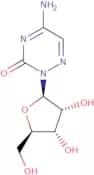
6-Azacytidine
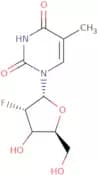
CAS:6-Azacytidine is a molecule that contains a hydroxyl group and a glycosidic bond. It has been shown to inhibit the growth of mollicutes, which are non-cellular bacteria. 6-Azacytidine has also been shown to be toxic in animal tissue culture studies. The drug can be eliminated through the urine or bile after being metabolized by the liver. 6-Azacytidine is not active against human cells in cell culture, but it does show some toxicity against human liver cells.Formula:C8H12N4O5Purity:Min. 95%Color and Shape:PowderMolecular weight:244.2 g/mol1-(2'-Deoxy-2'-fluoro-a-L-arabinofuranosyl)-thymine
CAS:1-(2'-Deoxy-2'-fluoro-α-L-arabinofuranosyl)-thymine (commonly abbreviated as L-FMAU) is a nucleoside analog. It contains an α-L-arabinofuranose sugar instead of the natural β-D-deoxyribose found in DNA. A fluorine (F) substitution at the 2'-position enhances stability and resistance to enzymatic degradation. The thymine nucleobase allows it to mimic natural thymidine, potentially incorporating into DNA synthesis pathways. It can be research for its potential antiviral activity.Formula:C10H13FN2O5Purity:Min. 95%Color and Shape:White PowderMolecular weight:260.22 g/molBBQ-650-DT CEP
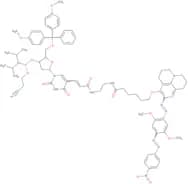
CAS:BBQ-650-DT CEP is an antiviral compound that is a phosphoramidite derivative of cytidine. BBQ-650-DT CEP has been shown to inhibit the replication of human immunodeficiency virus type 1 (HIV-1) and other retroviruses in vitro, and to inhibit tumor cell proliferation in vivo. BBQ-650-DT CEP also inhibits the synthesis of RNA and DNA, which may have anticancer properties. This compound has been shown to be active against leukemia cells, lymphoma cells, and various breast cancer cell lines. It has also been shown to induce apoptosis in leukemia cells.Formula:C76H89N12O15PPurity:Min. 95%Molecular weight:1,441.6 g/mol6-Amino-3-iodo-4-methoxy-1-(b-D-ribofuranosyl)-1H-pyrazolo[3,4-d]pyrimidine
CAS:6-Amino-3-iodo-4-methoxy-1-(beta-D-ribofuranosyl)-1H-pyrazolo[3,4-d]pyrimidine is a synthetic nucleoside that has antiviral activity. It is an activator of DNA polymerase and can be used to synthesize DNA and RNA. 6AIOMP binds to the ribonucleotide reductases in cells and inhibits their activity. This prevents the conversion of ribonucleotides into deoxyribonucleotides, which are essential for DNA synthesis.Purity:Min. 95%5’-O-DMT-2’-b-C-methyladenosine
5’-O-DMT-2’-b-C-methyladenosine is a modified nucleoside with antiviral and anticancer activity. It is an activator of DNA synthesis, and can be used as a precursor for phosphoramidites for the synthesis of oligonucleotides. The 5’-O-DMT group in this compound may be replaced with other activating groups to synthesize different modified nucleosides.
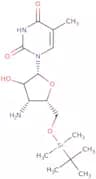
Purity:Min. 95%3'-Amino-5'-O-tert-butyldimethylsilyl-3'-deoxythymidine
CAS:3'-Amino-5'-O-tert-butyldimethylsilyl-3'-deoxythymidine is a novel synthetic nucleoside that has been shown to have anticancer and antiviral activities. The compound is an activator of the immune system, which may be due to its ability to stimulate the production of interferon and other cytokines. 3'-Amino-5'-O-tert-butyldimethylsilyl-3'-deoxythymidine can also inhibit viral DNA polymerases. This nucleoside has been shown to inhibit the growth of leukemia cells in culture by inhibiting ribonucleotide reductase activity.Formula:C16H29N3O5SiPurity:Min. 95%Molecular weight:371.51 g/mol3’-deoxy-3’-fluorosangivamycin
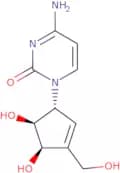
CAS:3’-deoxy-3’-fluorosangivamycin is a modified deoxyribonucleoside with antiviral and anticancer properties. It is an activator of DNA polymerase. 3’-deoxy-3’-fluorosangivamycin has been shown to inhibit the replication of human immunodeficiency virus type 1 (HIV-1) in the calf thymus DNA system. This drug is also effective against other viruses, such as herpes simplex virus type 2 (HSV-2), cytomegalovirus (CMV), and influenza A virus. 3′-deoxy-3′-fluorosangivamycin binds to viral DNA and inhibits nucleotide incorporation, leading to inhibition of viral RNA synthesis and protein synthesis.Purity:Min. 95%Cyclopentenyl cytosine
CAS:Cyclopentenyl cytosine is a cytotoxic drug that inhibits the synthesis of DNA, RNA, and proteins. It is a nucleoside analogue that inhibits the enzyme activity of ribonucleotide reductase. Cyclopentenyl cytosine has significant cytotoxicity against hl-60 cells, as well as squamous carcinoma and MDA-MB-231 breast cancer cells. It also has significant activity against cyclopentenyl, dextran sulfate, and mitochondrial functions in vivo in human cells. Cyclopentenyl cytosine binds to the response element on the DNA strand, preventing transcription of genes for protein synthesis and cell division.
Formula:C10H13N3O4Purity:Min. 95%Color and Shape:PowderMolecular weight:239.23 g/mol5'-Carboxy-2-chloro-2'-3'-O-isopropylideneadenosine
CAS:5'-Carboxy-2-chloro-2'-3'-O-isopropylideneadenosine is a monophosphate nucleoside that inhibits viral replication by inhibiting the synthesis of both DNA and RNA. This compound is used to treat cancers such as leukemia, lymphoma, and multiple myeloma. It also has antiviral properties that are active against herpes simplex virus (HSV) and human cytomegalovirus (CMV). 5'-Carboxy-2-chloro-2'-3'-O-isopropylideneadenosine is a modified nucleoside with a phosphoramidite group on the 2' position of the ribose sugar.Formula:C13H14ClN5O5Purity:Min. 95%Color and Shape:Off-White PowderMolecular weight:355.74 g/molPseudothymidine
CAS:Pseudothymidine is the nucleobase analog of thymidine. It is a synthetic substance that has been used in the polymerase chain reactions (PCRs) to form DNA molecules. Pseudothymidine is not naturally found in cells and can be used as a substitute for thymidine during PCR to make more copies of DNA sequences. It has been shown that pseudothymidine can be incorporated into DNA without disrupting the polymerase chain reaction. The thermal denaturation of pseudothymidine is 10 °C lower than that of thymidine, allowing it to be used at higher temperatures with less risk of degradation.Formula:C10H14N2O5Purity:Min. 95%Color and Shape:PowderMolecular weight:242.23 g/mol2'-Deoxyguanosine 3'-O-L-valinyl ester
2'-Deoxyguanosine 3'-O-L-valinyl ester is a synthetic nucleoside obtained from 2'-deoxyguanosine and valine. It has antiviral activity against DNA viruses, such as herpes simplex virus and vaccinia virus, and anticancer activity. 2'-Deoxyguanosine 3'-O-L-valinyl ester is an analog of guanosine that has been modified to contain an L-valyl group at the 3' position. This modification increases the stability of this nucleoside in aqueous solutions and provides potent antiviral and anticancer activity.Purity:Min. 95%3'-O-Aminoacetoxy-2'-deoxycytidine
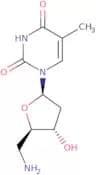
Please enquire for more information about 3'-O-Aminoacetoxy-2'-deoxycytidine including the price, delivery time and more detailed product information at the technical inquiry form on this pageFormula:C12H18N4O4Purity:Min. 98 Area-%Color and Shape:PowderMolecular weight:282.30 g/mol5'-Amino-5'-deoxythymidine
CAS:5'-Amino-5'-deoxythymidine is a nucleoside that is structurally related to thymidine. It has been shown to be a substrate for fatty acid synthase, which is a key enzyme in the synthesis of membrane lipids. 5'-Amino-5'-deoxythymidine has been shown to induce tumorigenesis in mouse bladder carcinoma cells. This compound also does not form stable complexes with DNA duplexes and can inhibit uptake of thymidylate into cells by competitive inhibition. 5'-Amino-5'-deoxythymidine binds to the cell surface and acts as an antibody response modifier.Formula:C10H15N3O4Purity:Min. 98 Area-%Color and Shape:White Off-White PowderMolecular weight:241.24 g/mol3’-β-Azido-2’,3’-dideoxy-5-fluorouridine
CAS:Please enquire for more information about 3’-beta-Azido-2’,3’-dideoxy-5-fluorouridine including the price, delivery time and more detailed product information at the technical inquiry form on this page
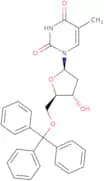
Purity:Min. 95%5'-O-Tritylthymidine
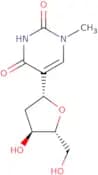
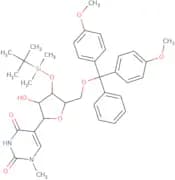
CAS:5'-O-Tritylthymidine is a nucleoside that is found in human mitochondrial DNA. It is synthesized from uridine by the enzyme thymidylate synthase and can be converted to thymine by the enzyme thymidine phosphorylase. 5'-O-Tritylthymidine has been shown to inhibit cancer cell growth, but its mechanism of action is not clear. It may inhibit xylene production. 5'-O-Tritylthymidine also causes an increase in p53 activity, which may lead to apoptosis of cancer cells.Formula:C29H28N2O5Purity:Min. 95%Molecular weight:484.54 g/mol3’-O-tert-butyldimethylsilyl-5’-O-DMT-N1-methylpseudouridine
CAS:3′-O-tert-butyldimethylsilyl-5′-O-DMT-N1-methylpseudouridine is a synthetic nucleoside that is used in the synthesis of deoxyribonucleosides. It is an activator nucleoside that has antiviral activity and provides high purity, novel monophosphate nucleosides, and modified nucleosides. 3′-O-tert-butyldimethylsilyl-5′-O-DMT-N1 methylpseudouridine has CAS No. 875302–43–5 and can be used for the synthesis of phosphoramidites or ribonucleotides.Purity:Min. 95%N3-Methyl-2'-O-methyluridine
CAS:2'-O-methyluridine is an antiviral nucleoside that is used as a phosphoramidite in the synthesis of oligonucleotides. It has been shown to inhibit viral replication, and has been found to be effective in treating HIV-1 by inhibiting reverse transcriptase. N3-Methyl-2'-O-methyluridine also inhibits DNA synthesis and cell proliferation, and may be useful for the treatment of cancer. This modified nucleoside has been synthesized from uracil and contains a methyl group at the 3' position. The methyl group prevents 2'-O-methyluridine from being activated by cellular thymidylate synthase, which normally converts deoxyribonucleotides into ribonucleotides. This novel nucleotide has not yet been used in clinical trials but it may provide an alternative to other drugs used for cancer treatments.
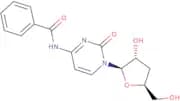
Formula:C11H16N2O6Purity:Min. 95 Area-%Color and Shape:White Off-White PowderMolecular weight:272.25 g/molN4-Benzoyl-2'-deoxy-2'-fluorocytidine 3'-CE phosphoramidite
N4-Benzoyl-2'-deoxy-2'-fluorocytidine 3'-CE phosphoramidite is a novel DNA phosphoramidite monomer that has been modified to include an N4-benzoyl group at the 2'-position of the sugar. It is synthesized from 4,5-diaminopyrimidine, 1,3-bis(2-chloroethyl)carbodiimide hydrochloride (EDC), and 4-(N,N-dimethylamino)benzoic acid. The benzoyl group allows for the incorporation of this monomer into DNA in place of deoxycytidine. This product is designed to be used in oligonucleotide synthesis as an activator.Formula:C46H51FN5O8PPurity:Min. 95%Molecular weight:851.9 g/mol3'-O-Aminoacetoxythymidine
Amino functionalised thymidineFormula:C13H21N4O4Purity:Min. 98 Area-%Color and Shape:PowderMolecular weight:297.33 g/mol3'-O-Aminoacetoxy-2'-deoxyguanosine
Please enquire for more information about 3'-O-Aminoacetoxy-2'-deoxyguanosine including the price, delivery time and more detailed product information at the technical inquiry form on this page
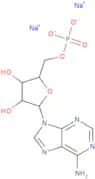
Formula:C13H17N6O4Purity:Min. 98 Area-%Color and Shape:PowderMolecular weight:321.32 g/molL-Adenosine 5'-monophosphate disodium
CAS:L-Adenosine 5'-monophosphate disodium is a high quality, novel, modified phosphoramidite used for the synthesis of deoxyribonucleosides and nucleosides. It is also used as an antiviral agent and has anti-cancer properties. L-Adenosine 5'-monophosphate disodium is an activator of ribonucleoside activities and inhibits viral replication by inhibiting the enzyme RNA polymerase. It has been shown to be effective against HIV, herpes simplex virus (HSV), cytomegalovirus (CMV), Epstein-Barr virus (EBV), influenza A virus, and influenza B virus.Formula:C10H12N5Na2O7PPurity:Min. 98 Area-%Color and Shape:PowderMolecular weight:391.18 g/mol3’-b-C-Methylcytidine
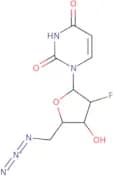
CAS:3’-b-C-Methylcytidine is a nucleoside analog that inhibits the viral enzyme reverse transcriptase and is used as an antiviral agent. 3’-b-C-Methylcytidine binds to DNA and prevents RNA synthesis, which is essential for viral replication. It has been shown to inhibit the growth of cultured cells from human breast cancer and melanoma, suggesting that it also has anticancer activity. 3’-b-C-Methylcytidine can be synthesized in high purity and at high yield using phosphoramidites. This nucleoside analog may be useful in clinical applications due to its ability to activate transcription, which may lead to novel therapeutic strategies.Purity:Min. 95%5'-Azido-2',5'-dideoxy-2'-fluorouridine
CAS:5'-Azido-2',5'-dideoxy-2'-fluorouridine is a novel nucleoside that is a phosphoramidite. It is an antiviral agent that has been shown to inhibit the synthesis of RNA in cells. This drug also inhibits the growth of cancer cells and can be used for the treatment of leukemia, lymphoma, and myeloma. 5'-Azido-2',5'-dideoxy-2'-fluorouridine has been shown to bind to DNA through its azide group and form a stable covalent bond with the N7 position of guanine. This bond prevents the incorporation of adenosine triphosphate (ATP) into DNA, which prevents DNA transcription and replication.Formula:C9H10FN5O4Purity:Min. 95%Molecular weight:271.21 g/mol2-Chloro-2',3'-O-isopropylideneadenosine
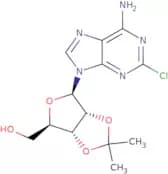
CAS:2-Chloro-2',3'-O-isopropylideneadenosine is a novel, anti-cancer drug that inhibits the synthesis of DNA. It is a phosphoramidite monophosphate with a molecular weight of 288.08 g/mol and an empirical formula C6H12ClNO5PS. The chemical name for this compound is 2-chloro-N-(2,3-diisopropyl)adenine diphosphate. This product has not yet been approved by the FDA for use in humans or animals.Formula:C13H16ClN5O4Purity:Min. 95%Color and Shape:PowderMolecular weight:341.75 g/molClofarabine
CAS:Clofarabine is FDA-approved for treating relapsed or refractory acute lymphoblastic leukaemia (ALL) in children after at least two other types of treatment have failedFormula:C10H11ClFN5O3Purity:Min. 98 Area-%Color and Shape:White Off-White PowderMolecular weight:303.68 g/mol3'-Deoxy-2'-O-methyladenosine
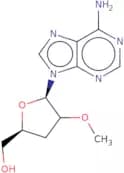
CAS:3'-Deoxy-2'-O-methyladenosine is a nucleoside that has antiviral and anticancer activity. It is a novel chemical compound with a unique structure, which makes it highly reactive. 3'-Deoxy-2'-O-methyladenosine induces DNA synthesis and cell proliferation in cancer cells. It also inhibits the production of viral DNA and RNA in infected cells by inhibiting the enzyme ribonucleotide reductase, which converts ribonucleotides to deoxyribonucleotides. 3'-Deoxy-2'-O-methyladenosine can be used as an antiviral agent against herpes simplex virus type 1 (HSV1), herpes simplex virus type 2 (HSV2) and human cytomegalovirus (CMV).
Formula:C11H15N5O3Purity:Min. 95%Color and Shape:Off-White PowderMolecular weight:265.27 g/mol1-(b-D-Xylofuranosyl)-2-thiouracil
CAS:1-(b-D-Xylofuranosyl)-2-thiouracil is a synthetic nucleoside that inhibits viral and cancer cell growth. It is an analog of the natural nucleoside thymidine, with an extra oxygen atom at position 2. The molecule forms a monophosphate, which is converted to a diphosphate by phosphoramidate synthase. This diphosphate is then incorporated into DNA, where it inhibits the activity of DNA polymerase and deoxyribonucleases, leading to inhibition of DNA synthesis. 1-(b-D-Xylofuranosyl)-2-thiouracil also has antiviral properties as it can inhibit viral replication by blocking the incorporation of nucleotides into the growing DNA strand.Formula:C9H12N2O5SPurity:Min. 95%Molecular weight:260.27 g/mol2'-O-(2-Methoxyethyl)uridine
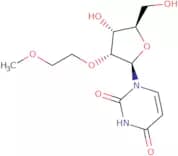
CAS:2'-O-(2-Methoxyethyl)uridine is a nucleoside analog that inhibits the synthesis of DNA, RNA and protein. It can be used as an antimetabolite to treat cancer and prevents tumor growth by interfering with cell division. 2'-O-(2-Methoxyethyl)uridine is often used in combination with other chemotherapeutic drugs. This drug is not active against bacteria and does not inhibit the growth of bacteria. The major disadvantage of this drug is its lack of efficacy against tumors, which may be due to the lack of penetration through the cell membrane or damage to DNA caused by radiation, abiotic factors, or malfunctioning enzymes. 2'-O-(2-Methoxyethyl)uridine has been shown to cause damage to cells by altering their metabolism and affecting the function of their mitochondria. Damage can cause cells to die through apoptosis or necrosis.Formula:C12H18N2O7Purity:Min. 95 Area-%Color and Shape:PowderMolecular weight:302.28 g/molAdenosine 5'-phosphosulfate sodium salt, 10 mM in water
CAS:Adenosine 5′-phosphosulfate sodium salt has been used quantify pyrophosphate and in enzyme-linked bioluminescence assay for adenosine triphosphate (ATP).Product provided as 10 mM solution in water.Formula:C10H14N5O10PSPurity:Min. 90.0 Area-%Molecular weight:427.28 g/mol5-b-D-Ribofuranosyl-2(1H)-pyridinone
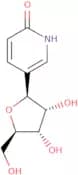
CAS:5-b-D-Ribofuranosyl-2(1H)-pyridinone is a phosphoramidite that is used in the synthesis of DNA. It is also an antiviral and anticancer agent. 5-b-D-Ribofuranosyl-2(1H)-pyridinone may be modified to include deoxyribonucleosides or ribonucleosides, which are important for DNA synthesis. 5-b-D-Ribofuranosyl-2(1H)-pyridinone is a novel chemical compound with a high purity and quality. 5 b D Ribofuranosyl 2 1 H Pyridinone CAS No 188871 50 3 Activator monophosphate High purity High quality DNA Synthetic Deoxyribonucleosides Novel Modified Ribonuclesides NucleosidesPurity:Min. 95%N-Phenylpyridin-4-amine
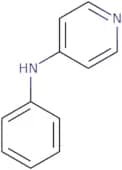
CAS:N-Phenylpyridin-4-amine is a tautomeric compound that has been shown to inhibit the growth of cancer cells. It is able to bind to tyrosine kinase and inhibit its activity, which affects the proliferation of cancer cells. N-Phenylpyridin-4-amine also inhibits mitochondrial functions by inhibiting cytochrome c oxidase. This drug also has an anti-inflammatory effect, inhibiting the production of cytokines such as IL1β, IL6, and TNFα. The biological function of N-Phenylpyridin-4-amine is not yet fully understood. It may be due to the inhibition of protein tyrosine phosphatases (such as PTP1B), which are involved in insulin signalling pathways.Formula:C11H10N2Purity:Min. 95%Color and Shape:White Off-White PowderMolecular weight:170.21 g/mol3'-O-Methyladenosine
CAS:3'-O-Methyladenosine (3'OMeA) is a monomethylated adenosine that belongs to the group of nucleosides. It has been found to inhibit the activity of adenosine receptors, which are important for the regulation of blood pressure and central nervous system function. 3'OMeA also inhibits virus replication in human lymphocytes. 3'OMeA is synthesized by reaction with methylamine and purification by column chromatography. The molecule is a potential therapeutic target for HIV/AIDS, as it can be used as a specific agonist in order to block viral entry into cells.
Formula:C11H15N5O4Purity:Min. 95%Color and Shape:White PowderMolecular weight:281.27 g/mol1-(2'-O-4-C-Methylene-b-D-ribofuranosyl)thymine
CAS:1-(2'-O-4-C-Methylene-b-D-ribofuranosyl)thymine is a nucleoside analog with a modified ribofuranosyl sugar, which includes a 2'-O-4'-C-methylene bridge that constrains the sugar conformation.Formula:C11H14N2O6Purity:Min. 95%Color and Shape:PowderMolecular weight:270.24 g/mol4'-C-Fluoroadenosine
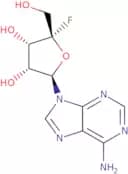
CAS:4'-C-Fluoroadenosine is a fluorine-substituted analog of adenosine, which has been shown to have minimal toxicity in animals. 4'-C-Fluoroadenosine inhibits the uptake of trypanosomes by macrophages and has been shown to be effective in treating Leishmania donovani infections in mice. Its mechanism of action is not yet clear, but it may involve inhibiting the enzymatic activity of enzymes involved in the metabolism of adenosine and/or enhancing the activity of those that are involved in catalysing adenoside triphosphate synthesis.Purity:Min. 95%2'-O-Methyladenosine-5'-triphosphate sodium salt - 100mM aqueous solution
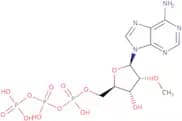
CAS:2'-O-Methyladenosine-5'-triphosphate sodium salt is a novel nucleoside phosphoramidite. It is an activator and it can be used in the synthesis of DNA and RNA. The compound has antiviral properties and has been shown to inhibit DNA replication, protein synthesis, and RNA transcription. The compound also inhibits the growth of cancer cells by inducing apoptosis.Formula:C11H18N5O13P3·xNaPurity:Min. 95%Color and Shape:PowderMolecular weight:521.21 g/mol1-(4’-Azido-3’,5’-di-O-benzoyl-2’-deoxy-2’-fluoro-b-D-arabinofuranosyl)uracil
CAS:1-(4’-Azido-3’,5’-di-O-benzoyl-2’-deoxy-2’-fluoro-b-D-arabinofuranosyl)uracil is a synthetic antiviral agent that inhibits the activity of DNA and RNA polymerases. It also has anticancer properties. The compound is an analogue of 2'-deoxycytidine monophosphate (dCMP). This compound binds to the phosphate group of nucleoside triphosphates and prevents their incorporation into DNA or RNA. 1-(4’-Azido-3’,5’-di-O-benzoyl-2’-deoxy) -2′ fluoro -b D arabinofuranosyl) uracil has been shown to inhibit the growth of cancer cells in vitro.Purity:Min. 95%L-Cytidine
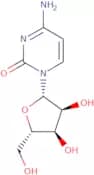
CAS:L-Cytidine is a nucleoside that is found in the body, and is also used as a drug. It is a precursor to other nucleosides, such as cytidine triphosphate, which is involved in DNA synthesis and repair. L-Cytidine has been shown to be effective against HIV infection by inhibiting the activity of the enzyme ns3 protease. This inhibition prevents viral proteins from being released from cells and infecting other cells. L-Cytidine has also been shown to be an inhibitor of creatine kinase and glycosidation, two enzymes that are necessary for cell metabolism. L-Cytidine has also been shown to be reactive with halides, which may lead to unwanted side effects.
Formula:C9H13N3O5Purity:Min. 95%Color and Shape:PowderMolecular weight:243.22 g/mol3'-O-Aminoacetoxy-2'-deoxyadenosine
amino functionalised nucleosideFormula:C13H22N6O3Purity:Min. 98 Area-%Color and Shape:PowderMolecular weight:310.36 g/molN6-Benzoyl-7-deaza-2'-deoxy-7-iodoadenosine
CAS:N6-Benzoyl-7-deaza-2'-deoxy-7-iodoadenosine is an antiviral compound that inhibits the synthesis of DNA and RNA. It is a synthetic, modified nucleoside with antiviral properties. The compound has been shown to be active against both animal and human tumor cells, as well as being effective in the treatment of viral infections.N6-Benzoyl-7-deaza-2'-deoxy-7-iodoadenosine is water soluble and biologically stable.Purity:Min. 95%Zebularine 3'-CE phosphoramidite
CAS:Zebularine 3'CE phosphoramidite is a novel, high quality activator for modified DNA monophosphate. It is used as an anticancer drug and antiviral agent. Zebularine 3'CE phosphoramidite is a synthetic, diphosphate with high purity and high reactivity. It has been shown to activate deoxyribonucleosides to ribonucleosides in DNA synthesis, as well as being able to inhibit viral RNA synthesis by inhibiting viral polymerase.Formula:C45H61N4O8PSiPurity:Min. 95%Color and Shape:Off-white solid.Molecular weight:845.04 g/mol3'-O-Benzoyl-2'-deoxyuridine
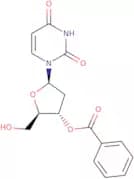
CAS:3'-O-Benzoyl-2'-deoxyuridine is a synthetic nucleoside that is used in the synthesis of DNA and RNA. 3'-O-Benzoyl-2'-deoxyuridine is also an antiviral agent that has shown efficacy against HIV, HSV, and influenza virus. 3'-O-Benzoyl-2'-deoxyuridine is a phosphoramidite monophosphate that can be used as a building block for DNA or RNA synthesis. It is also a diphosphate that can be used to synthesize modified nucleosides. This product has novel properties and high purity, making it suitable for research purposes.Formula:C16H16N2O6Purity:Min. 95%Color and Shape:PowderMolecular weight:332.31 g/mol2,4,6-Trichloro-5-methylpyrimidine
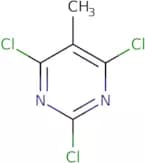
CAS:2,4,6-Trichloro-5-methylpyrimidine is a nucleoside for use in research applicationsFormula:C5H3Cl3N2Purity:Min. 95%Color and Shape:PowderMolecular weight:197.45 g/mol2'-Deoxy-6-methylthioguanosine
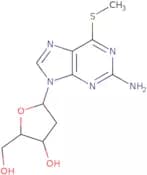
CAS:2'-Deoxy-6-methylthioguanosine is a novel nucleoside and nucleotide analog with antiviral and anticancer activities. It has been shown to inhibit the replication of DNA by inhibiting the activity of DNA polymerase. The target of this drug is not related to any virus or bacterial species, but it inhibits the growth of cancer cells in vitro. The synthesis of 2'-deoxy-6-methylthioguanosine can be achieved by modifying commercially available phosphoramidites.Formula:C11H15N5O3SPurity:Min. 95%Color and Shape:PowderMolecular weight:297.33 g/molN4-Benzoyl-3'-deoxycytidine
CAS:N4-Benzoyl-3'-deoxycytidine is a novel antiviral agent that has shown activity against DNA and RNA viruses. It is an activator of DNA polymerase, which is essential for replication of viral nucleic acids. The compound is a modified nucleoside with a benzoyl group at the 4' position of the ribose moiety. It also has phosphoramidite, monophosphate, and diphosphate analogues. N4-Benzoyl-3'-deoxycytidine binds to the enzyme DNA polymerase, thereby inhibiting its ability to synthesize deoxyribonucleotides from ribonucleotides. This results in inhibition of viral DNA synthesis and subsequent inhibition of viral replication.Formula:C16H17N3O5Purity:Min. 95%Color and Shape:White To Off-White SolidMolecular weight:331.32 g/mol2'-Deoxy-7-deazaisoguanosine triphosphate
CAS:2'-Deoxy-7-deazaisoguanosine triphosphate is a nucleotide analogue that is used as an antiviral agent in the treatment of HIV. It has potent activity against HIV and other retroviruses, including SIV, FIV, and HTLV-1. 2'-Deoxy-7-deazaisoguanosine triphosphate has been shown to act as an activator of DNA polymerase by enhancing the incorporation of deoxynucleotide triphosphates into DNA. It also inhibits the synthesis of viral DNA by inhibiting the activity of reverse transcriptase enzymes. 2'-Deoxy-7-deazaisoguanosine triphosphate can be synthesized from diphosphates and phosphoramidites through a modified phosphoramidite approach that allows for high quality and purity with high yield.Formula:C11H17N4O13P3Purity:Min. 95%Molecular weight:506.19 g/mol5-Methoxycarbonylmethyluridine
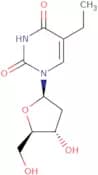
CAS:5-Methoxycarbonylmethyluridine is a nucleoside that is a precursor in the synthesis of other nucleotides. It has been shown to have potential as a biomarker for various diseases, such as metabolic disorders and hepatic steatosis. 5-Methoxycarbonylmethyluridine also inhibits the activity of methyltransferases, which are enzymes that catalyze the transfer of methyl groups from S-adenosylmethionine to substrates. It is also used as a model system for polymerase chain reaction in cancer research, because it has been shown to inhibit DNA replication by blocking the incorporation of uracil into DNA. 5-Methoxycarbonylmethyluridine has been found at high levels in fetal bovine serum and eukaryotic cells, but not in prokaryotes or cancerous tissues.Formula:C12H16N2O8Purity:Min. 95%Color and Shape:PowderMolecular weight:316.26 g/mol2'-Deoxy-5-ethyluridine
CAS:2'-Deoxy-5-ethyluridine is a nucleoside analog that is used in cancer gene therapy. It is an analog of the natural pyrimidine base uracil and inhibits RNA synthesis by competing with natural nucleosides for incorporation into the growing RNA chain. 2'-Deoxy-5-ethyluridine is cytotoxic to cervical cancer cells, inhibiting cell growth and proliferation at inhibitory doses of 0.1 μM. This drug has also been shown to have synergistic effects with other drugs such as trifluoroacetic acid, monoclonal antibody, tissue culture, glycosidic bond, biological properties, cancer tissues, and polymerase chain reaction (PCR).Formula:C11H16N2O5Purity:Min. 95%Color and Shape:PowderMolecular weight:256.26 g/mol2'-Azido-2'-deoxy-5'-O-DMT-uridine
CAS:2'-Azido-2'-deoxy-5'-O-DMT-uridine is a nucleoside that has been modified with an azido group at the 2' position. The azido group is used to modify DNA and RNA nucleosides, which are monophosphate, ribonucleosides, and deoxyribonucleosides. This drug may be used as an activator of DNA synthesis or as a antiviral agent. It has been shown to inhibit HIV replication in vitro.Purity:Min. 95%5'-Azido-5'-deoxyuridine
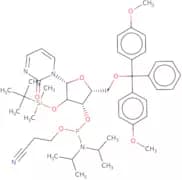
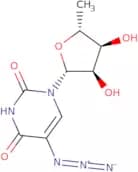
CAS:5'-Azido-5'-deoxyuridine is a synthetic nucleobase that is used in the synthesis of oligodeoxynucleotides. It has been shown to have an inhibitory effect on tumor cells, which may be due to its ability to interact with guanosine diphosphate (GDP) and prevent the formation of GTP. 5'-Azido-5'-deoxyuridine has also been shown to have an inhibitory effect on Mycobacterium tuberculosis and Mycobacterium avium complex, but does not affect other bacteria. 5'-Azido-5'-deoxyuridine interacts with RNA by binding to the phosphate group and inhibiting the synthesis of proteins and DNA.Purity:Min. 95%5'-O-DMT-2'-O-triisopropylsilyloxymethyl-N2-methylguanosine 3'-CE phosphoramidite
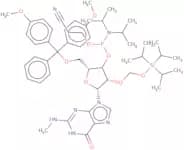
5'-O-DMT-2'-O-triisopropylsilyloxymethyl-N2-methylguanosine 3'-CE phosphoramidite is a novel monophosphate nucleotide analog of guanosine, which has been modified to include an additional methyl group on the 2' position. It exhibits antiviral activity and is a potent activator of RNA polymerase II, with a Km of ∼0.05 μM. 5'-O-DMT-2'-O-triisopropylsilyloxymethyl-N2-methylguanosine 3'-CE phosphoramidite is used in the synthesis of ribonucleosides and deoxyribonucleosides for DNA and RNA experiments. The compound has also been shown to be active against some cancers, such as leukemia, breast cancer, prostate cancer, and colon cancer. 5'-O-DMT-2'-O-Formula:C51H72N7O9PSiPurity:Min. 95%Molecular weight:986.22 g/mol

![6-Amino-3-iodo-4-methoxy-1-(b-D-ribofuranosyl)-1H-pyrazolo[3,4-d]pyrimidine](/_next/image/?url=https%3A%2Fstatic.cymitquimica.com%2Fproducts%2F3D%2Fthumb-webp%2FNA162944.webp&w=3840&q=75)