Nucleosides
Found 3569 products of "Nucleosides"
2’-Deoxy-4-hydazone uridine
2’-Deoxy-4-hydazone uridine is a modified nucleoside that has antiviral activity. It is used to synthesize DNA and RNA, which are important for the synthesis of proteins. 2’-Deoxy-4-hydazone uridine can also be used as an activator for phosphoramidites in the synthesis of oligonucleotides. This drug is CAS No. 92287-17-7 and has a molecular weight of 263.29 g/mol.Purity:Min. 95%2-Amino-1-(b-D-arabinofuranosyl)-5-methyl-4(1H)-pyrimidinone
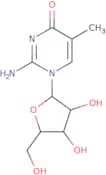
CAS:2-Amino-1-(b-D-arabinofuranosyl)-5-methyl-4(1H)-pyrimidinone (araA) is an activator of nucleoside synthesis. It is a novel and versatile chemical that can be used to produce both ribonucleosides and deoxyribonucleosides. AraA is a potent antiviral and anticancer agent that has been shown to inhibit the growth of cancer cells in vitro. AraA is a modified form of 2′,3′-dideoxyadenosine, which is synthesized by enzymatic modification of natural 2′,3′ dideoxythymidine.Purity:Min. 95%N6-Benzoyl-9-(3'-O-Deoxy-3'-fluoro-b-D-xylofuranosyl)adenine
N6-Benzoyl-9-(3'-O-Deoxy-3'-fluoro-b-D-xylofuranosyl)adenine is a novel compound that was synthesized in order to improve the activity of adenine. It has been shown to be an effective anticancer agent and antiviral agent in vitro. This drug has also been shown to be effective against herpes simplex virus type 1, herpes simplex virus type 2, varicella zoster virus, and HIV. N6-Benzoyl-9-(3'-O-Deoxy-3'-fluoro-b-D-xylofuranosyl)adenine is a ribonucleoside that binds to DNA and inhibits the synthesis of RNA. The phosphoramidites were synthesized with high purity and high quality. CAS Number: 51401061Purity:Min. 95%5-Hydroxycytidine
CAS:5-Hydroxycytidine is a pyrimidine nucleoside that is found in DNA and RNA. It can be produced by the conversion of cytidine 5-monophosphate to cytidine 5'-diphosphate, which is then hydrolyzed to produce 5-hydroxycytidine. This conversion requires the enzyme cytidylate kinase. The structure of 5-hydroxycytidine differs from other pyrimidine nucleosides as its hydroxyl group does not have an acidic proton present. Biological functions that have been attributed to 5-hydroxydihydrocytidylic acid include its ability to inhibit translation and induce cell death in lung cells. This compound has also been shown to modify DNA duplexes and form bioconjugates with proteins or small molecules, such as fluorescein and digoxigenin. These modifications are used in analytical methods such as phase chromatography, nuclear magnetic resonance spectroscopy
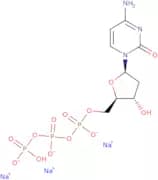
Formula:C9H13N3O6Purity:Min. 95 Area-%Color and Shape:PowderMolecular weight:259.22 g/mol2'-Deoxycytidine-5'-triphosphate trisodium salt
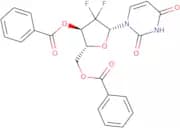
CAS:2'-Deoxycytidine-5'-triphosphate trisodium salt is an activator that has been shown to exhibit anticancer and antiviral activities. It is a novel nucleoside phosphoramidite that is used in the synthesis of DNA, RNA, and other nucleic acids. 2'-Deoxycytidine-5'-triphosphate trisodium salt has been modified by substituting the oxygen atom for a sulfur atom at the 5' position of the sugar moiety. This change makes it resistant to degradation by ribonucleases. 2'-Deoxycytidine-5'-triphosphate trisodium salt has also been shown to act as an inhibitor of human telomerase activity.Formula:C9H13N3O13P3Na3Purity:(%) Min. 85%Color and Shape:PowderMolecular weight:533.1 g/mol3',5'-Di-O-benzoyl-2'-deoxy-2',2'-difluorouridine
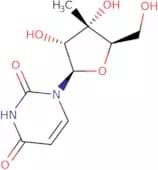
CAS:An intermediate for the preparation of modified oligonucleotides and other uridine derivatives containing a 2',2'-difluoro modification.Formula:C23H18F2N2O7Purity:Min. 95%Color and Shape:White PowderMolecular weight:472.4 g/mol3’-b-C-Methyluridine
CAS:3’-b-C-Methyluridine (3′-b-CMU) is an analog of uridine. It inhibits the activity of viral and bacterial nucleases by attacking the phosphate group. 3′-b-CMU inhibits syncytial formation in cell cultures, which may be due to its ability to inhibit RNA synthesis. This drug has a hydroxyl group that can react with free radicals and may have some inhibitory effect on deoxyribonucleoside triphosphate hydrolysis. 3′-b-CMU is not widely used clinically because it is not readily available, but it is being reinvestigated for use in corynebacterium infections.
Purity:Min. 95%Fmoc morpholino guanosine monomer
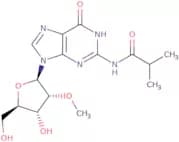
Fmoc Morpholino Guanosine Monomer is a novel and modified nucleoside with antiviral and anticancer activities. It is synthesized from the ribonucleotide, deoxyribonucleotide, and phosphoramidite. Fmoc Morpholino Guanosine Monomer is an activator of RNA polymerase and inhibits cell proliferation in vitro. This compound has been shown to be a potential candidate for treatment of viral infections such as HIV-1, herpes simplex virus type 1, or influenza A virus.Formula:C31H34ClN7O8PPurity:Min. 95%Color and Shape:PowderMolecular weight:699.07 g/molN2-Isobutyryl-2'-O-methylguanosine
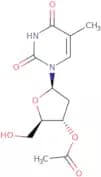
CAS:N2-Isobutyryl-2'-O-methylguanosine (IBOG) is a modified nucleoside that can be used as an activator for DNA synthesis. IBOG is a high purity, high quality chemical with CAS No. 63264-29-9 and has antiviral and anticancer properties.Formula:C15H21N5O6Purity:Min. 95%Color and Shape:White To Yellow SolidMolecular weight:367.36 g/mol3'-O-Acetylthymidine
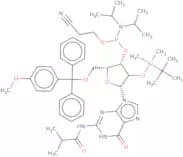
CAS:3'-O-Acetylthymidine is a dinucleoside analogue of thymidine. It has been used as a model for human immunodeficiency virus (HIV) and has been shown to be resistant to HIV infection in vitro. 3'-O-Acetylthymidine inhibits the synthesis of protein by binding to the ribosomal RNA of the host cell, preventing the formation of an aminoacyl-tRNA synthetase complex with tRNA. This prevents the incorporation of amino acids into proteins, leading to inhibition of protein synthesis and cell death. 3'-O-Acetylthymidine also inhibits HIV replication by competing with deoxycytidine triphosphate for incorporation into DNA, preventing the synthesis of viral DNA. 3'-O-Acetylthymidine is hydrolyzed by esterases or glucuronidases, oxidized by cytochrome P450 enzymes, reduced by glutathione reductaseFormula:C12H16N2O6Purity:Min. 98 Area-%Color and Shape:White PowderMolecular weight:284.27 g/mol2'-O-tert-Butyldimethylsilyl-N2-isobutyryl-5'-O-MMT-guanosine 3'-CE phosphoramidite
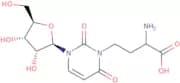
2'-O-tert-Butyldimethylsilyl-N2-isobutyryl-5'-O-MMT-guanosine 3'-CE phosphoramidite is a novel modified ribonucleoside that has been synthesized to mimic the natural nucleotide. It has been shown to activate DNA synthesis, inhibit cancer cell division and proliferation, and inhibit viral replication. 2'-O-tert-Butyldimethylsilyl-N2-isobutyryl-5'-O-MMTguanosine 3'-CE phosphoramidite is a monophosphate nucleotide with an anticancer activity. It has also showed antiviral effects against HIV and Hepatitis B virus. This novel modified ribonucleoside is highly pure and can be used for the synthesis of high quality DNA, RNA, or phosphoramidites.Formula:C49H66N7O8PSiPurity:Min. 95%Molecular weight:940.17 g/mol3-(3-Amino-3-carboxypropyl)uridine
CAS:3-(3-Amino-3-carboxypropyl)uridine is an uridine analog that is used in the study of protein synthesis. It can be used to determine the amino acid sequence of a protein, or to identify proteins with similar sequences. 3-(3-Amino-3-carboxypropyl)uridine can also be used to study enzymatic reactions, such as those involved in the synthesis of polypeptides. This molecule has been shown to produce disulfide bonds and form covalent bonds with other molecules. The three-dimensional structure of this molecule has been determined by NMR spectroscopy and X-ray crystallography.
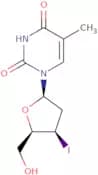
Formula:C13H19N3O8Purity:Min. 95%Color and Shape:PowderMolecular weight:345.31 g/mol3'-Deoxy-3'-iodothymidine
CAS:3'-Deoxy-3'-iodothymidine is a nucleoside that is found in DNA. It has a constant of -1.5 and can be protonated to form the anion. The molecule has a reactive radical anion, which is stabilized by electron delocalization with the aromatic rings. 3'-Deoxy-3'-iodothymidine has been studied for use as a medicine for cancer treatment, but it also has applications in biology and chemistry. This compound can be used in conductometry and electron spectroscopy, as well as other chemical experiments that require ionic compounds or radiation.
Formula:C10H13IN2O4Purity:Min. 95%Color and Shape:PowderMolecular weight:352.13 g/mol7-Deaza-2'-deoxy-6-methoxyguanosine
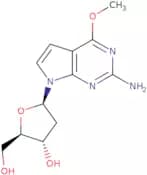
CAS:7-Deaza-2'-deoxy-6-methoxyguanosine is a modified nucleoside and antiviral agent. It has been shown to inhibit the synthesis of DNA, RNA and protein in cells infected with the herpes simplex virus (HSV). 7-Deaza-2'-deoxy-6-methoxyguanosine is also an anticancer agent that has been shown to inhibit tumor growth in animal models. This compound is synthesized by phosphoramidite chemistry and is a novel precursor for the preparation of modified DNA and RNA. The purity of this product is greater than 98%.Formula:C12H16N4O4Purity:Min. 95%Color and Shape:PowderMolecular weight:280.29 g/mol1-(2'-Deoxy-5'-O-DMT-2'-fluoro-β-D-arabinofuranosyl)thymine
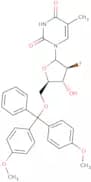
CAS:1-(2'-Deoxy-5'-O-DMT-2'-fluoro-b-D-arabinofuranosyl)thymine is a chemically modified nucleoside that contains a fluorinated sugar moiety and a thymine base, with a dimethoxytrityl (DMT) protecting group on the 5'-hydroxyl of the sugar.Formula:C31H31FN2O7Purity:Min. 95%Molecular weight:562.6 g/mol4-Amino-5-chloro-2,6-dimethylpyrimidine
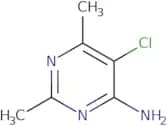
CAS:4-Amino-5-chloro-2,6-dimethylpyrimidine is a supramolecular complex that is characterized by the coordination geometry of its metal ion and the donor atoms. It has been proposed as a potential drug for the treatment of bacterial infections, such as tuberculosis. The 4-Amino-5-chloro-2,6,dimethylpyrimidine is structurally similar to nucleobases and may be able to form hydrogen bonds with water molecules. This molecule also has a high melting point and is not soluble in water. It can be protonated at different pH values and forms complexes with hydroxyl groups found in nucleic acids.Formula:C6H8ClN3Purity:Min. 95%Color and Shape:PowderMolecular weight:157.6 g/mol5’-Deoxy-N4-dimethyl-5-fluorocytidine
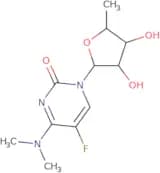
CAS:5’-Deoxy-N4-dimethyl-5-fluorocytidine is a novel antiviral agent that inhibits the synthesis of viral RNA. It is synthesized by the de novo purine nucleotide biosynthesis pathway and is activated by phosphorylation to a 5'-diphosphate. This compound has been shown to inhibit the replication of herpes simplex virus type 1 in cell culture. In addition, it has been shown to have anticancer activity against human leukemia cells in vitro and in vivo.Purity:Min. 95%5-Hydroxymethyl-2’-β-C-methyluridine
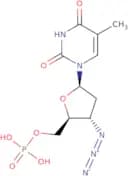
CAS:5-Hydroxymethyl-2’C-methyluridine is a modified nucleoside that is an activator of cellular DNA synthesis. It is a synthetic compound that has been shown to be active against cancer cells in vitro. 5-Hydroxymethyl-2’C-methyluridine has also been used to inhibit the replication of various viruses, including herpes simplex virus type 1 and 2, cytomegalovirus, and human immunodeficiency virus type 1. This drug was shown to be safe and effective in clinical trials for the treatment of HIV/AIDS patients with no adverse side effects.Formula:C11H16N2O7Purity:Min. 95%Color and Shape:PowderMolecular weight:288.25 g/mol3'-Azido-3'-deoxythymidine 5'-monophosphate sodium salt
CAS:3'-Azido-3'-deoxythymidine 5'-monophosphate sodium salt is a synthetic nucleoside that is structurally related to thymidine. It has antiviral and anticancer properties, as well as the potential for use in gene therapy. 3'-Azido-3'-deoxythymidine 5'-monophosphate sodium salt is active against herpes simplex virus type 1 (HSV-1) and HSV-2, human immunodeficiency virus type 1 (HIV-1), human papillomavirus types 16 and 18 (HPV), Epstein Barr Virus (EBV), and cytomegalovirus (CMV). 3'-Azido-3'-deoxythymidine 5'-monophosphate sodium salt inhibits the production of HIV by preventing the viral reverse transcriptase from synthesizing DNA from RNA.Formula:C10H13N5NaO7PPurity:Min. 95%Molecular weight:369.23 g/mol3'-O-Propargyluridine
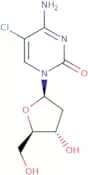
CAS:3'-O-Propargyluridine is a synthetic nucleoside with an alkyne functional handle on the 3'-position of the sugarFormula:C12H14N2O6Purity:Min. 95%Color and Shape:White PowderMolecular weight:282.25 g/mol5-Chloro-2'-deoxycytidine
CAS:5-Chloro-2'-deoxycytidine (5-Cl-dC) is a nucleoside analog that inhibits DNA synthesis by blocking the action of thymidylate synthase. It can be used in animal models to study bowel diseases, such as ulcerative colitis and Crohn's disease. 5-Cl-dC has been shown to be effective in treating the effects of radiation and chemical toxicity in HL60 cells, a type of human leukemia cell line. 5-Cl-dC has also been shown to enhance the cytotoxicity of eosinophil peroxidase, which is an enzyme that may be involved in the pathogenesis of asthma. This drug is currently being evaluated for its safety and efficacy in clinical trials involving patients with myelodysplastic syndrome or acute myeloid leukemia who are at risk for developing leukemia.
Formula:C9H12CIN3O4Purity:Min. 95%Color and Shape:PowderMolecular weight:261.67 g/molUridine-5'-triphosphate trisodium salt
CAS:P2Y receptor agonist; precursor in RNA biosynthesisÂFormula:C9H12N2Na3O15P3Purity:(31P Nmr) Min. 95 Area-%Color and Shape:White PowderMolecular weight:550.09 g/mol1-(3'-azido-3'-deoxy-b-D-ribofuranosyl)-5-nitro-2(1H)-pyridinone
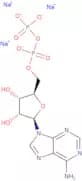
CAS:1-(3'-azido-3'-deoxy-b-D-ribofuranosyl)-5-nitro-2(1H)-pyridinone is a nucleoside analog that has antiviral and anticancer activities. It has been shown to be an activator of cellular DNA polymerase γ, which is involved in the DNA chain elongation process during DNA replication. 1-(3'-azido-3'-deoxy-b-D-ribofuranosyl)-5-nitro-2(1H)-pyridinone also inhibits the activity of human T cell leukemia virus type 1 (HTLV1) reverse transcriptase by binding to its active site and preventing the synthesis of viral DNA. This compound has a high quality with a purity > 98% and is not radioactive or toxic.Purity:Min. 95%Adenosine 5'-diphosphate monosodium salt
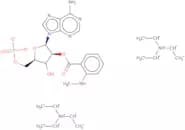
CAS:Used for energy storage and in nucleic acid metabolismFormula:C10H14N5NaO10P2Purity:Min. 98 Area-%Color and Shape:White Off-White PowderMolecular weight:449.18 g/mol2'/3'-(N-Methylanthraniloyl)-adenosine-5'-monophosphate triethylammonium salt
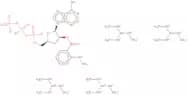
CAS:2'/3'-(N-Methylanthraniloyl)-adenosine-5'-monophosphate triethylammonium salt is an antiviral agent that is based on ribonucleosides. This drug has been shown to be effective against cancer and herpes simplex virus type 1 (HSV-1) and may have potential as a treatment for HIV. It also inhibits the growth of tumors in animal models. 2'/3'-(N-Methylanthraniloyl)-adenosine-5'-monophosphate triethylammonium salt is synthesized by reacting ribonucleosides with N-(2,2,2,-trimethylpropyl)anthranilic acid chloride in the presence of triethylamine. The resulting product can be purified by column chromatography or recrystallization.Formula:C18H21N6O8PPurity:Min. 95%Molecular weight:480.37 g/mol1-(2-C-Methyl-b-D-ribofuranosyl)-5-nitropyridine-2(1H)-one
1-(2-C-Methyl-b-D-ribofuranosyl)-5-nitropyridine-2(1H)-one is an antiviral agent that belongs to the class of monophosphate deoxyribonucleosides. It is a novel compound that has been shown to be an activator of high purity and quality. 1-(2-C-Methyl-b-D-ribofuranosyl)-5-nitropyridine-2(1H)-one is synthesized from modified ribonucleosides and phosphoramidites. The antiviral activity of this drug against DNA viruses (e.g., herpes, adenovirus) and RNA viruses (e.g., influenza virus) has been shown in vitro and in vivo. In addition, 1-(2-C-Methyl-b--D--ribofuranosyl)-5--nitropyridine--2(1H)--Purity:Min. 95%5-Amino-2’-deoxy-2’-O-methyluridine HCl
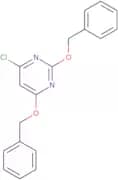
5-Amino-2’-deoxy-2’-O-methyluridine HCl is a novel nucleoside analog that has been modified with an O-methyl group at the 5′ position of the ribose moiety. This modification inhibits phosphorylation by inhibiting DNA polymerase and thus, preventing DNA synthesis. 5-Amino-2’-deoxy-2’-O-methyluridine HCl has also been shown to inhibit viral replication by inhibiting viral RNA and protein synthesis, while not affecting human RNA and protein synthesis. 5AADMUT is an activator of diphosphate metabolism in cells which may be due to its ability to inhibit enzymes involved in nucleotide metabolism (e.g., adenosine kinase).Purity:Min. 95%2,4-bis(Benzyloxy)-6-chloropyrimidine
CAS:This study investigates the association between the use of 2,4-bis(benzyloxy)-6-chloropyrimidine (BCP) and lowering in the risk of developing breast cancer in women. The study is based on a national dataset that includes all Danish women who were enrolled in the Danish Breast Cancer Screening Program from 1995 to 2009. The covariates collected include age, weight, height, family history of breast cancer, parity, and hormone replacement therapy. This research was conducted by researchers at various universities in Denmark.Purity:Min. 95%2-Methylthio-N6-isopentenyladenosine
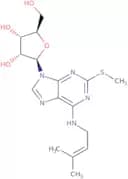
CAS:A nucleoside analogue of adenosine that arises from post-transcriptional modification. In humans, this is mediated by the enzyme CDK5RAP1 in mitochondrial transfer RNA (tRNA) at amino acid 37. Deficiency for this modification, for example due to CDK5RAP1 deficiency, leads to impaired mitochondrial protein synthesis. This has implications for mitochondrial diseases, as well as cancer, type II diabetes and vitiligo. Synthetic ms2i6A can be used to raise monoclonal antibodies against this nucleotide in vivo.Formula:C16H23N5O4SPurity:Min. 95%Color and Shape:White PowderMolecular weight:381.45 g/mol3'-O-tert-Butyldimethylsilyl-5'-O-DMT-uridine 2'-CE phosphoramidite
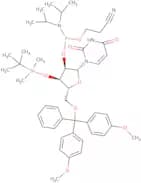
CAS:3'-O-tert-Butyldimethylsilyl-5'-O-DMT-uridine 2'-CE phosphoramidite is a modified nucleoside that is commonly used in the synthesis of DNA. It is a monophosphate, diphosphate, and triphosphate analog of uridine. 3'-O-tert-Butyldimethylsilyl-5'-O-DMT-uridine 2'-CE phosphoramidite has antiviral and anticancer activity, as well as antitumor properties. This product is available in high purity and high quality.Formula:C45H61N4O9PSiPurity:Min. 95%Molecular weight:861.05 g/mol5'-Deoxy-5'-fluorothymidine
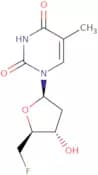
CAS:5'-Deoxy-5'-fluorothymidine is a cytotoxic agent that inhibits the synthesis of DNA by binding to the enzyme thymidylate synthase and preventing the formation of thymine nucleotide. 5'-Deoxy-5'-fluorothymidine has shown to be effective against herpes simplex virus, murine bone, and tissue culture cells. This drug also inhibits cellular proliferation in vitro and can be used in chemotherapy treatment. 5'-Deoxy-5'-fluorothymidine is synthesized from guanine by an enzyme called deoxyguanosine kinase. The biosynthesis of this drug involves two steps: conversion of guanine to xanthosine monophosphate (XMP) and conversion of XMP to 5'-deoxy-5'-fluorothymidine (dFTP).Formula:C10H13FN2O4Purity:Min. 95%Molecular weight:244.22 g/molN2-Isobutyryl-2'-deoxy-5'-O-pixylguanosine
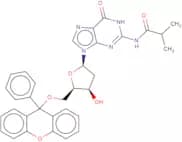
N2-Isobutyryl-2'-deoxy-5'-O-pixylguanosine is a modified nucleotide that has been shown to be an activator of the protein kinase C and may have anticancer and antiviral properties. N2-Isobutyryl-2'-deoxy-5'-O-pixylguanosine is a synthetic nucleoside that is structurally similar to ribonucleosides and deoxyribonucleosides, but contains a modified base. The nucleotide is activated by phosphorylation and then undergoes hydrolysis in the cell to form diphosphate. This product has CAS No. 125965-04-3, purity at 99%, and high quality.Formula:C33H31N5O6Purity:Min. 95%Molecular weight:593.64 g/mol3’-Deoxy-3’C-methyl-5-methyluridine
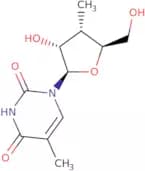
CAS:3’-Deoxy-3’C-methyl-5-methyluridine is a novel and efficient phosphoramidite monophosphate, which can be used in the synthesis of DNA. This product has antiviral activity against HIV and some other viruses. The phosphoramidite is modified with a diphosphate group, which increases the efficiency of DNA synthesis. 3’-Deoxy-3’C-methyl-5-methyluridine is synthesized by modifying 5′ position with a C6 methylaminomethyl group and coupling with the 3′ deoxynucleoside.Purity:Min. 95%5'-Deoxy-5'-iodoguanosine
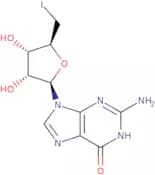
CAS:5'-Deoxy-5'-iodoguanosine is a synthetic nucleoside that is used as a molecular probe to study the biochemical and physiological effects of UV irradiation. It has been shown to be reactive under in vitro conditions, and to have functionalities in vivo. 5'-Deoxy-5'-iodoguanosine has been used as a polymerase inhibitor, and it can also be used for the synthesis of oligonucleotides.Formula:C10H12IN5O4Purity:Min. 95%Color and Shape:Yellow PowderMolecular weight:393.14 g/molN6-Benzoyl-3'-O-tert-butyldimethylsilyl-5'-O-DMT-adenosine 2'-CE phosphoramidite
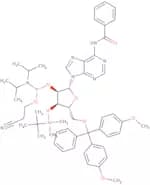
CAS:N6-Benzoyl-3'-O-tert-butyldimethylsilyl-5'-O-DMT-adenosine 2'-CE phosphoramidite is an antiviral nucleoside phosphoramidite that is used in the synthesis of DNA. It has been shown to have antiviral activity against HIV and herpes, as well as anticancer effects. It also has high purity, being a novel synthetic nucleoside with a CAS number. N6-Benzoyl-3'-O-tert-butyldimethylsilyl-5'-O-DMT-adenosine 2'-CE phosphoramidite is synthesized using novel methods. The synthesis process includes activation with diphosphate, DNA, and Novel nucleosides, which are high quality and modified.Formula:C53H66N7O8PSiPurity:Min. 95%Color and Shape:PowderMolecular weight:988.19 g/mol2'-O-(N-Methylanthraniloyl)-3'-deoxy-adenosine-5'-triphosphate triethylammonium salt
CAS:2'-O-(N-Methylanthraniloyl)-3'-deoxy-adenosine-5'-triphosphate triethylammonium salt is a novel antiviral and anticancer compound. It is an analogue of adenosine, which inhibits the synthesis of viral RNA and DNA. This compound can also be used to treat certain types of cancer. 2'-O-(N-Methylanthraniloyl)-3'-deoxy-adenosine-5'-triphosphate triethylammonium salt is chemically synthesized by reacting anthranilic acid with 3',5'-dideoxyadenosine 5' triphosphoric acid.Formula:C18H23N6O13P3Purity:Min. 95%Molecular weight:624.33 g/molN4-Benzoyl-2'-deoxy-5'-O-tritylcytidine
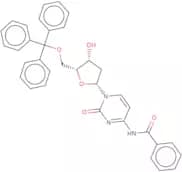
CAS:N4-Benzoyl-2'-deoxy-5'-O-tritylcytidine is a nucleoside analog that is used as an antiviral agent. It inhibits DNA synthesis by inhibiting the enzyme DNA polymerase, which is essential for the replication of viral and cellular DNA. N4-Benzoyl-2'-deoxy-5'-O-tritylcytidine also has anticancer activity, which may be due to its ability to inhibit ribonucleotide reductase and thereby block the production of RNA.Formula:C35H31N3O5Purity:Min. 95%Molecular weight:573.65 g/molN4-Benzoyl-2'-deoxy-5'-O-pixylcytidine
CAS:N4-Benzoyl-2'-deoxy-5'-O-pixylcytidine is a novel nucleoside that is structurally related to cytidine. It is synthesized from 2'-deoxycytidine monophosphate and 4-benzoylpixyl chloride. N4-Benzoyl-2'-deoxy-5'-O-pixylcytidine has antiviral, antiangiogenic and anticancer properties, as well as the ability to inhibit the replication of DNA in cells. This compound can be used for synthesis of phosphoramidites, which are used in the production of oligonucleotides.Formula:C35H29N3O6Purity:Min. 95%Molecular weight:587.64 g/molN4-Acetylcytidine
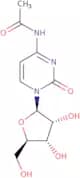
CAS:N4-Acetylcytidine is a modified nucleoside and endogenous urinary nucleoside product of the degradation of tRNA. N4-Acetylcytidine is a biological marker for various cancers with elevated concentrations present in urine. N4-Acetylcytidine is also a partially protected cytidine and therefore can be used as a synthetic building block to prepare further derivatized nucleosides such as 2’,3’-dideoxycytidine.Formula:C11H15N3O6Purity:Min. 95%Color and Shape:White PowderMolecular weight:285.25 g/mol5'-O-Methyl-D3-thymidine
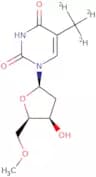
Controlled Product5'-O-Methyl-D3-thymidine is a synthetic nucleoside that has been modified to contain a methyl group at the 5' position. It is used in the synthesis of DNA and RNA, as well as in the preparation of phosphoramidites for oligonucleotide synthesis. This nucleoside has antiviral and anticancer properties and may be useful for treating diseases such as AIDS, hepatitis B, and leukemia. The compound can also act as an activator during polymerase chain reactions. 5'-O-Methyl-D3-thymidine is readily soluble in water and in organic solvents and is highly pure with a high yield of 99%.Formula:C11H13N2O5D3Purity:Min. 95%Molecular weight:259.27 g/mol6-Amino-1-(2'-deoxy-b-D-ribofuranosyl)-4-hydroxyamino-1H-pyrazolo[3,4-d]pyrimidine
6-Amino-1-(2'-deoxy-b-D-ribofuranosyl)-4-hydroxyamino-1H-pyrazolo[3,4-d]pyrimidine is a modified nucleoside with antiviral and anticancer properties. It is an activator of ribonucleotide reductase, which converts ribonucleotides to deoxyribonucleotides. 6-Amino-1-(2'-deoxy-b-D-ribofuranosyl)-4-hydroxyamino-1H pyrazolo[3,4 d]pyrimidine can be used in the synthesis of phosphoramidites for DNA synthesis and for the production of monophosphate nucleotides. The compound has been shown to inhibit the growth of cells in culture that are resistant to other antiinfectives such as erythromycin and chloramphenicol.Purity:Min. 95%Adenosine 5'-monophosphate monohydrate
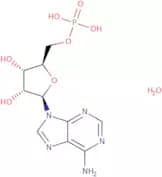
CAS:Adenosine 5'-monophosphate monohydrate (AMP) is a nucleotide that is released by cells in response to various stimuli. It is involved in the regulation of metabolic rate, cell death, and inflammatory responses. AMP may also act as a mediator of opioid-induced analgesia. AMP has been shown to inhibit the production of pro-inflammatory cytokines in activated macrophages and to reduce nociception at high doses. This drug also has an effect on blood pressure and may be used for the treatment of hypertension.Formula:C10H14N5O7P•H2OPurity:Min. 98 Area-%Color and Shape:White PowderMolecular weight:365.24 g/mol3’-Deoxy-3’-fluoro-N6-hydroxyadenosine
CAS:3’-Deoxy-3’-fluoro-N6-hydroxyadenosine (3'-DF) is an antiviral nucleoside that inhibits viral DNA synthesis and has shown cytotoxic effects in human cancer cells. 3'-DF is a novel chemical compound that was first synthesized in 1994. It is a nucleotide analog that is structurally related to adenosine, with the exception of the fluoro atom at position 6 on the ribose sugar. 3'-DF inhibits DNA polymerase and RNA polymerase by competitively binding to the ribonucleotide reductase enzyme, inhibiting the production of new RNA and DNA molecules. This compound also has been shown to inhibit protein synthesis in cancer cells without affecting normal cells.Purity:Min. 95%5-Fluoro-4’-C-methyluridine
CAS:5-Fluoro-4’-C-methyluridine is a novel antiviral agent that is structurally related to the nucleoside analogue cytidine. It has been shown to be an activator of DNA polymerase, which may contribute to its antiviral activity. 5-Fluoro-4’-C-methyluridine has been shown to inhibit the growth of cancer cells by modifying the synthesis of deoxyribonucleic acid (DNA) and ribonucleic acid (RNA). 5-Fluoro-4’-C-methyluridine has also been shown to have anticancer effects, as it inhibits cell proliferation and induces apoptosis.Purity:Min. 95%Isocytidine triphosphate triethylamine
CAS:Isocytidine triphosphate triethylamine salt is a nucleoside that has been modified to include an amino group. It is a monophosphate, which means it contains one phosphate group. Isocytidine triphosphate triethylamine salt has shown anticancer properties as it inhibits the synthesis of DNA and RNA. This compound also prevents the activation of transcription factors, such as NF-κB, that are important in cancer cell proliferation.Formula:C9H16N3O14P3•(C6H15N)xPurity:Min. 95%Color and Shape:PowderMolecular weight:483.15 g/mol2-Amino-6-chloro-9-(b-D-ribofuranosyl)purine
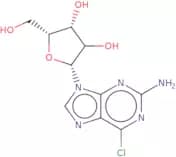
CAS:Intermediate in the synthesis of nelarabineFormula:C10H12ClN5O4Purity:Min. 97 Area-%Color and Shape:Off-White PowderMolecular weight:301.69 g/mol5'-O-MMT-thymidine 3'-CE phosphoramidite
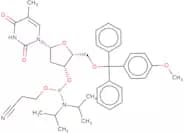
CAS:5'-O-MMT-thymidine 3'-CE phosphoramidite is a novel anticancer drug that is modified from the natural nucleoside thymidine. It has been shown to inhibit the activity of DNA polymerase, preventing DNA synthesis and replication. It also inhibits viral DNA replication, including HIV and herpes simplex virus type-1 (HSV-1). 5'-O-MMT-thymidine 3'-CE phosphoramidite has antiviral properties against HIV and HSV-1. This nucleoside is synthesized by reacting 5'-O-methyl cytidylic acid with an activated phosphite in the presence of triethylamine in dichloromethane. The product is purified by column chromatography on silica gel and recrystallization from acetonitrile.
Formula:C39H47N4O7PPurity:Min. 95%Molecular weight:714.81 g/molAdenosine
CAS:Endogenous adenosine receptor ligand; regulator of innate immunityFormula:C10H13N5O4Purity:(Titration) 99.0 To 101.0%Color and Shape:White PowderMolecular weight:267.25 g/molN2-DMF-5'-O-DMT-2'-O-methylguanosine 3'-CE phosphoramidite
N2-DMF-5'-O-DMT-2'-O-methylguanosine 3'-CE phosphoramidite is a novel ribonucleotide with high purity and high quality. It is an activator of DNA synthesis and can be used in the synthesis of DNA, monophosphate, and diphosphate. N2-DMF-5'-O-DMT-2'-O-methylguanosine 3'-CE phosphoramidite is used for the preparation of anticancer drugs, antiviral agents, and other nucleosides.Formula:C44H55N8O8PPurity:Min. 95%Color and Shape:White PowderMolecular weight:854.95 g/mol2'-O-tert-Butyldimethylsilyl-5'-O-tritylthymidine 3'-CE phosphoramidite
2'-O-tert-Butyldimethylsilyl-5'-O-tritylthymidine 3'-CE phosphoramidite is a novel monophosphate derivative that is used as an activator for DNA synthesis. This compound is synthesized by reacting 2,4,6-triisopropylbenzenesilyl chloride with 5'-O-tritylthymidine 3'-hydroxyl in the presence of a base. The resulting intermediate is then converted to the desired product with 1,1'-carbonyldiimidazole and 2-(N,N-dimethylamino)ethoxychloroformate. 2'-O-tert-Butyldimethylsilyl-5'-O-tritylthymidine 3'-CE phosphoramidite has been shown to be effective against hepatitis B virus and herpes simplex virus type 1 (HSV1).Formula:C44H59N4O7PSiPurity:Min. 95%Molecular weight:815.04 g/mol












![6-Amino-1-(2'-deoxy-b-D-ribofuranosyl)-4-hydroxyamino-1H-pyrazolo[3,4-d]pyrimidine](/_next/image/?url=https%3A%2Fstatic.cymitquimica.com%2Fproducts%2F3D%2Fthumb-webp%2FNA162941.webp&w=3840&q=75)