


Nucleosides
Found 3569 products of "Nucleosides"
3-N-Boc-5'-O-DMT-3'-fluorothymidine
CAS:3-N-Boc-5'-O-DMT-3'-fluorothymidine is a monophosphate nucleoside with antiviral and anticancer activity. It is a novel synthetic analogue of fluoro thymidine (FT) that has been shown to be an activator of DNA polymerase α, RNA polymerase β and γ, and protein kinase C. This compound is also an inhibitor of the reverse transcriptase enzyme HIV-1. 3-N-Boc-5'-O-DMT-3'-fluorothymidine has been shown to inhibit cancer cell growth in vitro and in vivo. The synthesis of this compound can be achieved by phosphoramidite chemistry using a commercially available automated synthesizer.Purity:Min. 95%2'-Deoxy-N4-methylcytidine 5'-triphosphate lithium salt - 100 mM aqueous solution
2'-Deoxy-N4-methylcytidine 5'-triphosphate lithium salt is a replication inhibitor that inhibits the synthesis of DNA. The drug binds to the replicase, which prevents the elongation of the single-stranded DNA chain by blocking the polymerase and terminating transcription. 2'-Deoxy-N4-methylcytidine 5'-triphosphate lithium salt can be used for research purposes in nucleic acid research, including single-stranded DNA, RNA, or protein synthesis. It has been shown to be effective in preventing artifacts during polymerase chain reactions.Formula:C10H18N3O13P3Purity:Min. 95%Molecular weight:481.18 g/mol2'-O-tert-Butyldimethylsilyl-5'-O-DMT-N3-methylcytidine 3'-CE phosphoramidite
2'-O-tert-Butyldimethylsilyl-5'-O-DMT-N3-methylcytidine 3'-CE phosphoramidite is a modified nucleoside that is synthesized by the reaction of 2'-deoxycytidine with bis(2,4,6-trichlorophenyl)carbonate in the presence of a base. 2'-O-tert-Butyldimethylsilyl-5'-O-DMT-N3 methylcytidine 3'-CE phosphoramidite has been shown to have anticancer activity and is used as an activator in the synthesis of oligonucleotides. This product is available as a white powder and can be used for research purposes only.Purity:Min. 95%Guanosine-5'-[(b,gamma)-methyleno]triphosphate sodium salt
CAS:Guanosine-5'-[(b,gamma)-methyleno]triphosphate sodium salt (GMPP) is an analog of guanosine triphosphate that is enzymatically inactivated by the enzyme kinesin. GMPP inhibits the polymerization of microtubules by binding to the kinesin molecule and preventing it from binding to tubulin. GMPP has been shown to inhibit sephadex g-100 chromatography and act as a competitive inhibitor for protein synthesis in vitro. GMPP has also been shown to have a fat cell differentiation effect which may be due to its ability to inhibit microtubule polymerization.Formula:C11H18N5O13P3·xNaPurity:Min. 95 Area-%Color and Shape:PowderMolecular weight:521.21 g/mol2,3'-Anhydro-N4-benzoyl-2'-deoxycytidine 5'-CE phosphoramidite
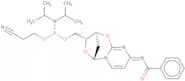
2,3'-Anhydro-N4-benzoyl-2'-deoxycytidine 5'-CE phosphoramidite is a novel nucleoside analog that has been synthesized to have the same chemistry as 2,3'-dideoxycytidine 5'-C phosphoramidite. It has antiviral and anticancer properties. This compound can be used in the synthesis of oligonucleotides for DNA sequencing and for gene therapy. 2,3'-Anhydro-N4-benzoyl-2'-deoxycytidine 5'-CE phosphoramidite is not toxic to normal cells, but it inhibits replication of viruses such as HIV and herpes simplex virus.Formula:C25H32N5O5PPurity:Min. 95%Molecular weight:513.54 g/mol5’-Deoxy-5’-iodo-2’-O-(2-methoxyethyl)-5-methyluridine
CAS:5’-Deoxy-5’-iodo-2’-O-(2-methoxyethyl)-5-methyluridine is an antiviral drug that inhibits the synthesis of viral DNA. It is synthesized by reacting 5'-deoxyadenosine monophosphate with 2'-O-(2-methoxyethyl)iodoacetamide and methylating the resulting product with methyl iodide. 5'-Deoxy-5’-iodo-2’-O-(2-methoxyethyl)-5-methyluridine has a novel structure and can be used as an activator of ribonucleosides in DNA synthesis. The drug also has anticancer properties, which may be due to its ability to inhibit cellular proliferation by inhibiting the enzyme DNA polymerase or by arresting cells at the G1 phase of the cell cycle.Purity:Min. 95%N4-Acetyl-2'-deoxy-5'-O-DMT-2'-fluorocytidine
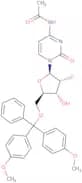
CAS:N4-Acetyl-2'-deoxy-5'-O-DMT-2'-fluorocytidine is a cytosine analog with high affinity for the T cell receptor. It can be used to generate antibodies against cytosine and as a screening tool for plasmon resonance.
Formula:C32H32FN3O7Purity:Min. 95%Color and Shape:White PowderMolecular weight:589.61 g/mol4'-C-Azido-2'-deoxy-2'-fluoro-4-[bis(2-hydroxyethyl)]-b-D-arabinocytidine
CAS:4'-C-Azido-2'-deoxy-2'-fluoro-4-[bis(2-hydroxyethyl)]-b-D-arabinocytidine is a novel nucleoside analog with antiviral and anticancer activities. It is a chemical compound with the molecular formula C8H14N6O5P and a molecular weight of 288.28 g/mol. 4'-C-Azido-2'-deoxy-2'-fluoro-4-[bis(2-hydroxyethyl)]-b-D-arabinocytidine has the CAS number 136045902, which can be found in PubChem Compound Database.Purity:Min. 95%1-(4’-Azido-2’-deoxy-2’-fluoro-b-D-arabinofuranosyl)N4-(n-palmitoyl)-cytosine
1-(4’-Azido-2’-deoxy-2’-fluoro-b-D-arabinofuranosyl)N4-(n-palmitoyl)-cytosine is a deoxyribonucleoside, modified nucleoside that is synthesized by using a novel phosphoramidite chemistry. 1-(4’-Azido-2’-deoxy-2’-fluoro-b-D-arabinofuranosyl)N4-(n-palmitoyl)-cytosine is an activator of ribonucleotide reductase and can be used in anticancer and antiviral therapy.Purity:Min. 95%N6-Dimethyl-3’-b-C-methyladenosine
CAS:N6-Dimethyl-3’-b-C-methyladenosine is a novel nucleoside analog that has antiviral and anticancer properties. It is a phosphoramidite, which can be used as an activator for the synthesis of modified oligonucleotides. N6-Dimethyl-3’-b-C-methyladenosine has been shown to activate ribonucleosides and deoxyribonucleosides in vitro. This compound also has anticancer properties, which may be due to its ability to act as an activator in the synthesis of DNA.Purity:Min. 95%1'-13CCytidine
CAS:Please enquire for more information about 1'-13CCytidine including the price, delivery time and more detailed product information at the technical inquiry form on this pageFormula:CC8H13N3O5Purity:Min. 95%Color and Shape:PowderMolecular weight:244.21 g/mol2'-O-(2-Methoxyethyl)-5-methyluridine 5'-monophosphate
2'-O-(2-Methoxyethyl)-5-methyluridine 5'-monophosphate is an antiviral nucleoside with anticancer properties that is synthesized from 2'-deoxyuridine monophosphate and 5-methyluridine. This novel compound has shown antiviral activity against HIV, herpes simplex virus type 1, and herpes simplex virus type 2. It also inhibits the growth of human breast cancer cells in vitro.Purity:Min. 95%5'-O-p-Anisoyl-D3-thymidine
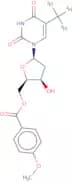
Controlled Product5'-O-p-Anisoyl-D3-thymidine is a nucleoside analogue that is used in antiviral and anticancer treatments. It is synthesized by the condensation of 3,4-dihydroxyacetophenone with 2,6-diaminopurine followed by phosphorylation of the 5' hydroxyl group. This product has been shown to be an activator of both DNA polymerase and RNA polymerase. In addition, it can inhibit the production of viral proteins such as HIV protease without affecting protein synthesis in mammalian cells. It also inhibits cancer cell growth by stopping DNA replication at the G2 phase. 5'-O-p-Anisoyl-D3-thymidine has been shown to be highly purified and can be used for research purposes. This product may have a CAS number but it will not be listed on this website due to company policy.Formula:C18H17N2O7D3Purity:Min. 95%Molecular weight:379.38 g/mol2'-Deoxy-5'-O-DMT-N6-isobutyryladenosine
CAS:2'-Deoxy-5'-O-DMT-N6-isobutyryladenosine is a modified ribonucleoside that has antiviral and anticancer activity. It is synthesized by modifying the 5' hydroxyl group of the natural nucleoside, 2'-deoxyadenosine, with a 6-aminohexanoic acid to give 2'-deoxy-5'-O-(2,4,6-trimethoxybenzoyl)adenosine. This modification increases the affinity for viral DNA polymerases, leading to higher antiviral activity. The drug also has antitumor effects against human leukemia cells in culture.Formula:C35H37N5O6Purity:Min. 95%Color and Shape:Off-White To Light (Or Pale) Yellow SolidMolecular weight:623.72 g/molN2-Phenylacetyl-L-guanosine
N2-Phenylacetyl-L-guanosine is a nucleoside that has been synthetically modified to have the desired properties of an anticancer agent. This compound inhibits DNA synthesis and is therefore cytotoxic to cells. It also inhibits RNA synthesis and is antiviral. N2-Phenylacetyl-L-guanosine has been found to be effective in preventing the growth of leukemia cells, breast cancer cells, prostate cancer cells, and ovarian cancer cells. N2-Phenylacetyl-L-guanosine is a nucleotide analogue that can be used as a building block for DNA or RNA synthesis. It can be used as a phosphate donor in phosphoramidite chemistry and can activate other nucleosides for use in chemical biology.
Formula:C18H19N5O6Purity:Min. 95%Molecular weight:401.37 g/mol2'-O-Acetyl-3'-deoxy-3'-fluoro-5-methoxy-5'-O-toluoyluridine
CAS:2'-O-Acetyl-3'-deoxy-3'-fluoro-5-methoxy-5'-O-toluoyluridine is a modified nucleoside that has antiviral, anticancer and antimalarial activities. This compound has been synthesized as a monophosphate derivative of the natural nucleoside uridine. It is an activator of DNA polymerase, which helps to synthesize DNA in cells. 2'-O-Acetyl-3'-deoxy-3'-fluoro-5-methoxy-5'-O-toluoyluridine also has anticancer activity due to its ability to inhibit the replication of the human tumor virus KSHV.Purity:Min. 95%4,6-Diamino-2-(b-D-ribofuranosyl)-2H-pyrazolo[3,4-d]pyrimidine
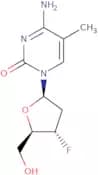
CAS:4,6-Diamino-2-(b-D-ribofuranosyl)-2H-pyrazolo[3,4-d]pyrimidine is a nucleoside monophosphate that is used as an antiviral agent. It inhibits the synthesis of viral DNA and RNA by inhibiting the activity of enzymes needed for nucleotide synthesis. 4,6-Diamino-2-(b-D-ribofuranosyl)-2H-pyrazolo[3,4-d]pyrimidine has shown anticancer properties in vitro against human colon cancer cells. This drug has been shown to inhibit the growth of tumor cells with high expression levels of cyclin D1 and low levels of p27 (a cell cycle regulatory protein).Purity:Min. 95%2',3'-Dideoxy-3'-fluoro-5-methylcytidine
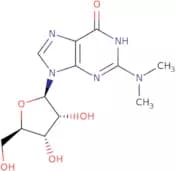
CAS:2',3'-Dideoxy-3'-fluoro-5-methylcytidine (ddFMdC) is a nucleoside analogue that inhibits the synthesis of DNA by terminating DNA chain elongation. It is a purine analog and has been shown to be active against HIV in vivo. ddFMdC also terminates the DNA strand, which prevents polymerase from extending the strand. ddFMdC has been shown to be chemically stable, with no changes in stereochemistry during the course of vivisection trials. The antiviral agent ddFMdC has been used in the treatment of hepatoblastoma, a form of liver cancer, and retroviruses.Purity:Min. 95%N2,N2-Dimethylguanosine
CAS:N2,N2-Dimethylguanosine is a purine nucleoside that is found in human serum. It belongs to the group of purines and has been shown to be involved in energy metabolism. N2,N2-Dimethylguanosine has been shown to be present at high levels in patients with autoimmune diseases such as rheumatoid arthritis. The x-ray crystal structures of wild-type strains of Escherichia coli and Streptococcus pneumoniae have been determined, which revealed that this compound interacts with the enzyme activity for primary sclerosing cholangitis. This nucleoside can also be detected by LC-MS/MS methods and multivariate logistic regression analysis.Formula:C12H17N5O5Purity:Min. 98 Area-%Color and Shape:Off-White PowderMolecular weight:311.3 g/mol2'-Deoxy-5'-O-DMT-inosine 3'-thio CE phosphoramidite
CAS:2'-Deoxy-5'-O-DMT-inosine 3'-thio CE phosphoramidite is a modified phosphoramidite. It is used in the synthesis of antiviral and anticancer nucleosides. 2'-Deoxy-5'-O-DMT-inosine 3'-thio CE phosphoramidite has been shown to be an effective inhibitor of HIV reverse transcription, with selectivity for HIV over other retroviruses. It also inhibits viral replication at low concentrations, which makes it a promising candidate for the development of drugs against AIDS.
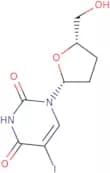
Formula:C40H47N6O6PSPurity:Min. 95%Color and Shape:PowderMolecular weight:770.88 g/mol2',3'-Dideoxy-5-iodouridine
CAS:2',3'-Dideoxy-5-iodouridine is a synthetic nucleoside analog derived from uridine, one of the natural building blocks of RNA. This molecule has been chemically modified to disrupt the normal processes of DNA and RNA synthesis, making it a candidate for antiviral and anticancer research.Formula:C9H11IN2O4Purity:Min. 95%Color and Shape:PowderMolecular weight:338.1 g/molβ-Nicotinamide adenine dinucleotide
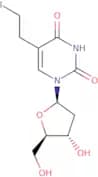
CAS:Nicotinamide adenine dinucleotide (NAD), is a very important and essential coenzyme formed by the union of two nucleotides covalently bond to each other by their phosphates group. NAD is present in cells either in its oxidative form or in its reduced form, NAD+ and NADH respectively. They take part in many redox reactions, carrying electrons from one molecule to another.Formula:C21H27N7O14P2Purity:Min. 95 Area-%Color and Shape:White PowderMolecular weight:663.43 g/mol2'-Deoxy-5-(2-iodoethyl)uridine
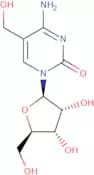
CAS:2'-Deoxy-5-(2-iodoethyl)uridine is a nucleoside analog with antiviral and anticancer activity. It has been shown to be an activator of DNA replication, as well as inhibiting the synthesis of deoxyribonucleotides. This drug also has a novel structure that is modified from the natural nucleosides found in DNA and RNA. 2'-Deoxy-5-(2-iodoethyl)uridine can be synthesized using phosphoramidites, which are activated by iodine and sulfurizing agents. The purity of this compound is high and it is available at high quality.Purity:Min. 95%5-Hydroxymethylcytidine
CAS:5-Hydroxymethylcytidine is a nucleoside that has been shown to inhibit the activity of RNA polymerase by forming hydrogen bonds with the enzyme. It is used in vitro to study the role of messenger RNA in regulating gene expression, and also as a probe for transcriptase activity. 5-Hydroxymethylcytidine has also been shown to have a biological function in solid tumours and may be an analytical method for detecting cancer.Formula:C10H15N3O6Purity:Min. 95 Area-%Color and Shape:White PowderMolecular weight:273.24 g/mol3’-b-Azido-2’,3’-dideoxy-5’-O-(4-methoxytrityl)uridine
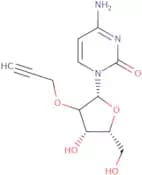
CAS:3’-b-Azido-2’,3’-dideoxy-5’-O-(4-methoxytrityl)uridine (AZDU) is a modified nucleoside that is used as an antiviral agent. AZDU inhibits viral DNA synthesis by acting as a competitive inhibitor of the enzyme ribonucleotide reductase. AZDU has also been shown to inhibit tumor cell growth in vitro and in vivo. In addition, AZDU has been found to have anticancer activity against human leukemia cells, which may be due to its ability to inhibit DNA synthesis.Purity:Min. 95%2'-O-Propargylcytidine
CAS:2'-O-Propargylcytidine is a novel nucleoside that has been modified from cytidine. It is designed to inhibit the activity of RNA polymerase and to be used in anticancer therapy. The synthesis of 2'-O-propargylcytidine has been achieved by modifying the nucleotide with propargylic chloride, which is then reacted with sodium cyanide. The resulting product is purified by column chromatography and recrystallization.
2'-O-Propargylcytidine is a phosphoramidite that can be used for DNA synthesis or as a monophosphate in RNA synthesis. This high purity product has a CAS number of 206552-85-4 and it can be used as an activator for ribonucleosides, such as adenosine, guanosine, uridine, cytidine, and thymidine.Formula:C12H15N3O5Purity:Min. 95%Color and Shape:PowderMolecular weight:281.26 g/mol5'-O-Benzoyl-2'-deoxyinosine
5'-O-Benzoyl-2'-deoxyinosine is an antiviral agent that inhibits the replication of certain viruses. It is a nucleoside analog that contains a benzoyl group at the 5' position and a 2'-deoxyribose sugar moiety. It has been shown to inhibit the growth of cancer cells in vitro and to produce cytotoxic effects on human lymphocytes. This compound is synthesized by reacting an appropriate ribonucleotide with phosphoramidite reagents, which are used as starting materials for DNA synthesis.Purity:Min. 95%3'-O-Methyl-2'-O-acetyl-5'-O-benzoyluridine
CAS:3'-O-Methyl-2'-O-acetyl-5'-O-benzoyluridine is a nucleoside that has antiviral and anticancer properties. It is a monophosphate analogue of the natural uridine, which is found in RNA. 3'-O-Methyl-2'-O-acetyl-5'-O-benzoyluridine is modified by substituting a methyl group at the 3' position and an acetyl group at the 2' position with benzoyl groups. The substitution of these groups prevents the conversion of the monophosphate to a diphosphate, meaning that it can only be incorporated into RNA during transcription. This limits its use as an intermediate in DNA synthesis to some extent, but it also makes it more difficult for viruses to replicate their genetic material. 3'-O-Methyl-2'-O-acetyl-5'-O-benzoyluridine has been shownPurity:Min. 95%N6,7-Dimethyldeoxyadenosine
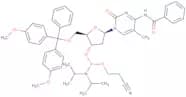
N6,7-Dimethyldeoxyadenosine is a nucleoside with antiviral and anticancer properties. It is a modified DNA monophosphate with the chemical formula C8H16N2O6P. N6,7-dimethyldeoxyadenosine has been shown to inhibit the replication of HIV and herpes simplex virus type 1 (HSV-1) in vitro. This compound also inhibits the growth of cancer cells in culture and has been suggested as an anticancer therapeutic agent.Purity:Min. 95%N4-Benzoyl-2'-deoxy-5'-O-DMT-5-methylcytidine 3'-CE phosphoramidite
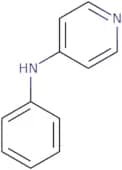
CAS:Nucleoside phosphoramidites are widely used as building blocks in the chemical synthesis of oligonucleotides. The use of a chemical synthesis rather than an enzymatic one allows bespoke oligonucleotides of a desired sequence to be obtained. 3’-Cyanoethyl phosphoramidites are typically modified by reaction with the 5’ hydroxyl of the next nucleoside in the desired sequence. The reaction is usually catalysed by 1H-tetrazole or 4,5-dicyanoimidazole in acetonitrile. N4-Benzoyl-2'-deoxy-5'-O-DMT-5-methylcytidine 3'-CE phosphoramidite, also called N4-Bz-5'-DMT-5-Me-dC phosphoramidite, is used in the synthesis of 2’-deoxy-5-methylcytidine-containing oligonucleotides as antisense drugs.Formula:C47H54N5O8PPurity:Min. 95%Color and Shape:White PowderMolecular weight:847.93 g/molN-Phenylpyridin-4-amine
CAS:N-Phenylpyridin-4-amine is a tautomeric compound that has been shown to inhibit the growth of cancer cells. It is able to bind to tyrosine kinase and inhibit its activity, which affects the proliferation of cancer cells. N-Phenylpyridin-4-amine also inhibits mitochondrial functions by inhibiting cytochrome c oxidase. This drug also has an anti-inflammatory effect, inhibiting the production of cytokines such as IL1β, IL6, and TNFα. The biological function of N-Phenylpyridin-4-amine is not yet fully understood. It may be due to the inhibition of protein tyrosine phosphatases (such as PTP1B), which are involved in insulin signalling pathways.Formula:C11H10N2Purity:Min. 95%Color and Shape:White Off-White PowderMolecular weight:170.21 g/mol2'-O-Acetyl-3'-deoxy-3'-fluoro-5'-O-toluoyluridine
2′-O-Acetyl-3′-deoxy-3′-fluoro-5′-O-toluoyluridine is a novel, activator ribonucleoside. It is synthesized by the phosphoramidite method and modified with an acetyl group at the 2′ position and a toluoyl group at the 3′ position. This compound has been shown to be active against cancer cells in vitro and in vivo.Formula:C19H19FN2O7Purity:Min. 95%Molecular weight:406.36 g/mol5’(R)-C-Methyl-5-methyluridine
CAS:5’(R)-C-Methyl-5-methyluridine is an nucleoside and a ribonucleoside. It has antiviral, anticancer, and DNA modifying properties. This product is used in research to make phosphoramidites, diphosphates, and deoxyribonucleosides. 5’(R)-C-Methyl-5-methyluridine is also used in the production of modified oligonucleotides as well as other novel DNA compounds.
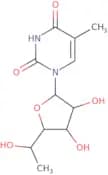
Purity:Min. 95%6-Amino-2,5-dihydro-2-(b-D-ribofuranosyl)-4H-pyrazolo[3,4-d]pyrimidin-4-one
CAS:6-Amino-2,5-dihydro-2-(b-D-ribofuranosyl)-4H-pyrazolo[3,4-d]pyrimidin-4-one is a novel chemical. It is a nucleoside analog that has been shown to inhibit the growth of cancer cells in vitro and in vivo. 6-Amino-2,5-dihydro-2-(b-D ribofuranosyl)-4H pyrazolo[3,4 d]pyrimidin 4 one has also been shown to inhibit viral replication. It is phosphoramidites that are modified with bifunctional linkers for coupling to DNA or RNA molecules. 6 amino 2 5 dihydro 2 (b D ribofuranosyl) 4 H pyrazolo 3 4 d pyrimidine 4 one has high purity and high quality.Purity:Min. 95%5'-Deoxy-5'-fluoro-5'-(methylthio)adenosine
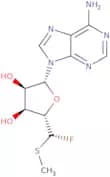
CAS:5'-Deoxy-5'-fluoro-5'-(methylthio)adenosine is an analogue of adenosine that has inhibitory activities on the biosynthetic pathway of polyamines. It has been shown to have a cytostatic effect on murine leukemia cells in vitro. 5'-Deoxy-5'-fluoro-5'-(methylthio)adenosine inhibits the production of polyamines by interfering with the enzyme responsible for their biosynthesis, ornithine decarboxylase. 5'-Deoxy-5'-fluoro-5'-(methylthio)adenosine also inhibits the growth of murine leukemia cells and other leukemia cell lines, including L1210 and MM1.Formula:C11H14FN5O3SPurity:Min. 95%Molecular weight:315.33 g/molN6-Benzoyl-3’-deoxy-5'-O-DMT-3’- fluoroadenosine 2’-CE-phosphoramidite
N6-Benzoyl-3’-deoxy-5'-O-DMT-3’- fluoroadenosine 2’-CE-phosphoramidite is a novel and activator ribonucleoside with deoxyribonucleosides, diphosphate and phosphoramidites. It is an anti-cancer, antiviral, and antiinflammatory agent. N6-Benzoyl-3’-deoxy-5'-O-DMT-3’ -fluoro adenosine 2’ -CE phosphoramidite has a CAS no.Purity:Min. 95%Denufosol tetrasodium
CAS:A P2Y2 receptor agonist that has been studied in cystic fibrosis and retinal diseases such as retinal detachment. Denufosol was studied as an inhaled drug for cystic fibrosis, due to its ability to activate an alternative chloride channel and avoiding the defective CFTR chloride channel. This enhances hydration of the lung mucosa and improves mucociliary clearance. The drug did not progress from phase III clinical trials. Denufosol resulted in subretinal fluid reabsorption in in vivo model of retinal detachment.
Formula:C18H23N5Na4O21P4Purity:Min. 90 Area-%Color and Shape:PowderMolecular weight:861.25 g/mol5'-O-DMT-N2-isobutyryl-2'-O-methylguanosine
CAS:5'-O-DMT-N2-isobutyryl-2'-O-methylguanosine is a nucleoside that has been synthesized using an oxime opening of the 5' position and a methylation at the 2' position. It has been shown to have an affinity for tissues in a chemotactic assay. The compound is minimised to remove non-specific binding sites, avoiding false positives on the checklist. This molecule has been analysed with fluorescence spectroscopy and microscopy techniques, which revealed that it is distributed in tissues as well as being found in dragonflies. It was also shown to be transduced by muscle cells and geochemically detected in limestone from China.Formula:C36H39N5O8Purity:Min. 95%Color and Shape:PowderMolecular weight:669.74 g/mol8-Hydrazinoadenosine
CAS:8-Hydrazinoadenosine is an inhibitor of phosphodiesterase, which is a key enzyme in the regulation of cellular processes. 8-Hydrazinoadenosine binds to the active site of the enzyme and inhibits its function. This binding prevents hydrolysis of the phosphate bond between two nucleotides and so prevents the formation of a new nucleotide from a nucleoside and a phosphate molecule. 8-Hydrazinoadenosine has been shown to inhibit phosphodiesterases in vitro and in animals, including rat brain and mouse lung. Strategies for 8-hydrazinoadenosine commercialization have been investigated, including attaching it to other molecules that are more easily absorbed by cells or using irradiation to produce 8-aminoadenosine, which can be converted into 8-hydrazinoadenosine.Purity:Min. 95%8-Chloroadenosine
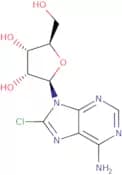
CAS:8-Chloroadenosine is a potent inhibitor of apoptosis, which is the process by which cells die. It has been shown to inhibit cell growth in murine hepatoma cells and synergize with other cytotoxic agents. 8-Chloroadenosine inhibits the activity of bcl-2 protein and thus blocks the release of cytochrome c from mitochondria. This causes DNA damage by inhibiting DNA synthesis and protein synthesis, leading to apoptosis. 8-Chloroadenosine has also been shown to be an active inhibitor of cancer cells, especially myeloma cell lines. The response element for 8-chloroadenosine is located in the promoter region of the gene encoding cyclooxygenase 2 (COX-2), which encodes a protein that produces prostaglandins involved in inflammation and tumor growth. The concentration of camp in cancer tissues determines whether these cells will respond favorably or unfavorably to this drug.Formula:C10H12ClN5O4Purity:Min. 95%Color and Shape:PowderMolecular weight:301.69 g/mol5-Hydroxymethyl-2’-O-(2-methoxyethyl)uridine
CAS:5-Hydroxymethyl-2’-O-(2-methoxyethyl)uridine (5HMEU) is a nucleoside that is synthesized from 2’,3’-dideoxyribonucleosides. 5HMEU has been shown to be an activator of the human telomerase enzyme and is used in the synthesis of DNA. It also has anticancer properties and can inhibit the growth of various cancer cells, including pancreatic, breast, prostate, lung, liver, and cervical cancer cells. 5HMEU is a modified nucleoside that contains a hydroxyl group at the 2’ position and an methoxyl group at the 5’ position. The chemical name for 5HMEU is 5-hydroxymethyl-2'-O-(2-methoxyethyl)uridine.Purity:Min. 95%N-Acetyl-2'-O-[(tert-butyl)dimethylsilyl]-5'-O-DMT-6'-O-methylguanosine-3'-CE phosphoramidite
CAS:N-Acetyl-2'-O-[(tert-butyl)dimethylsilyl]-5'-O-DMT-6'-O-methylguanosine-3'-CE phosphoramidite is a nucleoside and nucleotide analog. It is synthesized by reacting 2'-deoxyguanosine with acetyl chloride, 5'-dimethoxytrityl chloride, and 3'-Ce phosphoramidite in an organic solvent. N-Acetyl-2'-O-[(tert-butyl)dimethylsilyl]-5'-O-DMT-6'-O-methylguanosine has been shown to inhibit the growth of cancer cells and viruses in cell culture studies. It is also a potent inhibitor of HIV replication in vitro.Formula:C49H66N7O9PSiPurity:Min. 95%Color and Shape:PowderMolecular weight:956.15 g/mol1-(2'-O-4-C-Methylene-b-D-ribofuranosyl)thymine
CAS:1-(2'-O-4-C-Methylene-b-D-ribofuranosyl)thymine is a nucleoside analog with a modified ribofuranosyl sugar, which includes a 2'-O-4'-C-methylene bridge that constrains the sugar conformation.Formula:C11H14N2O6Purity:Min. 95%Color and Shape:PowderMolecular weight:270.24 g/mol2'-C-Methylcytidine
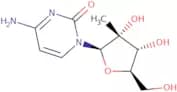
CAS:Broad-spectrum anti-viral; inhibitor of HCV NS5B RNA polymeraseFormula:C10H15N3O5Purity:Min. 98 Area-%Color and Shape:White Off-White PowderMolecular weight:257.25 g/molPolyinosinic acid-polycytidylic acid, homopolymer (1:1)
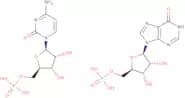
CAS:Polyinosinic acid-polycytidylic acid (Poly I:C), an agonist of TLR3 toll-like receptors, is a synthetic double-stranded RNA analog, consisting of polyinosinic acid (poly I) paired with polycytidylic acid (poly C), forming a stable duplex structure.PolyI:C stimulates the secretion of pro-inflammatory cytokines and type I interferon through its interaction with endosomal Toll-like receptor 3 (TLR-3) and the cytoplasmic receptors melanoma differentiation-associated gene 5 (MDA-5) and retinoic acid-inducible gene I (RIG-I). This immunostimulant activity makes Poly I:C a useful vaccine adjuvant and is used in vaccine formulations. Poly I:C and its stabilized analogs (e.g., poly-ICLC) are also being actively researched for their dual role in oncology: directly targeting tumors and acting as immune potentiators. For example Poly I:C can induce apoptosis in tumor cells and stimulate immunogenic cell death and is therefore being explored alongside chemotherapy, radiotherapy, and checkpoint inhibitors, helping to overcome resistance mechanisms and strengthen treatment outcomes.We can supply PolyI:C to all stages of your project - from R&D and preclinical phases right up to GMP commercial manufacture. Contact our team for custom Poly I:C products. For more on poly I:C read out blog 'Poly I:C: A Vaccine Adjuvant With Oncological Potential.'Formula:(C10H13N4O8P)x•(C9H14N3O8P)xColor and Shape:Powder2,3'-Anhydro-5'-O-tert-butyldiphenylsilylthymidine
2,3'-Anhydro-5'-O-tert-butyldiphenylsilylthymidine is a synthetically modified thymidine analog for use in researchPurity:Min. 95%Color and Shape:White to off-white solid.N4-Benzoyl-3'-deoxy-5'-O-DMT-cytidine
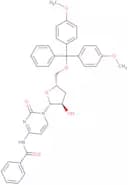
CAS:N4-Benzoyl-3'-deoxy-5'-O-DMT-cytidine is a synthetic nucleoside that is used as an activator for DNA synthesis. It is also used in the preparation of diphosphate derivatives for use as antiviral and anticancer agents or as probes for DNA and RNA research. N4-Benzoyl-3'-deoxy-5'-O-DMT-cytidine is a novel, high purity, and high quality chemical with CAS No. 86234-45-9.
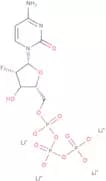
Formula:C37H35N3O7Purity:Min. 95%Molecular weight:633.69 g/mol2'-Deoxy-2'-fluorocytidine-5'-triphosphate lithium salt - 100mM aqueous solution
CAS:2'-Deoxy-2'-fluorocytidine-5'-triphosphate lithium salt is a nucleoside that is used in the synthesis of DNA. 2'-Deoxy-2'-fluorocytidine-5'-triphosphate lithium salt is an antiviral, antineoplastic, and anticancer agent. It has been shown to be active against some strains of HIV and herpes viruses. 2'-Deoxy-2'-fluorocytidine-5'-triphosphate lithium salt also inhibits DNA polymerase and RNA polymerase, preventing viral replication and transcription. The phosphate group on the 5' end of this molecule can be modified to produce phosphoramidites, diphosphates, or triphosphates.Formula:C9H11FN3O13P3·Li4Purity:Min. 95%Molecular weight:508.88 g/mol1,5-Anhydro-3-O-benzoyl-4,6-O-benzylidene-2-deoxy-2-(N4-benzoylcytidin-1-yl)-D-altro-hexitol
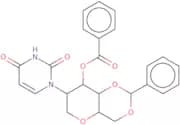
CAS:1,5-Anhydro-3-O-benzoyl-4,6-O-benzylidene-2-deoxy-2-(N4-benzoylcytidin-1-yl)-D-altro-hexitol is a synthetic nucleoside analog for use in researchFormula:C24H22N2O7Purity:Min. 95%Color and Shape:White To Off-White SolidMolecular weight:450.45 g/mol2-[(Benzo[b]thien-2-ylcarbonyl)amino]benzoic acid
CAS:2-[(Benzo[b]thien-2-ylcarbonyl)amino]benzoic acid is a benzoic acid derivative for use in researchFormula:C16H11NO3SPurity:Min. 95%Color and Shape:PowderMolecular weight:297.33 g/mol



![Guanosine-5'-[(b,gamma)-methyleno]triphosphate sodium salt](/_next/image/?url=https%3A%2Fstatic.cymitquimica.com%2Fproducts%2F3D%2Fthumb-webp%2FNG46689.webp&w=3840&q=75)

![4'-C-Azido-2'-deoxy-2'-fluoro-4-[bis(2-hydroxyethyl)]-b-D-arabinocytidine](/_next/image/?url=https%3A%2Fstatic.cymitquimica.com%2Fproducts%2F3D%2Fthumb-webp%2FNA167989.webp&w=3840&q=75)






![4,6-Diamino-2-(b-D-ribofuranosyl)-2H-pyrazolo[3,4-d]pyrimidine](/_next/image/?url=https%3A%2Fstatic.cymitquimica.com%2Fproducts%2F3D%2Fthumb-webp%2FND162980.webp&w=3840&q=75)







![6-Amino-2,5-dihydro-2-(b-D-ribofuranosyl)-4H-pyrazolo[3,4-d]pyrimidin-4-one](/_next/image/?url=https%3A%2Fstatic.cymitquimica.com%2Fproducts%2F3D%2Fthumb-webp%2FNA162979.webp&w=3840&q=75)




![N-Acetyl-2'-O-[(tert-butyl)dimethylsilyl]-5'-O-DMT-6'-O-methylguanosine-3'-CE phosphoramidite](/_next/image/?url=https%3A%2Fstatic.cymitquimica.com%2Fproducts%2F3D%2Fthumb-webp%2FPA152483.webp&w=3840&q=75)


![2-[(Benzo[b]thien-2-ylcarbonyl)amino]benzoic acid](/_next/image/?url=https%3A%2Fstatic.cymitquimica.com%2Fproducts%2F3D%2Fthumb-webp%2FNB181580.webp&w=3840&q=75)