


Nucleosides
Found 3569 products of "Nucleosides"
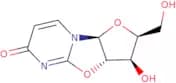
2,2'-Anhydro-L-uridine
CAS:2,2'-Anhydro-L-uridine is a nucleoside used in for research purposes. It is of particular interest due to it being an L-isomer which is different from the D-form sugars used by the human body. It is useful to study these kinds of molecules for their use in medicine, especially as antiviralsFormula:C9H10N2O5Purity:Min. 95%Color and Shape:PowderMolecular weight:226.19 g/molN4-Acetyl-2'-deoxycytidine
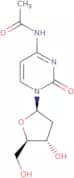
CAS:N4-Acetyl-2'-deoxycytidine is a nucleoside analogue that acts as an inhibitor of DNA synthesis. It binds to the active site of the enzyme ribonucleotide reductase, blocking the conversion of ribonucleotides to deoxyribonucleotides. This prevents DNA synthesis and replication, which leads to cell death. N4-Acetyl-2'-deoxycytidine has been shown to be more efficient than other analogues in terms of energy efficiency, control levels, and constant linear model. This compound is reactive and can cause low yields when isolated from solutions with high concentrations. A diode can be used for analytical purposes, while calcium binding may be used as a mathematical model in order to analyze this drug.Formula:C11H15N3O5Purity:Min. 98 Area-%Color and Shape:PowderMolecular weight:269.25 g/mol3-(3-Acetamido-3-carboxypropyl)uridine
CAS:acetylated derivative from 3-(3-amino-3-carboxypropyl)uridine
Formula:C15H21N3O9Purity:Min. 95%Color and Shape:SolidMolecular weight:387.34 g/mol3-b-D-Ribofuranosyl-6-hydroxymethyl-furano[2,3-d]-pyrimidin-2-one
CAS:3-b-D-Ribofuranosyl-6-hydroxymethyl-furano[2,3-d]-pyrimidin-2-one is a novel modified ribonucleoside that has DNA activating, antiviral and anticancer activities. This compound is an activator of diphosphate and deoxyribonucleosides. 3bRFMF can be used in the synthesis of phosphoramidites. It has been shown to have high purity and good quality.Purity:Min. 95%N6-Benzoyl-5'-O-benzyl-2'-O-tert-butyldimethylsilyladenosine 3'-CE phosphoramidite
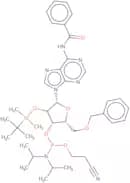
N6-Benzoyl-5'-O-benzyl-2'-O-tert-butyldimethylsilyladenosine 3'-CE phosphoramidite is an activator of ribonucleosides and deoxyribonucleosides. It is a novel synthetic nucleoside, which has high quality and purity. The chemical modification of the base allows for the synthesis of DNA with modified bases. This product has been shown to have anticancer effects in vitro and in vivo, as well as antiviral activities against HIV.Formula:C39H54N7O6PSiPurity:Min. 95%Molecular weight:775.97 g/molO2-3'-anhydro-β-D-fructofuranosyluracil
O2-3'-anhydro-beta-D-fructofuranosyluracil is a novel nucleoside analogue that has antiviral and anticancer properties. It is synthesized by the reaction of beta-D-fructofuranosyluracil with phosphoramidites. The product is purified by HPLC and characterized by IR spectroscopy, UV spectroscopy, and mass spectrometry.Purity:Min. 95%9-(b-D-Arabinofuranosyl)adenine
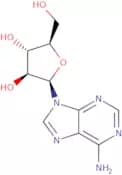
CAS:9-(b-D-Arabinofuranosyl)adenine is a nucleoside that is used as an antiviral agent. It binds to viral RNA and inhibits viral replication. 9-(b-D-Arabinofuranosyl)adenine has been shown to have potent side-effect profiles, including myocardial infarct, neuronal death, and immunological reactions. These effects are due to its ability to inhibit the synthesis of guanine nucleotides in the heart and brain cells, which are essential for energy production and neurotransmitter release respectively. 9-(b-D-Arabinofuranosyl)adenine also binds to toll-like receptors (TLRs), which are proteins found on the surface of cells that recognize invading microbes or foreign substances. This binding leads to activation of immune response pathways.Formula:C10H13N5O4Purity:Min. 95%Color and Shape:White PowderMolecular weight:267.24 g/molN6-Benzyladenosine
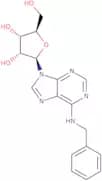
CAS:N6-Benzyladenosine is a nucleoside that is synthesized from adenosine and benzylamine. It is a component of the nutrient solution for cell culture studies, which has been shown to have an effect on the hydrophobic effect in cells. This compound also acts as a co-factor for epidermal growth factor and enzyme activities. N6-Benzyladenosine has been used in the development of monoclonal antibodies with covalent linkages. It is also being studied as a potential biomarker for various cancers, including prostate cancer and other solid tumors. In addition, this compound has been shown to be a sesquiterpene lactone with structural analysis and pharmacokinetic properties. N6-Benzyladenosine can be found in plants such as tomato and ginger at physiological levels.
Formula:C17H19N5O4Purity:Min. 98 Area-%Color and Shape:White PowderMolecular weight:357.36 g/molN4-Benzoyl-2'-deoxy-5'-O-DMT-cytidine 3'-thiophosphoramidite
N4-Benzoyl-2'-deoxy-5'-O-DMT-cytidine 3'-thiophosphoramidite is a novel nucleoside that has been shown to inhibit the growth of cancer cells in vitro. It is an analogue of cytidine and inhibits DNA synthesis by inhibiting the enzyme ribonucleotide reductase, which converts ribonucleotides to deoxyribonucleotides. This drug also inhibits the synthesis of viral RNA in cells infected with human immunodeficiency virus (HIV) and herpes simplex virus type 1 (HSV-1). N4-Benzoyl-2'-deoxy-5'-O-DMT-cytidine 3'-thiophosphoramidite is a phosphoramidite that is synthesized from 2,4,6-trichlorobenzoyl chloride, 5'-O-[(N,N-diisopropFormula:C50H51N4O8PS2Purity:Min. 95%Molecular weight:931.07 g/molUridine-5'-triphosphate trisodium salt
CAS:P2Y receptor agonist; precursor in RNA biosynthesisÂFormula:C9H12N2Na3O15P3Purity:(31P Nmr) Min. 95 Area-%Color and Shape:White PowderMolecular weight:550.09 g/mol3-Ribofuranosyl-4,9-dihydro-4,6,7-trimethyl-9-oxoimidazo(1,2-a)purine
CAS:3-Ribofuranosyl-4,9-dihydro-4,6,7-trimethyl-9-oxoimidazo(1,2-a)purine is a nucleoside with the chemical formula C8H8N5O5. It is used in research as a phylogenetic marker and index fossil. 3RFP is found as a natural product in some plants and animals, but it can also be synthesized chemically. 3RFP has been shown to posttranscriptionally inhibit rRNA synthesis by binding to the ribonucleotide reductase enzyme. This inhibits the production of RNA needed for protein synthesis and cell division. 3RFP has been shown to have structural diversity that has yet to be fully explored due to its rarity.Purity:Min. 95%Xanthosine 5'-monophosphate disodium salt
CAS:Xanthosine 5'-monophosphate disodium salt is a nucleotide that has been shown to react with nitrite in aqueous solution to form xanthosine 5'-monophosphate. The reaction system can be prepared by adding nitrite to a solution of xanthosine 5'-monophosphate disodium salt and deionized water. The crystallization process can be done by adding ethanol dropwise to the reaction system under controlled conditions. Impurities may result from the preparation process, such as sodium chloride, sodium sulfate, and sodium hydroxide.Formula:C10H11N4Na2O9PPurity:Min. 95%Color and Shape:White Slightly Yellow PowderMolecular weight:408.17 g/mol2'-Deoxy-5-hydroxymethylcytidine-5'-triphosphate sodium, 100 mM aqueous solution
2'-Deoxy-5-hydroxymethylcytidine-5'-triphosphate sodium, 100 mM aqueous solution is a synthetic nucleoside that can be used as an antiviral and anticancer agent. The drug inhibits viral replication by inhibiting the synthesis of DNA. The drug also suppresses tumor growth by inhibiting the production of RNA and DNA in cancer cells.Formula:C10H18N3O14P3•NaxPurity:Min. 90 Area-%Color and Shape:Clear LiquidMolecular weight:497.18 g/molN4-Benzoyl-5'-O-DMT-2'-O-methylcytidine 3'-CE phosphoramidite
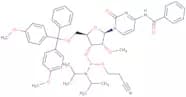
CAS:N4-Benzoyl-5'-O-DMT-2'-O-methylcytidine 3'-CE phosphoramidite is a diploid DNA molecule that is synthesized by the enzyme diploid. The clone was obtained from a yeast strain, and it has been shown to catalyze the conversion of isoprene to isopentenyl diphosphate. The optical spectra of this compound have been characterized in detail, and it has been found to have an absorption maximum at 243 nm. This compound has also been used in the disruption of yeast chromosomes, and its spectrum has been used as a reference for other compounds with similar chemical structures.Formula:C47H54N5O9PPurity:Min. 98 Area-%Color and Shape:PowderMolecular weight:863.96 g/mol3'-Deoxy-5'-O-DMT-3'-C-methyluridine
3'-Deoxy-5'-O-DMT-3'-C-methyluridine is an activator of DNA synthesis, which can be used to synthesize deoxyribonucleosides and ribonucleosides. 3'-Deoxy-5'-O-DMT-3'-C-methyluridine has been shown to have anticancer activity in vitro and in vivo. It is a novel synthetic monophosphate nucleoside that can be modified for use as a phosphoramidite or a ribonucleoside. 3'-Deoxy-5'-O-DMT-3'-C-methyluridine has also been shown to have antiviral activity against HIV in vitro.Purity:Min. 95%N2-Carbamoylthreonylguanosine sodium salt
N2-Carbamoylthreonylguanosine sodium salt is a modified nucleotide that has been synthesized and tested in vitro. It has been shown to be an activator of the phosphoramidites, deoxyribonucleosides, and ribonucleosides. N2-Carbamoylthreonylguanosine sodium salt has also been shown to have anticancer properties as well as antiviral activity. This drug is being developed as a new treatment for cancer and HIV/AIDS.Purity:Min. 95%2'-Deoxy-2',2'-difluorocytidine 5'-triphosphate triethylammonium salt - Aqueous solution
CAS:2'-Deoxy-2',2'-difluorocytidine 5'-triphosphate triethylammonium salt - Aqueous solution is a nucleoside analog for research purposesFormula:C9H14F2N3O13P3·C24H60N4Color and Shape:Colorless PowderMolecular weight:907.9 g/mol1-(5'-O-Benzoyl-2'-deoxy-2'-fluoro-beta-L-arabinofuranosyl)thymine
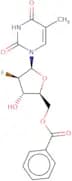
CAS:1-(5'-O-Benzoyl-2'-deoxy-2'-fluoro-β-L-arabinofuranosyl)thymine is a modified nucleoside analog with structural modifications that enhance its biological properties, stability, and pharmaceutical potential. The compound features thymine (5-methyluracil) as the nucleobase, a pyrimidine derivative. The sugar component is 2'-deoxy-2'-fluoro-β-L-arabinofuranose, which includes the L-arabinose configuration, a departure from the natural D-ribose or D-deoxyribose configuration typically found in DNA and RNA, influencing how the molecule is recognized by biological systems. The 2'-fluoro substitution at the sugar position improves the compound's stability and resistance to enzymatic degradation, while also potentially enhancing its antiviral activity. A 5'-O-benzoyl group serves as a protecting group, safeguarding the 5'-hydroxyl group during synthesis.Formula:C17H17FN2O6Purity:Min. 95%Molecular weight:364.33 g/molN1,O2'-Dimethyladenosine
CAS:N1,O2'-Dimethyladenosine is a monophosphate that is an antiviral agent. It has been shown to be a potent activator of the tRNA synthetase enzyme and also inhibits viral DNA synthesis. This drug is synthesized from diphosphate and phosphoramidites. N1,O2'-Dimethyladenosine has been shown to be highly active against viruses such as HIV-1, HIV-2, and HCV. It is also used in the production of modified nucleosides for use in synthetic constructs with therapeutic applications.
Formula:C12H17N5O4Purity:(%) Min. 95%Color and Shape:PowderMolecular weight:295.29 g/molDihydrozeatin riboside
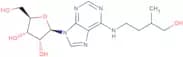
CAS:Dihydrozeatin riboside is a cytokinin, a group of plant hormones that regulate various aspects of plant growth and development. It is found in the form of an ester, dihydrozeatin riboside, which is produced by the action of trifluoroacetic acid on zeatin. The natural function of this hormone is to stimulate cell division in plants, but it has also been shown to have antibacterial effects against bacterial strains such as Bacillus subtilis and Escherichia coli. Dihydrozeatin riboside inhibits bacterial growth by binding to DNA-dependent RNA polymerase, thereby preventing transcription and replication. The high frequency of human activity has been shown using a patch-clamp technique on human erythrocytes. This active form is metabolized through a number of metabolic transformations, including hydrolysis by esterases or glucuronidases, oxidation by cytochrome P450 enzymes, reductionFormula:C15H23N5O5Purity:Min. 95%Color and Shape:PowderMolecular weight:353.37 g/mol3’-b-C-Methyl-5-methyluridine
CAS:3’-b-C-Methyl-5-methyluridine is a phosphoramidite that is used as an antiviral agent. It is also known as (2’,3’)-O-(2-methoxyethyl) 5'-O-(4,4'-dimethoxytrityl)thymidine or 3’-b-C-Methyluridine. It has been shown to have anticancer properties in vitro and in vivo, and it can be used for the treatment of prostate cancer. 3’-b-C-Methyluridine is synthesized by the reaction of uracil with bis(trimethylsilyl)acetamide followed by reaction with methylamine. The synthesis of this drug was first reported in 1975.Purity:Min. 95%7-Deaza-2'-deoxyinosine
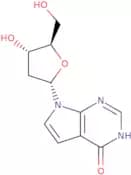
CAS:7-Deaza-2'-deoxyinosine is a purine nucleoside analog that has been shown to be a hydrogen bond donor and formamide acceptor. This drug destabilizes duplex DNA by interfering with the formation of the hydrogen bonds between the bases, which may result in strand breakage. 7-Deaza-2'-deoxyinosine has also been shown to inhibit RNA polymerase activity, thereby inhibiting protein synthesis. It has been used as a tool for studying enzyme mechanisms and in solid phase synthesis.
Formula:C11H13N3O4Purity:Min. 95%Color and Shape:PowderMolecular weight:251.24 g/molThymidine-5'-diphosphate trisodium salt
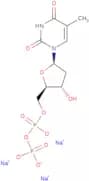
CAS:Thymidine-5'-diphosphate trisodium salt is a novel anticancer drug that is structurally modified to resemble thymidine. It has antiviral and antitumor effects and can be used as an antineoplastic agent. Thymidine-5'-diphosphate trisodium salt is a high quality, high purity ribonucleoside that can be used in the synthesis of deoxyribonucleosides and phosphoramidites. This drug has shown activity against various types of cancer cells and is being investigated for its potential use in the treatment of leukemia.
Formula:C10H13N2Na3O11P2Purity:Min. 95%Color and Shape:White PowderMolecular weight:468.13 g/mol2’,3’,5’-Tri-O-acetyl-5-cyanouridine
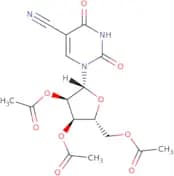
CAS:2’,3’,5’-Tri-O-acetyl-5-cyanouridine is a novel modified nucleoside that can be used as an antiviral agent. It has been shown to inhibit the replication of HIV and herpes simplex virus, and it also inhibits tumor growth in animal models. The drug is synthesized by the chemical reaction of 5-aminoimidazole with 2’,3’,5’-triphosphate uridine monophosphate. 2’,3’,5’-Tri-O-acetyl-5-cyanouridine has been shown to bind to ribonucleosides and deoxyribonucleosides with high affinity and specificity. This drug may be useful for the treatment of cancer or for the prevention of viral infection.Purity:Min. 95%7-Deaza-2'-deoxy-2'-fluoroguanosine
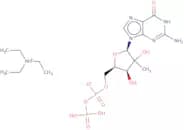
7-Deaza-2'-deoxy-2'-fluoroguanosine is a nucleoside that can be phosphorylated to form 7-deaza-2'-deoxy-2'-fluoroguanosine 5'-triphosphate. This compound has antiviral properties and may be used as an antiviral agent in the treatment of HIV/AIDS. 7DGTP inhibits HIV replication by inhibiting the reverse transcriptase enzyme. The mechanism by which this drug exerts its effects is not yet well understood, but it is believed that it binds to the active site of the enzyme and prevents it from hydrolyzing dNTPs.Formula:C11H14FN4O4Purity:Min. 95%Molecular weight:284.25 g/mol2'-C-Methylguanosine 5'-diphosphate triethylammonium salt
2'-C-Methylguanosine 5'-diphosphate triethylammonium salt is a synthetic nucleotide analog for use in researchFormula:C11H16N5O11P2·C18H45N3Purity:Min. 95%Color and Shape:PowderMolecular weight:759.79 g/mol2'-O-Acetyl-5'-O-benzoyl-3'-deoxy-3'-C-methyluridine
CAS:2'-O-Acetyl-5'-O-benzoyl-3'-deoxy-3'-C-methyluridine is a synthetic analog of the antiviral agent 5'-O-benzoyl-2'-O-acetyl-3'-deoxyadenosine (BAEA). BAEA is a nucleoside that functions as an activator, which stimulates the activity of ribonucleosides. BAEA has been shown to inhibit the replication of HIV and other viruses, and may be useful in treating cancer or other diseases. 2'-O-Acetyl-5'-O-benzoyl-3'-deoxy-3'-C methyluridine has been shown to have antiviral properties against herpes simplex virus type 1 (HSV1) and HSV2 and cytomegalovirus (CMV), with higher activity against CMV than BAEA. This compound may also be used in the development of new anticFormula:C19H20N2O7Purity:Min. 95%Molecular weight:388.37 g/molCytidine
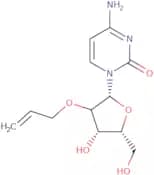
CAS:Cytidine is a pyrimidine nucleoside that is important in the synthesis of RNA and DNA. Cytidine deaminase is an enzyme that catalyzes the conversion of cytidine to uridine. Cytidine deaminase has been shown to be inhibited by its substrate, cytidine, and by other compounds that are structurally similar to cytidine such as uracil, thymine, and guanine. Cytidine deaminase has been shown to have a role in the development of autoimmune diseases and HIV infection. This enzyme also has an important role in the polymerization of DNA during replication. Cytidine can be used for transfection experiments and to inhibit viral replication.Formula:C9H13N3O5Purity:Min. 99 Area-%Molecular weight:243.22 g/mol2'-O-Allylcytidine
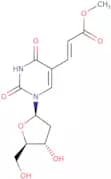
CAS:2'-O-Allylcytidine is a synthetic nucleotide that contains an allylated amino function. It is synthesized by the regiospecific allylation of uridine and guanosine. 2'-O-Allylcytidine has been used in research studies for the synthesis of oligonucleotides with specific sequences and for high-yield production of synthons.Formula:C12H17N3O5Purity:Min. 95%Color and Shape:PowderMolecular weight:283.28 g/molE-5-(2-Carbomethoxyvinyl)-2'-deoxyuridine
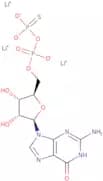
CAS:E-5-(2-Carbomethoxyvinyl)-2'-deoxyuridine is a nucleoside that is a modified form of uridine. It is a nucleotide analog that inhibits the synthesis of DNA and RNA and can be used to treat cancer. E-5-(2-Carbomethoxyvinyl)-2'-deoxyuridine is an activator that activates the phosphoramidites in the synthesis of DNA and RNA. This drug can also be used as antiviral therapy for herpes simplex virus type 1, influenza virus, and HIV. E-5-(2-Carbomethoxyvinyl)-2'-deoxyuridine has been shown to have anti-inflammatory properties by inhibiting prostaglandin synthesis.Formula:C13H16N2O7Purity:Min. 95%Color and Shape:White to off-white solid.Molecular weight:312.28 g/molGuanosine 5'-O-(2-thiodiphosphate) trilithium salt
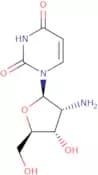
CAS:Guanosine 5'-O-(2-thiodiphosphate) trilithium salt (GTPTS) is a membrane-permeable molecule that hyperpolarizes cells by inhibiting the movement of ions through the cell membrane. GTPTS is activated by extracellular calcium and potassium ions, which are involved in signal transduction pathways. It has been shown to inhibit the release of neurotransmitters, such as acetylcholine, dopamine, serotonin, and norepinephrine. GTPTS also blocks voltage-gated sodium channels, which leads to a reduction in neuronal excitability. The drug has been shown to have analgesic effects in animal models of pain and can be used to treat chronic pain due to nerve damage.Formula:C10H12Li3N5O10P2SPurity:Min. 85 Area-%Color and Shape:PowderMolecular weight:477.06 g/mol2'-Amino-2'-deoxyuridine
CAS:2'-Amino-2'-deoxyuridine is a modified nucleoside based on uridine. The 2'-hydroxyl group on the sugar is replaced by an amino group. This compound can be used for research purposes
Formula:C9H13N3O5Purity:Min. 98 Area-%Color and Shape:PowderMolecular weight:243.22 g/mol2'-Deoxy-2'-fluorouridine
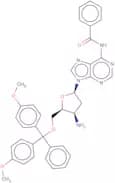
CAS:2'-Deoxy-2'-fluorouridine is a nucleoside analog that inhibits the replication of wild-type viruses by binding to the viral RNA.Formula:C9H11FN2O5Purity:Min. 95%Color and Shape:White Off-White PowderMolecular weight:246.2 g/mol3'-Amino-N6-benzoyl-2',3'-dideoxy-5'-O-DMT-adenosine
A valuable chemical tool for synthesizing modified oligonucleotides with specific functionalities at the 3' end, primarily used in oligonucleotide synthesis.Formula:C38H36N6O5Purity:Min. 95%Molecular weight:656.73 g/mol2’,3’-Bis-O-tert-butyldimethylsilyl-5’-deoxy-4’,5’-Didehydrouridine
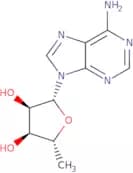
CAS:2’,3’-Bis-O-tert-butyldimethylsilyl-5’-deoxy-4’,5’-Didehydrouridine is a phosphoramidite that is used in the synthesis of DNA, RNA and nucleotide analogues. It has antiviral and antitumor properties and can be used for the treatment of leukemia. 2’,3’-Bis-O-tert-butyldimethylsilyl-5’-deoxyuridine is an activator for ribonucleotides and deoxyribonucleotides. It also has anticancer properties due to its ability to inhibit DNA replication, which may lead to apoptosis or cell death.Purity:Min. 95%5'-Deoxyadenosine
CAS:5'-Deoxyadenosine is a nucleoside that is produced by the enzymatic reaction of glycolaldehyde and ATP. It is found in both DNA and RNA, where it plays an important role in the catalytic subunit of ribonucleotide reductase. 5'-Deoxyadenosine has been shown to be involved in hydrogen bonding with other molecules, such as ethanolamine. It also has a kinetic effect on the enzyme activity of ribonucleotide reductase by forming intramolecular hydrogen bonds with other adenine nucleotides. The analogs of 5'-deoxyadenosine have been shown to inhibit viral replication in cell culture studies using typhimurium virus.Formula:C10H13N5O3Purity:Min. 95%Color and Shape:PowderMolecular weight:251.25 g/mol3'-Azido-3'-deoxy-5-fluoro-b-L-cytidine
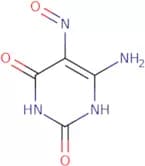
CAS:3'-Azido-3'-deoxy-5-fluoro-b-L-cytidine is an antiviral drug. It is a modified nucleoside with phosphoramidite and azido groups. This product can be used as an activator for DNA synthesis, in anticancer drug development, as well as in the treatment of HIV. 3'-Azido-3'-deoxy-5-fluoro-b-L-cytidine has been shown to inhibit the growth of human tumor cells by inhibiting protein synthesis and enhancing the production of reactive oxygen species (ROS). It also inhibits the activity of ribonucleotide reductase, which is a critical enzyme for DNA synthesis.Purity:Min. 95%4-Amino-2,6-dihydroxy-5-nitrosopyrimidine
CAS:4-Amino-2,6-dihydroxy-5-nitrosopyrimidine is a molecule that has been shown to be an effective inhibitor of the enzyme tyrosinase in the oxidation of tyrosine to DOPA, which is a precursor of melanin. It is believed that vibrational and structural changes during these reactions are responsible for the inhibitory effects. 4-Amino-2,6-dihydroxy-5-nitrosopyrimidine has also been shown to have anti cancer effects on glioma cells. This molecule binds to copper ions, forming a chelate ring that can stabilize reactive intermediates and terminate free radicals. The chlorine atom on this molecule may be responsible for its cytotoxic effects by reacting with nucleophilic sites on proteins. The functional groups on this molecule react with acid catalysts, such as protonation or dehydration reactions.Formula:C4H4N4O3Purity:Min. 98 Area-%Color and Shape:PowderMolecular weight:156.1 g/molGuanosine 5'-monophosphate disodium [1',2',3',4',5'-13C5]
Guanosine 5'-monophosphate disodium salt [1',2',3',4',5'-13C5] is a modified nucleoside that is used as an antiviral agent. It inhibits the synthesis of DNA by competitively inhibiting the activity of ribonucleotide reductase, which is required for de novo synthesis of DNA. Guanosine 5'-monophosphate disodium salt [1',2',3',4',5'-13C5] has been shown to be effective in treating cancer and may have anticancer properties due to its ability to inhibit the proliferation of tumor cells.Formula:C5C5H14N5O8P•Na2Purity:Min. 95%Color and Shape:PowderMolecular weight:414.64 g/mol4-(b-D-Ribofuranosyl)-vic-triazolo[4,5-b]pyridin-5-one
CAS:Ribonucleosides, Deoxyribonucleosides and Activator are a group of synthetic compounds that are used in the synthesis of DNA. Ribonucleosides and Deoxyribonucleosides are nucleotides that contain ribose or deoxyribose as the sugar moiety. Activator is an activator for DNA polymerase, which catalyses the formation of a phosphodiester bond between two adjacent 3'-5' phosphate groups on a single strand of DNA. Ribonuclesides, Deoxyribonucleosides and Activator are used in recombinant DNA technology to synthesize DNA molecules containing modified bases. The CAS number for Ribonuclesides, Deoxyribonucleosides and Activator is 59892-40-9.
Formula:C10H12N4O5Purity:Min. 95%Molecular weight:268.23 g/molCytidine-5-carboxylic acid sodium
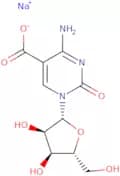
CAS:Cytidine-5-carboxylic acid sodium salt is a nucleoside that is used as an activator for the synthesis of phosphoramidites. It is also used in anticancer and antiviral research as a component of DNA. Cytidine-5-carboxylic acid sodium salt is available in high purity, with a monophosphate form and diphosphate forms available.Formula:C10H13N3O7•NaPurity:Min. 95%Color and Shape:PowderMolecular weight:310.21 g/mol2'-Deoxyinosine-5'-monophosphate disodium salt
CAS:2'-Deoxyinosine-5'-monophosphate disodium salt is a synthetic nucleoside, phosphoramidite, and diphosphate that is used in the synthesis of DNA. It has been shown to have antiviral effects against HIV and herpes simplex virus type 2 (HSV-2). This drug also has anticancer activity and is an activator of novel nucleosides.Formula:C10H11N4Na2O7PPurity:Min. 98 Area-%Color and Shape:White PowderMolecular weight:376.17 g/molPolycytidylic acid
CAS:Polycytidylic acid is a single stranded RNA analog which is combined with Polyinosinic acid to form a stable duplex structure known as Polyinosinic acid-polycytidylic acid (Poly I:C). PolyI:C stimulates the secretion of pro-inflammatory cytokines and type I interferon through its interaction with endosomal Toll-like receptor 3 (TLR-3) and the cytoplasmic receptors melanoma differentiation-associated gene 5 (MDA-5) and retinoic acid-inducible gene I (RIG-I). This immunostimulant activity makes Poly I:C a useful vaccine adjuvant and is used in vaccine formulations. Poly I:C and its stabilized analogs (e.g., poly-ICLC) are also being actively researched for their dual role in oncology: directly targeting tumors and acting as immune potentiators. For example Poly I:C can induce apoptosis in tumor cells and stimulate immunogenic cell death and is therefore being explored alongside chemotherapy, radiotherapy, and checkpoint inhibitors, helping to overcome resistance mechanisms and strengthen treatment outcomes. We can supply PolyI:C to all stages of your project - from R&D and preclinical phases right up to GMP commercial manufacture. Contact our team for custom Poly I:C products.
For more on poly I:C read out blog 'Poly I:C: A Vaccine Adjuvant With Oncological Potential.'Purity:Min. 95%2-Hydrazinoadenosine
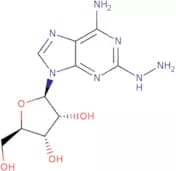
CAS:2-Hydrazinoadenosine is an active analogue of adenosine. It is a potent agonist for the adenosine receptor subtypes A1 and A2A with high affinity. 2-Hydrazinoadenosine has been shown to inhibit cardiac contractility in animal models, as well as to produce hypotension, bradycardia, and bronchodilation in humans. This drug also has a functional effect on the heart by binding to adenosine receptors, which leads to the inhibition of catecholamine release. This drug is used clinically as an antiarrhythmic agent and a vasodilator in coronary artery disease.
Formula:C10H15N7O4Purity:Min. 95%Color and Shape:PowderMolecular weight:297.27 g/mol5-Fluorouridine-5'-triphosphate sodium salt
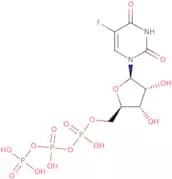
CAS:5-Fluorouridine-5'-triphosphate sodium salt is an analog of uridine that has been used in the treatment of metastatic colorectal cancer. It is a prodrug that is metabolized to 5-fluorouracil, its active form. 5-Fluorouridine-5'-triphosphate sodium salt inhibits the synthesis of thymidylate, one of the precursors to DNA, and blocks the production of nucleotides. This results in cell lysis and death by apoptosis. The drug also inhibits epidermal growth factor receptor (EGFR), which may contribute to its antitumor effects.Formula:C9H14N2O15P3FPurity:Min. 95%Molecular weight:502.13 g/mol2'-Deoxy-N2,3-ethenoguanosine
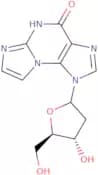
CAS:2'-Deoxy-N2,3-ethenoguanosine is a novel antiviral agent that is phosphorylated by the viral enzyme ribonucleotide reductase and then incorporated into viral DNA. This compound is an activator of deoxyribonucleoside monophosphate activity and inhibits the synthesis of DNA and RNA. 2'-Deoxy-N2,3-ethenoguanosine has been shown to inhibit the growth of cancer cells in culture and may be useful for treating cancer.Formula:C12H13N5O4Purity:Min. 95%Molecular weight:291.26 g/moldNTP bundle, 4 x 100mM aqueous solution
CAS:Each dNTP supplied in a separate vialPurity:Min. 99 Area-%Color and Shape:Clear Liquid1-(β-D-Arabinofuranosyl)thymine
CAS:1-(β-D-Arabinofuranosyl)thymine is a nucleoside analog. It has a similar structure to thymidine. It has possible applications in research into the specificity and kinetics of thymidine kinases and has demonstrated antiviral activity against some viruses.Formula:C10H14N2O6Purity:Min. 95%Color and Shape:White PowderMolecular weight:258.23 g/mol9-(2'-Deoxy-2'-fluoro-β-D-arabinofuranosyl)guanine
CAS:9-(2'-Deoxy-2'-fluoro-b-D-arabinofuranosyl)guanine is a nucleoside phosphorylase inhibitor that is used to treat inflammatory bowel disease. It has been shown to be effective in treating women with inflammatory bowel disease, and has no significant side effects. 9-(2'-Deoxy-2'-fluoro-b-D-arabinofuranosyl)guanine inhibits the bacterial enzyme nucleoside phosphorylase, which is responsible for the conversion of guanosine triphosphate (GTP) to guanosine diphosphate (GDP). This inhibition prevents the synthesis of DNA and RNA by blocking the conversion of GTP and GDP into AMP and GMP. The drug binds to the active site of nucleoside phosphorylase, which is located in the bacterial cytoplasmic membrane. 9-(2'-Deoxy-2'-fluoroFormula:C10H12FN5O4Purity:Min. 97 Area-%Color and Shape:PowderMolecular weight:285.24 g/mol8-Amino[1''-(N''-dansyl)-4''-aminobutyl]-5'-(1-aziridinyl)-5'-deoxy adenosine
CAS:8-Amino-[1''-(N''-dansyl)-4''-aminobutyl]-5'-(1-aziridinyl)-5'-deoxyadenosine is a novel nucleoside phosphoramidite that has antiviral and anticancer activity. It is currently under development as a potential treatment for Hepatitis C, HIV and cancer. 8-Amino-[1''-(N''-dansyl)-4''-aminobutyl]-5'-(1-aziridinyl)-5'-deoxyadenosine is an activator of the enzyme ribonucleotide reductase, which converts ribonucleotides to deoxyribonucleotides. It also inhibits the synthesis of DNA and RNA by inhibiting the enzyme DNA gyrase and topoisomerase IV. 8-Amino-[1''-(N''-dansyl)-4''-aminobutylFormula:C28H37N9O5SPurity:Min. 95%Color and Shape:PowderMolecular weight:611.72 g/mol


![3-b-D-Ribofuranosyl-6-hydroxymethyl-furano[2,3-d]-pyrimidin-2-one](/_next/image/?url=https%3A%2Fstatic.cymitquimica.com%2Fproducts%2F3D%2Fthumb-webp%2FNR162809.webp&w=3840&q=75)















![Guanosine 5'-monophosphate disodium [1',2',3',4',5'-13C5]](/_next/image/?url=https%3A%2Fstatic.cymitquimica.com%2Fproducts%2F3D%2Fthumb-webp%2FNG57598.webp&w=3840&q=75)
![4-(b-D-Ribofuranosyl)-vic-triazolo[4,5-b]pyridin-5-one](/_next/image/?url=https%3A%2Fstatic.cymitquimica.com%2Fproducts%2F3D%2Fthumb-webp%2FNR04971.webp&w=3840&q=75)




![8-Amino[1''-(N''-dansyl)-4''-aminobutyl]-5'-(1-aziridinyl)-5'-deoxy adenosine](/_next/image/?url=https%3A%2Fstatic.cymitquimica.com%2Fproducts%2F3D%2Fthumb-webp%2FNA16503.webp&w=3840&q=75)