Nucleosides
Nucleosides are fundamental building blocks of nucleic acids, composed of a nitrogenous base attached to a sugar molecule. In this section, you can find a wide variety of nucleosides essential for research in molecular biology, biochemistry, and pharmacology. These compounds play crucial roles in the synthesis of DNA and RNA, and are also vital in various metabolic processes. Nucleosides are used in studying genetic material, developing antiviral and anticancer therapies, and understanding cellular mechanisms. At CymitQuimica, we provide high-quality nucleosides to support your research and development needs, ensuring purity and reliability for your experimental applications.
Found 3567 products of "Nucleosides"
Sort by
Purity (%)
0
100
|
0
|
50
|
90
|
95
|
100
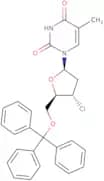
2’,3’-Dideoxy-3’-chloro-5-methyl-5’-O-trityluridine
CAS:<p>2’,3’-Dideoxy-3’-chloro-5-methyl-5’-O-trityluridine (ddCTP) is a novel nucleoside analog that is synthesized by the protection of the 5'-hydroxyl group with an acetyl group followed by a 2',3'-dideoxy substitution. This compound has been shown to have antiviral and anticancer activities. ddCTP is an activator of DNA polymerase and inhibits viral DNA synthesis in vitro. It also inhibits protein synthesis and cell division by binding to the RNA template strand, which prevents it from being used as a template for protein synthesis.</p>Purity:Min. 95%8-Azidoadenosine 5'-triphosphate tetralithium salt
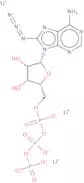
<p>8-Azidoadenosine 5'-triphosphate tetralithium salt is a modified nucleoside phosphoramidite. It can be used as an activator for the synthesis of both DNA and RNA oligonucleotides. 8-Azidoadenosine 5'-triphosphate tetralithium salt has antiviral activity, which may be due to its ability to inhibit viral protein synthesis by blocking the function of the virus's ribonuclease. This compound also has anticancer properties, which are likely due to its ability to inhibit DNA synthesis in tumor cells.</p>Formula:C10H15N8O13P3Purity:Min. 95%Color and Shape:Yellow oil.Molecular weight:548.19 g/mol6-(4-Fluorophenyl)pyrimidine-2,4-diamine
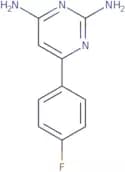
CAS:<p>6-(4-Fluorophenyl)pyrimidine-2,4-diamine is an organic compound that has been shown to inhibit the proliferation of cells in vitro and to induce apoptosis. It also inhibits the growth of cancer cells. 6-(4-Fluorophenyl)pyrimidine-2,4-diamine mediates the activation of arylation, which is a chemical reaction that produces a new carbon-carbon bond between two or more molecules. This reaction is involved in the process of angiogenesis. In addition, this compound has been shown to be reactive with other compounds that are known to cause mutations and cellular damage.</p>Formula:C10H9FN4Purity:Min. 95%Molecular weight:204.2 g/mol5'-O-DMT-2'-O-(2-methoxyethyl)uridine 3'-CE phosphoramidite
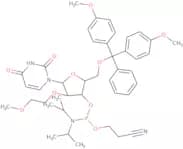
CAS:<p>Building block for the introduction of uridine units into oligonucleotides</p>Formula:C42H53N4O10PPurity:Min. 95%Molecular weight:804.86 g/mol5'-O-Acetyl-3'-azido-2',3'-dideoxy-N2-palmitoylguanosine
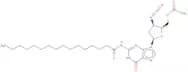
CAS:<p>5'-O-Acetyl-3'-azido-2',3'-dideoxy-N2-palmitoylguanosine is a novel antiviral and anticancer agent. It is an analogue of the natural nucleoside guanosine. It has been modified with an acetyl group at the 5' position of the pentose moiety and an azido group at the 2' and 3' positions of the ribose moiety. The acetyl group makes this compound more water soluble, which means it can be easily administered intravenously for treatment of cancer or infection.</p>Formula:C28H44N8O5Purity:Min. 95%Molecular weight:572.7 g/mol2'-Deoxycytidine phosphoramidite dimer
<p>2'-Deoxycytidine phosphoramidite dimer is a Novel, high quality, and CAS No. Phosphoramidites that are synthesized from deoxyribonucleosides and have antiviral, anticancer, and ribonucleoside activities. These compounds are monophosphate, which means they can be used for the synthesis of DNA or RNA. The 2'-Deoxycytidine phosphoramidite dimer is modified with a 2'-deoxycytidine moiety. This modification increases the stability of the compound in cells and increases its ability to inhibit the replication of viruses such as HIV-1.</p>Purity:Min. 95%5'-O-DMT-2'-O-pentylaminoadenosine
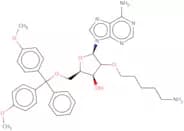
<p>5'-O-DMT-2'-O-pentylaminoadenosine is a phosphoramidite nucleoside monophosphate. It is a novel anticancer and antiviral agent that has been shown to kill cancer cells, inhibit viral replication, and inhibit the synthesis of DNA in the cell. 5'-O-DMT-2'-O-pentylaminoadenosine has been shown to be an effective inhibitor of herpes simplex virus type 1 (HSV1) replication in vitro. This drug also inhibits the synthesis of DNA and RNA by inhibiting nucleoside diphosphate kinase, which is a key enzyme in the metabolism of nucleosides.</p>Formula:C36H42N6O6Purity:Min. 95%Molecular weight:654.77 g/mol3'-Deoxyadenosine CPG
<p>3'-Deoxyadenosine CPG is a nucleoside that is synthetically manufactured. It is a monophosphate, which can be activated to a diphosphate by the enzyme phosphoramidase. 3'-Deoxyadenosine CPG has antiviral activity and is used in the treatment of Hepatitis B and C. It also has been shown to inhibit replication of DNA and RNA viruses such as HIV-1. 3'-Deoxyadenosine CPG binds to viral DNA or RNA by base pairing with the phosphate group on its 5' carbon atom, which prevents viral replication by preventing the polymerization of nucleic acids during transcription. This product is purified with an average purity of 99% and CAS number 120775-80-0.br>br><br>3'-Deoxyadenosine CPG (3'-DAD) is a modified nucleoside that was synthesized for use in antiviral therapy against hepatitis B virus</p>Purity:Min. 95%6-Chloro-2-iodo-9-(2',3',5'-tri-O-acetyl-b-D-ribofuranosyl)purine
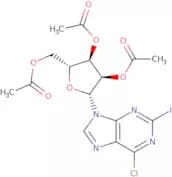
CAS:<p>6-Chloro-2-iodo-9-(2',3',5'-tri-O-acetyl-b-D-ribofuranosyl)purine is a protected purine nucleoside</p>Formula:C16H16ClIN4O7Purity:Min. 95%Molecular weight:538.68 g/mol2'-Deoxy-5'-O-DMT-N4-isobutyrylcytidine 3'-CE phosphoramidite
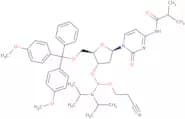
CAS:<p>This is a nucleotide analog that is used as a building block in DNA synthesis. It can be obtained from various sources, such as Sigma-Aldrich, Inc.</p>Purity:Min. 95%2'-Deoxy-5'-O-DMT-2'-fluoro-N2-isobutyrylguanosine 3'-O-succinate triethylammonium salt
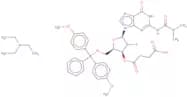
<p>2'-Deoxy-5'-O-DMT-2'-fluoro-N2-isobutyrylguanosine 3'-O-succinate triethylammonium salt is a novel phosphoramidite that can be used as an activator for DNA synthesis. It is activated by the addition of an appropriate nucleophile and has been shown to be effective in antiviral and anticancer activities. This compound is synthesized through a modified diphosphate method and it is available in high purity with a CAS number.</p>Formula:C39H40FN5O10·C6H16NPurity:Min. 95%Molecular weight:859.98 g/mol3'-Azido-3'-deoxythymidine-methyl-D3-b-D-glucuronide sodium salt
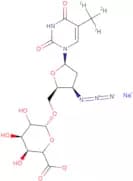
Controlled Product<p>3'-Azido-3'-deoxythymidine-methyl-D3-b-D-glucuronide sodium salt is a novel antiviral nucleoside phosphoramidite that has been shown to be an effective activator in the synthesis of diphosphate and triphosphate analogs. The novel antiviral nucleoside phosphoramidite was synthesized from 3'-azido-3'-deoxythymidine, methyl bromoacetate and sodium hydroxide in methanol at room temperature. It is structurally similar to the natural nucleosides, deoxyribonucleosides and ribonucleosides with modifications on the sugar moiety and phosphate group. This compound is a high quality synthetic material for use in pharmaceutical research, as an anticancer agent and as a potential antiviral drug.</p>Formula:C16H17D3N5NaO10Purity:Min. 95%Color and Shape:PowderMolecular weight:468.36 g/mol5-Bromo-2-methylsulfanyl-pyrimidine-4-carboxylic acid
CAS:<p>5-Bromo-2-methylsulfanyl-pyrimidine-4-carboxylic acid is a pyrimidine derivative that inhibits protein kinases. The compound has been shown to inhibit the activity of protein kinase C, which is involved in mediating inflammatory responses, and phosphorylation of the insulin receptor substrate 1. 5-Bromo-2-methylsulfanyl-pyrimidine-4-carboxylic acid is an efficient inhibitor of kinases and can be used as a lead compound for the development of new compounds with therapeutic potential.</p>Formula:C6H5BrN2O2SPurity:Min. 95%Molecular weight:249.09 g/mol3'-Deoxy-2-fluoroadenosine
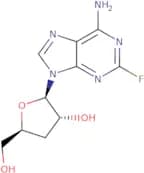
CAS:<p>3'-Deoxy-2-fluoroadenosine is a byproduct of the metabolism of nucleoside phosphorylase. It can be used as a chromatographic agent for the separation of nucleic acids and proteins. 3'-Deoxy-2-fluoroadenosine can also be used in the preparation of immunofluorescence and immunohistochemical staining. 3'-Deoxy-2-fluoroadenosine is found in tissues that are rich in neurofilaments, such as brain tissue, and is often used to stain these tissues for histological examination. Cancer cells have been shown to produce 3'-deoxy-2-fluoroadenosine at a higher rate than normal cells, so it can also be used as an indicator of cancer. The thermophilic bacterium Thermus thermophilus produces high levels of this compound during DNA replication, which may be due to its role in the synthesis of d-arabinose from rib</p>Formula:C10H12FN5O3Purity:Min. 95%Molecular weight:269.23 g/mol1-(2-Deoxy-b-D-ribofuranosyl)-4-methylindole
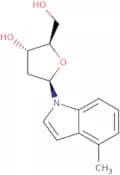
CAS:<p>1-(2-Deoxy-b-D-ribofuranosyl)-4-methylindole is a nucleoside that can be used as an activator for phosphoramidite synthesis. It is also known to have antiviral, anticancer, and antimalarial properties. 1-(2-Deoxy-b-D-ribofuranosyl)-4-methylindole has been shown to inhibit the proliferation of human leukemia cells in culture. It has also been shown to suppress HIV replication in vitro by inhibiting viral RNA synthesis.</p>Formula:C14H17NO3Purity:Min. 95%Molecular weight:247.3 g/mol2-Amino-4-(4-fluorophenyl)pyrimidine
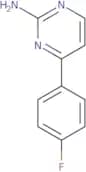
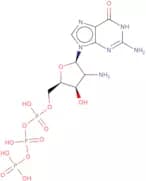
CAS:<p>2-Amino-4-(4-fluorophenyl)pyrimidine is a fluorinated derivative of imatinib, which is a chemical that inhibits the activity of tyrosine kinases. It has been shown to be a more potent inhibitor than imatinib, and it also offers high yields and regioselectivity. This compound can be used in organic chemistry to produce fluorinated derivatives.</p>Formula:C10H8FN3Purity:Min. 95%Molecular weight:189.19 g/mol2'-Amino-2'-deoxyguanosine-5'-triphospate tetralithium salt
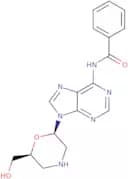
CAS:<p>2'-Amino-2'-deoxyguanosine-5'-triphosphate tetralithium salt is a novel nucleoside analog that has antiviral and anticancer activities. It is a high quality, modified nucleoside that can be used for the synthesis of deoxyribonucleosides or ribonucleosides. It is synthesized from 2'-amino-2'-deoxyguanosine triphosphate and a lithium salt of tetrabutylammonium. This product has a CAS number of 108269-13-2 and a purity level of ≥99%.</p>Formula:C10H17N6O13P3Li4Purity:Min. 95%Molecular weight:549.96 g/molN6-Benzoyl-7'-OH-morpholino adenosine
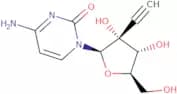
CAS:<p>N6-Benzoyl-7'-OH-morpholino adenosine is a modified nucleoside with antiviral activity. It is being developed as an activator of ribonucleotide reductase and a potential anticancer agent. N6-Benzoyl-7'-OH-morpholino adenosine is synthesized by reacting benzoyl chloride with 7'-O-dimethoxytritylmorpholine. This reaction results in the formation of the desired product, which has been shown to be an activator of ribonucleotide reductase. The synthesis of this compound can be performed on a large scale, making it an attractive candidate for chemotherapeutic use.</p>Formula:C17H18N6O3Purity:Min. 95%Color and Shape:SolidMolecular weight:354.36 g/mol2'-C-Ethynylcytidine
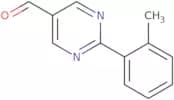
CAS:<p>2'-C-Ethynylcytidine is a synthetic surfactant that can be used in coatings and other surface treatments. It has been shown to inhibit the growth of bacteria and viruses, as well as being effective against a variety of bacterial species. 2'-C-Ethynylcytidine binds to sulfide, which is produced by bacteria, leading to cell death. The antimicrobial activity of 2'-C-Ethynylcytidine is due to its ability to form ester linkages with polyesters, which are able to penetrate the bacterial cell membrane and disrupt the integrity of the cytoplasmic membrane. This leads to leakage of intracellular contents, followed by cell death. 2'-C-Ethynylcytidine also has been shown to bind to metal ions such as silver, copper, zinc and cadmium and prevent their uptake into cells.</p>Purity:Min. 95%2-(2-Methylphenyl)pyrimidine-5-carbaldehyde
CAS:<p>2-(2-Methylphenyl)pyrimidine-5-carbaldehyde is a crystalline solid that has been shown to have synergistic effects with polypropylene. It is synthesized from 2-methylphenylacetonitrile and 2,4-dichloro-6-(trifluoromethyl)pyrimidine in the presence of sodium metal. The product is soluble in alcohols and ethers, but insoluble in water.</p>Formula:C12H10N2OPurity:Min. 95%Molecular weight:198.22 g/mol5'-O-DMT-thymidine 3'-Me phosphoramidite
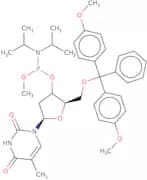
<p>5’-O-DMT-thymidine 3’-Me phosphoramidite is a novel and modified nucleotide analog that is used as an antiviral agent. It has been shown to be active against herpes simplex virus type 1 (HSV-1) and Epstein-Barr virus (EBV). 5'-O-DMT-thymidine 3’-Me phosphoramidite is not active against HIV, although it has been shown to inhibit the replication of Hepatitis B virus. This compound can also be used in cancer therapy.<br>5'-O-DMT-thymidine 3' -Me phosphoramidite inhibits cellular DNA synthesis by competing with natural thymidine monophosphate (TMP) for incorporation into DNA. The incorporation of 5'-O-DMT-thymidine 3' -Me into DNA leads to a high frequency of mutations, which causes the death of the cell.</p>Formula:C38H48N3O8PPurity:Min. 96 Area-%Color and Shape:White Off-White PowderMolecular weight:705.78 g/mol2'-Deoxy-5'-O-DMT-5-fluoro-4-O-(2,4,6-trimethylphenyl)uridine 3'-CE-phosphoramidite
<p>2'-Deoxy-5'-O-DMT-5-fluoro-4-O-(2,4,6-trimethylphenyl)uridine 3'-CE-phosphoramidite is a novel phosphoramidite monophosphate. It is modified to include fluorine at the 5 position of the uridine moiety and has antiviral activity. This product is a nucleoside with antiviral properties that can be used in cancer treatments. 2'-Deoxy-5'-O-DMT-5-fluoro-4-O-(2,4,6-trimethylphenyl)uridine 3'-CE phosphoramidite is synthesized from deoxyribonucleosides and ribonucleosides by using a high purity process.</p>Purity:Min. 95%NPE-caged- GTP sodium salt
<p>NPE-caged- GTP sodium salt is a novel nucleoside that can be used as a monophosphate or ribonucleotide, which is synthesized through the use of chemical phosphoramidites. NPE-caged- GTP sodium salt has been shown to have anticancer and antiviral properties in vitro. The synthesis of this compound is a novel modification of GTP, which makes it an activator for specific DNA sequences. It also has high purity and high quality.</p>Formula:C18H23N6O16P3·xNaPurity:Min. 95%Molecular weight:672.33 g/molAbacavir carboxylate
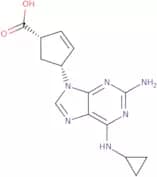
CAS:<p>Abacavir carboxylate is a prodrug of abacavir that is activated by the carboxylation of the terminal hydroxyl group in the liver. It has been shown to be quantified using a liquid chromatography-mass spectrometry (LC-MS) method. Abacavir carboxylate has an additional benefit of being less sensitive to degradation by nitrate, which can interfere with the analysis of acyclovir. The deuterium label on abacavir carboxylate ensures that it is not confused with acyclovir and facilitates identification in wastewater samples.</p>Formula:C14H16N6O2Purity:Min. 95%Molecular weight:300.32 g/mol2'-Deoxy-2'-fluoroguanosine-5'-triphosphate lithium salt - 100mM aqueous solution
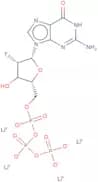
CAS:<p>2'-Deoxy-2'-fluoroguanosine-5'-triphosphate lithium salt - 100mM aqueous solution is an antiviral agent of the deoxyribonucleoside family. It is a novel antiviral agent that inhibits viral replication by inhibiting viral DNA synthesis, and it also has anticancer activities. 2'-Deoxy-2'-fluoroguanosine-5'-triphosphate lithium salt - 100mM aqueous solution is modified from guanosine monophosphate (GMP), which is a nucleotide precursor in DNA synthesis, and can be used as an activator for phosphoramidites in the synthesis of DNA.</p>Formula:C10H11FN5O13P3Li4Purity:Min. 95%Color and Shape:LiquidMolecular weight:548.9 g/mol2,5-Dioxo-3-sulfo-1-pyrrolidinyl 6-[[5-(hexahydro-2-oxo-1H-thieno[3,4-d]imidazol-4-yl)-1-oxopentyl]amino]hexanoate sodium salt
CAS:<p>2'-Deoxy-5'-O-DMT-N6-methyl-8-oxoadenosine 3'-CE phosphoramidite is a nucleotide analog that is used for the treatment of cancer. It inhibits sugar transport, which leads to tumor cell lysis. 2'-Deoxy-5'-O-DMT-N6-methyl-8-oxoadenosine 3'-CE phosphoramidite binds to glut1 and toll-like receptor 4 in the cell membrane, inhibiting the activation of these cells. This drug has been shown to have an antibody response in myeloma cells and basic fibroblast cell lines.</p>Formula:C20H30N4O9S2•NaPurity:Min. 95%Molecular weight:557.60 g/mol7-Benzyl-4-chloro-5-iodo-7H-pyrrolo[2,3-d]pyriMidine
CAS:<p>7-Benzyl-4-chloro-5-iodo-7H-pyrrolo[2,3-d]pyriMidine is an antiviral agent that is a modified nucleoside. It has shown to be a novel activator of the immune system. 7BICP has been shown to have high antiviral activity against herpes simplex virus type 1 (HSV1) and type 2 (HSV2) in cell cultures. It also inhibits the replication of HIV and influenza A virus in cell cultures. This drug is synthesized from deoxyribonucleosides, phosphoramidites, or nucleosides. 7BICP is a monophosphate and diphosphate, which are used as substrates for DNA synthesis by DNA polymerase. The CAS number for 7BICP is 1244855-59-1.</p>Purity:Min. 95%2'-O-tert-Butyldimethylsilyluridine
CAS:<p>2'-O-tert-Butyldimethylsilyluridine is a nucleoside that is used in DNA synthesis, antiviral research, and anticancer therapy. It is synthesized from 2'-deoxyuridine monophosphate (2'-dUMP) with the aid of a phosphoramidite coupling agent. It has shown to be an effective activator in the synthesis of oligonucleotides, which are short chains of nucleotide units that can be used for various purposes including the treatment of cancer cells. These chains are synthesized by linking together individual nucleosides with phosphate molecules at each end. The bonds between these phosphate groups and the sugar-phosphate backbone of the nucleotide units are called phosphodiester bonds. This synthetic process can be used to produce DNA or RNA strands as well as modified versions of these strands such as those that have been synthesized with other chemical groups on their sugar-phosphate backbones.</p>Formula:C15H26N2O6SiPurity:Min. 95%Color and Shape:PowderMolecular weight:358.46 g/mol5'-O-DMT-2'-O-propynyluridine 3'-CE phosphoramidite
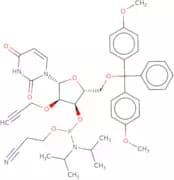
CAS:<p>5'-O-DMT-2'-O-propynyluridine 3'-CE phosphoramidite is a novel nucleoside analogue that can be used to synthesize DNA and RNA. This compound has antiviral and anticancer properties, which may be due to its ability to inhibit the synthesis of RNA. This product is also high quality, high purity, and low cost. 5'-O-DMT-2'-O-propynyluridine 3'-CE phosphoramidite is an excellent chemical intermediate for the synthesis of nucleosides with modified sugar moieties. It can be used in pharmaceuticals and other chemical industries.</p>Formula:C42H49N4O9PPurity:Min. 95%Molecular weight:784.83 g/mol2'-Deoxy-2'-fluoro-2-hydroxy-b-D-arabinoadenosine
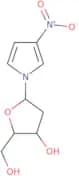
CAS:<p>2'-Deoxy-2'-fluoro-2-hydroxy-b-D-arabinoadenosine is a novel nucleoside that was synthesized as a potential antiviral agent. It is an analog of adenosine and has been shown to inhibit the replication of HIV in vitro. This nucleoside is synthesized using a modified phosphoramidite approach and can be used in the synthesis of DNA or RNA. 2'-Deoxy-2'-fluoro-2-hydroxy-b-D-arabinoadenosine has also been shown to have anticancer activity.</p>Formula:C10H12FN5O4Purity:Min. 95%Molecular weight:285.23 g/mol1-(β-D-2-Deoxyribofuranosyl)-3-nitropyrrole
CAS:<p>1-(β-D-2-Deoxyribofuranosyl)-3-nitropyrrole is a nitrofuranose analog that is used in the synthesis of nucleic acids. It has been shown to be effective as a template for DNA sequencing and as a probe for magnetic resonance spectroscopy. 1-(β-D-2-Deoxyribofuranosyl)-3-nitropyrrole inhibits the polymerase chain reaction by binding to the primer and causing misincorporation at mismatched sites, leading to reduced amplification of the target sequence. This compound also has antiviral properties and can prevent the replication of HIV and other viruses by destabilizing their dna duplexes.</p>Formula:C9H12N2O5Purity:Min. 95%Molecular weight:228.2 g/mol3,7-Dihydro-5-iodo-4-oxo-4H-pyrrolo[2,3-d]pyrimidine
CAS:<p>3,7-Dihydro-5-iodo-4-oxo-4H-pyrrolo[2,3-d]pyrimidine is a novel antiviral drug with anticancer activity. It is an inhibitor of the enzyme ribonucleotide reductase and has been shown to inhibit the production of deoxyribonucleosides in tumor cells. It also inhibits DNA synthesis by inhibiting DNA polymerase. 3,7-Dihydro-5-iodo-4-oxo-4H-pyrrolo[2,3-d]pyrimidine is a high purity product that is available in both monophosphate and diphosphate forms.</p>Formula:C6H4IN3OPurity:Min. 95%Molecular weight:261.02 g/mol2',3'-Dideoxy-3'-fluorocytidine
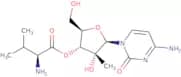
CAS:<p>2',3'-Dideoxy-3'-fluorocytidine is a synthetic nucleoside analog that inhibits DNA synthesis by blocking the incorporation of deoxycytidine into DNA. It is used to treat lymphocytic leukemia, hepatitis, and virus infections. 2',3'-Dideoxy-3'-fluorocytidine has been shown to inhibit cell growth in solid tumours. The drug has also been shown to inhibit the production of immunodeficiency viruses such as human immunodeficiency virus type 1 (HIV-1) and human T-lymphotropic virus type I (HTLV-I), which causes acquired immune deficiency syndrome (AIDS). 2',3'-Dideoxy-3'-fluorocytidine inhibits viral replication by inhibiting the activity of the enzyme deaminase, which converts dATP to dTTP. This prevents DNA replication and transcription.</p>Formula:C9H12FN3O3Purity:Min. 95%Molecular weight:229.21 g/molValopicitabine
CAS:<p>Valopicitabine is a prodrug that is converted to its active form, 3'-deoxy-3'-methylvalopicitabine, in the body. Valopicitabine inhibits viral replication by a mechanism that is not yet fully understood. It has been shown to inhibit NS3 protease and induce an interferon response. Valopicitabine has also been shown to inhibit Toll-like receptor 4 (TLR4) activity and elicit an antiviral response. Valopicitabine has low bioavailability, which may be due to its high lipophilicity.</p>Formula:C15H24N4O6Purity:Min. 95%Molecular weight:356.37 g/mol3'-O-Methyl-5'-guanylic acid
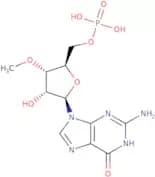
CAS:<p>3'-O-Methyl-5'-guanylic acid is a novel antiviral, synthetic deoxyribonucleoside which is activated by phosphoramidites to produce 3'-O-methyl-5'-guanylic acid phosphoramidite. It has high purity and quality and can be used as a nucleoside activator for DNA synthesis. 3'-O-Methyl-5'-guanylic acid has been shown to be an anticancer agent that inhibits the growth of cancer cells in vitro by inhibiting DNA synthesis and cell division. This drug also has a potential use as an antiviral agent.</p>Formula:C11H16N5O8PPurity:Min. 95%Molecular weight:377.25 g/mol3'-Deoxyguanosine-5'-triphosphate lithium salt - 100mM aqueous solution
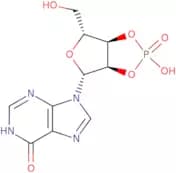
<p>3'-Deoxyguanosine-5'-triphosphate lithium salt - 100mM aqueous solution is Novel and Antiviral. 3'-Deoxyguanosine-5'-triphosphate lithium salt - 100mM aqueous solution is Synthetic and Deoxyribonucleosides. 3'-Deoxyguanosine-5'-triphosphate lithium salt - 100mM aqueous solution is High quality and Ribonuclesides. 3'-Deoxyguanosine-5'-triphosphate lithium salt - 100mM aqueous solution has CAS No. 51445-81-9, Activator, Phosphoramidites, Modified and Anticancer.</p>Formula:C10H12N5O13P3Li4Purity:Min. 95%Color and Shape:PowderMolecular weight:530.91 g/molInosine 2',3'-cyclic monophosphate sodium salt
CAS:<p>Inosine 2',3'-cyclic monophosphate sodium salt (ICMP) is a phosphodiesterase inhibitor that inhibits the activity of protein kinases and phosphatases. ICMP is used in biochemical studies to inhibit tryptophan metabolism and protein synthesis. It also has been shown to be useful in the study of sequences, such as those found in DNA and RNA. ICMP has been shown to increase the mRNA levels of a number of proteins at lower concentrations than other inhibitors, making it a valuable tool for studying protein synthesis. The enzyme-inhibiting properties of ICMP have been observed in calf thymus DNA and bacterial DNA gyrase, dna topoisomerase, and rna synthesis. ICMP also inhibits caenorhabditis elegans phosphatases and can be used in genetic engineering experiments involving Xenopus oocytes.</p>Purity:Min. 95%2'-Deoxy-N2-isopropylguanosine
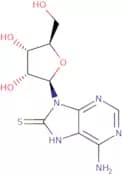
CAS:<p>2'-Deoxy-N2-isopropylguanosine is a nucleoside that is synthesized from 2'-deoxy-N6-methyladenosine and isopropyl alcohol. It has antiviral and anticancer properties. The antiproliferative effects of this drug are mediated by the inhibition of DNA synthesis in cells. This compound also inhibits the activation of the transcriptional factor NF-κB, which regulates inflammatory responses in the body.</p>Formula:C13H19N5O4Purity:Min. 95%Molecular weight:309.33 g/mol7,8-Dihydro-8-thioxo-adenosine
CAS:<p>7,8-Dihydro-8-thioxo-adenosine is a synthetic nucleoside that activates the synthesis of DNA and RNA by acting as a ribonucleotide. It also has antiviral and anticancer activities. 7,8-Dihydro-8-thioxo-adenosine is an antiviral agent against herpesviruses and retroviruses. The antitumor activity of this compound is due to its ability to inhibit the proliferation of tumor cells by inhibiting DNA synthesis. 7,8-Dihydro-8-thioxo-adenosine can be used in the treatment of leukemia and other cancers that are sensitive to cytotoxic drugs. This drug has been shown to have low toxicity in rats.</p>Formula:C10H13SN5O4Purity:Min. 95%Molecular weight:299.31 g/mol5'-O-DMT-2'-ethylfluoro-5-methyluridine 3'-CE phophoramidite
<p>5'-O-DMT-2'-ethylfluoro-5-methyluridine 3'-CE phophoramidite is an antiviral agent that has been shown to inhibit the replication of HIV in cell culture and to prevent the synthesis of the virus. 5'-O-DMT-2'-ethylfluoro-5-methyluridine 3'-CE phophoramidite inhibits viral replication by acting as a competitive inhibitor of HIV reverse transcriptase and blocking viral DNA synthesis from viral RNA. It has also been shown to have anticancer properties, which may be due to its ability to suppress tumor growth through inhibition of protein synthesis.</p>Purity:Min. 95%2'-Methyl-cytidine-(Bz)-succinyl-CPG; 500 Å (RNA)
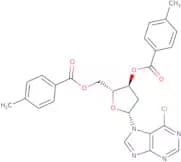
<p>2-Methyl-cytidine-(Bz)-succinyl-CPG; 500 Å (RNA) is a nucleoside analog that is modified with a 2'-methyl group. It is synthesized by the phosphoramidite method, which is performed in a high purity and high quality environment. This product can be used as an activator for DNA synthesis and has been shown to have anti-cancer and antiviral properties.</p>Purity:Min. 95%3,5-Di-O-toluoyl 6-chloropurine-7-b-D-deoxyriboside
CAS:<p>3,5-Di-O-toluoyl 6-chloropurine-7-b-D-deoxyriboside is a modified monophosphate nucleotide with antiviral and anticancer activity. It has been shown to be a potent activator of the enzyme DNA polymerase in vitro. This drug is synthesized by reacting 3,5-di-O-toluoyl 6-chloropurine with boron trichloride at high temperature. The final product was purified by HPLC and characterized using mass spectrometry. The purity of this compound is >99% as determined by HPLC analysis.</p>Formula:C26H23ClN4O5Purity:Min. 95%Molecular weight:506.94 g/molAdenosine 2',3'-cyclic monophosphate-5'-monophosphate
<p>Adenosine 2',3'-cyclic monophosphate-5'-monophosphate (AMP-CP) is a nucleotide that is the cyclic form of adenosine monophosphate. It is a modified nucleoside that is used in the synthesis of DNA and RNA, as well as in anticancer and antiviral research. The structure of AMP-CP consists of an adenosine base attached to ribose through a phosphate group at the 3' carbon position. This nucleotide can be converted to adenosine 5'-monophosphate (AMP) by phosphoramidites, which are chemical compounds consisting of an aminopropyl group joined to a phosphoryl group. AMP-CP is also known as diphosphate or deoxyribonucleosides.<br>AMP-CP has shown antiviral activity against herpes simplex virus type 1, HIV, influenza A virus, and vesicular stom</p>Purity:Min. 95%2'-Azido-2'-deoxyguanosine
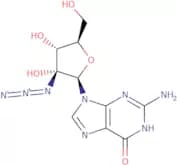
CAS:<p>2'-Azido-2'-deoxyguanosine is an analog of guanine that is used as a fluorescent probe in biochemical and chemical biology studies. It can be synthesized using the azide method, which involves coupling an azide functional group to an aromatic ring. 2'-Azido-2'-deoxyguanosine can also be modified by a number of modifications, including attachment of fluorescent molecules or biotin for labeling purposes. The chemical structure of this compound has been shown to have a conformation that is similar to that of natural guanosine and uridine. 2'-Azido-2'-deoxyguanosine can be detected by proton nuclear magnetic resonance spectroscopy at about 3 ppm, which corresponds to its chemical shift in the range of 200–300 Hz. This compound also has biochemical properties that are similar to those observed for natural guanine and uridine.</p>Formula:C10H12N8O4Purity:Min. 95%Molecular weight:308.25 g/mol5-Iodo-2’-O-methylcytidine
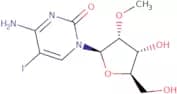
CAS:<p>5-Iodo-2’-O-methylcytidine is a nucleoside that is used as an activator for the synthesis of ribonucleosides. It is also used in the synthesis of DNA, RNA, and phosphoramidites. 5-Iodo-2’-O-methylcytidine has shown anticancer activity against a variety of cancer cell lines. This novel nucleotide exhibits high quality and purity, with an excellent yield and low impurities. The compound has been assigned CAS No. 847650-69-5 and its physical properties have been described in detail.</p>Formula:C10H14IN3O5Purity:Min. 95%Molecular weight:383.14 g/molN-Acetyl-3',5'-O-(1,1,3,3-tetraisopropyl-1,3-disiloxanediyl)adenosine
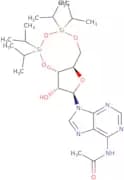
CAS:<p>N-Acetyl-3',5'-O-(1,1,3,3-tetraisopropyl-1,3-disiloxanediyl)adenosine is a novel nucleoside analog which has been modified to improve its anticancer activity. This compound is an activator of adenosine deaminase and inhibits the proliferation of various tumor cells. It also blocks the formation of DNA by inhibiting the synthesis of ribonucleotides. N-acetyl-3',5'-O-(1,1,3,3-tetraisopropyl-1,3-disiloxanediyl)adenosine has antiviral properties and can inhibit HIV replication in vitro.</p>Formula:C23H41N3O7Si2Purity:Min. 95%Molecular weight:527.76 g/molAdenosine-5'-[-(propargyl)]triphosphate sodium salt
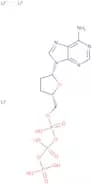
<p>Adenosine-5'-[-(propargyl)]triphosphate sodium salt is a modified nucleoside with anticancer activity. It has been shown to be a potent activator of DNA synthesis and an inhibitor of viral replication. Adenosine-5'-[-(propargyl)]triphosphate sodium salt is not active against bacterial cells, but it can be used in the treatment of cancer. This drug also has antiviral effects, which may be due to its ability to inhibit viral replication by binding to viral RNA polymerases or by inhibiting the transcriptional activation of genes encoding for enzymes that are required for mRNA synthesis.</p>Formula:C13H18N5O13P3Purity:Min. 95%Molecular weight:545.23 g/mol2',3'-Dideoxyadenosine-5'-triphosphate lithium salt - 100mM aqueous solution
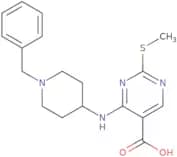
CAS:<p>2',3'-Dideoxyadenosine-5'-triphosphate lithium salt is a novel antiviral nucleoside that has the potential to be used in the treatment of various viral infections. It is synthesized from 2',3'-dideoxyadenosine monophosphate and lithium salt, and has been shown to have high antiviral activity against DNA viruses such as herpes simplex virus and adenovirus. It also inhibits the replication of RNA viruses such as influenza A virus, vesicular stomatitis virus, and measles virus. 2',3'-Dideoxyadenosine-5'-triphosphate lithium salt is a modified nucleoside that is phosphoramidite activated with a group at the 2' position on the ribose sugar. The phosphate group can be removed by hydrolysis or enzymatic catalysis, which leaves behind an unsaturated sugar moiety. This leads to an increased rate of incorporation into</p>Formula:C10H12N5O11P3·4LiPurity:Min. 95%Color and Shape:PowderMolecular weight:498.91 g/mol4-(1-Benzylpiperidin-4-Ylamino)-2-(Methylthio)Pyrimidine-5-Carboxylic Acid
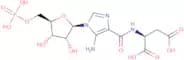
CAS:<p>4-(1-Benzylpiperidin-4-Ylamino)-2-(Methylthio)Pyrimidine-5-Carboxylic Acid is a novel nucleoside analog that has been shown to have anticancer activity. It has also been found to have antiviral and antitumor activities. 4-(1-Benzylpiperidin-4-Ylamino)-2-(Methylthio)Pyrimidine-5-Carboxylic Acid is a nucleoside analog that is synthesized from monophosphate, diphosphate, and phosphate esters of 2-(methylthio)pyrimidine 5'-carboxylic acid. It is an analogue of the natural nucleoside uridine and has phosphorylase enzyme activity. This agent is cytotoxic against cells in culture by inhibiting DNA synthesis.</p>Formula:C18H22N4O2SPurity:Min. 95%Molecular weight:358.46 g/molN-Succinyl-5-aminoimidazole-4-carboxamide ribose 5'-phosphate
CAS:<p>N-Succinyl-5-aminoimidazole-4-carboxamide ribose 5'-phosphate is a synthetase that is involved in the biosynthesis of purines and pyrimidines. It catalyzes the ATP-dependent formation of N-succinyl5'-aminoimidazole-4-carboxamide ribose 5'-phosphate from succinyl CoA and aspartic acid. This enzyme has been studied in wild type strains of bacteria, such as Escherichia coli, but not in humans or other organisms. N-Succinyl5'-aminoimidazole-4-carboxamide ribose 5'-phosphate has been shown to be an inhibitor of antimicrobial agents such as penicillin G, erythromycin, and tetracycline. The mechanism for this inhibition is unclear, but it may involve hydrogen bonding interactions or structural changes that prevent binding</p>Formula:C13H19N4O12PPurity:Min. 95 Area-%Color and Shape:White Off-White PowderMolecular weight:454.28 g/mol






![2,5-Dioxo-3-sulfo-1-pyrrolidinyl 6-[[5-(hexahydro-2-oxo-1H-thieno[3,4-d]imidazol-4-yl)-1-oxopentyl…](/_next/image/?url=https%3A%2Fstatic.cymitquimica.com%2Fproducts%2F3D%2Fthumb-webp%2FPD08913.webp&w=3840&q=75)
![7-Benzyl-4-chloro-5-iodo-7H-pyrrolo[2,3-d]pyriMidine](/_next/image/?url=https%3A%2Fstatic.cymitquimica.com%2Fproducts%2F3D%2Fthumb-webp%2FNB44294.webp&w=3840&q=75)


![3,7-Dihydro-5-iodo-4-oxo-4H-pyrrolo[2,3-d]pyrimidine](/_next/image/?url=https%3A%2Fstatic.cymitquimica.com%2Fproducts%2F3D%2Fthumb-webp%2FND57427.webp&w=3840&q=75)




![Adenosine-5'-[-(propargyl)]triphosphate sodium salt](/_next/image/?url=https%3A%2Fstatic.cymitquimica.com%2Fproducts%2F3D%2Fthumb-webp%2FNA30542.webp&w=3840&q=75)