Nucleosides
Found 3569 products of "Nucleosides"
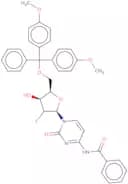
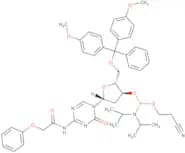
N4-Benzoyl-2'-deoxy-5'-O-DMT-2'-fluorocytidine
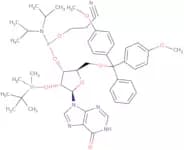
CAS:N4-Benzoyl-2'-deoxy-5'-O-DMT-2'-fluorocytidine (BDF) is a novel phosphoramidate prodrug of cytosine that has been synthesized for use in antiviral therapy. It is a DNA chain terminator and inhibits viral replication by inhibiting the synthesis of viral DNA. BDF is activated to cytosine monophosphate (CMP) by phosphodiesterase enzymes and then converted to cytosine diphosphate (CDP), which inhibits DNA synthesis. The synthesis of viral RNA is also inhibited, leading to inhibition of protein synthesis and cell death.Formula:C37H34FN3O7Purity:Min. 95%Color and Shape:White solid.Molecular weight:651.7 g/mol2'-O-tert-Butyldimethylsilyl-5'-O-DMT-inosine 3'-CE phosphoramidite
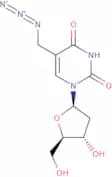
CAS:2'-O-tert-Butyldimethylsilyl-5'-O-DMT-inosine 3'-CE phosphoramidite is a modified ribonucleoside with antiviral and anticancer properties. Its DNA synthesis inhibitory activity has been shown in vitro. It is capable of inhibiting the growth of cells infected with influenza A virus, herpes simplex virus type 2, and human lymphocytic leukemia cells. This compound can also be used to produce synthetic oligonucleotides for research purposes. SELECTIVE: The following description should only be used for products that are specifically designed for one gender or age group:Formula:C46H61N6O8PSiPurity:Min. 96 Area-%Color and Shape:PowderMolecular weight:885.07 g/mol5-(Azidomethyl)-2’-deoxyuridine
CAS:5-azidomethyl-2-deoxyuridine (AmdU) is a nucleoside that contains an azide group. The structure of the nucleoside is similar to thymidine, and it is incorporated into nascent DNA by cellular polymerases, similarly to EdU (NE08701). Unlike EdU that needs to be further modified with azides in the presence of copper catalyst, AmdU can also react in the absence of copper catalyst using spAAC Click Chemistry with strained cycloalkynes, such as cyclooctynes. This enables detection of nascent DNA in benign, copper free conditions.
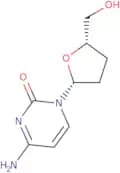
Formula:C10H13N5O5Purity:Min. 95%Color and Shape:PowderMolecular weight:283.24 g/mol2',3'-Dideoxycytidine
CAS:Anti-viral; reverse transcriptase inhibitorFormula:C9H13N3O3Purity:Min. 98 Area-%Color and Shape:White PowderMolecular weight:211.22 g/mol3'-O-[(Propan-2-ylidene)amino]-thymidine 5'-triphosphate
CAS:3'-O-[(Propan-2-ylidene)amino]-thymidine 5'-triphosphate is an antiviral and anticancer agent that is used for the synthesis of DNA and RNA. It is a novel nucleoside analog that has been modified to be activated by phosphoramidite chemistry. 3'-O-[(Propan-2-ylidene)amino]-thymidine 5'-triphosphate is synthesized from 2,6-diisopropylaniline, methyl 3-(aminomethyl)-1H-pyrrole-2,4-dicarboxylate, and propylamine in cyclohexane at reflux.Formula:C13H22N3O14P3Purity:Min. 95%Molecular weight:537.25 g/mol5'-O-Pixylthymidine
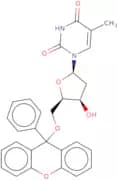
5'-O-Pixylthymidine is a modified nucleoside that has been shown to have anticancer and antiviral activity. It is an analog of thymidine, which is a deoxynucleoside. 5'-O-Pixylthymidine can be converted into diphosphate form by addition of phosphoramidites or ribonucleosides. This nucleotide can also be used as a building block for the synthesis of oligonucleotides, which are synthetic DNA molecules with therapeutic applications.Formula:C29H26N2O6Purity:Min. 95%Molecular weight:498.53 g/mol3’-b-C-Methyladenosine
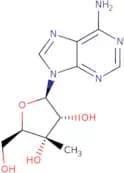
CAS:3’-b-C-Methyladenosine is a novel antiviral and anticancer agent that is synthetically derived from deoxyribonucleosides. 3’-b-C-Methyladenosine has been shown to have antiviral activity against HIV, influenza, herpes simplex virus type 1 and type 2, and vaccinia virus. It also has anticancer activity against leukemia cells. 3’-b-C-Methyladenosine can be used as a phosphoramidite in the synthesis of oligonucleotides. It may be useful as an activator for nucleophilic substitution reactions with phosphorus halides.Purity:Min. 95%Adenosine 2',3'-cyclic monophosphate sodium
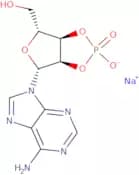
CAS:Adenosine 2',3'-cyclic monophosphate sodium (AMP-Na) is a chemical compound that is found in Streptomyces coelicolor. It has been shown to have an active role in the biotechnology industry for research and development. AMP-Na inhibits the synthesis of carbohydrates by binding to enzymes such as adenosyl-l-methionine peroxidase, which is involved in the metabolism of carbohydrates. Adenosine 2',3'-cyclic monophosphate sodium also has a long half-life, which makes it useful for therapeutic purposes.Formula:C10H11N5NaO6PPurity:Min. 95%Color and Shape:PowderMolecular weight:351.19 g/mol5-b-D-Glucopyranosyl-5-thio-thymine
5-b-D-Glucopyranosyl-5-thio-thymine is a novel, synthetic nucleoside that has antiviral activity. It is deoxyribonucleosides and ribonucleosides, which are the building blocks of DNA and RNA respectively. 5-b-D-Glucopyranosyl-5-thio-thymine can be used as an activator for phosphoramidites, which are used in the synthesis of DNA and RNA. This modified nucleotide also has anti cancer properties as it inhibits the growth of tumor cells.Purity:Min. 95%5-Methoxycarbonylmethyl-2-thiouridine
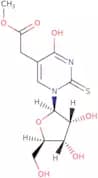
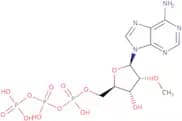
CAS:Nucleoside functionalised on the baseFormula:C12H16N2O7SPurity:Min. 95 Area-%Color and Shape:White Off-White PowderMolecular weight:332.33 g/mol2'-O-Methyladenosine-5'-triphosphate sodium salt - 100mM aqueous solution
CAS:2'-O-Methyladenosine-5'-triphosphate sodium salt is a novel nucleoside phosphoramidite. It is an activator and it can be used in the synthesis of DNA and RNA. The compound has antiviral properties and has been shown to inhibit DNA replication, protein synthesis, and RNA transcription. The compound also inhibits the growth of cancer cells by inducing apoptosis.Formula:C11H18N5O13P3·xNaPurity:Min. 95%Color and Shape:PowderMolecular weight:521.21 g/mol4,6-Diamino-3-iodo-1-(b-D-ribofuranosyl)-1H-pyrazolo[3,4-d]pyrimidine
CAS:4,6-Diamino-3-iodo-1-(b-D-ribofuranosyl)-1H-pyrazolo[3,4-d]pyrimidine is a novel antiviral, modified nucleoside monophosphate. It is an inhibitor of the RNA polymerase and is active against both DNA and RNA viruses. 4,6-Diamino-3-iodo-1-(b-D-ribofuranosyl)-1H-pyrazolo[3,4-d]pyrimidine has been shown to have anticancer properties in vitro and in vivo. It also has been shown to be an activator of the enzyme diphosphate kinase.Purity:Min. 95%1-(α-D-Ribofuranosyl)uracil
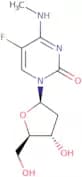
CAS:1-(α-D-Ribofuranosyl)uracil is a nucleoside analog made up of a uracil attached to a ribose sugar at the 1-position, with the sugar in the α configuration. This compound is of interest in biochemistry research and nucleoside chemistry, especially when studying stereochemistry or synthesizing analogs.Formula:C9H12N2O6Purity:(¹H-Nmr) Min. 95 Area-%Color and Shape:PowderMolecular weight:244.2 g/mol2'-Deoxy-5-fluoro-N-methylcytidine
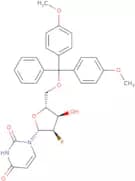
CAS:2'-Deoxy-5-fluoro-N-methylcytidine is a phosphoramidite that belongs to the group of deoxyribonucleosides. It is used as an antiviral agent, with high purity and high quality. 2'-Deoxy-5-fluoro-N-methylcytidine has been shown to inhibit the growth of cancer cells and is also a novel nucleoside with anticancer activity.Formula:C10H14FN3O4Purity:Min. 95%Molecular weight:259.23 g/mol2'-Deoxy-5'-O-DMT-2'-fluorouridine
CAS:2'-Deoxy-5'-O-DMT-2'-fluorouridine is a medicament that belongs to the group of antineoplastic agents and is used in cancer treatment. It inhibits the synthesis of DNA by inhibiting the enzyme thymidylate synthetase, which is required for the formation of thymine nucleotides. This drug has been shown to be effective against some cancer cells in vitro and in vivo, but not all. 2'-Deoxy-5'-O-DMT-2'-fluorouridine can also inhibit terminal growth phases and induce programmed cell death. Solid phase synthesis has been used to synthesize this molecule as a phosphoramidite.Formula:C30H29FN2O7Purity:Min. 98 Area-%Color and Shape:White PowderMolecular weight:548.57 g/mol3’-deoxy-3’-fluorotoyocamycin
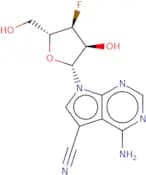
CAS:3’-deoxy-3’-fluorotoyocamycin is a nucleoside, ribonucleoside and antiviral agent. It inhibits the replication of DNA viruses by inhibiting the viral enzyme RNA polymerase. This drug also has anticancer activity and can be used to treat leukemia and other cancers. 3’-deoxy-3’-fluorotoyocamycin can be used as a monophosphate or diphosphate activator for phosphoramidites in the synthesis of modified DNA. It is also a novel drug that has been modified to contain an additional phosphate group at position 3' on the sugar moiety. The CAS number for this compound is 847649-44-9.Purity:Min. 95%2'-Deoxy-5'-O-DMT-N4-isobutyryl-5-methylcytidine
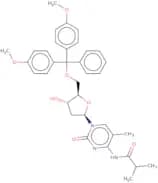
CAS:The chemical compound 2'-deoxy-5'-O-dimethyltryptophan 4-isobutyryl-5-methylcytidine is an antiviral and anticancer agent. It is a nucleoside analog that inhibits the synthesis of DNA, RNA, and proteins by inhibiting the activity of various enzymes in the cell. This agent also acts as an activator that binds to DNA, preventing transcription of genes. The modified nucleotide has been used in research to study the effects on cancer cells and HIV cells.Purity:Min. 95%5'-O-DMT-2'-O-methyl-N6-phenoxyacetyladenosine
CAS:5'-O-DMT-2'-O-methyl-N6-phenoxyacetyladenosine is a novel synthetic nucleoside with antiviral and anticancer activities. It is a phosphoramidite that can be used to synthesize oligonucleotides of any sequence. It is a nucleoside analogue that has been shown to inhibit the activity of DNA gyrase and topoisomerase IV, which are enzymes that maintain the integrity of bacterial DNA. 5'-O-DMT-2'-O-methyl-N6-phenoxyacetyladenosine is also an activator of viral transcription and replication. 5'-O-DMT-2'-O-methyl-N6-phenoxyacetyladenosine has been shown to be active against methicillin resistant Staphylococcus aureus (MRSA) and Clostridium perfringens, although it is not active against acid fast bacteria suchFormula:C40H39N5O8Purity:Min. 95 Area-%Color and Shape:PowderMolecular weight:717.77 g/molN6-Benzoyl-7-deaza-2'-deoxy-7-iodoadenosine
CAS:N6-Benzoyl-7-deaza-2'-deoxy-7-iodoadenosine is an antiviral compound that inhibits the synthesis of DNA and RNA. It is a synthetic, modified nucleoside with antiviral properties. The compound has been shown to be active against both animal and human tumor cells, as well as being effective in the treatment of viral infections.N6-Benzoyl-7-deaza-2'-deoxy-7-iodoadenosine is water soluble and biologically stable.Purity:Min. 95%3'-O-Benzoyl-2'-deoxyuridine
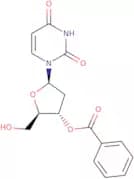
CAS:3'-O-Benzoyl-2'-deoxyuridine is a synthetic nucleoside that is used in the synthesis of DNA and RNA. 3'-O-Benzoyl-2'-deoxyuridine is also an antiviral agent that has shown efficacy against HIV, HSV, and influenza virus. 3'-O-Benzoyl-2'-deoxyuridine is a phosphoramidite monophosphate that can be used as a building block for DNA or RNA synthesis. It is also a diphosphate that can be used to synthesize modified nucleosides. This product has novel properties and high purity, making it suitable for research purposes.Formula:C16H16N2O6Purity:Min. 95%Color and Shape:PowderMolecular weight:332.31 g/molN4-Benzoyl-3'-deoxycytidine
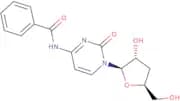
CAS:N4-Benzoyl-3'-deoxycytidine is a novel antiviral agent that has shown activity against DNA and RNA viruses. It is an activator of DNA polymerase, which is essential for replication of viral nucleic acids. The compound is a modified nucleoside with a benzoyl group at the 4' position of the ribose moiety. It also has phosphoramidite, monophosphate, and diphosphate analogues. N4-Benzoyl-3'-deoxycytidine binds to the enzyme DNA polymerase, thereby inhibiting its ability to synthesize deoxyribonucleotides from ribonucleotides. This results in inhibition of viral DNA synthesis and subsequent inhibition of viral replication.Formula:C16H17N3O5Purity:Min. 95%Color and Shape:White To Off-White SolidMolecular weight:331.32 g/mol2'-Deoxy-7-deazaisoguanosine triphosphate
CAS:2'-Deoxy-7-deazaisoguanosine triphosphate is a nucleotide analogue that is used as an antiviral agent in the treatment of HIV. It has potent activity against HIV and other retroviruses, including SIV, FIV, and HTLV-1. 2'-Deoxy-7-deazaisoguanosine triphosphate has been shown to act as an activator of DNA polymerase by enhancing the incorporation of deoxynucleotide triphosphates into DNA. It also inhibits the synthesis of viral DNA by inhibiting the activity of reverse transcriptase enzymes. 2'-Deoxy-7-deazaisoguanosine triphosphate can be synthesized from diphosphates and phosphoramidites through a modified phosphoramidite approach that allows for high quality and purity with high yield.Formula:C11H17N4O13P3Purity:Min. 95%Molecular weight:506.19 g/mol2'-O-(2-Methoxyethyl)guanosine
CAS:2'-O-(2-Methoxyethyl)guanosine is a guanosine derivative isolated from the reaction of 2-aminoadenosine with methylsulfonyl chloride. This compound has been shown to react with aromatic hydrocarbons to form a reagent that is useful for the alkylation of nucleophilic groups in organic synthesis.Formula:C13H19N5O6Purity:Min. 95%Color and Shape:PowderMolecular weight:341.32 g/mol7-Deaza 2-C-methyl-N6-methyladenosine
CAS:7-Deaza 2-C-methyl-N6-methyladenosine is a nucleoside that is modified with a methyl group at the 7 position of the deoxyribose ring. It has antiviral and anticancer properties. 7-Deaza 2-C-methyl-N6-methyladenosine is an activator of phosphoramidites, which are compounds that can be used to synthesize DNA or RNA.Formula:C13H18N4O4Purity:Min. 95 Area-%Molecular weight:294.31 g/mol5-Aminoimidazole-4-carboxamide-1-b-D-ribofuranose
CAS:Acadesine is a purine nucleoside analogue that inhibits the synthesis of ATP in cells. Acadesine blocks phosphorylation of adenosine monophosphate (AMP) to adenosine triphosphate (ATP) by inhibiting the activity of kinase-3, an enzyme involved in the production of ATP. Acadesine also inhibits the release of ATP from muscle cells into the blood stream and preferentially targets kidney cells, thereby reducing renal injury. Acadesine has been shown to be effective at reducing proteinuria and improving renal function in rats with acute kidney injury. Acadesine also has anti-inflammatory properties due to its ability to inhibit proteins that are involved in inflammation.Formula:C9H14N4O5Purity:Min. 98 Area-%Color and Shape:PowderMolecular weight:258.23 g/molN3-Methylcytidine
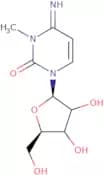
CAS:N3-Methylcytidine is a synthetic analog of uridine. It is used for the treatment of syncytial virus infection, which is a group of diseases caused by viruses that have an RNA genome and replicate by forming syncytia—large groups of infected cells. N3-Methylcytidine inhibits the synthesis of proteins in cells and inhibits the growth of bacteria. This drug has been shown to inhibit actin polymerization and prevents cell spreading. N3-Methylcytidine also binds to RNA polymerase II and blocks its interaction with DNA, inhibiting protein synthesis at the ribosome level. N3-Methylcytidine is metabolized in vivo into methylated cytidine, which can be detected in urine samples using chemical biology methods or fluorescence resonance energy transfer (FRET) analysis. Synonyms: N3-methyluridine; 3-methyluridineFormula:C10H15N3O5Purity:Min. 95%Color and Shape:White PowderMolecular weight:257.24 g/molAdenosine 3',5'-bisphosphate triethylammonium salt - 10mM aqueous solution
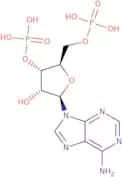
CAS:Adenosine 3',5'-bisphosphate triethylammonium salt is a metabolite of adenosine and an ester of triethylamine. The conjugate acid has been isolated from mouse urine. It is a metabolite of adenosine in the liver and is hydrolyzed to adenosine monophosphate and bisphosphate. Adenosine 3',5'-bisphosphate triethylammonium salt is used to study the metabolism of adenosine in mice. It has also been shown that this metabolite can inhibit the growth of E. coli (a bacterium) and mouse erythrocyte mitochondria by blocking ATP synthesis at the level of substrate-level phosphorylation.Formula:C10H15N5O10P2•(C6H15N)xPurity:Min. 95%Molecular weight:427.2 g/mol5,6-Dihydro-5-azacytidine acetate
5,6-Dihydro-5-azacytidine acetate is a monophosphate nucleoside that is used in the synthesis of DNA and RNA. It is an antiviral agent that inhibits the synthesis of DNA by preventing the conversion of deoxyribonucleotides to diphosphates. 5,6-Dihydro-5-azacytidine acetate has been found to have anticancer properties and is used in cancer treatment. This chemical also has a high purity and quality, making it a suitable reagent for use in phosphoramidite coupling reactions for oligonucleotide synthesis. 5,6-Dihydro-5-azacytidine acetate has been shown to be active against a variety of human tumor cell lines, including leukemia cells.Formula:C10H17N4O7Purity:Min. 95%Color and Shape:White PowderMolecular weight:305.26 g/mol3'-Deoxy-3'-fluoro-isocytidine
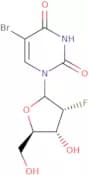
3'-Deoxy-3'-fluoro-isocytidine is a nucleoside that belongs to the class of Deoxyribonucleosides. It is a novel nucleoside that has antiviral and anticancer properties. 3'-Deoxy-3'-fluoro-isocytidine inhibits viral replication by inhibiting the action of DNA polymerase. It also inhibits cancer cell proliferation through inhibition of DNA synthesis and protein synthesis, as well as induction of apoptosis. 3'-Deoxy-3'-fluoro-isocytidine is phosphorylated by ribonucleotide reductase in the erythrocyte to yield its active form, deoxycytidine monophosphate (dCMP).Purity:Min. 95%5-Bromo-2'-deoxy-2'-fluorouridine
CAS:5-Bromo-2'-deoxy-2'-fluorouridine is a phosphoramidite that can be used as an anticancer, antiviral, and antimalarial agent. It is modified form of nucleosides with a high purity and quality. It has been shown to have antiviral activity against HIV type 1 and influenza A virus in vitro. 5-Bromo-2'-deoxy-2'-fluorouridine is a novel synthetic nucleoside that binds to the ribonucleotide reductase enzyme and inhibits its activity, which prevents the production of RNA. This drug also has anticancer properties due to its ability to inhibit DNA synthesis by binding to DNA polymerase and blocking the incorporation of deoxythymidylate into DNA. It also has been shown to cause cancer cell death by inhibiting protein synthesis.Purity:Min. 95%4-Amino-7-(2-deoxy-b-D-ribofuranosyl)-7H-pyrrolo[2,3-d]pyrimidin-5-carboxamide
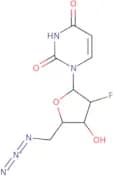
CAS:4-Amino-7-(2-deoxy-b-D-ribofuranosyl)-7H-pyrrolo[2,3-d]pyrimidin-5-carboxamide is a synthetic compound that inhibits protein synthesis by binding to the 50S ribosomal subunit. It also prevents viral replication by inhibiting the incorporation of amino acids into proteins. 4-Amino-7-(2-deoxy-b-Dribofuranosyl)-7H pyrrolo[2,3 d]pyrimidin 5 carboxamide binds to the 50S ribosomal subunit and blocks tRNA entry into the A site of the ribosome. This binding prevents translation and transcription of mRNA, effectively inhibiting protein synthesis. It has been shown to be effective against murine leukemia virus (MLV), influenza A virus, and herpes simplex virus type 1 (HSV1) in cell cultureFormula:C12H15N5O4Purity:Min. 95%Molecular weight:293.28 g/mol5'-Azido-2',5'-dideoxy-2'-fluorouridine
CAS:5'-Azido-2',5'-dideoxy-2'-fluorouridine is a novel nucleoside that is a phosphoramidite. It is an antiviral agent that has been shown to inhibit the synthesis of RNA in cells. This drug also inhibits the growth of cancer cells and can be used for the treatment of leukemia, lymphoma, and myeloma. 5'-Azido-2',5'-dideoxy-2'-fluorouridine has been shown to bind to DNA through its azide group and form a stable covalent bond with the N7 position of guanine. This bond prevents the incorporation of adenosine triphosphate (ATP) into DNA, which prevents DNA transcription and replication.Formula:C9H10FN5O4Purity:Min. 95%Molecular weight:271.21 g/molN4-Benzoyl-3'-O-tert-butydimethylsilylcytidine 2'-CE-phosphoramidite
N4-Benzoyl-3'-O-tert-butydimethylsilylcytidine 2'-CE-phosphoramidite is a novel nucleoside analog that has shown anticancer and antiviral activity. It is a monophosphate, modified nucleoside that inhibits the deoxyribonucleotide biosynthetic pathway in cells. N4-Benzoyl-3'-O-tert-butydimethylsilylcytidine 2'-CE-phosphoramidite can be used as an activator of ribonuclease S1 and ribonuclease T1, which are enzymes involved in the process of DNA replication. In addition to its use as a therapeutic agent, this compound is also used for research purposes.Formula:C52H66N5O9PSiPurity:Min. 95%Molecular weight:964.17 g/mol5-Aza-N6-benzoyl-5'-O-DMT-2'-deoxycytidine 3'-CE phosphoramidite
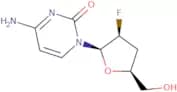
CAS:5-Aza-N6-benzoyl-5'-O-DMT-2'-deoxycytidine 3'-CE phosphoramidite is a monophosphate, Synthetic, DNA Activator, Anticancer, Modified, Novel, Nucleosides. It has the CAS No. 929904-98-3 and is High purity.Formula:C46H53N6O9PPurity:Min. 95%Molecular weight:864.92 g/mol1-(2,3-Dideoxy-2-fluoropentofuranosyl)cytosine
CAS:1-(2,3-Dideoxy-2-fluoropentofuranosyl)cytosine is a cytosine analog that is structurally similar to the antiviral drug tenofovir. It has been shown to be active against human serum and logarithmic growth phase cells, as well as cancer cell lines. 1-(2,3-Dideoxy-2-fluoropentofuranosyl)cytosine inhibits HIV infection in vitro by binding to the viral reverse transcriptase enzyme, blocking its activity and preventing DNA synthesis. This drug also inhibits the replication of human immunodeficiency virus type 1 (HIV-1) and other retroviruses in cell culture.Formula:C9H12FN3O3Purity:Min. 95%Molecular weight:229.21 g/mol3-beta-D-Ribofuranosyl-1H-pyrimido[5,4-b][1,4]benzoxazin-2(3H)-one
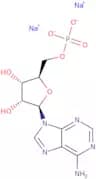
CAS:3-beta-D-Ribofuranosyl-1H-pyrimido[5,4-b][1,4]benzoxazin-2(3H)-one is a phosphoramidite that can be used for the synthesis of DNA. It has antiviral activity and has been shown to inhibit the growth of cancer cells. 3-beta-D-Ribofuranosyl-1H-pyrimido[5,4-b][1,4]benzoxazin-2(3H)-one is a novel nucleoside that is modified with a fluoroquinolone moiety. This modification inhibits viral replication by interfering with viral DNA polymerase. The novel nucleoside has also been shown to have anticancer activity in vitro and in vivo.Formula:C15H15N3O6Purity:Min. 95%Color and Shape:PowderMolecular weight:333 g/molAdenosine 5'-monophosphate disodium salt
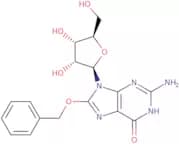
CAS:Adenosine 5'-monophosphate disodium salt (AMP-Na2) is a chemical compound that has been used in the study of metabolic disorders. It belongs to the class of ethylene diamines and has been shown to increase the glomerular filtration rate. Ammonium adenosine 5'-monophosphate disodium salt has also been shown to increase the activity of glutamate decarboxylase, which converts glutamate into GABA, an inhibitory neurotransmitter. The neutral pH optimum for AMP-Na2 is 6.5-7.5, which may be due to its lysine residues. AMP-Na2 has a carbonyl group that can be oxidized by reactive oxygen species and cause oxidative injury to cells in vivo and in vitro. This damage was found mainly in microglia cells, which are responsible for removing dead or damaged neurons from the central nervous system (CNS). AMP-Na2 also activates adFormula:C10H12N5Na2O7PPurity:Min. 98 Area-%Color and Shape:PowderMolecular weight:391.19 g/mol8-(Benzyloxy)guanosine
CAS:8-(Benzyloxy)guanosine is a novel nucleoside analog that is an activator of ribonucleotide reductase. It has been shown to inhibit the proliferation of cancer cells in vitro and in vivo, as well as inhibit the production of diphosphate from ATP. This compound also has antiviral activity against herpes simplex virus type 1 (HSV-1) and human immunodeficiency virus type 1 (HIV-1). 8-(Benzyloxy)guanosine is synthesized by reacting the 8-hydroxy group on guanosine with benzaldehyde, followed by phosphorylation with diphosphate. This compound has CAS No. 3868-36-8 and can be used for research purposes only.Formula:C17H19N5O6Purity:Min. 95 Area-%Color and Shape:White To Off-White SolidMolecular weight:389.36 g/mol5'-O-(4,4'-Dimethoxytrityl)adenosine
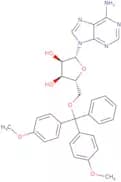
CAS:5'-O-(4,4'-Dimethoxytrityl)adenosine is a phosphoramidite that can be used as an activator for the synthesis of DNA. It is also used in the preparation of modified nucleosides and has anticancer activity. 5'-O-(4,4'-Dimethoxytrityl)adenosine is a modified ribonucleoside with high quality and high purity. This product has been shown to have antiviral activity against HIV-1.
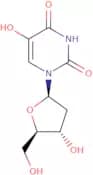
Formula:C31H31N5O6Purity:Min. 95 Area-%Color and Shape:White Off-White PowderMolecular weight:569.61 g/mol2'-Deoxy-5-hydroxyuridine
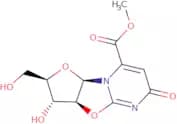
CAS:2'-Deoxy-5-hydroxyuridine is a hydrated form of uracil that is used in the synthesis of nucleic acids. It is also a substrate for DNA polymerases and has been shown to inhibit the replication of herpes simplex virus. 2'-Deoxy-5-hydroxyuridine has been shown to have biological properties, such as inhibition of radiation-induced transformation, inhibition of cancer cell growth, and antiviral activity. The mechanism by which 2'-deoxy-5-hydroxyuridine inhibits the replication of herpes simplex virus is unclear but may be due to its ability to inhibit cellular metabolism.Formula:C9H12N2O6Purity:Min. 95 Area-%Color and Shape:White PowderMolecular weight:244.21 g/mol2,2'-Anhydro-6-methoxycarbonyl-b-D-arabinofuranosyl uracil
CAS:2,2'-Anhydro-6-methoxycarbonyl-b-D-arabinofuranosyl uracil is a novel and high purity anticancer and antiviral agent. It is an activator that has been shown to exhibit antineoplastic activity in vitro. The compound also inhibits the formation of RNA and DNA, which are necessary for the replication of cells. 2,2'-Anhydro-6-methoxycarbonyl-b-D-arabinofuranosyl uracil is a modified nucleoside that has been synthesized by phosphoramidite chemistry. This product can be used for research purposes and as a starting material for the synthesis of other compounds with similar structures.Formula:C11H12N2O7Purity:Min. 95%Molecular weight:284.22 g/mol2-Chloro-6-O-methylinosine
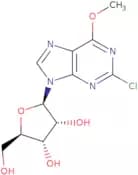
CAS:2-Chloro-6-O-methylinosine is a modified nucleoside analog. Its structure is based on inosine and at position 2 a chlorine atom replaces the hydrogen. At position 6, the keto oxygen (normally part of the purine ring) is O-methylated, forming a methoxy group (-OCH₃)Formula:C11H13ClN4O5Purity:Min. 95%Color and Shape:PowderMolecular weight:316.7 g/molInosine 5'-triphosphate disodium
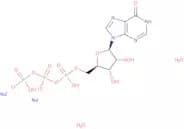
CAS:Inosine 5'-triphosphate disodium salt is a phosphoramidite that can be used as an activator for DNA synthesis. It also has antiviral and anticancer properties. Inosine 5'-triphosphate disodium salt is used in the synthesis of deoxyribonucleosides and other nucleotides.Formula:C10H13N4O14P3•Na2Purity:Min. 95%Color and Shape:PowderMolecular weight:552.13 g/mol5'-O-Acetyl-2',3'-dideoxy-3'-fluoro-a-uridine
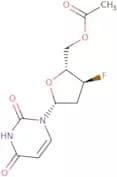
CAS:5'-O-Acetyl-2',3'-dideoxy-3'-fluoro-a-uridine is a novel nucleoside analogue that is an activator of the innate immune system. It is used for the treatment of cancer and viral infections. 5'-O-Acetyl-2',3'-dideoxy-3'-fluoro-a-uridine has been shown to have anticancer activity against pancreatic, lung, breast, prostate, colon, and leukemia cells in vitro. This drug also inhibits influenza virus A/WSN/33 replication in cell culture by blocking the RNA polymerase complex at the initiation stage. 5'-O-Acetyl-2',3'-dideoxy-3'-fluoro-a-uridine has also been shown to be active against herpes simplex virus type 1 (HSV1) and human immunodeficiency virus type 1 (HIV1).Purity:Min. 95%N6-Isobutyryl-2'-O-methyladenosine
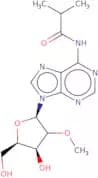
N6-Isobutyryl-2'-O-methyladenosine is a nucleoside that has antiviral, anticancer, and anti-inflammatory properties. It is an analog of adenosine that is used in the synthesis of DNA and RNA. It is modified by the incorporation of an iso-butyl group at the 2' position on the ribose ring. N6-Isobutyryl-2'-O-methyladenosine was first synthesized in 1962 and has been extensively studied due to its novel properties. The phosphoramidites are activated with tetrazole or triazole, which are both strong activators. This nucleoside can be synthesized in high purity (>98%) through a modification of the conventional phosphorylation process.Formula:C15H21N5O5Purity:Min. 95%Molecular weight:351.36 g/mol2-Amino-2'-deoxyadenosine
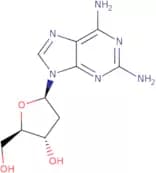
CAS:2-Amino-2'-deoxyadenosine is a modified nucleoside, closely related to adenosine in which the 2'-hydroxyl group is replaced by an amino group. This compound has potential research applicationsFormula:C10H14N6O3Purity:Min. 98 Area-%Color and Shape:White PowderMolecular weight:266.26 g/mol5’-O-Benzoyl-3’-O-(4-methoxybenzoyl)-2’-O,4’-C- methyleneuridine
5'-O-Benzoyl-3'-O-(4-methoxybenzoyl)-2'-O,4'-C-methyleneuridine is a nucleoside that is synthesized from 5'-O-benzoyl-2'-deoxyadenosine and 4'-methoxybenzoyl chloride. It has antiviral and anticancer properties. 5' - O - benzoyl - 3' - O - (4-methoxybenzoyl) - 2' - O,4' - C methyleneuridine is a novel nucleoside with anti-cancer and antiviral effects. It can also be used as an activator for the synthesis of oligonucleotides or as a ribonucleotide phosphoramidite. The chemical name for this compound is 5’ – O – benzoyl – 3’ – O – (4 methoxybenzoyl) – 2Purity:Min. 95%9-Deazaguanosine
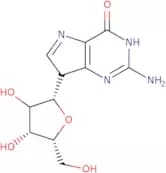
CAS:9-Deazaguanosine is a naturally occurring purine, which has been shown to inhibit the binding of adenosine deaminase enzyme. This enzyme is responsible for the conversion of adenosine to inosine, and plays a role in the replication of viruses. 9-Deazaguanosine has also been shown to have an inhibitory effect on trichomonas vaginalis, benzyl groups, and anomers. The hydroxyl group on 9-Deazaguanosine interacts with mammalian cells which may be related to its inhibitory effect on leishmania and hepatitis.
Formula:C11H14N4O5Purity:Min. 95%Color and Shape:PowderMolecular weight:282.25 g/mol2’,3’-Bis-O-tert-butyldimethylsilyluridine
CAS:2’,3’-Bis-O-tert-butyldimethylsilyluridine is a modified nucleoside that is used as an antiviral and anticancer agent. It inhibits the RNA polymerase of human immunodeficiency virus (HIV) and prevents the synthesis of viral DNA. It also inhibits tumor growth by inhibiting the enzyme ribonucleotide reductase. 2’,3’-Bis-O-tert-butyldimethylsilyluridine is synthesized by reacting 2′,3′-dideoxyribonucleosides with tertiary butyl dimethylchlorosilane in aqueous media.Purity:Min. 95%N4,N4,2’-O-Trimethylcytidine
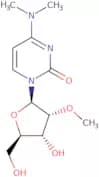
CAS:N4,N4,2’-O-Trimethylcytidine is a novel nucleoside that has been shown to be an anticancer drug. It inhibits the growth of cells by selectively inhibiting their DNA synthesis. N4,N4,2’-O-Trimethylcytidine is also active against viruses and is able to inhibit viral replication by blocking the synthesis of deoxyribonucleosides and phosphoramidites. This compound has been synthesized in high purity and quality with CAS No. 34218-81-0.Formula:C12H19N3O5Purity:Min. 95%Color and Shape:White PowderMolecular weight:285.3 g/mol

![3'-O-[(Propan-2-ylidene)amino]-thymidine 5'-triphosphate](/_next/image/?url=https%3A%2Fstatic.cymitquimica.com%2Fproducts%2F3D%2Fthumb-webp%2FNP145591.webp&w=3840&q=75)

![4,6-Diamino-3-iodo-1-(b-D-ribofuranosyl)-1H-pyrazolo[3,4-d]pyrimidine](/_next/image/?url=https%3A%2Fstatic.cymitquimica.com%2Fproducts%2F3D%2Fthumb-webp%2FND162946.webp&w=3840&q=75)






![4-Amino-7-(2-deoxy-b-D-ribofuranosyl)-7H-pyrrolo[2,3-d]pyrimidin-5-carboxamide](/_next/image/?url=https%3A%2Fstatic.cymitquimica.com%2Fproducts%2F3D%2Fthumb-webp%2FNA144685.webp&w=3840&q=75)

![3-beta-D-Ribofuranosyl-1H-pyrimido[5,4-b][1,4]benzoxazin-2(3H)-one](/_next/image/?url=https%3A%2Fstatic.cymitquimica.com%2Fproducts%2F3D%2Fthumb-webp%2FNR180574.webp&w=3840&q=75)