Nucleosides
Found 3569 products of "Nucleosides"
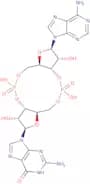
3',3'-Cyclic guanosine monophosphate-adenosine monophosphate
CAS:3',3'-Cyclic guanosine monophosphate-adenosine monophosphate is a molecule that is a stimulator of lymphocytic leukemia. It has been shown to induce chronic lymphocytic leukemia in mice and humans, which is an indication of its clinical relevance. 3',3'-Cyclic guanosine monophosphate-adenosine monophosphate induces cancer by inhibiting the production of cyclic nucleotide phosphodiesterases, which are enzymes that break down cyclic nucleotides. This leads to elevated levels of cyclic nucleotides and an increase in intracellular cAMP levels. The anticancer effect of 3',3'-cyclic guanosine monophosphate-adenosine monophosphate may also be due to its ability to inhibit the growth factor activity of staphylococcus aureus.
Formula:C20H22N10O13P2·2NaPurity:Min. 95%Molecular weight:718.38 g/mol5-Aminoallyl-2'-deoxyuridine
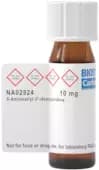
CAS:5-Aminoallyl-2'-deoxyuridine is a bifunctional alkylating agent that has low affinity for DNA. It is used in the laboratory to measure the rate of synthesis of thymidylate, which is one of the four deoxythymidylate needed for DNA synthesis. 5-Aminoallyl-2'-deoxyuridine has been shown to be a stable complex with sulfoxide, which can be used as an alkylation agent in the laboratory. 5-Aminoallyl-2'-deoxyuridine has also been shown to have high affinity for cellular nucleic acids in l1210 cells and have a high uptake. The sequence of 5-aminoallyl-2'-deoxyuridine is: 5-(N-(2-(5-aminoallylamino)ethyl)-N-(carboxyethyl)glycine)-2',3',5'-triiod
Formula:C12H18N4O4Purity:Min. 95%Color and Shape:PowderMolecular weight:282.3 g/molRef: 3D-NA02924
Discontinued productEthyl 2-amino-4-(trifluoromethyl)pyrimidine-5-carboxylate
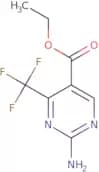
CAS:Ethyl 2-amino-4-(trifluoromethyl)pyrimidine-5-carboxylate is a small molecule that is a potent inhibitor of diacylglycerol acyltransferase. The compound has been shown to be an efficient inhibitor of this enzyme, which is involved in the synthesis of diacylglycerol. Diacylglycerol acyltransferase catalyzes the transfer of an acyl group from an acyl-carrier protein (ACP) to glycerol 3-phosphate, forming lysophosphatidic acid and releasing CoA. The inhibition of this enzyme leads to drastically reduced levels of diacylglycerol, which may have implications for the treatment of metabolic syndrome and diabetes.
Formula:C8H8F3N3O2Purity:Min. 95%Molecular weight:235.16 g/mol3',5'-O-(Di-tert-butylsilanediyl)uridine
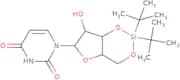
CAS:3',5'-O-(Di-tert-butylsilanediyl)uridine is a novel antiviral agent that is synthesized from uridine and has been shown to be effective against herpes simplex virus. This compound was also shown in vitro to inhibit the replication of human immunodeficiency virus type 1 (HIV-1). 3',5'-O-(Di-tert-butylsilanediyl)uridine binds to single stranded DNA, preventing the synthesis of DNA by the viral enzyme reverse transcriptase. It also inhibits the production of viral proteins by binding to viral RNA polymerase. This drug may also have anticancer activity due to its ability to inhibit ribonucleotide reductase, an enzyme required for DNA synthesis.
Purity:Min. 95%3'-O-Acetyl-5'-O-DMT-2'-O-methyuridine
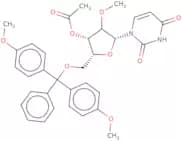
3'-O-Acetyl-5'-O-DMT-2'-O-methyuridine is a novel nucleoside analogue with anticancer activity. 3'-O-Acetyl-5'-O-DMT-2'-O-methyuridine is a modified deoxyribonucleoside monophosphate, which is activated by phosphorylation to the corresponding diphosphate form and then converted to an antiviral agent. 3'-O-Acetyl-5'-O-DMT-2'-O-methyuridine has been shown to have antiviral activity against herpes simplex virus type 1 (HSV1) and Epstein Barr virus (EBV). This compound also inhibits the proliferation of human cancer cells in vitro and in vivo.
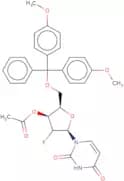
Formula:C33H34N2O9Purity:Min. 95%Molecular weight:602.63 g/mol3'-O-Acetyl-2'-deoxy-5'-O-DMT-2'-fluorouridine
3'-O-Acetyl-2'-deoxy-5'-O-DMT-2'-fluorouridine is a novel, activator, ribonucleosides, deoxyribonucleosides, diphosphate, phosphoramidites, modified nucleosides. It can be used as an anticancer and antiviral agent.
Formula:C32H31FN2O8Purity:Min. 95%Molecular weight:590.6 g/molRef: 3D-NA08460
Discontinued product3',5'-O-[Tetrakis(1-methylethyl)-1,3-disiloxanediyl]-guanosine
CAS:3',5'-O-[Tetrakis(1-methylethyl)-1,3-disiloxanediyl]-guanosine is a nucleoside phosphoramidite that is synthesized by the reaction of 3',5'-O-[Tetrakis(trimethylsiloxy)silyl]guanosine with tetrakis(1-methylethyl) siloxane. It is a novel monophosphate analogue of guanosine and has antiviral, anticancer and activator properties. 3',5'-O-[Tetrakis(1-methylethyl)-1,3-disiloxanediyl]-guanosine is not toxic to cells and can be used in the treatment of cancer.
Formula:C22H39N5O6Si2Purity:Min. 95%Molecular weight:525.75 g/molRef: 3D-NT16564
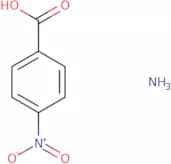
Discontinued productAmmonium 4-nitrobenzoate dihydrate
CAS:Ammonium 4-nitrobenzoate dihydrate is a corrosion inhibitor that prevents the corrosion of metal parts and other materials. It is used in the production of plastics, coatings, adhesives, and lubricants. The corrosion inhibition activity of aminobenzoates can be attributed to their ability to form hydrogen phosphate (HPO) anions as well as their ability to complex with metal ions. The hydration process is also important for the corrosion inhibition activity of ammonium 4-nitrobenzoate dihydrate. This process involves the release of water molecules from the ammonium salt, which provide a protective coating around the metal surface. Ammonium 4-nitrobenzoate dihydrate also has additive properties that are beneficial for other industrial applications such as antistatic agents, surfactants, and stabilizers.
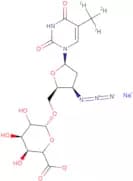
Purity:Min. 95%3'-Azido-3'-deoxythymidine-methyl-D3-b-D-glucuronide sodium salt
Controlled Product3'-Azido-3'-deoxythymidine-methyl-D3-b-D-glucuronide sodium salt is a novel antiviral nucleoside phosphoramidite that has been shown to be an effective activator in the synthesis of diphosphate and triphosphate analogs. The novel antiviral nucleoside phosphoramidite was synthesized from 3'-azido-3'-deoxythymidine, methyl bromoacetate and sodium hydroxide in methanol at room temperature. It is structurally similar to the natural nucleosides, deoxyribonucleosides and ribonucleosides with modifications on the sugar moiety and phosphate group. This compound is a high quality synthetic material for use in pharmaceutical research, as an anticancer agent and as a potential antiviral drug.Formula:C16H17D3N5NaO10Purity:Min. 95%Color and Shape:PowderMolecular weight:468.36 g/molRef: 3D-NA04586
Discontinued product5-Bromo-2-methylsulfanyl-pyrimidine-4-carboxylic acid
CAS:5-Bromo-2-methylsulfanyl-pyrimidine-4-carboxylic acid is a pyrimidine derivative that inhibits protein kinases. The compound has been shown to inhibit the activity of protein kinase C, which is involved in mediating inflammatory responses, and phosphorylation of the insulin receptor substrate 1. 5-Bromo-2-methylsulfanyl-pyrimidine-4-carboxylic acid is an efficient inhibitor of kinases and can be used as a lead compound for the development of new compounds with therapeutic potential.Formula:C6H5BrN2O2SPurity:Min. 95%Molecular weight:249.09 g/molRef: 3D-NB44268
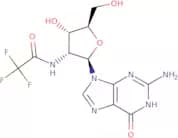
Discontinued product2'-TFA-NH-dG
CAS:2'-TFA-NH-dG is a novel nucleoside analog that is used as an antiviral and anticancer agent. It is a synthetic monophosphate with a modified 2'-hydroxyl group and a deoxyribose sugar backbone. It has been shown to inhibit HIV replication in vitro by interfering with the synthesis of viral DNA and RNA, which may be due to its ability to bind to the viral reverse transcriptase enzyme. 2'-TFA-NH-dG has also been shown to have anticancer activity against human A549 cells in vitro by inhibiting the proliferation of these cells. This drug is available for purchase as a white powder at CAS No. 144089-98-5.
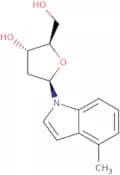
Formula:C12H13F3N6O5Purity:Min. 95%Molecular weight:378.26 g/mol1-(2-Deoxy-b-D-ribofuranosyl)-4-methylindole
CAS:1-(2-Deoxy-b-D-ribofuranosyl)-4-methylindole is a nucleoside that can be used as an activator for phosphoramidite synthesis. It is also known to have antiviral, anticancer, and antimalarial properties. 1-(2-Deoxy-b-D-ribofuranosyl)-4-methylindole has been shown to inhibit the proliferation of human leukemia cells in culture. It has also been shown to suppress HIV replication in vitro by inhibiting viral RNA synthesis.Formula:C14H17NO3Purity:Min. 95%Molecular weight:247.3 g/molRef: 3D-ND06396
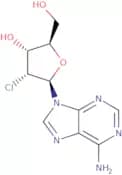
Discontinued product2’-Chloro-2’-deoxyadenosine
CAS:2’-Chloro-2’-deoxyadenosine (2CDA) is a synthetic nucleoside analogue that is used as an antineoplastic agent for the treatment of non-Hodgkin lymphoma and histiocytic lymphoma. It is typically used in combination with other cytotoxic drugs. 2CDA has been shown to be effective against resistant tumor cell lines and has been used to treat patients with metastatic breast cancer, Hodgkin lymphoma, and multiple myeloma. The drug can cause thrombocytopenia, which may be due to its effects on platelets or bone marrow cells. Other toxicities include bone marrow suppression, nausea, vomiting, diarrhea, anorexia, and liver damage. Patients who are at risk for these toxicities should be closely monitored.
Formula:C10H12ClN5O3Purity:Min. 95%Color and Shape:PowderMolecular weight:285.69 g/molN6-Benzoyl-3'-O-benzoyl-2'-deoxyadenosine
6-Benzoyl-3'-O-benzoyl-2'-deoxyadenosine (BBD) is a synthetic nucleoside that has antiviral activity. It is an activator of DNA polymerase and also a novel monophosphate nucleotide. BBD has been shown to inhibit the replication of RNA in cells infected with HIV and HSV.
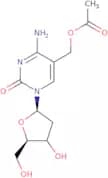
Purity:Min. 95%5-Acetoxymethyl-2'-deoxycytidine
5-Acetoxymethyl-2'-deoxycytidine (5-AO-dC) is a nucleoside that is used as an anticancer agent. It is a modified form of cytidine and has been shown to be effective in the treatment of cancer cells. 5-AO-dC inhibits the production of DNA by binding to deoxyribonucleotide triphosphate and preventing its conversion into diphosphate, thereby inhibiting DNA synthesis. The drug also inhibits viral replication by binding to viral RNA and interfering with the synthesis of viral proteins. 5-AO-dC may also inhibit HIV replication by competing with HIV reverse transcriptase for the incorporation of deoxyadenosine monophosphate into DNA.
5-AO-dC is not active against bacteria or fungi but it does bind to human ribonucleosides and can inhibit the synthesis of both DNA and RNA in human cells.Formula:C12H17N3O6Purity:Min. 95%Molecular weight:299.28 g/mol8-Oxo-N2-isobutyryl-2-deoxyguanosine
CAS:8-Oxo-N2-isobutyryl-2-deoxyguanosine is a modified synthetic nucleoside. It finds applications in understanding mutagenesis and DNA repair mechanisms.
Formula:C14H19N5O6Purity:Min. 95%Molecular weight:353.33 g/molRef: 3D-LFA85976
Discontinued product5’-O-DMT cET-N2-isopropylguanosine 3’-OCE amidite
CAS:Please enquire for more information about 5'-ODMT cEt G Phosphoramidite including the price, delivery time and more detailed product information at the technical inquiry form on this page
Formula:C46H56N7O9PMolecular weight:881.95 g/mol2',3',5'-Tri-O-benzoyl-2-thiouridine
CAS:2',3',5'-Tri-O-benzoyl-2-thiouridine is an analog of the nucleoside thiouracil, which is a modified nucleoside. It inhibits the synthesis of DNA and RNA by competitively inhibiting the enzyme thymidylate synthase. 2',3',5'-Tri-O-benzoyl-2-thouridine has been shown to exhibit anticancer activity in vitro and in vivo. This compound also exhibits antiviral properties against herpes simplex virus type 1 (HSV1) and Herpes simplex virus type 2 (HSV2).
Formula:C30H24N2O8SPurity:Min. 95%Molecular weight:572.59 g/molRef: 3D-NT16569
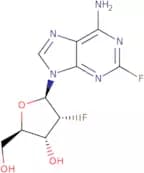
Discontinued product9-(2'-Deoxy-2'-fluoro-b-D-ribofuranosyl)-2-fluoroadenine
CAS:9-(2'-Deoxy-2'-fluoro-b-D-ribofuranosyl)-2-fluoroadenine is a modified nucleoside that is used as an antiviral and anticancer agent. It acts as an activator for the synthesis of DNA, RNA, and protein. 9-(2'-Deoxy-2'-fluoro-b-D-ribofuranosyl)-2-fluoroadenine also inhibits the growth of cancer cells by interfering with the division process. This drug is synthesized from 9-(5'-deoxy-5'-iodo-b-D-ribofuranosyl) -2,6 difluoro adenine (diFdA). The Ribonucleosides are then prepared in a similar manner to other nucleosides by using phosphoramidites. The product is then purified using HPLC.
Formula:C10H11F2N5O3Purity:Min. 95%Color and Shape:White PowderMolecular weight:287.23 g/molRef: 3D-ND09526
Discontinued product2'-O-Hexylaminoguanosine
2'-O-Hexylaminoguanosine is a modified nucleoside that has antiviral properties. It is an activator of the human immune system and is used to treat cancer. 2'-O-Hexylaminoguanosine inhibits the synthesis of DNA by phosphoramidite addition to the monophosphate form of guanosine, which prevents RNA synthesis and therefore also protein synthesis. It also has anticancer effects by inhibiting the growth of cells in culture.
Purity:Min. 95%

![3',5'-O-[Tetrakis(1-methylethyl)-1,3-disiloxanediyl]-guanosine](/_next/image/?url=https%3A%2Fstatic.cymitquimica.com%2Fproducts%2F3D%2Fthumb-webp%2FNT16564.webp&w=3840&q=75)