Nucleosides
Found 3569 products of "Nucleosides"
2'-Deoxy-3'-O-DMT-N2-iBu-guanosine--succinyl-CPG 1000 Å
2'-Deoxy-3'-O-DMT-N2-iBu-guanosine--succinyl-CPG 1000 Å is a modified nucleoside that is synthesized from 2'-deoxyribonucleosides and succinic anhydride. It has antiviral, anticancer, and antimalarial activities. It can also be used to modify DNA sequences. This product is a novel phosphoramidite monomer with high purity.
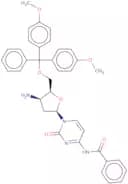
Purity:Min. 95%3'-Amino-N4-benzoyl-2',3'-dideoxy-5'-O-DMT-cytidine
3'-Amino-N4-benzoyl-2',3'-dideoxy-5'-O-DMT-cytidine is a novel 3'-amino nucleoside
Formula:C37H36N4O6Purity:Min. 95%Molecular weight:632.71 g/molRef: 3D-NA08780
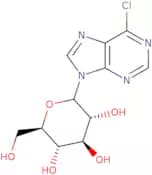
Discontinued product6-Chloropurine-9-b-D-glucoside
CAS:6-Chloropurine-9-b-D-glucoside is a nucleoside that belongs to the family of modified nucleosides. It is used as an activator and a phosphoramidate in the synthesis of oligonucleotides. 6-Chloropurine-9-b-D-glucoside is also used in anticancer therapy because it inhibits DNA, RNA, and protein synthesis. 6CPG has antiviral activity against herpes virus and other viruses. This compound has been shown to have antiinflammatory activities by inhibiting the production of prostaglandins. 6CPG is also classified as a carcinogen by the International Agency for Research on Cancer (IARC).
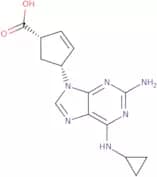
Formula:C11H13CIN4O5Purity:Min. 95%Molecular weight:420.16 g/molAbacavir carboxylate
CAS:Abacavir carboxylate is a prodrug of abacavir that is activated by the carboxylation of the terminal hydroxyl group in the liver. It has been shown to be quantified using a liquid chromatography-mass spectrometry (LC-MS) method. Abacavir carboxylate has an additional benefit of being less sensitive to degradation by nitrate, which can interfere with the analysis of acyclovir. The deuterium label on abacavir carboxylate ensures that it is not confused with acyclovir and facilitates identification in wastewater samples.
Formula:C14H16N6O2Purity:Min. 95%Molecular weight:300.32 g/mol3'-Deoxyadenosine CPG
3'-Deoxyadenosine CPG is a nucleoside that is synthetically manufactured. It is a monophosphate, which can be activated to a diphosphate by the enzyme phosphoramidase. 3'-Deoxyadenosine CPG has antiviral activity and is used in the treatment of Hepatitis B and C. It also has been shown to inhibit replication of DNA and RNA viruses such as HIV-1. 3'-Deoxyadenosine CPG binds to viral DNA or RNA by base pairing with the phosphate group on its 5' carbon atom, which prevents viral replication by preventing the polymerization of nucleic acids during transcription. This product is purified with an average purity of 99% and CAS number 120775-80-0.br>br>
3'-Deoxyadenosine CPG (3'-DAD) is a modified nucleoside that was synthesized for use in antiviral therapy against hepatitis B virusPurity:Min. 95%Myristoyl coenzyme A lithium salt
CAS:Myristoyl coenzyme A lithium salt is an activator that can be used in the synthesis of Ribonucleosides and Deoxyribonucleosides. It has a high purity, which ensures high quality synthesis. Myristoyl coenzyme A lithium salt is a novel nucleotide precursor that can be used to synthesize DNA or RNA for use in anti-cancer or antiviral treatments.
Formula:C35H62N7O17P3S·xLiPurity:Min. 95%Molecular weight:977.89 g/mol5'-O-DMT-thymidine 3'-Rp-oxazaphospholidine
5'-O-DMT-thymidine 3'-Rp-oxazaphospholidine is a novel nucleoside analogue. It has antiviral activity and can be used to treat infections caused by herpes virus. It also has anticancer activity against some types of cancer cells and can inhibit the growth of tumour cells. 5'-O-DMT-thymidine 3'-Rp-oxazaphospholidine acts as an inhibitor of DNA polymerase, preventing the synthesis of DNA from RNA. It also inhibits ribonucleotide reductase, which is involved in the production of ribonucleotides from diphosphate nucleotides. This drug can be used as a monophosphate or phosphoramidite for the synthesis of oligodeoxyribonucleotides and deoxyribonucleotides.
Purity:Min. 95%cis-Zeatin-o-glucoside riboside
CAS:Cis-Zeatin-o-glucoside riboside is a plant metabolite that belongs to the class of phenylpropanoids. It is the product of the conversion of zeatin by a polyphenol oxidase. Cis-Zeatin-o-glucoside riboside has been found in plants, such as Eucomis and Alnifolia, at levels ranging from 0.2 to 1%. This metabolite is also present in animal tissues, such as rat brain and bovine mammary gland. The metabolic pathway for cis-Zeatin-o-glucoside riboside has been elucidated through tissue culture experiments with Eucomis and 24-epibrassinolide. The biosynthesis of this metabolite involves a two step process: first, an oxidative cleavage of zeatin to indole-3-acetyl l -aspartic acid and then conversion to
Formula:C21H31N5O10Purity:Min. 95%Molecular weight:513.5 g/mol5-[4-(4,4,5,5-tetramethyl-[1,3,2]dioxaborolan-2-yl)-benzylidene]-pyrimidine-2,4,6-trione
Ribonuclease is an enzyme that cleaves the phosphodiester backbone of ribonucleotide to produce a 5'-phosphate and a 2'-deoxyribonucleoside. Ribonuclease is an activator that activates the synthesis of ribonucleotides, deoxyribonesucleotides and nucleosides. Ribonuclease has antiviral properties which may be due to its ability to inhibit DNA polymerase by catalyzing the hydrolysis of the 2'-deoxyribose-5'-phosphate bond in DNA. Ribonuclease has also been shown to have anticancer activity, which may be due to its ability to inhibit protein synthesis.
Purity:Min. 95%Ref: 3D-NT44284
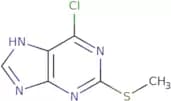
Discontinued product2-Methylthio-6-chloropurine
CAS:2-Methylthio-6-chloropurine riboside is a nucleotide analog that is used as a substrate to study the enzymatic modification of RNA. The compound has been synthesized by reacting 2-methylthio-6-chloropurine with ribose and purine bases in a postsynthetic modification. To detect the product, 2-methylthio-6-chloropurine riboside was labeled with 32P and then detected using mass spectrometry. In order to identify the structure of this compound, it was subjected to chromatography and spectroscopy. This process allowed for the identification of 2-methylthio-6-chloropurine riboside as an analog of N6 methyladenosine.
Formula:C6H5CIN4SPurity:Min. 95%Molecular weight:304.11 g/mol5′-O-DMT-LNA N-dmf guanosine
CAS:5′-O-DMT-LNA N-dmf guanosine is a modified nucleoside that has anticancer, antiviral, and anti-inflammatory activities. It binds to the ribonucleotide reductase enzyme, which is an enzyme required for the production of new DNA and RNA. This binding prevents the synthesis of new DNA and RNA in cells, leading to cell death. 5′-O-DMT-LNA N-dmf guanosine has been shown to be active against cancer cells in vitro and in vivo. In addition, it also inhibits replication of human immunodeficiency virus type 1 (HIV) by binding to reverse transcriptase (RT), which is an enzyme critical for HIV replication.
Formula:C35H36N6O7Purity:Min. 95%Molecular weight:652.7 g/molRef: 3D-ND182843
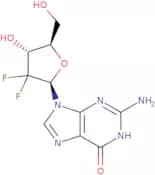
Discontinued product2'-Deoxy-2',2'-difluoroguanosine
CAS:2'-Deoxy-2',2'-difluoroguanosine (DFG) is an analog of guanosine that has been used to study the effect of guanylate kinase on cellular proliferation. This compound has also been shown to have a cytotoxic effect on leukemia cells. DFG has been shown to inhibit the growth of cancer cells and induce apoptosis in HL-60 leukemia cells. It has also been shown to inhibit the synthesis of DNA, RNA, and proteins. These effects are due to inhibition of guanylate kinase activity and may be related to its ability to cause the release of intracellular calcium ions.
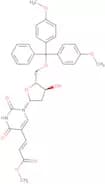
Formula:C10H11F2N5O4Purity:Min. 95%Molecular weight:303.22 g/molE-5-(2-Carbomethoxyvinyl)-2'-deoxy-5'-O-DMT-uridine
CAS:E-5-(2-Carbomethoxyvinyl)-2'-deoxy-5'-O-DMT-uridine is a monophosphate nucleoside analog that has been modified to be resistant to antiviral ribonucleases. This drug is phosphorylated in vivo to the corresponding diphosphate and triphosphate, which inhibits viral DNA synthesis and thus prevents the virus from replicating. E-5-(2-Carbomethoxyvinyl)-2'-deoxy-5'-O-DMT-uridine can be used as an antiviral agent against herpes simplex virus (HSV).Formula:C34H34N2O9Purity:Min. 95%Molecular weight:614.66 g/molRef: 3D-NC08240
Discontinued productLinoleoyl coenzyme A
CAS:Linoleoyl coenzyme A (LCA) is a fatty acid that is a component of the cell membrane. LCA is synthesized from linoleic acid and coenzyme A in the mitochondria. In humans, LCA is an important component of the mitochondrial protein. The production of this enzyme can be enhanced by dietary supplementation with linoleic acid. Linoleoyl coenzyme A has been used as a model system to study energy metabolism in mitochondria. It has been shown to be involved in carthamus tinctorius, human mitochondrial, rat liver microsomes, and dietary models. LCAs have also been used as analytical methods for measuring the amount of fatty acids within cells or tissues.
Formula:C39H66N7O17P3SPurity:Min. 95%Molecular weight:1,029.97 g/mol2′-O-Succinyladenosine 3′,5′-monophosphate
CAS:Please enquire for more information about 2′-O-Succinyladenosine 3′,5′-monophosphate including the price, delivery time and more detailed product information at the technical inquiry form on this page
Formula:C14H16N5O9PPurity:Min. 95%Molecular weight:429.28 g/molRef: 3D-NS184178
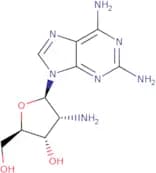
Discontinued product2,6-Diamino-9-(2'-amino-2'-deoxy-b-D-ribofuranosyl)purine
CAS:2,6-Diamino-9-(2'-amino-2'-deoxy-b-D-ribofuranosyl)purine (dAraMP) is a novel nucleoside analogue that was synthesized and characterized. It has been shown to inhibit the growth of cancer cells in vitro. dAraMP is a monophosphate analogue of 2,6-diamino-9-(2'-deoxy-b-D-ribofuranosyl)purine (dAraP). The modified phosphoramidite approach used in its synthesis yielded high purity and yields. This product is also available as a diphosphate analogue of 2,6 diamino 9-(2'-amino 2'-deoxy b D ribofuranosyl) purine (dAMP). The diphosphate form of this product has been shown to be an activator for DNA polymerase.Formula:C10H15N7O3Purity:Min. 95%Color and Shape:White To Off-White SolidMolecular weight:281.28 g/molRef: 3D-ND06322
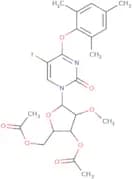
Discontinued product3',5'-Di-o-acetyl-5-fluoro-O4-(2,4,6-trimethylphenyl)-2'-o-methyluridine
CAS:3',5'-Di-O-acetyl-5-fluoro-O4-(2,4,6-trimethylphenyl)-2'-O-methyluridine is a novel monophosphate nucleoside analog that is activated by T4 polynucleotide kinase. It is synthesized from the corresponding phosphoramidite and reacts with the 5'-OH group of a ribonucleoside to form a 3',5'-di-O-acetylribonucleoside. The diacetyl group confers increased stability to the molecule and also provides an acetyl group for incorporation into DNA. This compound has antiviral activity against herpes simplex virus type 1 (HSV1) in cell culture and has shown anticancer properties in animal studies.
Formula:C23H27FN2O8Purity:Min. 95%Molecular weight:478.5 g/molRef: 3D-UJB35532
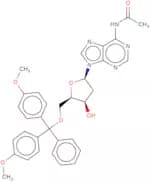
Discontinued productN6-Acetyl-2'-deoxy-5'-O-DMT-adenosine
N6-Acetyl-2'-deoxy-5'-O-DMT adenosine is a modified nucleoside that can be used as an antiviral or anticancer agent. It has been shown to inhibit the replication of HIV in vitro and in vivo, and also inhibits the replication of hepatitis B virus. N6-Acetyl-2'-deoxy-5'-O-DMT adenosine is active against cancer cells in vitro and inhibits the growth of human breast cancer xenografts in athymic mice. This compound also has high purity, high quality, and novel properties.
Formula:C33H33N5O6Purity:Min. 95%Molecular weight:595.65 g/molRef: 3D-NA08597
Discontinued product5'-Cytidylic acid
CAS:Please enquire for more information about 5'-Cytidylic acid including the price, delivery time and more detailed product information at the technical inquiry form on this page
Formula:C9H14N3O8PPurity:Min. 98.0 Area-%Molecular weight:323.20 g/molRef: 3D-Q-101433
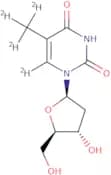
Discontinued productThymidine-a,a,a,6-D4
CAS:Controlled ProductThymidine-a,a,a,6-D4 is a nucleoside analogue that inhibits the replication of the hepatitis B virus. It is an analogue of thymidine and is activated by phosphorylation to its active form. This drug prevents viral replication by inhibiting early events in the viral life cycle. Thymidine-a,a,a,6-D4 has been shown to inhibit the synthesis of viral DNA and to inhibit the incorporation of thymidine into newly synthesized DNA. Thymidine-a,a,a,6-D4 also inhibits telbivudine resistance mutations in vitro.
Formula:C10H10N2O5D4Purity:Min. 95%Molecular weight:246.25 g/mol




![5-[4-(4,4,5,5-tetramethyl-[1,3,2]dioxaborolan-2-yl)-benzylidene]-pyrimidine-2,4,6-trione](/_next/image/?url=https%3A%2Fstatic.cymitquimica.com%2Fproducts%2F3D%2Fthumb-webp%2FNT44284.webp&w=3840&q=75)