Nucleosides
Found 3569 products of "Nucleosides"
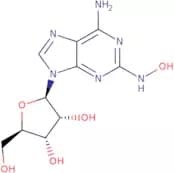
2-Hydroxyaminoadenosine
CAS:2-Hydroxyaminoadenosine (2-HAA) is a novel nucleoside that is used as an activator of ribonucleotide reductase. It has been shown to be effective against cancer cells in vitro and in vivo. 2-HAA also inhibits the synthesis of viral DNA, which may be due to its ability to inhibit the ribonuclease activity of the virus. 2-HAA has also been shown to have antiviral activity against herpes simplex virus type 1 (HSV-1).
Formula:C10H14N6O5Purity:Min. 95%Molecular weight:298.26 g/molLauroyl coenzyme A
CAS:Lauroyl CoA is a body-fat molecule that can be formed from acetyl-coenzyme A, which is an intermediate in the metabolism of fatty acids. It is used in analysis as a standard for enzyme activities and as a substrate for reactions involving enzymes with coenzyme A. Reaction mechanisms are determined using titration calorimetry and structural analyses are performed using analytical methods such as infrared spectroscopy and nuclear magnetic resonance spectroscopy. Lauroyl CoA is also used to study the effects of the protein toll-like receptor 4 on hepatic steatosis. The wild-type strain of Escherichia coli was used to measure the activity of bacterial synthetases containing lauroyl CoA.
Formula:C33H58N7O17P3SPurity:Min. 95%Color and Shape:PowderMolecular weight:949.84 g/molRef: 3D-NL47197
Discontinued product6-[(4-Nitrobenzyl)thio]-9-(b-D-ribofuranosyl)purine-5'-monophosphate disodium salt
CAS:6-[(4-Nitrobenzyl)thio]purine-5'-monophosphate disodium salt is a modified nucleoside that has anticancer activity. It is phosphorylated to the corresponding nucleotide in vivo and inhibits the growth of cancer cells. 6-[(4-Nitrobenzyl)thio]purine-5'-monophosphate disodium salt has a novel structure and can be used as an activator for ribonucleotides or deoxyribonucleotides. It is also used as a component in DNA synthesis, which may be due to its ability to inhibit viral RNA replication. This drug can be synthesized through chemical reactions that involve diphosphate, nucleosides, and phosphoramidites. 6-[(4-Nitrobenzyl)thio]purine-5'-monophosphate disodium salt is not currently available on the market; however, it canFormula:C17H16N5Na2O9PSPurity:Min. 95%Color and Shape:White to off-white solid.Molecular weight:543.36 g/molRef: 3D-NN07313
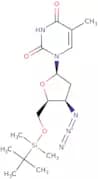
Discontinued product3'-Azido-5'-O-tert-butyldimethylsilyl-3'-deoxythymidine
CAS:3'-Azido-5'-O-tert-butyldimethylsilyl-3'-deoxythymidine (BUdR) is an antiviral agent that is used in the synthesis of DNA and RNA. BUdR is a modified phosphoramidite that is activated with diphosphate. It has a high quality, high purity, and a novel structure. BUdR has been shown to have anticancer properties as well as inhibitory effects on HIV production in cells.
Formula:C16H27N5O4SiPurity:Min. 95%Molecular weight:381.51 g/molRef: 3D-NA08679
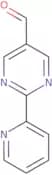
Discontinued product2-Pyridin-2-ylpyrimidine-5-carbaldehyde
CAS:Ribonucleosides and deoxyribonucleosides are synthetic analogues of the natural nucleotides. Ribonucleosides are analogues of ribose and deoxyribonucleosides are analogues of deoxyribose. Ribonuclesides, Deoxyribonucleosides, Activator, Antiviral, Synthetic, Modified, DNA, Nucleosides is a novel nucleotide analogue with high quality and purity. It can be used in the synthesis of oligodeoxynucleotides for use as antiviral agents. It is also a component of phosphoramidites.Formula:C10H7N3OPurity:Min. 95%Molecular weight:185.18 g/molRef: 3D-NP57439
Discontinued product7-Benzyl-4-chloro-5,6,7,8-tetrahydropyrido[3,4-d]pyrimidine
CAS:7-Benzyl-4-chloro-5,6,7,8-tetrahydropyrido[3,4-d]pyrimidine is a nucleoside analog that is used as an antiviral and anticancer drug. It has also been shown to have antimalarial activity. 7-Benzyl-4-chloro-5,6,7,8-tetrahydropyrido[3,4-d]pyrimidine inhibits the replication of HIV by blocking the viral reverse transcriptase enzyme. This drug is a phosphoramidite monophosphate with a purity of 99%.
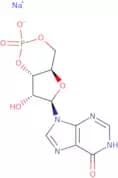
Formula:C14H14ClN3Purity:Min. 95%Molecular weight:259.73 g/molInosine-3',5'-cyclic-monophosphate sodium
CAS:Inosine-3',5'-cyclic-monophosphate sodium (cIMP) is a metabolite of inosine and is generated by the enzyme inosine monophosphate cyclohydrolase. cIMP has been shown to be related to colorectal adenocarcinoma, cancer, and body mass index. It has also been implicated in the diagnosis of cancer and infectious diseases. cIMP is involved in energy metabolism and DNA synthesis, which are important for the progression of renal cell cancer. In addition, it has been shown that cIMP can function as a biomarker for prognosis when used with multivariate logistic regression.Formula:C10H11N4O7P·NaPurity:Min. 95%Molecular weight:353.18 g/molRef: 3D-NI170529
Discontinued product3'-Deoxy-3',4'-didehydro-CTP
CAS:3'-Deoxy-3',4'-didehydro-CTP is a nucleoside analog. It is a novel, high quality, high purity and synthetic compound with antiviral and anticancer activities. 3'-Deoxy-3',4'-didehydro-CTP inhibits the synthesis of DNA by specifically inhibiting the activity of DNA polymerase. The IC50 value for this compound is 12.5 μM against herpes simplex virus type 1 (HSV-1) in vitro.
Formula:C9H14N3O13P3Purity:Min. 95%Molecular weight:465.14 g/molRef: 3D-FD180918
Discontinued product8-(p-Chlorophenylthio)-cGMP
CAS:8-(p-Chlorophenylthio)-cGMP is a modified nucleoside that has anticancer activity. It inhibits DNA synthesis and the activation of protein kinases, which are enzymes that transmit signals from the cell surface to the nucleus. 8-(p-Chlorophenylthio)-cGMP can also inhibit viral replication by inhibiting the production of new virus particles and by inhibiting the action of reverse transcriptase, an enzyme that converts RNA into DNA.
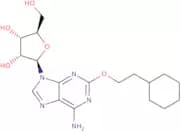
Formula:C16H15ClN5O7PSPurity:Min. 95%Molecular weight:487.81 g/mol2-(2-Cyclohexylethoxy)adenosine
CAS:2-(2-Cyclohexylethoxy)adenosine (CX-5461) is a new chemical entity that has been shown to have an incremental effect on muscle contraction. The mechanism of action of CX-5461 is not fully understood, but it has been shown to be nonselective and to bind to adenosine receptors. This binding produces a response in the cell similar to that of adenosine, which is a small molecule involved in the regulation of blood pressure and heart rate. CX-5461 also binds with platelet membranes at the site of inflammation and causes vasodilation. It has been shown to be effective in animal models of pertussis, where it reduces the severity of muscle spasms and increases the duration before death. These effects are due to CX-5461's ability to lower intracellular calcium concentrations by preventing calcium release from internal stores or from outside sources such as muscle cells or platelets.
Formula:C18H27N5O5Purity:Min. 95%Molecular weight:393.44 g/molRef: 3D-NC16523
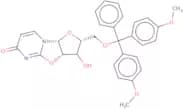
Discontinued product5'-O-DMT-2,2'-anhydrouridine
CAS:5'-O-DMT-2,2'-anhydrouridine is a nucleoside that is an activator of RNA polymerase. This compound is novel and can be used for the synthesis of modified oligonucleotides and DNA. 5'-O-DMT-2,2'-anhydrouridine has anticancer properties and can be used in the treatment of cancer. 5'-O-DMT-2,2'-anhydrouridine has been shown to inhibit the growth of cancer cells by binding to DNA and inhibiting the production of RNA.
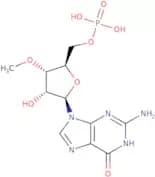
Formula:C30H28N2O7Purity:Min. 95%Molecular weight:528.55 g/mol3'-O-Methyl-5'-guanylic acid
CAS:3'-O-Methyl-5'-guanylic acid is a novel antiviral, synthetic deoxyribonucleoside which is activated by phosphoramidites to produce 3'-O-methyl-5'-guanylic acid phosphoramidite. It has high purity and quality and can be used as a nucleoside activator for DNA synthesis. 3'-O-Methyl-5'-guanylic acid has been shown to be an anticancer agent that inhibits the growth of cancer cells in vitro by inhibiting DNA synthesis and cell division. This drug also has a potential use as an antiviral agent.
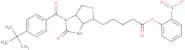
Formula:C11H16N5O8PPurity:Min. 95%Molecular weight:377.25 g/molN1-(4-(t-Butyl)benzoyl)-D-(+)biotin 2-nitrophenyl ester
CAS:N1-(4-(t-Butyl)benzoyl)-D-(+)biotin 2-nitrophenyl ester is a novel nucleoside analogue and phosphoramidite. It has been modified to have an acyclic carbon chain with a 4-hydroxybenzoyl group at the C2 position. This compound is an activator of DNA synthesis, and it can be used for the synthesis of deoxyribonucleosides. The purity of this compound is 99%. The CAS number for this compound is 869354-61-0.
Formula:C27H31N3O6SPurity:Min. 95%Molecular weight:525.6 g/molRef: 3D-UJB35461
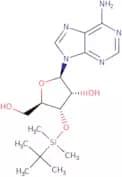
Discontinued product3'-O-tert-Butyldimethylsilyladenosine
CAS:3'-O-tert-Butyldimethylsilyladenosine is a synthetic nucleoside that is an antiviral agent with high purity. It has been shown to have anticancer properties and can be used as a deoxyribonucleoside activator or as a novel monophosphate nucleoside. 3'-O-tert-Butyldimethylsilyladenosine is also modified with an alkyl group for the phosphoramidite building block synthesis of DNA, RNA, and oligonucleotides. It has been shown to inhibit the synthesis of DNA and RNA by binding to the enzyme ribonucleotide reductase in cells.Purity:Min. 95%2'-O-Methyladenosine-5'-a-thiotriphosphate sodium salt
2'-O-Methyladenosine-5'-a-thiotriphosphate sodium salt is an activator that has been synthesized for therapeutic use. It is a modified nucleoside, which means that it does not occur naturally in the human body and must be made artificially. This drug is currently undergoing clinical trials and is being studied for its anticancer properties. 2'-O-Methyladenosine-5'-a-thiotriphosphate sodium salt binds to the phosphate groups on DNA and inhibits viral replication by preventing RNA synthesis. It also has antiviral activity against Herpes simplex virus type 1, HIV type 1, and influenza A virus type H1N1. The drug may have potential as a treatment for chronic hepatitis B infection as well as various cancers such as breast cancer, prostate cancer, and leukemia.
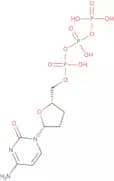
Purity:Min. 95%DdCTP trilithium
CAS:2',3'-Dideoxycytidine-5'-triphosphate trilithium salt (ddCTP) is a nucleoside analogue that has been shown to inhibit the enzyme activity of DNA polymerase. The ddCTP is a prodrug, which is activated by phosphorylation catalyzed by cellular kinases and then hydrolyzed to its active form, dideoxycytidine triphosphate (ddCTP). This drug also inhibits the synthesis of DNA and RNA. In vitro studies have shown that ddCTP causes cell lysis in murine sarcoma virus-infected cells, although it does not affect uninfected cells. 2',3'-Dideoxycytidine-5'-triphosphate trilithium salt has been shown to be an effective inhibitor of HIV reverse transcriptase and HIV protease in biochemical assays. It has also been found to be an effective inhibitor of mouse monoclon
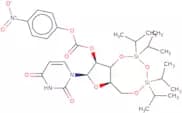
Formula:C9H13N3Li3O12P3Purity:Min. 95%Color and Shape:LiquidMolecular weight:468.96 g/mol3',5'-O-(1,1,3,3-Tetraisopropyl-1,3-disiloxanediyl)-2'-(p-nitrophenylcarbonyloxy)uridine
CAS:3',5'-O-(1,1,3,3-Tetraisopropyl-1,3-disiloxanediyl)-2'-(p-nitrophenylcarbonyloxy)uridine is a novel phosphoramidite. It is modified with p-nitrophenyl carbonyloxy group at the 3' position of the uracil moiety. This phosphoramidite has antiviral activity against Hepatitis C and HIV. It also has anticancer activity in vitro and in vivo. 3',5'-O-(1,1,3,3-Tetraisopropyl-1,3-disiloxanediyl)-2'-(p-nitrophenylcarbonyloxy)uridine is a nucleoside that can be used for DNA synthesis or as a monophosphate or diphosphate for RNA synthesis. It is synthesized from deoxyFormula:C28H41N3O11Si2Purity:Min. 95%Molecular weight:651.81 g/molNPOM-Caged-dT CEP
CAS:Please enquire for more information about NPOM-Caged-dT CEP including the price, delivery time and more detailed product information at the technical inquiry form on this page
Formula:C50H58N5O13PPurity:Min. 95%Molecular weight:968 g/molRef: 3D-SMB21871
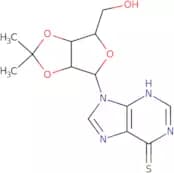
Discontinued product2',3'-O-Isopropylidene-6-thioinosine
CAS:2',3'-O-Isopropylidene-6-thioinosine is a fluorinated analogue of 6-thioguanine, which is an important precursor in the synthesis of nucleotides. The compound contains a fluorine atom at the 2' position and a sulfur atom at the 3' position of the ribose ring. It is soluble in organic solvents and can be used as a tracer for biochemical studies. The thermal stability of 2',3'-O-Isopropylidene-6-thioinosine has been demonstrated by molecular modelling and thermally induced filtration experiments. Molecular modeling has also shown that 2',3'-O-Isopropylidene-6-thioinosine binds to the active site of uridine phosphorylase, which is involved in pyrimidine salvage pathways in cells.
2',3'-O-Isopropylidene-6-thioinosFormula:C13H16N4O4SPurity:Min. 95%Molecular weight:324.36 g/molUridine-2-13C
CAS:Uridine-2-13C is a modified nucleoside that is used as an anticancer agent. It is phosphorylated to uridine-2-13C diphosphate and can be used in DNA synthesis and as a radiolabel.
Formula:C9H12N2O6Purity:Min. 95%Molecular weight:245.19 g/molRef: 3D-KBA80342
Discontinued product


![6-[(4-Nitrobenzyl)thio]-9-(b-D-ribofuranosyl)purine-5'-monophosphate disodium salt](/_next/image/?url=https%3A%2Fstatic.cymitquimica.com%2Fproducts%2F3D%2Fthumb-webp%2FNN07313.webp&w=3840&q=75)
![7-Benzyl-4-chloro-5,6,7,8-tetrahydropyrido[3,4-d]pyrimidine](/_next/image/?url=https%3A%2Fstatic.cymitquimica.com%2Fproducts%2F3D%2Fthumb-webp%2FNB57451.webp&w=3840&q=75)