Polysaccharides
Found 498 products for "Polysaccharides".
- Lower prices
- Higher prices
- Lower purities
- Higher purities
- Faster estimated delivery
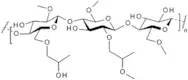
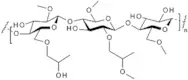
(Hydroxypropyl)methyl cellulose - Viscocity 75000-140000 cP, 2 % in H2O
CAS:Viscoelastic polymer; excipient; food additivePurity:Min. 95%Hydroxypropyl cellulose - Average MW 100,000
CAS:In water, hydroxypropyl cellulose forms liquid crystals with many mesophases depending on concentration. These mesophases include isotropic, anisotropic, nematic and cholesteric, the latter resulting in many colors such as violet, green and red. Pharmaceutical applications include treatments for medical conditions such as dry eye syndrome (keratoconjunctivitis sicca), recurrent corneal erosions, decreased corneal sensitivity, exposure and neuroparalytic keratitis. It is also used as a binder in tablets. Hydroxypropylcellulose is also used as a thickener, a binder and emulsion stabiliser in foods with E number E463. HPC is used as a support matrix for DNA separations by capillary and microchip electrophoresis.Purity:Min. 95%Rhamnogalacturonan - from soy bean
CAS:Pectin is a highly complex polysaccharide matrix that is found in the primary walls of dicotyledenous and monocotyledenous plants and gymnosperms, including soy plants. A key fragment of this complex is rhamnogalacturonan I, containing a backbone of the repeating disaccharide [-4)-α-D-GalpA-(1,2)-α-L-Rhap-(1,]. Several applications for RG1 have been described including drug targeting to the colon via the oral administration route for local treatment of e.g. inflammatory bowel disease and colonic cancer. This has several advantages such as needle-free administration and low infection risk and in the gastro-intestinal tract RG-I is only degraded by the action of the colonic microflora. High purity rhamnogalacturonan I is also used in research, biochemical enzyme assays and in vitro diagnostic analysis.Purity:Min. 95%Color and Shape:SolidLM Pectin
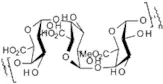
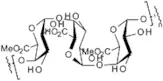
CAS:Pectins are regarded as linear chains of α-1,4-linked D-galacturonic acid, a homogalacturonan (pectic acid). In the products of commerce, the degree of methylation has a vital influence on the properties of pectin, especially the solubility and gel forming characteristics.
Color and Shape:PowderGalactan - from gum arabic
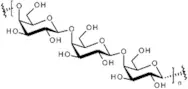
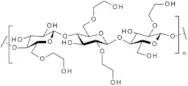
CAS:A linear β-(1,4)-galactan from Acacia gum. Other linear β-(1,4)-galactans have been isolated from lemon peel, potato tubers and Norwegian spruce compresssion wood.Purity:Min. 95%Color and Shape:White PowderHydroxyethyl cellulose - Viscocity 4500-6500mPa·s
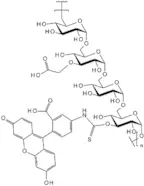
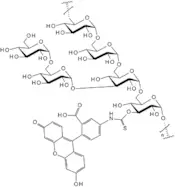
CAS:Water thickener; rheological control additive; has industrial appplicationsPurity:Min. 95%Fluorescein isothiocyanate-carboxymethyl-dextran - Average MW 150,000
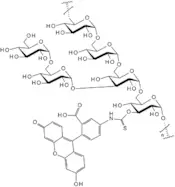
Fluorescein isothiocyanate carboxymethyl dextran (FITC-CM Dextran) has been reported to provide a valuable carrier for nanoparticles of iron oxide. These products provide a potent tool for contrast enhancement in magnetic resonance imaging.Purity:Min. 95%Hydroxypropyl cellulose - Average MW 200,000
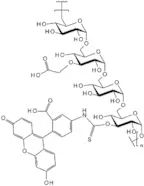
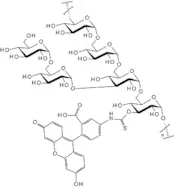
CAS:In water, hydroxypropyl cellulose forms liquid crystals with many mesophases depending on concentration. These mesophases include isotropic, anisotropic, nematic and cholesteric, the latter resulting in many colors such as violet, green and red. Pharmaceutical applications include treatments for medical conditions such as dry eye syndrome (keratoconjunctivitis sicca), recurrent corneal erosions, decreased corneal sensitivity, exposure and neuroparalytic keratitis. It is also used as a binder in tablets. Hydroxypropylcellulose is also used as a thickener, a binder and emulsion stabiliser in foods with E number E463. HPC is used as a support matrix for DNA separations by capillary and microchip electrophoresis.Color and Shape:PowderFluorescein isothiocyanate-carboxymethyl-dextran - Average MW 70,000
Fluorescein isothiocyanate carboxymethyl dextran (FITC-CM Dextran) has been reported to provide a valuable carrier for nanoparticles of iron oxide. These products provide a potent tool for contrast enhancement in magnetic resonance imaging.Purity:Min. 95%Heparan sulfate
CAS:Glycosaminoglycan in mammalian tissues; anti-coagulant; thrombolyticPurity:Min. 95%Diethylaminoethyl-dextran HCl
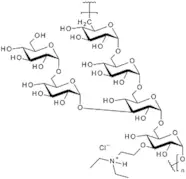
CAS:DEAE-Dextran hydrochloride (DEAE-D) is a positively-charged dextran derivative that can be used for vaccine production, gene therapy, protein stabilisation, dyslipidemia prevention, as flocculating agent, and many other applications. DEAE-D is also used for transfecting animal cells with foreign DNA. DEAE-Sepharose, DEAE-650 and DEAE-Sephadex are commonly used in chromatography for the separation of biological molecules such as proteins and carbohydrates.
Purity:Min. 95%Color and Shape:White Off-White PowderLow calcium heparin
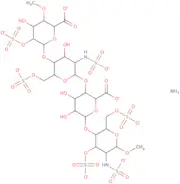
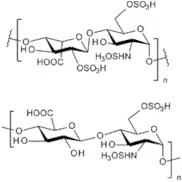
CAS:Low calcium heparin is a glycosaminoglycan, which occurs in many mammalian tissues and has important anticoagulant and thrombolytic properties. The chemical structure is composed mainly of two disaccharide repeating units A and B. A is L-iduronic acid 2-suplhate linked α-(1,4) to 2-deoxy-2-sulfamido-D-galactose 6-sulphate, while B is D-glucuronic acid β-(1,4) linked to 2-deoxy-2-sulfamido-D-glucose 6-sulphate.Purity:Min. 95%Fluorescein isothiocyanate-dextran - Average MW 20,000
CAS:Anterograde and retrograde tracer in neurons; biologically inertPurity:Min. 95%Fluorescein isothiocyanate-dextran - Average MW 10,000
CAS:Fluorescein dextran (FD) is widely used as both an anterograde and retrograde tracer in neurons and for numerous other applications. It is biologically rather inert having α-1,6-linked glucose residues resistant to cleavage by most endogenous cellular glycosidases. It has low immunogenicity and makes an ideal long-term tracer for live cells. FD also serves as a valuable marker for cell loading of macromolecules by micro-injection, vesicular fusion, and electroporation, as well as for the uptake and internal processing of exogenous materials by phagocytotic and endocytic pathways.Purity:Min. 95%Cellulose - Particle Size approx 50 um
CAS:Cellulose is a linear polysaccharide of β 1-4 linked glucose residues. The polysaccharide chains are bundled as microfibrils in cell walls and provide the essential structural components within growing plants. Each microfibril exhibits a high degree of three-dimensional internal bonding resulting in a crystalline structure that is insoluble in water, resistant to reagents and very strong.Purity:Min. 95%Color and Shape:PowderDextran 70 - MW 64,000 to 76,000, EP
CAS:Complex glucan (a 1-6) from Leuconostoc spp.; extender in blood transfusions.
Purity:Min. 95%Low-Substituted hydroxypropylcellulose
CAS:LH 21 is a low-substituted hydroxypropylcellulose. It is produced by the fluorination of cellulose, followed by substitution with a variety of monosaccharides and oligosaccharides to produce a complex carbohydrate. LH 21 is synthesized for custom needs, glycosylated, methylated, and modified at the sugar level with click chemistry. It has a CAS No. 9004-64-2 and is Carbohydrate in nature. LH 21 has high purity and can be used in many applications including as an excipient or additive in pharmaceutical formulations.Purity:Min. 95%Color and Shape:PowderFluorescein isothiocyanate-dextran - Average MW 3,000-5,000
CAS:Fluorescein isothiocyanate dextran is a fluorescent derivative of a dextran fraction with an average molecular weight of approximately 4000. It is supplied as a yellow powder which is readily soluble in water.
Purity:Min. 95%HM Pectin
CAS:Pectins are regarded as linear chains of α-1,4-linked D-galacturonic acid, a homogalacturonan (pectic acid). In the products of commerce, the degree of methylation has a vital influence on the properties of pectin, especially the solubility and gel forming characteristics. Commercial high methoxy (HM) pectin has > 70% of hydroxyl groups methyl esterified. HM pectin forms gels in the presence of sucrose and for this reason it is used in jams often in combination with other fruits.
Purity:(%) Min. 85%Color and Shape:PowderCellulose - Microcystalline USP
CAS:Cellulose is a linear polysaccharide of β 1-4 linked glucose residues. The polysaccharide chains are bundled as microfibrils in cell walls and provide the essential structural components within growing plants. Each microfibril exhibits a high degree of three-dimensional internal bonding resulting in a crystalline structure that is insoluble in water, resistant to reagents and very strong. The crystalline region of cellulose is isolated to produce microcrystalline cellulose. Microcrystalline cellulose is a term for refined wood pulp and is used as a texturizer, an anti-caking agent, a fat substitute, an emulsifier, an extender, and a bulking agent in food production.
Purity:Min. 95%