Polysaccharides
Polysaccharides are organic compounds formed by the union of multiple monomers, which are joined together by glycosidic bonds to create large and often branched molecules. These complex carbohydrates play crucial roles in various biological functions, including energy storage, structural support, and cell-cell communication. In this section, you will find a diverse range of polysaccharides essential for research in biochemistry, molecular biology, and glycoscience. These compounds are vital for studying metabolic pathways, cell wall structures, and the therapeutic potential of carbohydrates. At CymitQuimica, we provide high-quality polysaccharides to support your scientific research, ensuring precision and reliability in your experimental outcomes.
Found 503 products of "Polysaccharides"
Sort by
Purity (%)
0
100
|
0
|
50
|
90
|
95
|
100
κ-Carrageenan
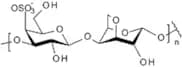
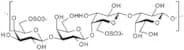
CAS:<p>Kappa-Carrageenan is a gelling sulphated galactan extracted from red seaweed (typically Mastocarpus stellata and Chondrus crispus). The structure of all carrageenans consists of a strictly alternating masked repeating unit of 1,3-linked α-D-galactose and 1,4-linked β-D-galactose. The α-linked galactose occurs as α-3-6-anhydro unit and the β-linked sugar occurs as the 4-sulphate.<br>The image was kindly provided by Prof Mike Guiry from Cork who runs ‘The Seaweed Site’.</p>Color and Shape:White PowderGum Jhingan
<p>Gum Jhingan is a modified carbohydrate with a fluorinated saccharide. It is an oligosaccharide that has been synthesized from the sugar galactose. Gum Jhingan is a high-purity, custom-synthesized product that has been methylated and glycosylated. The modification process of this carbohydrate includes fluorination and click chemistry.</p>Purity:Min. 95%Color and Shape:SolidCellulose - Microcystalline USP
CAS:<p>Cellulose is a linear polysaccharide of β 1-4 linked glucose residues. The polysaccharide chains are bundled as microfibrils in cell walls and provide the essential structural components within growing plants. Each microfibril exhibits a high degree of three-dimensional internal bonding resulting in a crystalline structure that is insoluble in water, resistant to reagents and very strong. The crystalline region of cellulose is isolated to produce microcrystalline cellulose. Microcrystalline cellulose is a term for refined wood pulp and is used as a texturizer, an anti-caking agent, a fat substitute, an emulsifier, an extender, and a bulking agent in food production.</p>Purity:Min. 95%Danaparoid sodium - mixture of dermatan sulfate, heparan sulfate and chondroitin sulfate
CAS:<p>Danaparoid sodium (the active pharmaceutical ingredient in Orgaran; Merck Sharp and Dohme) is a biopolymeric non-heparin drug that is used as anticoagulant and antithrombotic agent, approved for the prophylaxis of postoperative deep-vein thrombosis. It consists of a mixture of three glycosaminoglycans: heparan sulphate, dermatan sulphate, and chondroitin sulphate. Danaparoid, has well established antithrombotic activity. The drug has a high antifactor Xa to antifactor IIa (thrombin) activity ratio, a low tendency to cause bleeding and minimal effects on the fibrinolytic system.</p>Purity:Min. 95%Color and Shape:White PowderCellulose acetate - MW 30,000
CAS:<p>Cellulose acetate fiber is one of the earliest synthetic fibers and is based on cotton or tree pulp cellulose. Cellulose acetate is used as a film base in photography, as a component in some coatings, and as a frame material for eyeglasses. It is also used as a synthetic fiber in the manufacture of cigarette filters and playing cards. In photographic film, cellulose acetate replaced nitrate film in the 1950s, being far less flammable and cheaper to produce but in recent years has been rendered obsolete by the advent of digital cameras.</p>Color and Shape:PowderTamarind gum
CAS:<p>Tamarind gum comes from the seed of the tamarind tree Tamarindus indica and is used in the food industry as a stabiliser and an emulsifier. It has been suggested that the structure is a main chain of cellulose with frequent branching at the O-6 positions with short side chains of one or two D-xylopyranosyl capped with D-xylopyranosyl, D-galactopyranosyl or L-arabinofuranosyl units. In application, tamarind finds use in the sizing of jute and as a stabilizer and thickener in the food industry.</p>Color and Shape:PowderN-Trimethylchitosan
CAS:<p>Quaternization of the primary amine in N-Trimethylchitosan increases the water solubility of chitosan and keeps chitosan soluble over a wide pH range. N-Trimethylchitosan is soluble in water and ethanol, making it ideal for use in biotechnology applications.The degree of quaternization is 30-70%</p>Purity:Min. 90%(Hydroxypropyl)methyl cellulose, viscosity 5 cP 80%-120%, 2% aqueous solution
CAS:<p>Please enquire for more information about (Hydroxypropyl)methyl cellulose, viscosity 5 cP 80%-120%, 2% aqueous solution including the price, delivery time and more detailed product information at the technical inquiry form on this page</p>Purity:Min. 95%β-1,3-Glucan
CAS:<p>β-1,3-Glucan is a bioactive polysaccharide, which is located predominantly in the cell walls of yeast, fungi, and certain cereals. This compound is characterized by its unique branched structure, which is crucial for its biological function. The mode of action of β-1,3-Glucan involves the binding to specific receptors on immune cells, such as dectin-1, which triggers a cascade of immune responses. This interaction enhances the activity of macrophages, neutrophils, and natural killer cells, thus bolstering the body's innate immune defenses.The uses and applications of β-1,3-Glucan are broad, primarily focused on immunological research and potential therapeutic strategies. It is extensively utilized in studies examining its effects as an immunomodulator, leveraging its ability to potentiate immune system function and examining its role in adjunctive cancer therapies, where it may enhance the efficacy of certain treatments. Additionally, β-1,3-Glucan is investigated for its potential benefits in reducing infection rates and improving recovery times in clinical settings. Moreover, its applications in dietary supplements and functional foods continue to be a subject of scientific inquiry, aiming to harness its health-promoting properties within nutrition science.</p>Purity:Min. 95%Color and Shape:PowderFucoidan, Lessonia nigrescens
CAS:<p>A fucan sulphate found in brown marine algae (Phaeophyta-typically Fucus vesiculotus, Ascophyllum nodosum, Alaria and Lessonia nigrescens (illustrated) and has been shown to have anticoagulant activity. The main constituents are α-1,4 and α-1,2 linked L-fucose sulphates although galactose also occurs and there are many variations of the basic structure found in different species of Phaeophyta.<br>The fucose content is approx. 26.2% and it also contains galactose (approx. 13.0%), uronic acid (approx. 13.0%) and sulfate (approx. 29.1%).<br>The image was kindly provided by Prof Mike Guiry from Cork who runs ‘The Seaweed Site’.</p>Purity:Min. 95%Color and Shape:White PowderPachyman - from Poria cocos
CAS:<p>Poria cocos is an edible medicinal fungus known as “Fuling” in Chinese that has been used as a Chinese traditional medicine for more than two thousand years. Polysaccharide material is the most abundant organic substance in the fungus, accounting for about 85% of the total and is a mixture of polysaccharides with the major component being Pachyman, a β-glucan with a 1,3 backbone and 1,6 side chains. It is reported that Pachyman has a wide range of biological activities including antitumour, immunomodulatory, anti-inflammatory and antioxidative properties. Pachyman is a beta-glucan with a 1,3 backbone and 1,6 side chains of fungal origin (Poria cocos).<br>The image was kindly provided by Dr. Chris Lawson.</p>Purity:Min. 95%Color and Shape:White PowderDextran 20, MW: 17,000 to 23,000
CAS:<p>Complex glucan (a 1-6) from Leuconostoc spp.; extender in blood transfusions</p>Color and Shape:Powder(Hydroxypropyl)methyl cellulose - USP, substitution type 2910 (viscosity 3000-5600mpa.s)
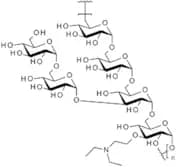
CAS:<p>Viscoelastic polymer; excipient; food additive</p>Diethylaminoethyl-dextran
CAS:<p>DEAE-Dextran (DEAE-D) is a positively-charged dextran derivative that can be used for vaccine production, gene therapy, protein stabilisation, dyslipidemia prevention, flocculating agents, and many other applications. DEAE-D is also used for transfecting animal cells with foreign DNA. DEAE-Sepharose, DEAE-650 and DEAE-Sephadex are commonly used in chromatography for the separation of biological molecules such as proteins and carbohydrates.</p>Purity:Min. 95%Laminariheptaose
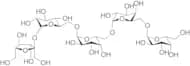
CAS:<p>Ex algal/bacterial polysaccharides-value in b1-3 glucanase assays & diagnostics</p>Formula:C42H72O36Purity:Min. 95%Color and Shape:PowderMolecular weight:1,153 g/molPorphyran
CAS:<p>Porphyran is an agar-like polysaccharide with a linear backbone consisting of 3 linked β-D-galactosyl units alternating with either 4-linked α-L-galactosyl 6-sulphate or 3-6-anhydro-α-L-galactosyl units.The composition includes 6-O-sulphated L-galactose, 6-O-methylated D-galactose, L-galactose, 3,6-anhydro-L-galactose, 6-O-methyl D-galactose and ester sulphate. Some of the ester is present as 1,4-linked L-galactose 6-sulphate. The precise composition of porphyran shows seasonal and environmental variations. Porphyran is not used commercially, but the seaweed, Porphyra umbilicalis, is edible and is consumed in Wales (Laver). It is also made into a delicacy called Laverbread.<br>The image was kindly provided by Prof Mike Guiry from Cork who runs ‘The Seaweed Site’.</p>Purity:(%) Min. 80%Color and Shape:PowderCellulose, carboxymethyl ether, sodium salt
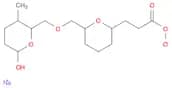
CAS:Formula:C16H27NaO7Color and Shape:SolidMolecular weight:354.3712Ref: IN-DA00IFZ8
Discontinued productVerbascose
CAS:Controlled Product<p>Applications Verbascose (CAS# 546-62-3) is an α-galactooligosaccharide with immunomodulatory activity in mouse macrophage RAW264.7 cells.<br>References Dai, Z.; et al.: J. Agric. Food. Chem., 66, 9070 (2018);<br></p>Formula:C30H52O26Color and Shape:NeatMolecular weight:828.72