Alpha blockers
Found 653 products of "Alpha blockers"
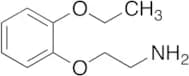
2-(2-Ethoxyphenoxy)ethanamine
CAS:Controlled ProductImpurity Tamsulosin EP Impurity F
Applications 2-(2-Ethoxyphenoxy)ethanamine (Tamsulosin EP Impurity F) is an impurity of Tamsulosin (T006350), a specific α1-adrenoceptor antagonist (1,2). It is used in the treatment of benign prostatic hypertrophy.
References 1. Kawabe, K. et al.: J. Urol. 1990 Oct;144(4):908-11;2. Abrams, P. et al.: Br. J. Urol. 1995 Sep;76(3):325-36.Formula:C10H15NO2Color and Shape:NeatMolecular weight:181.23Tamsulosin Catechol hydrochloride
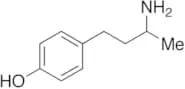
CAS:Controlled ProductFormula:C18H24N2O5S·ClHColor and Shape:NeatMolecular weight:416.92rac 4-(3-Aminobutyl)phenol
CAS:Controlled ProductApplications A metabolite of the antihypertensive agent, Labetalol (L096500).
References Gal, J., et al.: Res. Comm. Chem. Pathol. Pharmacol., 62, 3 (1988),Formula:C10H15NOColor and Shape:NeatMolecular weight:165.23N-Des(2-(2-ethoxy)phenoxy)ethyl), N-(2-(2-ethoxy)phenoxy)acetyl) Tamsulosin
CAS:Controlled ProductApplications Tamsulosin Ether is an impurity of is a Tamsulosin(CAS:106133-20-4) a specific α1-adrenoceptor antagonist. It is used in the treatment of benign prostatic hypertrophy.
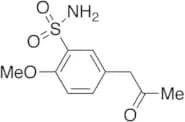
References Kawabe, K., et al.: J. Urol., 144, 908 (1990), Abrams, P., et al.: Br. J. Urol., 76, 325 (1995), Michel, M.C., Expert Opin. Pharmacother., 5, 151 (2004),Formula:C20H26N2O6SColor and Shape:Off-WhiteMolecular weight:422.55-Acetonyl-2-methoxybenzenesulfonamide
CAS:Controlled ProductFormula:C10H13NO4SColor and Shape:NeatMolecular weight:243.28N-Isopropyl Carvedilol
CAS:Controlled ProductApplications Carvedilol (C184625) derivative.
Not a dangerous good if item is equal to or less than 1g/ml and there is less than 100g/ml in the packageFormula:C27H32N2O4Color and Shape:White To Off-WhiteMolecular weight:448.555’-Hydroxyphenyl Carvedilol
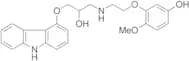
CAS:Applications A metabolite of Carvedilol (C184625). It is used in the treatment of hypertension.
References Sponer, G., et al.: J. Cardiovasc. Pharmacol., 9, 317 (1987), Fujimaki, M., ET AL.: Xenobiotica, 20, 1025 (1990), Ruffolo, R., et al.: Eur. J. Clin. Pharmacol., 38, S82 (1990), Schaefer, W.H., et al.: Drug Metab. Dispos., 26, 10, 958 (1998),Formula:C24H26N2O5Color and Shape:NeatMolecular weight:422.47Carvedilol Bisalkylpyrocatechol Impurity
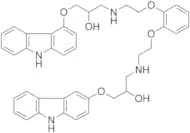
CAS:Controlled ProductApplications A new known impurity of Carvedilol (C184625), published in Carvedilol USP monograph.
Formula:C40H42N4O6Color and Shape:NeatMolecular weight:674.78S-Mirtazapine
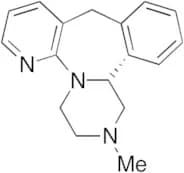
CAS:Controlled ProductApplications S-Mirtazapine is an enantiomer of Mirtazapine (M365000); an antidepressant. R-Mirtazapine showed antinociceptive effects in acute thermal nociception, whereas S-Mirtazapine showed pronociceptive effects.
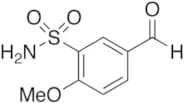
References Muth-Selbach, Uta., et al.: Brain Res. Bull., 79(1), 63-68 (2009); Smith, Donald F., et al.: Psychopharmacology, 200(2), 273-279 (2008); Freynhagen, Rainer., et al.: Brain Res. Bull., 69(2), 168-173 (2006)Formula:C17H19N3Color and Shape:NeatMolecular weight:265.355-Formyl-2-methoxy-benzenesulfonamide
CAS:Controlled ProductImpurity Tamsulosin EP Impurity E
Applications 5-Formyl-2-methoxy-benzenesulfonamide (Tamsulosin EP Impurity E) is an impurity of Tamsulosin (T006350), a specific α1-adrenoceptor antagonist used in the treatment of benign prostatic hypertrophy.
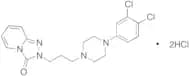
References Kawabe, K., et al.: J. Urol., 144, 908 (1990), Abrams, P., et al.: Br. J. Urol., 76, 325 (1995), Michel, M.C., Expert Opin. Pharmacother., 5, 151 (2004),Formula:C8H9NO4SColor and Shape:NeatMolecular weight:215.233,4-Dichloro Trazodone Dihydrochloride
CAS:Controlled ProductApplications 3,4-Dichloro Trazodone is the dichlorinated analogue and impurity of the antidepressant agent Trazodone (T718500).
References Pai, N.R. et al.: J. Chem. Pharmac. Res., 2, 458 (2010); Pai, N. et al.: Int. J. Pharmac. Sci. Rev. Res., 4, 180 (2010);Formula:C19H21Cl2N5O•2HCiColor and Shape:NeatMolecular weight:406.3123646[3-(9H-Carbazol-4-yloxy)-2-hydroxy]propyl Carvedilol
CAS:Controlled ProductFormula:C39H39N3O6Color and Shape:NeatMolecular weight:645.741-[4-(4-Amino-6,7-dimethoxy-2-quinazolinyl)-1-piperazinyl]-5-hydroxy-1-pentanone
CAS:1-[4-(4-Amino-6,7-dimethoxy-2-quinazolinyl)-1-piperazinyl]-5-hydroxy-1-pentanone is a drug product that is used as an HPLC standard. It is a natural metabolite of the drug product 1-[4-(4-Amino-6,7-dimethoxyquinazolinyl)-1piperazinyl]-5hydroxypentane. The synthesis of this compound has been reported in the literature. The impurity content of this compound meets the pharmacopoeia requirements for an analytical reference standard for API impurities.Formula:C19H27N5O4Purity:Min. 95%Molecular weight:389.45 g/molN2-Methyl alfuzosin
CAS:N2-Methyl alfuzosin is an impurity of Alfuzosin, a drug used to treat benign prostatic hyperplasia. It can be used as an HPLC standard for the detection and quantification of Alfuzosin in pharmaceutical products. N2-Methyl alfuzosin is a metabolite of Alfuzosin that is formed by cytochrome P450 3A4. It has been shown to have anti-inflammatory effects, which may be due to its inhibition of prostaglandin synthesis.Formula:C19H27N5O4Purity:Min. 95%Molecular weight:389.45 g/molLabetalol EP impurity D
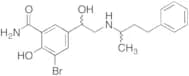
CAS:Labetalol EP impurity D is a metabolite of labetalol that is used as an impurity standard for HPLC. This impurity has been identified in the drug product and also in the drug development process. Labetalol EP impurity D is one of many metabolites that can be formed by cytochrome P450 enzymes. Labetalol EP impurity D is a natural metabolite of labetalol, which can be found in the urine of humans and other mammals. It is also present in various plants and fungi, including mushrooms, lichens, yeast, and barley. Synthetic labetalol EP impurity D can also be produced by various chemical reactions.
Formula:C9H12N2O3Purity:Min. 95%Molecular weight:196.2 g/mol[4-(4-Amino-6,7-dimethoxy-2-quinazolinyl)-1-piperazinyl]-2-furanyl-methanone
CAS:Leflunomide is a drug that belongs to the class of pyridones. It is used in the treatment of rheumatoid arthritis, juvenile idiopathic arthritis, psoriatic arthritis, and ankylosing spondylitis. Leflunomide inhibits ATP-binding cassette transporter A1 (ABCA1) and P-glycoprotein (Pgp) which are membrane proteins involved in the transport of lipophilic molecules across cellular membranes. Leflunomide also has been shown to inhibit 5-hydroxytryptamine2 receptors (5HT2 receptors). This inhibition may be responsible for leflunomide's effect on water retention. Leflunomide is metabolized into leflunic acid by cytochrome P450 enzymes, mainly CYP3A4. The activity of leflunic acid is similar to that of leflunomide.Formula:C19H21N5O4Purity:Min. 95%Molecular weight:383.4 g/mol1-[4-(4-Amino-6,7-dimethoxy-2-quinazolinyl)-1-piperazinyl]-2-hydroxy-1-pentanone
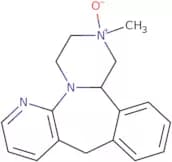
CAS:1-[4-(4-Amino-6,7-dimethoxy-2-quinazolinyl)-1-piperazinyl]-2-hydroxy-1-pentanone (DMPP) is an analog of the antiarrhythmic drugs flecainide and propafenone. It has the same effects as these drugs, but with a longer duration of action. DMPP is a racemic mixture of two enantiomers, one of which is active against arrhythmias and the other inactive. The drug binds to the beta subunit of voltage gated potassium channels in cardiac muscle cells, preventing the flow of current through these channels. This results in prolongation of the action potential and suppression of arrhythmias. DMPP also inhibits cellulase activity and may be used as an agent for treatment of bacterial infections caused by methicillin resistant Staphylococcus aureus (MRSA).Formula:C19H27N5O4Purity:Min. 95%Molecular weight:389.45 g/molMirtazapine N-oxide
CAS:Mirtazapine N-oxide is an antidepressant agent that is metabolized to mirtazapine. Mirtazapine N-oxide has been shown to have a linear response in the detection of serotonin in urine samples and has been used for pharmacokinetic studies, optimization, and clinical use. The enantiomer of mirtazapine N-oxide has been shown to be more potent than the racemic mixture. The drug is excreted unchanged into the urine with a half-life of 2 hours. Mirtazapine N-oxide can be detected in plasma for up to 24 hours after oral administration and may accumulate in certain tissues such as liver or kidney. This drug has also been shown to cause death in mice at very high doses.Formula:C17H19N3OPurity:Min. 95%Molecular weight:281.35 g/mol




![[3-(9H-Carbazol-4-yloxy)-2-hydroxy]propyl Carvedilol](/_next/image/?url=https%3A%2Fstatic.cymitquimica.com%2Fproducts%2FTR%2Fthumb-webp%2FC175950.webp&w=3840&q=75)
![1-[4-(4-Amino-6,7-dimethoxy-2-quinazolinyl)-1-piperazinyl]-5-hydroxy-1-pentanone](/_next/image/?url=https%3A%2Fstatic.cymitquimica.com%2Fproducts%2F3D%2Fthumb-webp%2FIA63845.webp&w=3840&q=75)


![[4-(4-Amino-6,7-dimethoxy-2-quinazolinyl)-1-piperazinyl]-2-furanyl-methanone](/_next/image/?url=https%3A%2Fstatic.cymitquimica.com%2Fproducts%2F3D%2Fthumb-webp%2FIA63850.webp&w=3840&q=75)
![1-[4-(4-Amino-6,7-dimethoxy-2-quinazolinyl)-1-piperazinyl]-2-hydroxy-1-pentanone](/_next/image/?url=https%3A%2Fstatic.cymitquimica.com%2Fproducts%2F3D%2Fthumb-webp%2FIA63849.webp&w=3840&q=75)