Enzymes in Recombinant Proteins
Enzymes accelerate chemical reactions, much like biological catalysts, acting on substrates and converting them into different molecules called products. These proteins are indispensable in biochemical processes and industrial applications, facilitating reactions under mild conditions with high specificity and efficiency. At CymitQuimica, we provide a wide selection of high-quality enzymes to support your research, industrial, and clinical applications.
Found 3318 products of "Enzymes in Recombinant Proteins"
Sort by
Purity (%)
0
100
|
0
|
50
|
90
|
95
|
100
Butyrylcholinesterase human
CAS:<p>Butyrylcholinesterase is an enzyme made in the liver and found mainly in blood plasma. Butyrylcholinesterase (EC 3.1.1.8), also known as BChE or BuChE, is a nonspecific cholinesterase enzyme that hydrolyses choline-based esters. One unit of Butyrylcholinesterase will hydrolyze 1.0 μmole of butyrylcholine to choline and butyrate per minute at pH 8.0 and 37 °C.</p>Color and Shape:PowderLysozyme - Enzyme activity min 40000 FIP/mg
CAS:Lysozyme is a bacteriolytic enzyme, which is primarily derived from hen egg whites. It functions by hydrolyzing the β-1,4-glycosidic linkages in the peptidoglycan layer of bacterial cell walls, particularly in Gram-positive bacteria. This enzymatic activity results in the lysis and subsequent death of the bacterial cells, providing a potent antimicrobial effect.Color and Shape:PowderCarboxypeptidase Y from baker's yeast
CAS:Carboxypeptidase Y (EC 3.4.16.1) is an exopeptidase enzyme. It hydrolyzes peptide bonds of C-terminal residues and it remains active in the presence of urea at low to moderate concentrations. One unit of the Carboxypeptidase Y will hydrolyze 1.0 μmole of a chromogenic peptide substrate, releasing C-terminal alanine and generating a light-absorbing product.Purity:Min. 95%β-Galactosidase >100KU/g
CAS:beta-Galactosidase (EC 3.2.1.23, shortly beta-Gal, also know as lactase) catalyses the hydrolysis of beta-d-galactoside in the presence of water to galactose and alcohol, or lactose into glucose and galactose. beta-Gal has a molecular weight of 540,000 and is composed of four identical subunits of MW 135,000, each with an independent active site. The enzyme has divalent metals as cofactors, with chelated Mg2+ ions required to maintain active site conformation. The molecule contains numerous sulfhydryl groups and is glycosylated.Color and Shape:PowderSuperoxide dismutase - >3000 units/mg
CAS:<p>Superoxide dismutase is an enzyme that catalyzes the conversion of harmful superoxide into hydrogen peroxide and oxygen.</p>Color and Shape:PowderMolecular weight:203.16 g/molMaltose phosphorylase (from bacteria), ammonium sulphate suspension
CAS:Maltose phosphorylase (systematic name maltose:phosphate 1-beta-D-glucosyltransferase; EC 2.4.1.8) is an enzyme that catalyzes the following reaction: maltose + Pi ⇌ D-glucose + beta-D-glucose 1-phosphate One unit of maltose phosphorylase will produce 1.0 μmole of D-Glucose from maltose per minute at pH 7.0 and 30°C.Purity:Min. 95%Molecular weight:0 g/molAcetylcholinesterase, type VI-S, 200-1,000 units/mg protein
CAS:<p>Acetylcholinesterase is an enzyme that breaks down acetylcholine</p>Purity:Min. 95%Color and Shape:PowderProteinase K - from Tritirachium album
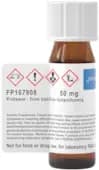
CAS:Proteinase K is used for the general digestion of proteins and removal of protein contamination in nucleic acids. Addition of Protease K also stabilizes nucleic acids by degrading any nucleases present. Proteinase K is active in wide range of pH range, in the presence of SDS, urea and Guanidinium chloride at low to moderate concentrations. Proteinase K is also known under names of protease K and endopeptidase K.Glucose dehydrogenase
CAS:<p>Glucose Dehydrogenase is an enzyme, which is typically derived from microbial sources such as bacteria and fungi. It functions by catalyzing the oxidation of glucose to gluconolactone, concurrently reducing a cofactor such as NAD⁺ or PQQ. This biochemical reaction is critical in various analytical applications due to its specificity and efficiency in glucose detection.Glucose Dehydrogenase is widely employed in the development of biosensors and diagnostic assays. Its primary application is in blood glucose monitoring devices, where its ability to accurately quantify glucose levels is crucial for managing diabetes. Additionally, it is utilized in research and development settings for biochemical assays that require precise glucose measurements. The enzyme's rapid and specific action on glucose molecules makes it an indispensable tool in both clinical and laboratory environments, contributing to advancements in biosensing technologies and metabolic studies.</p>Glucosidase from aspergillus niger
CAS:<p>Glucosidases are enzymes belonging to the family of oxidoreductases. They catalyse the hydrolysis of starches to simple sugars. Glucosidase is widely used in the food, carbohydrate and biofuels industries. In recent years, its applicability has expanded to biotechnology for its potential application in bioenzymatic fuel cells.</p>Purity:Min. 95%Color and Shape:Powderrec HIV-1 Protease (affinity purified) (expressed in E. coli)
<p>A proteolytic enzyme synthesized by the HIV cell as part of the GagPol polyprotein</p>CMP Sialic acid synthetase
<p>E. coli recombinant α-2,6 sialyltransferase from Neisseria meningitidis. One unit is defined as the amount of enzyme that catalyses the formation of 1 μmol CMP-Neu5Ac from CTP and Neu5Ac per minute at 37 ºC.Activity: 100U/mg</p>Sialic acid aldolase
<p>E. coli recombinant sialic acid aldolase (EC 4.1.3.3) from Pasteurella multocida. One unit is defined as the amount of enzyme that catalyses the formation of 1 umol Neu5Ac from ManNAc and Pyruvate per minute at 37 ℃.Activity: 9U/mg</p>α-Glucosidase from bacillus stearothermophilus, lyophilized powder, 250 Units
CAS:α-Glucosidase is a glycoside hydrolase enzyme that hydrolyzes α-1,4-linked D-glucose residues to produce α-D-glucose. This enzyme has been isolated from Bacillus stearothermophilus and is used as an industrial catalyst in the production of glucose syrups. One Unit of α-Glucosidase will release 1.0 µmole of p-nitrophenol from the chromogenic substrate mimic 4-nitrophenyl α-D-glucopyranoside per minute under optimum conditions.Color and Shape:PowderLyticase
CAS:Lyticase is a lysing enzyme that is designed to lyse cells in a biological sample. It contains an optimized wild-type guanine nucleotide-binding protein and has been shown to have high enzyme activities. Lyticase has also been shown to be active against opportunistic fungal strains, such as Candida glabrata, by disrupting their cell membranes. Lyticase is classified as a signal peptide with nuclear DNA, which allows it to be used in wastewater treatment applications. The enzyme can also be used for the analysis of the Toll-like receptor (TLR) response of microbes due to its electrochemical impedance spectroscopy properties.Purity:Min. 95%Protease - from bacillus licheniformis
CAS:<p>Protease enzymes break down proteins and are essential for many biological processes, including digestion, cellular regulation and blood clotting. They are also used in many industrial and biotechnological applications for example in food processing and in detergents.</p>Color and Shape:PowderMyokinase (from Yeast)
CAS:Myokinase (Adenylate kinase, EC 2.7.4.3) catalyzes interconversion between ATP, ADP and AMP by catalyzing the following reaction:ATP + AMP ⇌ 2 ADPOne unit of Myokinase will convert 1.0 µmol ATP and 1.0 µmol AMP to 2.0 µmol ADP per min at 25°C and pH 7.5.Phosphodiesterase II from bovine spleen
CAS:Phosphodiesterase II from bovine spleen is an enzyme derived from the spleen of cattle, which serves as a crucial biological catalyst for the hydrolysis of phosphodiester bonds in nucleotide sequences. This enzyme's mode of action involves cleaving the phosphodiester linkages within nucleic acids, facilitating the breakdown of these macromolecules into smaller nucleotide units.Purity:Min. 95%Thioredoxin reductase from escherichia coli
CAS:Thioredoxin reductase (TR, TrxR) (EC 1.8.1.9) is an enzyme that reduce thioredoxin using NADPH as a co-factor, and also contains FAD. One unit of thioredoxin reductase will raise increase light absorbance by 1.0 per minute at 412nm in the presence of thioredoxin and Ellman's reagent at pH 7.0 and 25 °C.Purity:Min. 95%Triose phosphate isomerase
CAS:<p>Triose-phosphate isomerase (TPI, TIM; EC 5.3.1.1) is an enzyme that catalyzes the reversible isomerisation of dihydroxyacetone phosphate and D-glyceraldehyde 3-phosphate: DHAP ⇌ GADP The reaction mechanism involves the formation of an enediol intermediate. One unit of Triose-phosphate isomerase will convert 1.0 μmole glyceraldehyde 3-phosphate to dihydroxyacetone phosphate per min at pH 7.6 and 25 °C.</p>Purity:Min. 95%