Enzymes in Recombinant Proteins
Enzymes accelerate chemical reactions, much like biological catalysts, acting on substrates and converting them into different molecules called products. These proteins are indispensable in biochemical processes and industrial applications, facilitating reactions under mild conditions with high specificity and efficiency. At CymitQuimica, we provide a wide selection of high-quality enzymes to support your research, industrial, and clinical applications.
Found 3318 products of "Enzymes in Recombinant Proteins"
Sort by
Purity (%)
0
100
|
0
|
50
|
90
|
95
|
100
Amylase protein
<p>Alpha Amylase (Amylase, α-Amylase, 1,4-α-D-glucan glucanohydrolase, glycogenase, ptyalin; systematic name 4-α-D-glucan glucanohydrolase; EC 3.2.1.1, CAS Number [9000-90-2]) is an enzyme that catalyses hydrolysis of large polysacharides into smaller fragments. Alpha amylase targets alpha bonds of 1→4 glycosidic linkages of poly- and oligosaccharides with three or more D-glucose units. One unit of Alpha Amylase will catalyze the hydrolysis of 1.0 μmol of 2-chloro-4-nitrophenyl-α-D-maltotrioside to yield 2-chloro-4-nitrophenol per minute at 37°C. Human salivary Alpha Amylase is supplied as clear, colorless liquid solution at ≥2000U/mL, specific activity ≥200 U/mg protein. Store at -20°C on arrival.</p>Purity:Min. 95%eXrase DNA Endonuclease, research-grade
CAS:<p>eXrase DNA endonuclease from enGenes is a recombinant endonuclease from Serratia marcescens produced in E. coli. Effectively and efficiently degrades all forms of DNA and RNA, reducing sample viscosity without proteolytic activity. As effective and efficient as other nucleases on the market, eXrase DNA endonuclease is the most cost-effective way to improve proteins yields and improve sample handing. Presented as a ready to use colourless liquid, formulated in Tris buffer at pH 8.0 with 50 % glycerol (v/v). This research grade eXrase has low endotoxin, max 0.25 EU/kU.eXrase DNA endonuclease is suitable for the effective breakdown of nucleic acids in numerous biotech settings: • Removal of residual host DNA from biotechnological products to meet regulatory standards • Reduction of viscosity and streamlined purification in downstream processing of fermentation procedures. • Reduction of viscosity in in upstream fermentation processes • Extraction and/or synthesis of flavouring nucleotides • Enhanced bioavailability of nucleotides in specific feed products • DNA degradation for the removal or prevention of biofilm formationeXrase DNA endonuclease from enGenes is made by a proprietary microbial fermentation process utilizing Escherichia coli cells. This enzyme facilitates the hydrolysis of phosphodiester bonds in various forms of DNA and RNA, including single-stranded, double-stranded, linear, circular, or supercoiled configurations, yielding smaller oligonucleotides typically composed of 2-4 base pairs. Unit-Definition: One unit (U) of the enzyme is defined as the amount required to digest calf thymus DNA, yielding acid-soluble oligonucleotides equivalent to a ΔA260nm of 1.0 within a 30-minute timeframe at pH 8.0 and 37°C. This standardization allows for consistent measurement of enzymatic activity across different batches.</p>eXrase DNA Endonuclease, tech-grade
CAS:eXrase DNA endonuclease from enGenes is a recombinant endonuclease from Serratia marcescens produced in E. coli. Effectively and efficiently degrades all forms of DNA and RNA, reducing sample viscosity without proteolytic activity. As effective and efficient as other nucleases on the market, eXrase DNA endonuclease is the most cost-effective way to improve proteins yields and improve sample handing. Presented as a ready to use colourless liquid, formulated in Tris buffer at pH 8.0 with 50 % glycerol (v/v). This tech grade version is our most cost effective endonuclease for R&D applications. eXrase DNA endonuclease is suitable for the effective breakdown of nucleic acids in numerous biotech settings: • Removal of residual host DNA from biotechnological products to meet regulatory standards • Reduction of viscosity and streamlined purification in downstream processing of fermentation procedures. • Reduction of viscosity in in upstream fermentation processes • Extraction and/or synthesis of flavouring nucleotides • Enhanced bioavailability of nucleotides in specific feed products • DNA degradation for the removal or prevention of biofilm formationeXrase DNA endonuclease from enGenes is made by a proprietary microbial fermentation process utilizing Escherichia coli cells. This enzyme facilitates the hydrolysis of phosphodiester bonds in various forms of DNA and RNA, including single-stranded, double-stranded, linear, circular, or supercoiled configurations, yielding smaller oligonucleotides typically composed of 2-4 base pairs. Unit-Definition: One unit (U) of the enzyme is defined as the amount required to digest calf thymus DNA, yielding acid-soluble oligonucleotides equivalent to a ΔA260nm of 1.0 within a 30-minute timeframe at pH 8.0 and 37°C. This standardization allows for consistent measurement of enzymatic activity across different batches.Glutathione Reductase, baker's yeast
CAS:<p>Glutathione Reductase, baker's yeast, is an enzyme derived from the yeast species *Saccharomyces cerevisiae*. This enzyme is sourced from baker's yeast, providing a renewable and consistent product for various biochemical applications. Its mode of action involves catalyzing the reduction of glutathione disulfide (GSSG) to the sulfhydryl form glutathione (GSH), using NADPH as an electron donor. This reaction is crucial for maintaining the intracellular redox balance by regenerating GSH, the primary cellular antioxidant.</p>QPRTase Protein, Human, Recombinant (His)
Nicotinate-Nucleotide Pyrophosphorylase (QPRT) belongs to the nadC/modD family.Color and Shape:Lyophilized PowderMolecular weight:34 KDa (reducing condition)CK1 δ/CSNK1D Protein, Human, Recombinant (Baculovirus, His)
<p>Expression system: Baculovirus<br>Length: 1-415, Full Length<br>Activity: Not Tested</p>Purity:85%Color and Shape:Odour Lyophilized PowderPPIE Protein, Human, Recombinant (His)
Peptidyl-prolyl cis-trans isomerase E, also known as Cyclophilin E, Cyclophilin-33, Rotamase E, CYP33, PPIE, is an enzyme which belongs to the cyclophilin-typeColor and Shape:Lyophilized PowderMolecular weight:34 KDa (reducing condition)PGDS Protein, Human, Recombinant
Hematopoietic Prostaglandin D Synthase (HPGDS) belongs to the GST superfamily and Sigma family.Color and Shape:Lyophilized PowderMolecular weight:26 KDa (reducing condition)Glucosidase from aspergillus niger
CAS:<p>Glucosidases are enzymes belonging to the family of oxidoreductases. They catalyse the hydrolysis of starches to simple sugars. Glucosidase is widely used in the food, carbohydrate and biofuels industries. In recent years, its applicability has expanded to biotechnology for its potential application in bioenzymatic fuel cells.</p>Purity:Min. 95%Color and Shape:PowderLysozyme - Enzyme activity min 40000 FIP/mg
CAS:Lysozyme is a bacteriolytic enzyme, which is primarily derived from hen egg whites. It functions by hydrolyzing the β-1,4-glycosidic linkages in the peptidoglycan layer of bacterial cell walls, particularly in Gram-positive bacteria. This enzymatic activity results in the lysis and subsequent death of the bacterial cells, providing a potent antimicrobial effect.Color and Shape:PowderCarnitine acetyltransferase
CAS:<p>From pigeon breast muscle - Carnitine acetyltransferase (EC 2.3.1.7, also Carnitine O-acetyltransferase) is an enzyme that catalyzes the following chemical reaction: acetyl-CoA + carnitine ⇌ CoA + acetylcarnitine</p>D-Alanine Aminotransferase, Bacilus subtilis, Recombinant
<p>D-Alanine aminotransferase (L-glutamic-pyruvic transaminase; EC 2.6.1.21) is an enzyme that catalyzes the following reaction: D-alanine + α-ketoglutarate ⇌ pyruvate + D-glutamate Please enquire for more information about D-Alanine Aminotransferase, Bacilus subtilis, Recombinant including the price, delivery time and more detailed product information at the technical inquiry form on this page</p>Purity:>90% By Sds-Page.Cocarboxylase hydrochloride
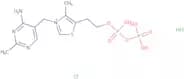
CAS:<p>Cocarboxylase hydrochloride is a coenzyme derivative, which is primarily sourced from thiamine (vitamin B1). It plays a crucial role in biochemical processes by facilitating the enzymatic decarboxylation of alpha-keto acids within the cellular environment. This action is fundamental in energy production as it aids in the conversion of pyruvate to acetyl-CoA, subsequently entering the citric acid cycle. Cocarboxylase hydrochloride’s involvement in carbohydrate metabolism is especially vital for tissues with high metabolic rates, such as the heart and brain.</p>Formula:C12H19N4O7P2S·ClHClPurity:Min. 95%Molecular weight:497.23 g/molGlucose dehydrogenase
CAS:<p>Glucose Dehydrogenase is an enzyme, which is typically derived from microbial sources such as bacteria and fungi. It functions by catalyzing the oxidation of glucose to gluconolactone, concurrently reducing a cofactor such as NAD⁺ or PQQ. This biochemical reaction is critical in various analytical applications due to its specificity and efficiency in glucose detection.Glucose Dehydrogenase is widely employed in the development of biosensors and diagnostic assays. Its primary application is in blood glucose monitoring devices, where its ability to accurately quantify glucose levels is crucial for managing diabetes. Additionally, it is utilized in research and development settings for biochemical assays that require precise glucose measurements. The enzyme's rapid and specific action on glucose molecules makes it an indispensable tool in both clinical and laboratory environments, contributing to advancements in biosensing technologies and metabolic studies.</p>rec HIV-1 Protease (affinity purified) (expressed in E. coli)
<p>A proteolytic enzyme synthesized by the HIV cell as part of the GagPol polyprotein</p>Sialic acid aldolase
<p>E. coli recombinant sialic acid aldolase (EC 4.1.3.3) from Pasteurella multocida. One unit is defined as the amount of enzyme that catalyses the formation of 1 umol Neu5Ac from ManNAc and Pyruvate per minute at 37 ℃.Activity: 9U/mg</p>CMP Sialic acid synthetase
<p>E. coli recombinant α-2,6 sialyltransferase from Neisseria meningitidis. One unit is defined as the amount of enzyme that catalyses the formation of 1 μmol CMP-Neu5Ac from CTP and Neu5Ac per minute at 37 ºC.Activity: 100U/mg</p>α-Glucosidase from bacillus stearothermophilus, lyophilized powder, 250 Units
CAS:α-Glucosidase is a glycoside hydrolase enzyme that hydrolyzes α-1,4-linked D-glucose residues to produce α-D-glucose. This enzyme has been isolated from Bacillus stearothermophilus and is used as an industrial catalyst in the production of glucose syrups. One Unit of α-Glucosidase will release 1.0 µmole of p-nitrophenol from the chromogenic substrate mimic 4-nitrophenyl α-D-glucopyranoside per minute under optimum conditions.Color and Shape:Powderendo-β-1,4-Mannanase
CAS:Endo-β-1,4-Mannanase (other names Mannan endo-1,4-β-mannosidase, endo-β-1,4-mannase, β-mannanase B, β-1, 4-mannan 4-mannanohydrolase, endo-β-mannanase, β-D-mannanase, 1,4-β-D-mannan mannanohydrolase; EC 3.2.1.78) is an enzyme, catalyzing the hydrolysis of -1, 4-mannosidic linkages in mannans, glucomannans and galactomannans. One unit of Endo-β-1,4-Mannanase will release 1.0 µmole of mannose reducing-sugar per minute from a 3mg/ml mannan solution at pH 5.5 and 37degC. Expressed in U/g.β-Galactosidase >100KU/g
CAS:beta-Galactosidase (EC 3.2.1.23, shortly beta-Gal, also know as lactase) catalyses the hydrolysis of beta-d-galactoside in the presence of water to galactose and alcohol, or lactose into glucose and galactose. beta-Gal has a molecular weight of 540,000 and is composed of four identical subunits of MW 135,000, each with an independent active site. The enzyme has divalent metals as cofactors, with chelated Mg2+ ions required to maintain active site conformation. The molecule contains numerous sulfhydryl groups and is glycosylated.Color and Shape:Powder