Others
Found 6297 products of "Others"
Ref: 4Z-A-0311
Discontinued productRef: 4Z-L-124064
Discontinued productRef: 4Z-Z-021011
Discontinued productRef: 4Z-P-283016
Discontinued productRef: 4Z-P-196028
Discontinued productRef: 4Z-E-1235
Discontinued productRef: 4Z-C-165009
Discontinued productRef: 4Z-P-283015
Discontinued productRef: 4Z-D-164087
Discontinued productRef: 4Z-P-226007
Discontinued productRef: 4Z-D-167002
Discontinued productRef: 4Z-N-066093
Discontinued productRef: 4Z-A-8287
Discontinued productRef: 4Z-D-164097
Discontinued productRef: 4Z-M-3812
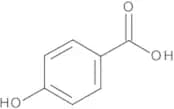
Discontinued productAcetylsalicylic Acid EP Impurity C (Lamivudine EP Impurity C, Mesalazine (Mesalamine) EP Impurity H, Sulfasalazine EP Impurity H, Salicylic Acid)
CAS:Formula:C7H6O3Color and Shape:White To Off-White SolidMolecular weight:138.12Ref: 4Z-A-033
Discontinued productRef: 4Z-C-165022
Discontinued productRef: 4Z-D-167004
Discontinued productRef: 4Z-P-283004
Discontinued product4-Hydroxy-N-Desmethyl Tamoxifen-d5 (Endoxifen-d5) (Mixture of Z and E Isomers)
CAS:Formula:C25H22D5NO2Color and Shape:White To Off-White SolidMolecular weight:378.53Ref: 4Z-T-0113
Discontinued productRef: 4Z-P-283019
Discontinued productRef: 4Z-B-119026
Discontinued productRef: 4Z-D-164092
Discontinued product1,1,3,3,5,5,7,7-Octamethyl-7-(2-Methylpropoxy)tetrasiloxan-1-Ol
CAS:Formula:C12H34O5Si4Molecular weight:370.74Ref: 4Z-S-153010
Discontinued productRef: 4Z-D-167007
Discontinued productRef: 4Z-P-196083
Discontinued productRef: 4Z-D-164012
Discontinued productRef: 4Z-C-165003
Discontinued productRef: 4Z-A-0321
Discontinued productRef: 4Z-C-459007
Discontinued productRef: 4Z-C-165006
Discontinued productRef: 4Z-P-283018
Discontinued productRef: 4Z-D-164101
Discontinued productRef: 4Z-D-164100
Discontinued productRef: 4Z-T-019
Discontinued productRef: 4Z-P-226013
Discontinued productRef: 4Z-P-226011
Discontinued productRef: 4Z-B-119032
Discontinued product(Z)-4-Hydroxy-N-Desmethyl Tamoxifen (Endoxifen) β-D-Glucuronide
CAS:Formula:C31H35NO8Molecular weight:549.62Ref: 4Z-T-0133
Discontinued productRef: 4Z-P-226012
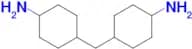
Discontinued product4,4'-Methylenedicyclohexanamine
CAS:Purity:95.0%Color and Shape:SolidMolecular weight:210.365005493164064-Nitrophenyl-beta-D-fucopyranoside
CAS:A chromogenic substrate for β-galactosidase.
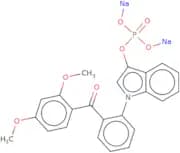
Formula:C12H15NO7Purity:Min. 99 Area-%Molecular weight:285.26 g/molAldol® 515 phosphate, disodium salt, Biosynth Patent: EP 2427431 and US 8940909
CAS:Aldol® 515 phosphate is a chromogenic and fluorogenic enzyme substrate used for detection of phosphatase activity. The colorless enzyme substrate is cleaved by acid and alkaline phosphatases secreted by bacteria in liquid or solid media, yielding intense red color and red fluorescence. Aldol® 515 phosphate can also be used in Western blots and other immunoassay applications with phosphatase-coupled secondary antibodies. Aldol® 515 phosphate can be used under aerobic and anaerobic conditions.Formula:C23H19N2Na2O5PPurity:Min. 95 Area-%Molecular weight:480.36 g/molRef: 3D-A-4721_P00
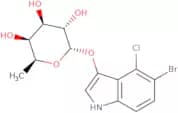
Discontinued product5-Bromo-4-chloro-3-indoxyl-alpha-L-fucopyranoside
CAS:5-Bromo-4-chloro-3-indoxyl-alpha-L-fucopyranoside is a chromogenic substrate for alpha-L-Fucosidase. It produces a green-blue color.
Formula:C14H15BrClNO5Purity:Min. 98 Area-%Color and Shape:PowderMolecular weight:392.63 g/molRef: 3D-EB03266
Discontinued product1-Naphthyl b-D-glucuronide sodium salt
CAS:1-Naphthyl b-D-glucuronide sodium salt is a chromogenic substrate commonly used to assay the activity of beta-glucuronidase enzymes. It is hydrolyzed by beta-glucuronidase to yield a yellow-colored product, 1-naphthol, which can be quantified spectrophotometrically. This substrate is widely used in diagnostic tests for detection of beta-glucuronidase activity, particularly in clinical microbiology for the identification of E. coli and other enteric bacteria. With its sodium salt form, it boasts increased solubility in aqueous solutions, ensuring seamless integration into various experimental settings.
Formula:C16H15NaO7Purity:Min. 95%Color and Shape:PowderMolecular weight:342.28 g/molRef: 3D-EN05128
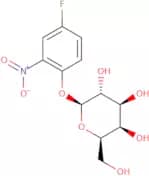
Discontinued product4-Fluoro-2-nitrophenyl b-D-galactopyranoside
CAS:4-Fluoro-2-nitrophenyl beta-D-galactopyranoside, a fluorinated analog of ONPG, is a chromogenic enzyme substrate specifically used to detect beta-galactosidase in bacterial media. 4-Fluoro-2-nitrophenyl beta-D-galactopyranoside is used in Lactose intolerance screening, bacterial beta-galactosidase detection (E. coli)
Purity:Min. 95%Color and Shape:PowderMolecular weight:319.24 g/molRef: 3D-EF15715
Discontinued product5-Bromo-6-chloro-3-indoxyl choline phosphate
CAS:Please enquire for more information about 5-Bromo-6-chloro-3-indoxyl choline phosphate including the price, delivery time and more detailed product information at the technical inquiry form on this page
Formula:C13H17BrClN2O4PPurity:Min. 99 Area-%Molecular weight:411.63 g/molRef: 3D-B-7118
Discontinued product4-Nitrophenyl 3-O-(a-D-mannopyranosyl)-a-D-mannopyranoside
CAS:Chromogenic substrate for α-glucanase
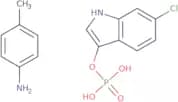
Formula:C18H25NO13Purity:Min. 97 Area-%Color and Shape:White PowderMolecular weight:463.39 g/mol6-Chloro-3-indolyl phosphate p-toluidine salt
CAS:A substrate for visualising alkaline phosphatase activity. Produces a red colored insoluble end product that is detected visually, when used together with Nitroblue tetrazolium. The substrate system is versatile and functions in a variety of applications, including Northern, Southern, and Western blotting, in situ hybridization, ELISAs and immunohistochemistry. DMF soluble.
Formula:C15H16ClN2O4PPurity:Min. 98%Color and Shape:White Off-White PowderMolecular weight:354.73 g/molRef: 3D-EC09439
Discontinued productBronze-Gal
Bronze-Gal (Bronze-beta-D-galactopyranoside) is a chromogenic indicator for beta-galactosidase activity. The colorless product is cleaved by lactose-utilizing bacteria in liquid media or on agar plates and yields a bronze colored precipitate. Bronze-Gal can also be used as detecting agent for beta-galactosidase activity in reporter gene assays or for identification of positive transformants on agar plates when using the α-complementation approach. Read more in the Application Notes.
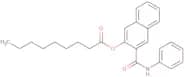
Purity:Min. 95%Molecular weight:443.57Naphthol AS nonanoate
CAS:Modified naphtol AS substrate used in histochemical and cytochemical staining
Formula:C26H29NO3Purity:Min. 95%Color and Shape:PowderMolecular weight:403.51 g/molAldol® 495 acetate, Biosynth Patent: EP 2427431 and US 8940909
CAS:Controlled ProductAldol 495 acetate is a chromogenic substrate that contains the chemical compound Aldol. It is used in food testing, diagnostics, and environmental testing. Aldol 495 acetate can be used as a ligand to detect the presence of enzymes or bacteria in culture media and diagnostics. This product has been shown to have a high purity and quality.
Formula:C22H17ClN2O3Purity:Min. 95.0 Area-%Molecular weight:392.83 g/mol4-Nitrophenyl-β-D-glucopyranoside
CAS:4-Nitrophenyl-beta-D-glucopyranoside is a fluorescent probe that can be used in the study of the biochemical properties of enzymes. This compound binds to the enzyme's active site, which allows for transfer reactions to occur. 4-Nitrophenyl-beta-D-glucopyranoside is an artificial substrate that is biochemically inert and has a similar physical structure to natural substrates. It can be used as a model system to study enzymatic reactions and has been shown to have pharmacokinetic properties and a pH optimum. The detection sensitivity of this compound is high, making it ideal for use in biochemical studies.
Formula:C12H15NO8Purity:Min. 99.0 Area-%Molecular weight:301.25 g/mol3,4-Cyclohexenoesculetine-N-acetyl-glucosamine
Please enquire for more information about 3,4-Cyclohexenoesculetine-N-acetyl-glucosamine including the price, delivery time and more detailed product information at the technical inquiry form on this page
4-Nitrophenyl β-rutinoside
CAS:4-Nitrophenyl beta-rutinoside is a chromogenic substrate for beta-glucosidase. Upon hydrolysis, para-nitrophenol is released yielding a yellowish colour. 4-Nitrophenyl beta-rutinoside is used in different applications such as the Flavonoid glycoside hydrolysis, food industry applications
Formula:C18H25NO12Purity:Min. 95%Color and Shape:PowderMolecular weight:447.39 g/molRef: 3D-EN46671
Discontinued product2-Chloro-4-nitrophenyl-α-L-fucopyranoside
CAS:2-Chloro-4-nitrophenyl-alpha-L-fucopyranoside is a compound that is commonly used as an enzyme substrate for glycogen synthase kinase (GSK). It is activated by GSK-3β and has been shown to inhibit the activity of this enzyme. This compound has also been found to have inhibitory effects on other enzymes such as carbonic anhydrase and lactate dehydrogenase. Additionally, 2-Chloro-4-nitrophenyl-alpha-L-fucopyranoside exhibits antifungal activity against various fungi, including those resistant to other antifungal agents such as fluopyram and prothioconazole. Its mechanism of action involves interfering with ergosterol biosynthesis, an essential component of fungal cell membranes. Furthermore, this compound has potential applications in the development of new drugs targeting GSK-3β and β-catenin signaling pathways, which are implicated in various diseases including cancer and neuro
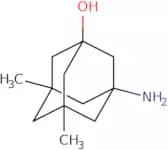
Formula:C12H14ClNO7Purity:Min. 98 Area-%Molecular weight:319.7 g/molMemantine impurity IV
CAS:Memantine impurity IV is a hydrolysis product of memantine. It appears as a white to off-white powder and has a molecular weight of 198.1 g/mol. Memantine impurity IV is an intermediate in the production of memantine and is therefore not used for any other purpose. The compound contains hydroxy groups, hydroxy, alcohols, and bridgehead groups which are efficient at hydrolyzing to form amino acids.
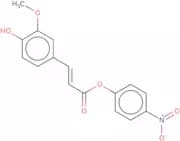
Formula:C12H21NO·HClPurity:Min. 95%Color and Shape:White PowderMolecular weight:231.76 g/mol4-Nitrophenyl trans-ferulate
CAS:Substrate for feruloyl esterases
Formula:C16H13NO6Purity:Min. 98 Area-%Color and Shape:PowderMolecular weight:315.28 g/molBronze-Gal
Bronze-Gal (Bronze-beta-D-galactopyranoside) is a chromogenic indicator for beta-galactosidase activity. The colorless product is cleaved by lactose-utilizing bacteria in liquid media or on agar plates and yields a bronze colored precipitate. Bronze-Gal can also be used as detecting agent for beta-galactosidase activity in reporter gene assays or for identification of positive transformants on agar plates when using the α-complementation approach. Read more in the Application Notes.
Molecular weight:443.57 g/molRef: 3D-B-8935
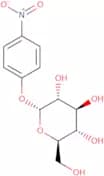
Discontinued product4-Nitrophenyl a-D-glucopyranoside
CAS:Chromogenic substrate for alpha-glucosidase
Formula:C12H15NO8Purity:Min. 98 Area-%Color and Shape:White PowderMolecular weight:301.25 g/molAldol® 467 beta-D-galactopyranoside, Biosynth Patent: EP 2427431 and US 8940909
CAS:Aldol® 467 beta-D-galactopyranoside is a chromogenic and fluorogenic enzyme substrate used for detection of beta-galactosidase activity. The colorless product is cleaved by lactose-utilizing bacteria grown in liquid or solid media, yielding yellow coloration and green fluorescence. Aldol® 467 beta-D-galactopyranoside can also be used in beta-galactosidase gene reporter assays or immunoassay applications (ELISA). Aldol® 467 beta-D-galactopyranoside can be used under aerobic and anaerobic conditions.
Formula:C29H28ClNO9Purity:Min. 95%Color and Shape:PowderMolecular weight:570 g/molNaphthol AS-BI
CAS:Chromogenic substrate for alkaline and acid phosphatase
Formula:C18H14BrNO3Purity:Min. 95%Molecular weight:372.21 g/molAldol® 518 beta-D-glucuronic acid, Biosynth Patent: EP 2427431 and US 8940909
CAS:Aldol® 518 beta-D-glucuronic acid is a chromogenic and fluorogenic enzyme substrate used for detection of beta-glucuronidase activity, yielding red colour and red fluorescence. Living cells of Escherichia coli can be reliably detected with Aldol® 518 beta-D-glucuronic acid-containing media. Aldol® 518 beta-D-glucuronic acid can be also used in GUS reporter assays, e.g. in plant biotechnology. Aldol® 518 beta-D-glucuronic acid is suitable for use in liquid and solid media, under aerobic as well as anaerobic conditions.Formula:C29H27ClN2O8Purity:Min. 95 Area-%Molecular weight:566.99 g/mol5-Bromo-4-chloro-3-indoxyl caprylate
CAS:Chromogenic substrate for esterase with C8 activity yielding a blue precipitate upon cleavage.
Formula:C16H19BrClNO2Purity:Min. 99 Area-%Molecular weight:372.70 g/molAldol® 515 nonanoate hydrochloride, Biosynth Patent: EP 2427431 and US 8940909
CAS:Aldol® 515 nonanoate hydrochloride is a chromogenic and fluorogenic enzyme substrate for detection of lipase activity. The colorless product is cleaved by C9 esterases produced by bacteria in liquid or solid media, yielding a red color and red fluorescence when Aldol® 355 fluorescence enhancer or a suitable matrix is present. Aldol® 515 nonanoate can be used under aerobic and anaerobic conditions. Well detectable color/fluorescence of bacterial colonies or liquid cultures is obtained within 24-48 h. In the presence of a purified lipase, color and fluorescence develops within minutes to few hours.
Formula:C32H36ClN2O3Purity:Min. 95%Color and Shape:PowderMolecular weight:533.1 g/mol5-Bromo-3-indoxyl choline phosphate
Please enquire for more information about 5-Bromo-3-indoxyl choline phosphate including the price, delivery time and more detailed product information at the technical inquiry form on this page
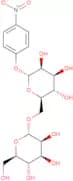
Formula:C13H18BrN2O4PMolecular weight:377.18 g/mol4-Nitrophenyl 6-O-(a-D-mannopyranosyl)-a-D-mannopyranoside
CAS:4-Nitrophenyl 6-O-(alpha-D-mannopyranosyl)-alpha-D-mannopyranoside is a chromogenic substrate for alpha-mannosidase. Upon hydrolysis, para-nitrophenol is released yielding a yellowish colour. 4-Nitrophenyl 6-O-(alpha-D-mannopyranosyl)-alpha-D-mannopyranoside is used in different applications such as the Lysosomal storage disorder diagnosis (e.g., alpha-mannosidosis)
Purity:Min. 95%Color and Shape:PowderMolecular weight:463.39 g/molRef: 3D-EN06126
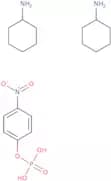
Discontinued product4-Nitrophenyl phosphate bis(cyclohexylammonium)
CAS:4-Nitrophenyl phosphate bis(cyclohexylammonium) is an excellent chromogenic substrate designed for the detection and quantification of phosphatase enzyme activities. Aided by the presence of the cyclohexylammonium cation, it undergoes enzymatic hydrolysis, yielding the colored 4-nitrophenolate ion, which can be readily observed at 405 nm. The substrate has become an essential tool for biomedical research, playing a crucial role in unearthing cellular mechanisms, function, and potential drug targets.
Formula:C18H32N3O6PPurity:97.0 To 103.0%Color and Shape:PowderMolecular weight:417.44 g/molAldol® 518 alpha-D-glucopyranoside, Biosynth Patent: EP 2427431 and US 8940909
CAS:Aldol® 518 alpha-D-glucopyranoside is a fluorogenic enzyme substrate used for detection of alpha-D-glucosidase activity. The colorless enzyme substrate is cleaved by alpha-D-glucosidase, generating red fluorescent signal and in some conditions, an orange colour in the visible spectrum can get formed, staining bacterial colonies in faint orange coloration. Aldol® 518 alpha-D-glucopyranoside can be used under aerobic and anaerobic conditions.
Formula:C29H29ClN2O7Purity:Min. 95.0 Area-%Molecular weight:553 g/molRef: 3D-A-4713_P00
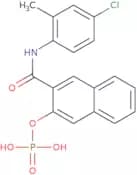
Discontinued productNaphthol AS-TR phosphate
CAS:Modified naphtol AS substrate used in histochemical and cytochemical staining
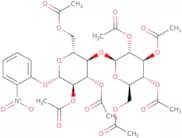
Formula:C18H15ClNO5PPurity:Min. 95%Color and Shape:Off-White PowderMolecular weight:391.74 g/mol2-Nitrophenyl b-D-cellobioside heptaacetate
CAS:2-Nitrophenyl b-D-cellobioside heptaacetate is a chromogenic enzyme substrate used to assay for cellobiohydrolase activity. The substrate undergoes enzymatic hydrolysis, releasing 2-nitrophenol which can then be detected via absorbance at 400 nm. This type of substrate is also used for the analysis of cellulose and hemicelluloses in plant materials. The heptaacetate modification enhances solubility, making it ideal for use in organic solvents, and it also protects against unwanted hydrolysis by acid or alkali. The substrate can be used in a variety of applications, including enzyme assay development, screening for inhibitors or activators, and in the study of the mode of action and substrate specificity of cellulase enzymes.Purity:Min. 95%Color and Shape:PowderMolecular weight:757.65 g/molNaphthol AS-OL
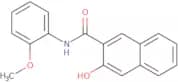
CAS:Naphthol AS-OL is a widely used chromogenic enzyme substrate that forms a colored product upon reaction with specific enzymes. It is commonly employed in histochemical and cytochemical staining techniques to visualize enzyme activity in cells and tissues. Naphthol AS-OL is particularly useful for detecting the presence of enzymes such as alkaline phosphatase, acid phosphatase, and esterases. The resulting colored product can be easily observed under a microscope, allowing researchers to study the distribution and localization of these enzymes in various biological samples.
Formula:C18H15NO3Purity:Min. 95%Color and Shape:PowderMolecular weight:293.32 g/molRef: 3D-EN71191
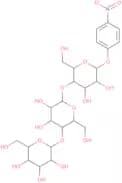
Discontinued product4-Nitrophenyl b-D-cellotrioside
CAS:4-Nitrophenyl beta-D-cellotrioside is a chromogenic substrate for cellulase. Upon hydrolysis, para-nitrophenol is released yielding a yellowish colour. 4-Nitrophenyl beta-D-cellotrioside is used in different applications such as the Biomass conversion research, paper industry applications
Formula:C24H35NO18Purity:Min. 95%Color and Shape:PowderMolecular weight:625.53 g/molRef: 3D-EN04796
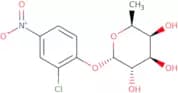
Discontinued product2-Chloro-4-nitrophenyl-alpha-L-fucopyranoside
CAS:Alternative chromogenic substrate for alpha-D-galactosidase
Formula:C12H14ClNO7Purity:Min. 98 Area-%Color and Shape:White PowderMolecular weight:319.69 g/molRef: 3D-EC05990
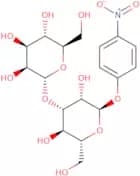
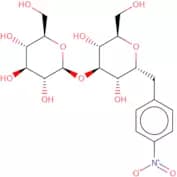
Discontinued product4-Nitrophenyl 3-O-(β-D-glucopyranosyl)-α-D-glucopyranoside
4-Nitrophenyl 3-O-(beta-D-glucopyranosyl)-alpha-D-glucopyranoside is a chromogenic substrate for alpha-glucosidase. Upon hydrolysis, para-nitrophenol is released yielding a yellowish colour. 4-Nitrophenyl 3-O-(beta-D-glucopyranosyl)-alpha-D-glucopyranoside is used in different applications such as the Gaucher disease screening, carbohydrate metabolism studies
Formula:C18H25NO13Purity:Min. 95%Molecular weight:463.39 g/molCrimson-Gal
Crimson-Gal (Crimson-beta-D-galactopyranoside) is a chromogenic indicator for beta-galactosidase activity. The colorless product is cleaved by lactose-utilizing bacteria in liquid media or on agar plates and yields a crimson colored precipitate. Crimson-Gal can also be used as detecting agent for beta-galactosidase activity in reporter gene assays or for identification of positive transformants on agar plates when using the α-complementation approach. Read more in the Application Notes.
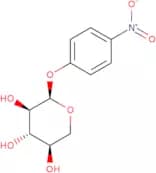
Purity:Min. 95%4-Nitrophenyl a-D-xylopyranoside
CAS:The 4-Nitrophenyl a-D-xylopyranoside is a highly sensitive and reliable chromogenic substrate tailored for the detection and analysis of alpha-D-xylosidase enzyme activity. Upon enzymatic hydrolysis, it forms 4-nitrophenol, a yellow compound with remarkable fluorescence that enables a straightforward, quantitative assay in areas including environmental science, metabolism studies, and enzyme modifier exploration.
Formula:C11H13NO7Purity:Min. 95%Color and Shape:White PowderMolecular weight:271.22 g/molRef: 3D-EN03233
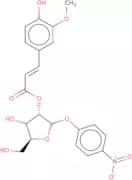
Discontinued product4-Nitrophenyl 2-O-trans-feruloyl-a-L-arabinofuranoside
CAS:4-Nitrophenyl 2-O-trans-feruloyl-alpha-L-arabinofuranoside is a chromogenic substrate for alpha-L-arabinofuranosidase. Upon hydrolysis, para-nitrophenol is released yielding a yellowish colour. 4-Nitrophenyl 2-O-trans-feruloyl-alpha-L-arabinofuranoside is used in different applications such as the Plant biomass analysis, bacterial arabinan degradation assays
Formula:C21H21NO10Purity:Min. 95%Color and Shape:PowderMolecular weight:447.39 g/molRef: 3D-EN16252
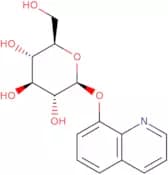
Discontinued product8-Hydroxyquinoline b-D-glucopyranoside
CAS:8-Hydroxyquinoline b-D-glucopyranoside (8-OHG-glu) is a chromogenic enzyme substrate commonly used to detect the presence of beta-glucosidase in biological samples. When hydrolyzed by beta-glucosidase, 8-OHG-glu produces a yellow-orange color, indicating the presence of the enzyme. This substrate is particularly useful for measuring beta-glucosidase activity in soil and plant samples.
Formula:C15H17NO6Purity:Min. 95%Color and Shape:PowderMolecular weight:307.3 g/molRef: 3D-EH04988
Discontinued product6-Chloro-3-indoxyl palmitate
CAS:6-Chloro-3-indoxyl palmitate is a high quality, pure chemical reagent that can be used as a substrate for enzyme activity. It is a chromogenic substrate that is used in the detection of esterase activity. 6-Chloro-3-indoxyl palmitate is also used as a fluorogenic substrate in the presence of horseradish peroxidase and hydrogen peroxide to produce chemiluminescence. 6-Chloro-3-indoxyl palmitate has been shown to be an effective bioluminescent substrate for luciferase enzymes, such as firefly luciferase and Renilla luciferase.
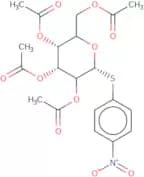
Formula:C24H36ClNO2Purity:Min. 98 Area-%Molecular weight:406.01 g/mol4-Nitrophenyl 2,3,4,6-tetra-O-acetyl-a-D-thiomannopyranoside
CAS:4-Nitrophenyl 2,3,4,6-tetra-O-acetyl-a-D-thiomannopyranoside is a pNP substrate that serves as a chromogenic substrate for enzyme assays. It has been tested for the detection of a-D-mannosidase activity in a variety of biological samples, including cell lysates, body fluids, and tissue homogenates.
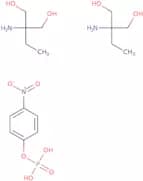
Purity:Min. 95%Molecular weight:485.47 g/mol4-Nitrophenyl phosphate mono(2-amino-2-ethyl-1,3-propanediol) salt monohydrate
CAS:Chromogenic substrate for alkaline phosphatase
Formula:C26H32N3NaO6S2Purity:Min. 95%Color and Shape:PowderMolecular weight:457.41 g/molEspresso-Gal
Espresso-Gal (Espresso-beta-D-galactopyranoside) is a chromogenic indicator for beta-galactosidase activity. The colorless product is cleaved by lactose-utilizing bacteria in liquid media or on agar plates and yields an espresso brown colored precipitate. Espresso-Gal can also be used as detecting agent for beta-galactosidase activity in reporter gene assays or for identification of positive transformants on agar plates when using the α-complementation approach. Read more in the Application Notes.
Purity:Min. 95%5-Bromo-4-chloro-3-indolyl a-L-rhamnoside
5-Bromo-4-chloro-3-indolyl a-L-rhamnoside is a chromogenic substrate used to detect the specific enzymatic activity of alpha-L-rhamnosidase. After cleavage, 5-bromo-4-chloro-indoxyl is released, resulting in a blue to blue-green color change in bacterial colonies or media. 5-Bromo-4-chloro-3-indolyl a-L-rhamnoside is used in bacterial rhamnose metabolism studies (e.g. E. coli).
Formula:C14H15BrClNO5Purity:Min. 95%Color and Shape:SolidMolecular weight:392.63 g/molRef: 3D-EB170531
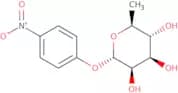
Discontinued product4-Nitrophenyl α-L-rhamnopyranoside
CAS:Chromogenic substrate for alpha-L-rhamnosidase
Formula:C12H15NO7Purity:Min. 99 Area-%Color and Shape:White Slightly Yellow PowderMolecular weight:285.25 g/mol3,4-Cyclohexenoesculetine β-D-glucopyranoside
CAS:Chromogenic substrate for beta-glucosidase
Formula:C19H22O9Purity:Min. 95%Color and Shape:PowderMolecular weight:394.37 g/mol3-Indoxyl phosphate p-toluidine Salt
CAS:Controlled Product3-Indoxyl phosphate p-toluidine salt is a secretor of blood group A. It is used in the detection of the presence of alkaline phosphatase in serum and other body fluids. This compound has been shown to be an isoform of 3-indoxyl phosphate with a molecular mass of about 4,000 daltons. It is also used as a substrate for gel electrophoresis and filtration experiments. The purified form of this compound has been shown to have an alkaline phosphatase activity that is ˜4 times greater than that found in human serum and intestinal extracts.
Formula:C8H8NO4P·C7H9NPurity:Min. 98 Area-%Color and Shape:PowderMolecular weight:320.28 g/molRef: 3D-EI56753
Discontinued productAldol® 470 phosphate, disodium salt, Biosynth Patent: EP 2427431 and US 8940909
CAS:Aldol® 470 phosphate, disodium salt is a fluorogenic substrate that is used in the detection of enzyme activity. It can be used to detect the presence of an enzyme by measuring the light emitted from the substrate after it has been converted to fluorescent product. Aldol® 470 phosphate, disodium salt is a chromogenic substrate that is used for detecting and measuring enzyme activity. The product of this reaction can be measured by absorbance or fluorescence spectroscopy, making it useful for many different types of diagnostic tests. This product can be conjugated with a variety of ligands for use in diagnostic assays and research. Aldol® 470 phosphate, disodium salt can also be used in culture media as a bioluminescent substrate for bacterial growth and metabolism studies. This product can also be used as an environmental testing reagent or as a staining agent in microscopy applications.
Formula:C23H18NNa2O7PPurity:Min. 95%Color and Shape:PowderMolecular weight:497.34 g/molAldol® 455 β-D-glucopyranoside, Biosynth Patent: EP 2427431 and US 8940909
CAS:Aldol® 455 beta-D-glucopyranoside is a chromogenic and fluorogenic enzyme substrate used for detection of beta-glucosidase activity. The colorless enzyme substrate is cleaved by beta-glucosidase producing bacteria grown in liquid or solid media, yielding a yellow color and green to orange fluorescence. Aldol® 455 beta-D-glucopyranoside can be used under aerobic and anaerobic conditions.
Formula:C27H24ClNO7Purity:Min. 92.0 Area-%Molecular weight:509.94 g/molRef: 3D-A-4689_P00
Discontinued productNaphthol AS-D
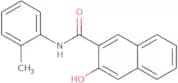
CAS:Naphthol AS-D is a diagnostic chemical for phosphatase enzymes and is used to stain cells, tissues, and body fluids for diagnosis. The chemical reacts with the amino groups of proteins in cells and produces a brown color. Naphthol AS-D is not toxic to living cells in concentrations below 5%. It stains basophilic leukemia cells as well as brain cells. This chemical can be used to diagnose cutaneous lesions, such as psoriasis or melanoma, which are difficult to diagnose by standard methods. present in these lesions and produce a brown color.
Formula:C18H15NO2Purity:Min. 95%Color and Shape:PowderMolecular weight:277.32 g/mol5-Amino-3-indoxyl-β-D-galactopyranoside
5-Amino-3-indoxyl-b-D-galactopyranoside is a chromogenic substrate for the enzyme galactosidase. 5-Amino-3-indoxyl-b-D-galactopyranoside is used in diagnostic tests to identify the presence of lactose intolerance. It can also be used to detect traces of blood in food, water, and other substances. This product has a high purity that makes it suitable for conjugation applications.
Formula:C14H18N2O6Purity:Min. 95%Molecular weight:310.31 g/mol4-Nitrophenyl decanoate
CAS:4-Nitrophenyl decanoate is a chromogenic substrate for lipase. Upon hydrolysis, para-nitrophenol is released yielding a yellowish colour. 4-Nitrophenyl decanoate is used in different applications such as the Pancreatic insufficiency diagnosis, lipid metabolism studies
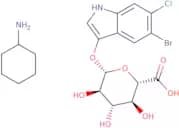
Formula:C16H23NO4Purity:Min. 97 Area-%Color and Shape:PowderMolecular weight:293.36 g/mol5-Bromo-6-chloro-3-indolyl b-D-glucuronide cyclohexylammonium salt
CAS:5-Bromo-6-chloro-3-indolyl b-D-glucuronide cyclohexylammonium salt is a magenta enzyme substrate commonly used in biochemical assays. This compound is a derivative of indole, containing bromine and chlorine atoms at positions 5 and 6, respectively. The glucuronide moiety is attached to the indolyl ring, and the cyclohexylammonium cation serves as a counterion to balance the charge. This substrate is often utilized in the detection and quantification of β-glucuronidase activity, an enzyme involved in the metabolism of glucuronides. Upon cleavage by β-glucuronidase, the substrate produces a magenta-colored product, allowing for easy visualization and measurement of enzyme activity.
Formula:C14H13BrClNO7·C6H13NPurity:Min. 98 Area-%Color and Shape:PowderMolecular weight:521.79 g/molRef: 3D-EB03300
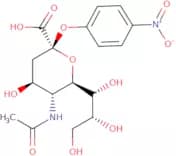
Discontinued product2-O-(4-Nitrophenyl)-a-D-N-acetylneuraminic acid
CAS:2-O-(4-Nitrophenyl)-a-D-N-acetylneuraminic acid, also known as p-nitrophenyl N-acetylneuraminic acid, is a chromogenic substrate specifically designed for the detection and quantification of neuraminidase (sialidase) activity. Upon cleavage by neuraminidase, it releases a yellow-colored product, 4-nitrophenol, which can be easily monitored spectrophotometrically at 405 nm. This substrate is widely used in various applications, including enzyme kinetics studies, inhibitor screening, and the determination of neuraminidase activity in biological samples such as viruses, bacteria, and cell lysates. It is particularly useful for studying the enzymatic properties of neuraminidases from different sources and for the development of novel antiviral and antibacterial agents targeting neuraminidase activity.
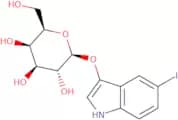
Formula:C17H22N2O11Purity:Min. 90 Area-%Color and Shape:White PowderMolecular weight:430.36 g/mol5-Iodo-3-indolyl b-D-galactopyranoside
CAS:5-Iodo-3-indolyl b-D-galactopyranoside is a chromogenic substrate used for beta-galactosidase. It is incorporated into media or detection kits for rapid and direct identification of microorganisms.
Formula:C14H16INO6Purity:Min. 98 Area-%Color and Shape:PowderMolecular weight:421.18 g/molRef: 3D-EI03217
Discontinued product5-Bromo-4-chloro-3-indoxyl-alpha-L-fucopyranoside
CAS:Chromogenic substrate for α-D-Fucosidase yielding a blue precipitate.
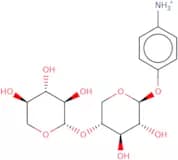
Formula:C14H15BrClNO5Purity:Min. 98.0 Area-%Molecular weight:392.64 g/mol4-Nitrophenyl β-D-xylobioside
CAS:4-Nitrophenyl beta-D-xylobioside is a chromogenic substrate for xylanase. Upon hydrolysis, para-nitrophenol is released yielding a yellowish colour. 4-Nitrophenyl beta-D-xylobioside is used in different applications such as the Xylan degradation studies, paper/pulp industry applicationsFormula:C16H21NO11Purity:Min. 95%Color and Shape:White PowderMolecular weight:403.34 g/molRef: 3D-EN15454
Discontinued product