Others
Found 6261 products of "Others"
Sort by
Purity (%)
0
100
|
0
|
50
|
90
|
95
|
100
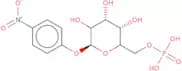
4-Nitrophenyl 2,3,4,6-tetra-O-acetyl-a-D-glucopyranoside
CAS:<p>4-Nitrophenyl 2,3,4,6-tetra-O-acetyl-a-D-glucopyranoside is a useful substrate for enzymatic assays. This high-sensitivity chromogenic pNP substrate offers enhanced selectivity and increased detection ability, allowing for a broad range of applications in the field of glycosidase research. Featuring rapid colorimetric readouts with easily detectable endpoint determination, this substrate delivers clear and accurate results every time.</p>Purity:Min. 95%Molecular weight:469.4 g/mol4-Nitrophenyl 3-O-(2,3,4,6-tetra-O-acetyl-a-D-mannopyranosyl)-2-O-benzoyl-4,6-O-benzylidene-a-D-mannopyranoside
<p>4-Nitrophenyl 3-O-(2,3,4,6-tetra-O-acetyl-a-D-mannopyranosyl)-2-O-benzoyl-4,6-O-benzylidene a -D-mannopyranoside is a synthetic substrate for glycosidases that can be used as an alternative to other substrates. It can be used in the detection of enzyme activity and in the diagnosis of diseases such as diabetes mellitus and Gaucher's disease. 4NP3ODABAB has been shown to have high quality and purity. This substrate has not been evaluated by CAS yet.</p>Purity:Min. 95%Molecular weight:823.75 g/mol2-Chloro-4-nitrophenyl 2-acetamido-2-deoxy-a-D-glucopyranoside
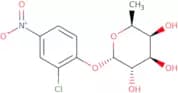
<p>L-2-Chloro-4-nitrophenyl 2-acetamido-2-deoxy-a-D-glucopyranoside is a chemiluminescent substrate for the detection of aminoglycoside antibiotics. It can be used to determine the concentration of aminoglycosides in blood, urine, and serum. The chemiluminescence reaction is dependent on the presence of oxygen. This product has been shown to have a high quality and purity with environmental testing and staining properties. L-2-Chloro-4-nitrophenyl 2-acetamido-2-deoxy--a--D--glucopyranoside has also been shown to bind ligands such as porphyrins, bilirubin, or hemin with bioluminescence or chromogenic substrates in diagnostics or culture media for food testing. L--2--Chloro--4--</p>Purity:Min. 95%4-Nitrophenyl 2-acetamido-2-deoxy-3-O-(2,3,4,6-tetra-O-acetyl-β-D-galactopyranosyl)-α-D-galactopyranoside
CAS:<p>4-Nitrophenyl 2-acetamido-2-deoxy-3-O-(2,3,4,6-tetra-O-acetyl-β-D-galactopyranosyl)-α-D-galactopyranoside is a chemiluminescent substrate that has been used in the detection of bacterial activity. It is used in the detection of bacterial activity through chemiluminescence and can be conjugated to an enzyme or protein for increased sensitivity. This product has been shown to have high purity and quality and is suitable for use in diagnostic applications.</p>Formula:C28H36N2O17Purity:Min. 95%Color and Shape:PowderMolecular weight:672.59 g/mol4-Nitrophenyl b-D-cellohexaoside
CAS:<p>4-Nitrophenyl b-D-cellohexaoside is a substrate for many enzymes and can be used to detect the presence of these enzymes in biological samples. It can also be used to detect the presence of bacteria, fungi, parasites, and viruses. 4-Nitrophenyl b-D-cellohexaoside is an excellent substrate for enzyme reactions that produce a chromogenic or fluorogenic product. This product is often conjugated with other compounds such as antibodies or antigens to form an immunoassay. 4-Nitrophenyl b-D-cellohexaoside is made from a high purity chemical by a process called nitration with sodium nitrate and sulfuric acid.</p>Purity:Min. 95%Molecular weight:1,111.95 g/molHexoprenaline
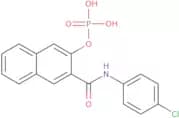
CAS:<p>Hexoprenaline is a stimulant of adrenergic beta 2 receptors used as a bronchodilator, antiasthmatic agent, and tocolytic agent.</p>Formula:C22H32N2O6Color and Shape:SolidMolecular weight:420.5Naphthol AS-CL phosphate
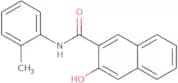
CAS:<p>Modified naphtol AS substrate used in histochemical and cytochemical staining</p>Purity:Min. 95%Molecular weight:407.74 g/mol1-Naphthyl-α-D-mannopyranoside
CAS:<p>1-Naphthyl-alpha-D-mannopyranoside is a chromogenic substrate. It is used in diagnostics and as a reagent for enzymatic analysis of alpha-mannosidase activity in culture media, food testing, and environmental testing.</p>Formula:C16H18O6Purity:Min. 95%Color and Shape:PowderMolecular weight:306.31 g/mol4-Nitrophenyl b-D-cellopentaoside
CAS:<p>Substrates for endoglucanase and beta-cellobiohydrolase activity in the study of digestive system in Zygentoma as an insect model for high cellulase activity</p>Formula:C36H55NO28Purity:Min. 95%Color and Shape:PowderMolecular weight:949.81 g/mol4-Nitrophenyl 2-azido-2-deoxy-b-D-galactopyranoside
<p>4-Nitrophenyl 2-azido-2-deoxy-beta-D-galactopyranoside is a chromogenic substrate for beta-galactosidase. Upon hydrolysis, para-nitrophenol is released yielding a yellowish colour. 4-Nitrophenyl 2-azido-2-deoxy-beta-D-galactopyranoside is used in different applications such as the Bacterial enzyme assays (e.g., E. coli detection)</p>Purity:Min. 95%Color and Shape:White To Off-White SolidMolecular weight:326.26 g/mol2,4-Dinitrophenyl)-L-lysine hydrochloride monohydrate
CAS:<p>2,4-Dinitrophenyl)-L-lysine hydrochloride monohydrate is a lysine derivative that has been modified with a 2,4-dinitrophenyl group. It could be used as an enzyme substrate to monitor enzymes that recognize and modify lysine residues, such as lysine methyltransferases and demethylases, lysine acylases and lysine oxidases.</p>Purity:Min. 95%Color and Shape:PowderMolecular weight:348.74 g/mol3-Amino-9-ethylcarbazole
CAS:<p>3-Amino-9-ethylcarbazole is a peroxidase substrate suitable for use in immunoblotting and immunohistochemical staining procedures. This substrate produces an insoluble end product that is red in color and can be observed visually.</p>Formula:C14H14N2Purity:Min. 95%Color and Shape:Beige PowderMolecular weight:210.27 g/mol4-Aminoantipyrine
CAS:<p>4-Aminoantipyrine has been used as an analgesic and anti-inflammatory agent. It can also target peroxidase enzymes to produce a red color</p>Formula:C11H13N3OColor and Shape:Off-White To Yellow SolidMolecular weight:203.24 g/mol6-Benzoyl-2-naphthylphosphate disodium salt
CAS:<p>6-Benzoyl-2-naphthylphosphate disodium salt is a chromogenic substrate used to detect and quantify alkaline phosphatase activity. After enzymatic hydrolysis, 6-benzoyl-2-naphthol is released, which can be detect or even further react with other reagents (e.g. Fast Red) to increase the intensity of the colorimetric signal. It is used in common applications such as ELISA, immunohistochemistry and Western Blotting.</p>Purity:Min. 95%Molecular weight:374.24 g/molRemazol brilliant blue R D-xylan
<p>Remazol Brilliant Blue R D-xylan is a chromogenic substrate used for the detection and quantification of xylanase enzyme activity. This substrate consists of a xylan polymer backbone covalently linked to the Remazol Brilliant Blue R dye. Upon cleavage by xylanase enzymes, the dye is released, producing a vibrant blue color that can be easily measured spectrophotometrically. This substrate is widely used in various applications, including the study of xylanase-producing microorganisms, optimization of enzyme production, and evaluation of enzyme kinetics.</p>Purity:Min. 95%Color and Shape:PowderChlorophenol red b-D-galactopyranoside
CAS:<p>Used in biological studies as a chromogenic substrate for β-galactosidase; red color.Chlorophenol red indicates changes of pH in the range of 4.8 to 6.7 by turning the solution from yellow (at pH 4.8) to violet (at pH 6.7). Converted as signalogenic moiety of an enzyme substrate, chlorophenol red beta-D-galactopyranoside has a good proven sensitivity in the detection of beta-galactosidase activity in transfected mammalian cells, when compared to ONPG (o-nitrophenyl-beta-D-galactopyranoside) (Eustice, 1991)</p>Formula:C25H22Cl2O10SPurity:Min. 95%Color and Shape:Orange Red PowderMolecular weight:585.41 g/mol4-Nitrophenyl b-globo-N-tetraoside
CAS:<p>4-Nitrophenyl beta-galactoside (pNP-Gal) is a chromogenic substrate commonly used in enzymatic assays to detect and quantify the presence of beta-galactosidase. It is hydrolyzed by the enzyme to release 4-nitrophenol, which produces a yellow color that can be measured spectrophotometrically. Similarly, 4-Nitrophenyl beta-glucoside (pNP-Glc) can be used to assay beta-glucosidase activity. 4-Nitrophenyl beta-globotrioside (pNP-Glo) is a similar compound that has been designed as a substrate for glycosidases that cleave terminal beta-galactosyl-(1->3)-N-acetylgalactosamine residues. In these assays, the release of 4-nitrophenol can be measured to determine the activity of the enzyme under study. The use of chromogenic substrates like pNP-Glo allows for the rapid and reliable detection of glycosidase activity in a variety of biological samples.</p>Purity:Min. 95%Color and Shape:PowderMolecular weight:828.72 g/mol4-Nitrophenyl a-D-maltotetraoside
CAS:<p>4-Nitrophenyl alpha-D-maltotetraoside is a chromogenic substrate used for the detection of alpha-glucosidase and alpha-amylase activity. The four glucose units in the molecule are hydrolyzed by the enzyme, releasing 4-nitrophenol and allowing for easy colorimetric measurement of enzymatic activity</p>Purity:Min. 95%Molecular weight:787.67 g/molBenzaldehyde
CAS:Controlled Product<p>Benzaldehyde</p>Formula:C7H6OColor and Shape:Colorless LiquidMolecular weight:106.041861-Bromo-3,5-dimethyladamantane
CAS:<p>Intermediate in the synthesis of memantine</p>Formula:C12H19BrPurity:Min. 95%Molecular weight:243.18 g/mol4-Nitrophenyl 2-acetamido-2-deoxy-4-O-(β-D-galactopyranosyl)-α-D-glucopyranoside
CAS:<p>4-Nitrophenyl 2-acetamido-2-deoxy-4-O-(β-D-galactopyranosyl)-α-D-glucopyranoside is a high-quality chromogenic pNP enzyme substrate specifically designed to enable effective and accurate detection of enzyme activity. By utilizing this advanced substrate, researchers and professionals can perform a range of applications, including activity assays, enzyme inhibition studies, and substrate specificity profiling. This substrate's unique properties result in exceptional sensitivity and throughput, ensuring effective results for a wide variety of enzyme assays.</p>Formula:C20H28N2O13Purity:Min. 90%Color and Shape:White PowderMolecular weight:504.44 g/mol2-Chloro-4-nitrophenyl 2-acetamido-2-deoxy-β-D-glucopyranoside
CAS:<p>2-Chloro-4-nitrophenyl 2-acetamido-2-deoxy-β-D-glucopyranoside is a chromogenic substrate used for beta-N-acetylglucosaminidase assays. Upon enzymatic hydrolysis, 2-chloro-4-nitrophenol is released, which has a yellowish color. It is used in diagnostic applications such as lysosomal storage disorder diagnosis (for example, Tay-Sachs disease) and glycosidase inhibition studies.</p>Formula:C14H17ClN2O8Purity:Min. 98 Area-%Color and Shape:White PowderMolecular weight:376.75 g/molClemastine
CAS:<p>Clemastine (Meclastin) is an antagonist of the H1 receptor and exhibits anti-inflammatory effects.</p>Formula:C21H26ClNOPurity:99.21%Color and Shape:SolidMolecular weight:343.89Naphthol AS-OL acetate
CAS:<p>Modified naphtol AS substrate used in histochemical and cytochemical staining</p>Purity:Min. 95%Molecular weight:335.35 g/molNaphthol AS sulphate potassium
CAS:<p>Modified naphtol AS substrate used in histochemical and cytochemical staining</p>Formula:C17H13NO5S•KPurity:Min. 95%Color and Shape:PowderMolecular weight:382.45 g/molFulvestrant (S enantiomer)
CAS:<p>Fulvestrant S enantiomer is the less active S enantiomer of Fulvestrant. Fulvestrant is a potent estrogen receptor antagonist with an IC50 of 9.4 nM.</p>Formula:C32H47F5O3SPurity:98%Color and Shape:SolidMolecular weight:606.77Fulvestrant (R enantiomer)
CAS:<p>Fulvestrant R enantiomer is the less active R enantiomer of Fulvestrant. Fulvestrant is a potent estrogen receptor antagonist with an IC50 of 9.4 nM.</p>Formula:C32H47F5O3SPurity:98%Color and Shape:SolidMolecular weight:606.772-Nitrobenzyl 2-deoxy-2-fluoro-L-fucopyranoside
<p>The photorelease of 2-deoxy-2-fluoro-L-fucose from 2-nitrobenzyl-2-deoxy-2-fluoro-L-fucopyranoside was performed under a 365 nm LED illumination. It has been shown in plant cells this liberated 2-deoxy-2-fluoro-L-fucose can be converted by the endogenous metabolic machinery into the corresponding nucleotide-sugar, which then efficiently inhibits Golgi-localized fucosyltransferases.</p>Formula:C13H16FNO6Purity:Min. 95%Color and Shape:PowderMolecular weight:301.27 g/mol2-O-(4-Nitrophenyl)-a-D-N-acetylneuraminic acid
CAS:<p>2-O-(4-Nitrophenyl)-a-D-N-acetylneuraminic acid, also known as p-nitrophenyl N-acetylneuraminic acid, is a chromogenic substrate specifically designed for the detection and quantification of neuraminidase (sialidase) activity. Upon cleavage by neuraminidase, it releases a yellow-colored product, 4-nitrophenol, which can be easily monitored spectrophotometrically at 405 nm. This substrate is widely used in various applications, including enzyme kinetics studies, inhibitor screening, and the determination of neuraminidase activity in biological samples such as viruses, bacteria, and cell lysates. It is particularly useful for studying the enzymatic properties of neuraminidases from different sources and for the development of novel antiviral and antibacterial agents targeting neuraminidase activity.</p>Formula:C17H22N2O11Purity:Min. 90 Area-%Color and Shape:White PowderMolecular weight:430.36 g/molMethyl 4-nitrophenyl hexylphosphonate
CAS:<p>Methyl 4-nitrophenyl hexylphosphonate is a phosphonate inhibitor of the enzyme serine esterase. It has been shown to be more potent than other irreversible inhibitors such as ethyl 4-nitrophenyl hexylphosphonate and methyl 4-nitrophenoxybutyl phosphate. This compound is an immobilized form of the methyl 4-nitrophenyl hexylphosphonate that is immobilized on an inert surface, such as silica gel, via a covalent bonding process. The immobilization of the molecule ensures that it will not leach from the surface and is stable over time. The molecular weight of this substance is 411.5 Daltons and its molecular formula is C8H15NO4P. This substance has a diameter of 0.8 nm and can be found in crystalline form with a melting point of 143 degrees Celsius at atmospheric pressure. Methyl 4-nitrophenyl</p>Formula:C13H20NO5PPurity:Min. 95%Molecular weight:301.27 g/mol4-Nitrophenyl 2-acetamido-3,6-di-O-(2-acetamido-2-deoxy-b-D-glucopyranosyl)-2-deoxy-a-D-galactopyranoside
CAS:<p>4-Nitrophenyl 2-acetamido-3,6-di-O-(2-acetamido-2-deoxy-b-D-glucopyranosyl)-2-deoxy-a-D-galactopyranoside is a fluorogenic substrate that is used in enzyme assays to detect the presence of an enzyme. The substrate reacts with the enzyme to produce a fluorescent product. 4NPAAG can be used for diagnostics, culture media, food testing and environmental testing.</p>Formula:C30H44N4O18Purity:Min. 95%Molecular weight:748.69 g/mol4-Nitrophenyl-myo-inositol-1-yl phosphate
CAS:<p>4-Nitrophenyl-myo-inositol-1-yl phosphate is a highly specific chromogenic substrate used for the detection, quantification, and characterization of phosphoinositide phosphatases. When cleaved by the target enzyme, it generates a highly absorbing 4-nitrophenyl moiety, producing a yellow color that can be measured spectrophotometrically. This versatile substrate is valuable in examining phosphoinositide phosphatase activity, enzyme kinetics, substrate specificity, and inhibition studies in various cellular processes, including signal transduction, lipid metabolism, and membrane trafficking.</p>Purity:Min. 95%Molecular weight:381.23 g/mol4-Nitrophenyl a-L-galactopyranoside
<p>Chromogenic substrate targeting alpha-D-galactosidase</p>Purity:Min. 95%Molecular weight:301.25 g/molCloprostenol
CAS:<p>Cloprostenol is a synthetic prostaglandin and PGF2α analogue used in animals to terminate pregnancy and induce corpus luteum dissolution.</p>Formula:C22H29ClO6Purity:99.81%Color and Shape:Clear Colorless To Light Yellowish LiquidMolecular weight:424.92[Pro(Ac)]1-Leuprolide (5-Oxo-N-acetyl-L-prolyl-L-histidyl-L-tryptophyl-L-seryl-L-tyrosyl-D-leucyl-L-leucyl-L-arginyl-N-ethyl-L-prolinamide)
CAS:<p>Lactams, nesoi</p>Formula:C61H86N16O13Color and Shape:Off-White PowderMolecular weight:1250.65603[Ser(Ac)]4-Leuprolide (5-Oxo-L-prolyl-L-histidyl-L-tryptophyl-N-acetyl-L-seryl-L-tyrosyl-D-leucyl-L-leucyl-L-arginyl-N-ethyl-L-prolinamide)
CAS:<p>Lactams, nesoi</p>Formula:C61H86N16O13Color and Shape:Off-White PowderMolecular weight:1250.65603[D-His]-Leuprolide (5-Oxo-L-prolyl-D-histidyl-L-tryptophyl-L-seryl-L-tyrosyl-D-leucyl-L-leucyl-L-arginyl-N-ethyl-L-prolinamide)
CAS:<p>Lactams, nesoi</p>Formula:C59H84N16O12Color and Shape:Off-White PowderMolecular weight:1208.64546[L-Leu]6-Leuprolide (5-Oxo-L-prolyl-L-histidyl-L-tryptophyl-L-seryl-L-tyrosyl-L-leucyl-L-leucyl-L-arginyl-N-ethyl-L-prolinamide)
CAS:<p>Lactams, nesoi</p>Formula:C59H84N16O12Color and Shape:Off-White PowderMolecular weight:1208.64546[D-Ser]-Leuprolide (5-Oxo-L-prolyl-L-histidyl-L-tryptophyl-D-seryl-L-tyrosyl-D-leucyl-L-leucyl-L-arginyl-N-ethyl-L-prolinamide)
CAS:<p>Lactams, nesoi</p>Formula:C59H84N16O12Color and Shape:Off-White PowderMolecular weight:1208.64546Tetrabutylammonium bis(3,6-dichloro-1,2-benzenedithiolato)nickelate
CAS:Formula:C28H40Cl4NNiS4Purity:98%Molecular weight:719.3893Benz[b]indeno[1,2-d]pyran-3,4,6a,9,10(6H)-pentol, 7,11b-dihydro-,(6aS,11bR)-
CAS:Formula:C16H14O6Purity:97%Color and Shape:SolidMolecular weight:302.27876Ref: 4Z-M-3812
Discontinued productRef: 4Z-U-0741
Discontinued productRef: 4Z-C-459008
Discontinued productRef: 4Z-C-459007
Discontinued productRef: 4Z-D-167002
Discontinued productRef: 4Z-A-8297
Discontinued productRef: 4Z-A-8287
Discontinued productRef: 4Z-P-196080
Discontinued product