Others
Found 6279 products of "Others"
Sort by
Purity (%)
0
100
|
0
|
50
|
90
|
95
|
100
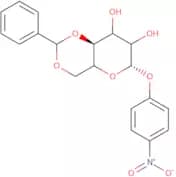
4-Nitrophenyl 4,6-O-benzylidene-b-D-glucopyranoside
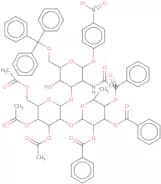
CAS:<p>4-Nitrophenyl 4,6-O-benzylidene-b-D-glucopyranoside is a fluorescent compound that is used in diagnostics and research. The compound is an enzyme substrate, a ligand for metal ions, and a chromogenic substrate. It can be used to test cultures of bacteria in culture media, as well as for food testing and environmental testing. 4-Nitrophenyl 4,6-O-benzylidene-b-D-glucopyranoside has high purity and quality due to its high fluorescence intensity. This product has been shown to be highly stable in various conditions and may be used in conjugates with other compounds.</p>Purity:Min. 95%Molecular weight:389.36 g/mol4-Nitrophenyl 2-acetamido-3-O-[2-O-(2,3,4-tri-O-benzoyl-a-L-fucopyranosyl)-3,4,6-tri-O-acetyl-D-galactopyranosyl]-2-deoxy-6-O-trityl -b-D-glucopyranoside
<p>4-nitrophenyl 2-acetamido-3-O-[2-O-(2,3,4-tri-O-benzoyl-a-L-fucopyranosyl)-3,4,6-tri-O-acetyl -D -galactopyranosyl]-2 deoxy 6 O trityl b D glucopyranoside is a chemiluminescent substrate that can be used in biochemical assays. It reacts with oxygen to produce light when it is excited by a UV or blue light source. This product has been tested for purity and quality by HPLC analysis and spectroscopy.</p>Purity:Min. 95%Molecular weight:1,331.33 g/molN-Acetyl-L-glutamine p-nitroanilide
CAS:<p>N-Acetyl-L-glutamine p-nitroanilide is a fluorogenic substrate that can be used in the diagnosis of bacterial infections. It is a ligand that can bind to enzymes involved in the production of bioluminescence, such as luciferase, and can be used for the detection of bacteria. It is also used for food testing, environmental testing, and diagnostics. N-Acetyl-L-glutamine p-nitroanilide has high purity and high quality, which makes it suitable for conjugation with other molecules.</p>Formula:C13H15N3O6Purity:Min. 95%Color and Shape:PowderMolecular weight:309.27 g/mol4-Nitrophenyl phosphate bis(tris) salt
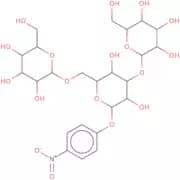
CAS:<p>Please enquire for more information about 4-Nitrophenyl phosphate bis(tris) salt including the price, delivery time and more detailed product information at the technical inquiry form on this page</p>Formula:C14H28N3O12PMolecular weight:461.36 g/mol4-Nitrophenyl 3,6-di-O-(a-D-mannopyranosyl)-b-D-mannopyranoside
<p>4-Nitrophenyl 3,6-di-O-(a-D-mannopyranosyl)-b-D-mannopyranoside is a chemiluminescent substrate that is used in the detection of enzymes. It is also used to measure the activity of beta-glucosidase, alpha-galactosidase, and alkaline phosphatase. The product has been tested for environmental sensitivity and has not shown any effects on bacterial growth. 4-Nitrophenyl 3,6-di-O-(a-D-mannopyranosyl)-b-D-mannopyranoside can be used as a high quality stain for histological sections and immunohistochemical studies. This product has been tested for staining properties with different dyes and has shown no interference with the staining process.</p>Purity:Min. 95%Molecular weight:625.53 g/mol2-Nitrophenyl 2,3,4-tri-O-acetyl-b-D-glucuronide methyl ester
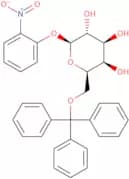
CAS:<p>2-Nitrophenyl-2,3,4-tri-O-acetyl-b-D-glucuronide methyl ester is a tri-O-acetylated glucuronide substrate commonly used in chromogenic assays to detect the activity of beta-glucuronidase. Upon hydrolysis by the enzyme, the substrate releases 2-nitrophenol, which can be spectrophotometrically. The substrate is widely used in diagnostic tests to assess bacterial and fungal infections, as well as in drug metabolism studies.</p>Purity:Min. 95%Molecular weight:455.37 g/mol2-Nitrophenyl 6-O-trityl-b-D-galactopyranoside
CAS:<p>2-Nitrophenyl 6-O-trityl-b-D-galactopyranoside is a chromogenic enzyme substrate used in assays to detect galactosidase activity. It is a derivative of galactose that can be hydrolyzed by galactosidase to release the yellow-colored 2-nitrophenyl group, which can be detected spectrophotometrically. The trityl group helps to stabilize the molecule and prevent undesired hydrolysis during storage. This substrate is commonly used in the study of carbohydrate metabolism and in the detection of galactosidase activity in microorganisms.</p>Purity:Min. 95%Molecular weight:543.56 g/mol2-Chloro-4-nitrophenyl b-D-cellobioside
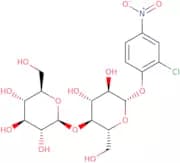
CAS:<p>2-Chloro-4-nitrophenyl b-D-cellobioside (CNPG) is a chromogenic enzyme substrate that is commonly used to detect and measure the activity of β-glucosidases. CNPG is cleaved by the enzyme into the chromogenic product, which can be detected spectrophotometrically. β-glucosidases are important enzymes in the breakdown of cellulose, and CNPG is a widely used substrate for the detection and quantification of these enzymes in various research studies.</p>Purity:Min. 95%Color and Shape:PowderMolecular weight:497.83 g/mol2,4-Dinitrophenyl b-D-cellobioside
CAS:<p>2,4-Dinitrophenyl b-D-cellobioside is a chemiluminescent substrate that is used to detect the activity of enzymes and other proteins. It can be conjugated with an antibody or other ligand for use in diagnostic purposes. 2,4-DNPBC is a pure compound with a high quality that does not contain any other impurities. Its CAS number is 157956-96-2.</p>Purity:Min. 95%5-Bromo-6-chloro-3-indolyl b-D-cellobiopyranoside
<p>5-Bromo-6-chloro-3-indolyl b-D-cellobiopyranoside is a fluorogenic substrate for the enzyme β-glucuronidase. It is used in diagnostic applications such as food testing, bacterial culture media and environmental testing. The product has CAS number: 123591-77-0.</p>Purity:Min. 95%4-Chloro-2-nitrophenyl b-D-galactopyranoside
<p>4-Chloro-2-nitrophenyl b-D-galactopyranoside is a fluorogenic substrate that is used in diagnostic testing, such as food and environmental testing. 4-Chloro-2-nitrophenyl b-D-galactopyranoside is an enzyme substrate that can be used to measure the activity of beta galactosidase. This substrate is also chromogenic, which means that it will change color when exposed to the enzyme. 4CNPGalA has been shown to be an excellent ligand for beta galactosidase and can be used in conjugation reactions with other molecules.</p>Purity:Min. 95%Molecular weight:335.69 g/mol4-Nitrophenyl 2,3,4-tri-O-acetyl-a-D-glucopyranoside
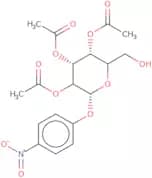
<p>4-Nitrophenyl 2,3,4-tri-O-acetyl-a-D-glucopyranoside is a high quality chemical used in the development of various diagnostic and research applications. It is also used in the production of enzymatic substrates for enzyme activity assays. 4NPTAG is a chromogenic substrate that produces chemiluminescence when it reacts with an oxidizing agent and has been shown to be very effective as a fluorogenic substrate for protein kinases. This compound has been shown to bind to ligands and can be used as a bioluminescent reporter for molecular biology applications. The CAS number for this product is 54973-14-0.</p>Purity:Min. 95%Molecular weight:427.36 g/mol5-Bromo-6-chloro-3-indoxyl nonanoate
CAS:<p>5-Bromo-6-chloro-3-indoxyl nonanoate is a chemical compound that is used in the detection of bioluminescence. It is a substrate for enzymes, such as luciferase, and can be used to measure the amount of light emitted during the reaction. The CAS number for this molecule is 682802-80-8.</p>Purity:Min. 95%Molecular weight:386.71 g/mol4-Nitrophenyl 6-O-DMT-a-D-mannopyranoside
<p>4-nitrophenyl 6-O-DMT-a-D-mannopyranoside is a fluorescent substrate for the enzyme beta-glucosidase. It reacts with an acyl group at the C2 position of the glycoside moiety, producing an aldehyde group at the C1 position and a hydroxymethylene group at the C4 position. This reaction is catalyzed by beta-glucosidase, which cleaves the glycosidic linkage in sucrose and other disaccharides. The product can be detected using luminescence methods, such as chemiluminescence or bioluminescence.<br>4-nitrophenyl 6-O-DMT-a-D-mannopyranoside is used to detect β glucosidase activity in bacteria. This substrate has been shown to be sensitive and specific for β glucosidase activity when combined with fluorescence detection technology</p>Purity:Min. 95%Molecular weight:603.62 g/mol4-Nitrophenyl 2,3,4-tri-O-acetyl-6-O-trityl-a-D-glucopyranoside
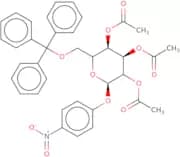
<p>4-Nitrophenyl 2,3,4-tri-O-acetyl-6-O-trityl-a-D-glucopyranoside is a substrate for chemiluminescent assays. It is a high quality chemical that can be used in environmental testing, staining, ligand binding and bioluminescence. 4NP2T6AODG is used as a chromogenic substrate or fluorogenic substrate to detect the presence of enzymes in diagnostics and food testing. This product has CAS No. 67794-14-0 and can be purchased at high purity.</p>Purity:Min. 95%Molecular weight:669.67 g/mol4-Nitrophenyl 3-O-(2,3,4,6-tetra-O-acetyl-a-D-mannopyranosyl)-2-O-benzoyl-4,6-O-benzylidene-a-D-mannopyranoside
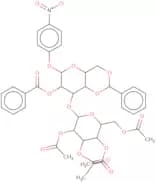
<p>4-Nitrophenyl 3-O-(2,3,4,6-tetra-O-acetyl-a-D-mannopyranosyl)-2-O-benzoyl-4,6-O-benzylidene a -D-mannopyranoside is a synthetic substrate for glycosidases that can be used as an alternative to other substrates. It can be used in the detection of enzyme activity and in the diagnosis of diseases such as diabetes mellitus and Gaucher's disease. 4NP3ODABAB has been shown to have high quality and purity. This substrate has not been evaluated by CAS yet.</p>Purity:Min. 95%Molecular weight:823.75 g/mol4-Nitrophenyl 2-acetamido-3-O-(3,4,6-tri-O-acetyl-2-deoxy-2-phthalimido-b-D-glucopyranosyl)-2-deoxy-a-D-galactopyranoside
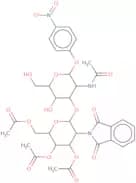
<p>4-Nitrophenyl 2-acetamido-3-O-(3,4,6-tri-O-acetyl-2-deoxy-2-phthalimido-b-D-glucopyranosyl)-2-deoxy -a -D -galactopyranoside is a Fluorogenic substrate that is used in the detection of beta glucuronidase activity. It can be used for food testing, staining, environmental testing and chromogenic substrate for diagnostic purposes. It has a CAS number of 184840–55–9 and is available in high purity and quality. 4NPPAG is an enzyme substrate that is used to measure the amount of beta glucuronidase activity in culture media by chemiluminescence or bioluminescence.</p>Purity:Min. 95%Molecular weight:759.67 g/mol5-Bromo-4-chloro-3-indolyl 2-acetamido-2-deoxy-a-D-glucopyranoside
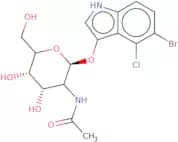
<p>5-Bromo-4-chloro-3-indolyl 2-acetamido-2-deoxy-a-D-glucopyranoside is a fluorogenic substrate that reacts with horseradish peroxidase to produce light. It is used in the detection of β-galactosidase activity in food testing, staining, and environmental testing. This product is also used as a chromogenic substrate for the determination of β-galactosidase activity in immunological assays. 5BICAPG is a conjugate that can be used as a diagnostic ligand for the detection of β -galactosidase enzyme activity. This product has been shown to react with horseradish peroxidase and produce chemiluminescence or bioluminescence when exposed to oxygen. 5BICAPG has also been found to be an excellent enzyme substrate for various enzymes including alkaline phosphatase</p>Formula:C16H18BrClN2O6Purity:Min. 95%Molecular weight:449.68 g/mol3-Indolyl-b-D-cellobioside
CAS:<p>3-Indolyl-b-D-cellobioside is a fluorogenic substrate for alkaline phosphatase. It can be used in food testing, environmental testing, and diagnostics. 3-Indolyl-b-D-cellobioside is a chromogenic substrate for beta-galactosidase. It can be used in staining and enzyme substrates. 3-Indolyl-b-D-cellobioside is also a ligand for alkaline phosphatase. It can be used in conjugates and chemiluminescence or bioluminescence reactions. 3-Indolyl -b -D -cellobioside is a high purity product with high quality standards that are suitable for use in culture media.br>br><br>3 - Indolyl - b - D - cellobioside <br>CAS No . 914912 - 14 - 4 <br>Food testing <br>St</p>Purity:Min. 95%Molecular weight:457.43 g/molAldol® 470 L-alanine ester, hydrochloride, Biosynth Patent: EP 2427431 and US 8940909
CAS:Controlled Product<p>Aldol® 470 L-alanine ester, hydrochloride is a chromogenic substrate that is used as a food testing reagent and enzyme substrate in diagnostics. It is also used to detect the presence of ligands in an environment. Aldol® 470 L-alanine ester, hydrochloride is used in chemiluminescence and bioluminescence reactions.</p>Formula:C26H25ClN2O5Purity:Min. 95.0 Area-%Molecular weight:480.95 g/mol