Aminoacids and derivatives
Amino acids are compounds with a structure based on an amino group (-NH₂) and a carboxyl group (-COOH), both attached to a central carbon atom. This structure makes them essential for the synthesis of proteins and other biomolecules. Their derivatives can have regulatory properties over metabolic processes and biological systems, with applications in nutrition, health, and regenerative medicine.
At CymitQuimica, we offer a wide range of amino acids and their derivatives, ideal for research and the formulation of bioactive products.
Found 12278 products of "Aminoacids and derivatives"
Sort by
Purity (%)
0
100
|
0
|
50
|
90
|
95
|
100
7',8'-DIMETHOXY-5'H-SPIRO[PIPERIDINE-4,4'-PYRROLO[1,2-A]QUINOXALINE
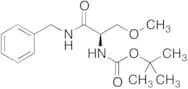
CAS:Purity:98.0%Molecular weight:299.3739929199219(R)-tert-Butyl 1-(Benzylamino)-3-methoxy-1-oxopropan-2-ylcarbamate
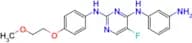
CAS:Controlled ProductFormula:C16H24N2O4Color and Shape:NeatMolecular weight:308.373N4-(3-Aminophenyl)-5-fluoro-N2-(4-(2-methoxyethoxy)phenyl)pyrimidine-2,4-diamine
CAS:Purity:98.0%Molecular weight:369.3999938964844L-Glutamine-2,3,3,4,4-d5
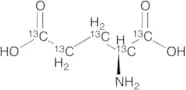
CAS:Controlled Product<p>Applications L-Glutamine-2,3,3,4,4-d5 is the isotope labelled analog of L-Glutamine (G597000); an essential amino acid that is a crucial component of culture media that serves as a major energy source for cells in culture. L-Glutamine is very stable as a dry powder and as a frozen solution. In liquid media or stock solutions, however, L-glutamine degrades relatively rapidly. Optimal cell performance usually requires supplementation of the media with L-glutamine prior to use.<br>References Rivett, A., et al.: J. Biol. Chem., 260, 300 (1985); Watford, M., et al.: Metabolism, 49, 141 (2000); Wilmore, D., et al.: J. Nutr., 131, 2543S (2001)<br></p>Formula:C5D5H5N2O3Color and Shape:NeatMolecular weight:151.18L-Glutamic Acid Magnesium Salt Hydrobromide
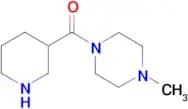
CAS:Controlled Product<p>Stability Hygroscopic<br>Applications L-Glutamic Acid, Magnesium Salt Hydrobromide is an metabolite of L-Glutamic acid, a non-essential amino acid. Its salt form (glutamate) is an important neurotransmitter that plays a key role in long-term potentiation and is important for learning and memory. It is also a key molecule in cellular metabolism. L-Glutamic Acid, Magnesium Salt Hydrobromide has also been investigated for sedative properties as a tranquilizer.<br>References McEntee, W., et al.: Psychopharmacology, 111, 391 (1993), Manev, H., et al.: Mol. Pharmacol., 36, 106 (1989), Hamanaka, T., et al.: Toho. Igakkai. Zasshi., 20, 663 (1973);<br></p>Formula:C5H8BrMgNO4Color and Shape:NeatMolecular weight:250.33(4-Methyl-piperazin-1-yl)-piperidin-3-yl-methanone
CAS:Formula:C11H21N3OColor and Shape:SolidMolecular weight:211.309(S)-tert-Butyl 2-(dimethylcarbamoyl)piperazine-1-carboxylate hydrochloride
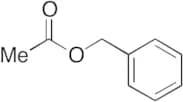
CAS:Purity:95%Molecular weight:293.7900085449219Benzyl Acetate
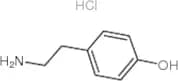
CAS:Controlled Product<p>Applications Benzyl Acetate, is found naturally in many flowers, It has pleasant sweet aroma reminiscent of jasmine, and thus is used widely in perfumery industry, and also as a flavouring agent. It is also used as a solvent.<br>References Schiestl, F. P., et al.: J. Chem. Ecology, 29 (2004); Qian-qian, M., et al.: Jingxi Huagong, 30, 442 (2013);<br></p>Formula:C9H10O2Color and Shape:NeatMolecular weight:150.17Tyramine Hydrochloride
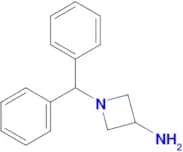
CAS:<p>Applications Tyramine Hydrochloride is a naturally occurring monoamine derived from tyrosine. Neurotransmitter.<br>References Roy, K., et al.: J. Mol. Liq., 230, 104-112 (2017); Roy, M. N., et al.: Chem. Phys. Lett., 655-656, 43-50 (2016)<br></p>Formula:C8H11NO·ClHColor and Shape:Off-WhiteMolecular weight:173.641-BENZHYDRYL-3-AMINOAZETIDINE
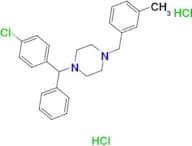
CAS:Purity:97.0%Color and Shape:Solid, Crystalline PowderMolecular weight:238.333999633789061-((4-Chlorophenyl)(phenyl)methyl)-4-(3-methylbenzyl)piperazine dihydrochloride
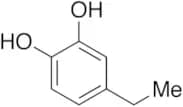
CAS:Purity:95.0%Color and Shape:SolidMolecular weight:463.86999511718754-Ethylcatechol
CAS:Controlled Product<p>Stability Hygroscopic<br>Applications 4-Ethylcatechol is one of the main phenolic off-flavour markers in French ciders.<br>References Alonso-Salces, R., et al.: Anal. Bioanal. Chem., 379, 464 (2004), Xu, Y., et al.: J. Agr. Food Chemi., 55, 3051 (2007),<br></p>Formula:C8H10O2Color and Shape:Off-WhiteMolecular weight:138.16Tranexamic Acid
CAS:Controlled Product<p>Stability Hygroscopic<br>Applications Antifibrinolytic agent; blocks lysine binding sites of plasminogen. Hemostatic.<br>References Andersson, et al.: Scand. J. Haematol. 2, 230 (1965), Melander, B., et al.: Acta Pharmacol. Toxicol., 22, 340 (1965), Bonnar, J., et al.: Br. Med. J., 313, 579 (1996), Dunn, C.J., et al.: Drugs, 57, 1005 (1999),<br></p>Formula:C8H15NO2Color and Shape:White To Off-WhiteMolecular weight:157.21Ref: 10-F801706
1gTo inquire5gTo inquire10mgTo inquire25mgTo inquire50mgTo inquire100mgTo inquire250mgTo inquire6-CHLORO-9-[3-(2-CHLOROETHYLAMINO)PROPYLAMINO]-2-METHOXYACRIDINE DIHYDROCHLORIDE
CAS:Purity:95%Molecular weight:451.209991455078Spermine
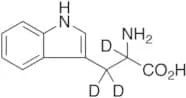
CAS:<p>Stability Hygroscopic<br>Applications Biogenic polyamine formed from spermidine and occurring in almost all tissues. Essential for both normal and neoplastic tissue growth. Involved in the modulation of calcium-dependent immune processes.<br> Not a dangerous good if item is equal to or less than 1g/ml and there is less than 100g/ml in the package<br>References Israel, et al.: J. Med. Chem., 7, 710 (1964), Janne, J., et al.: Biochim. Biophys. Acta, 473, 241 (1978). Theoharides, T.C., et al.: Life Sci., 27, 703 (1980), Horn, Y., et al.: Cancer Res., 42, 3248 (1982),<br></p>Formula:C10H26N4Color and Shape:White Solid With A Low Melting PointMolecular weight:202.34D,L-Tryptophan-d3
CAS:Controlled Product<p>Applications A labelled, essential amino acid.<br>References Liu, F., et al.: Bioorg. Med. Chem., 18, 4167 (2010), Kumar, R., et al.: Eur. J. Med. Chem., 45, 2265 (2010), Cai, W., et al.: Bioorg. Med. Chem., 18, 1899 (2010),<br></p>Formula:C112H3H9N2O2Color and Shape:NeatMolecular weight:207.24Nε-(1-Carboxymethyl)-L-lysine
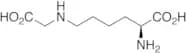
CAS:<p>Applications CEL and CML are two stable, nonenzymatic chemical modifications of protein lysine residues resulting from glycation and oxidation reactions.<br>References Fu, M.X., et al.: J. Biol. Chem., 271, 9982 (1996), Ahmed M.U., et al.: Biochem.J., 324, 565 (1997), Schleicher, E.D., et al.: J. Clin. Invest., 99, 457 (1997), Shibayama, R., et al.: Diabetes, 48, 1842 (1999),<br></p>Formula:C8H16N2O4Color and Shape:NeatMolecular weight:204.226-Aminocaproic Acid Dimer
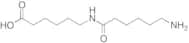
CAS:<p>Applications 6-Aminocaproic Acid Dimer is a reactant with citric acid in the formation of 3-hydroxy-3,4-dicarboxy-butanamide-N-hexanoic acid.<br>References Schou-Pedersen, A. V., et al.: J. Pharm. Biomed. Anal., 107, 333-340 (2015)<br></p>Formula:C12H24N2O3Color and Shape:White To Off-WhiteMolecular weight:244.33Carbidopa Methyl Ester
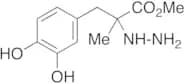
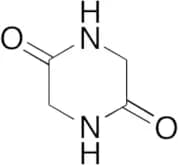
CAS:Controlled ProductFormula:C11H16N2O4Color and Shape:NeatMolecular weight:240.256Glycine Anhydride(2,5-Piperazinedione)
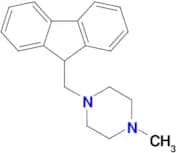
CAS:<p>Applications 2,5-Piperazinedione, can be used as an intermediate in the preparation of various pharmaceutical and biologically active compounds. It can be used in the synthesis of dipeptide isosteres by cross-metathesis.<br>References Enholm, J.E. et al.: Tetrahedron, 68, 6920 (2012);<br></p>Formula:C4H6N2O2Color and Shape:WhiteMolecular weight:114.101-((9H-Fluoren-9-yl)methyl)-4-methylpiperazine
CAS:Purity:98%Color and Shape:SolidMolecular weight:278.398986816406(5R,7R)-5-Methyl-4-(piperazin-1-yl)-6,7-dihydro-5H-cyclopenta[d]pyrimidin-7-ol dihydrochloride
CAS:Purity:98%Molecular weight:307.2200012207031Oleoyl-L-carnitine
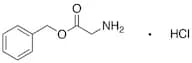
CAS:Controlled Product<p>Stability Hygroscopic<br>Applications Oleoyl-L-carnitine is a long-chain fatty ester of carnitine which is accumulated and released into the circulation, in fatty-acid oxidation defects. Pattern of Oleoyl-L-carnitine can be diagnostic for a number of ß-oxidation defects.<br>References Adams, S., et al.: J. Nutrition, 139, 1073 (2009); Ventura, F., et al.: Clinica Chimica Acta, 281, 1 (1999); Pourfarzam, M., et al.: Clinical Chem,, 40, 2267 (1994); Schaefer, J., et al.: Pediatric Res., 37, 354 (1995)<br></p>Formula:C25H47NO4Color and Shape:NeatMolecular weight:425.64Glycine Benzyl Ester Hydrochloride
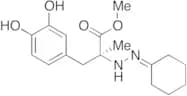
CAS:Controlled Product<p>Applications Potent crosslinking inhibitors.<br>References Sloan, J., et al.: J. Biol. Chem., 274, 23740 (1999).<br></p>Formula:C9H11NO2·ClHColor and Shape:Off-WhiteMolecular weight:201.65(S)-Carbidopa Methyl Ester N-Cyclohexylidene
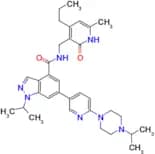
CAS:Controlled Product<p>Applications (S)-Carbidopa Methyl Ester N-cyclohexylideneis an impurity of Carbidopa (C175915), a prodrug inhibitor of aromatic amino acid decarboxylase.<br>References Sletzinger, M., et al.: J. Med. Chem., 6, 101 (1963)<br></p>Formula:C17H24N2O4Color and Shape:NeatMolecular weight:320.381-Isopropyl-6-(6-(4-isopropylpiperazin-1-yl)pyridin-3-yl)-N-((6-methyl-2-oxo-4-propyl-1,2-dihydropyridin-3-yl)methyl)-1H-indazole-4-carboxamide
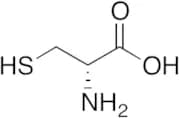
CAS:Purity:98%Color and Shape:SolidMolecular weight:569.754028320313D-Cysteine
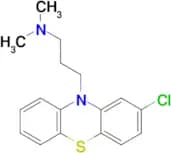
CAS:Controlled Product<p>Applications D-Cysteine is a strong inhibitor of Escherichia coli growth and also functions to provide inorganic sulfates for the sulfation of xenobiotics. D-Cysteine is a non-physiological isomer of L-Cysteine (C995000), and is not involved in protein or glutathione synthesis.<br>References Glazenburg, E., et al.: Biochem. Pharm., 33, 625 (1984); Klassen, C. & Boles, J.: FASEB J., 11, 404 (1997); Soutourina, J., et al.: J. Biol. Chem., 276, 40864 (2001);<br></p>Formula:C3H7NO2SColor and Shape:NeatMolecular weight:121.163-(2-Chloro-10H-phenothiazin-10-yl)-N,N-dimethylpropan-1-amine
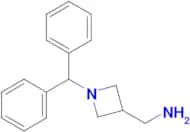
CAS:Purity:95.0%Color and Shape:SolidMolecular weight:318.85998535156253-Aminomethyl-1-benzhydrylazetidine
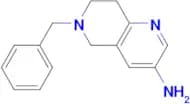
CAS:Purity:95.0%Color and Shape:Liquid, No data available.Molecular weight:252.360992431640623-Amino-6-benzyl-5,6,7,8-tetrahydro-1,6-naphthyridine
CAS:Purity:95.0%Color and Shape:SolidMolecular weight:239.32200622558594Pazopanib, Hydrochloride Salt
CAS:Purity:99.0%Color and Shape:SolidMolecular weight:473.98001098632815-Hydroxy L-Tryptophan-d4 (Major)
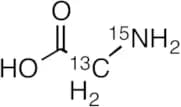
CAS:Controlled Product<p>Applications A labelled metabolite of Tryptophan.<br> Not a dangerous good if item is equal to or less than 1g/ml and there is less than 100g/ml in the package<br>References Gartside, S., et al.: Eur. J. Pharmacol., 179, 103 (1990), Gijsman, H., et al.: J. Clin. Psychopharmacol., 22, 183 (2002), Schruers, K., et al.: Psychiatry Res., 113, 237 (2002),<br></p>Formula:C11H8D4N2O3Color and Shape:Beige To GreyMolecular weight:224.25Glycine-15N,d2
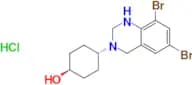
CAS:Controlled Product<p>Applications Glycine-15N,d2, is the labeled analogue of Glycine (G615990), a non-essential amino acid for human development. Glycine is an inhibitory neurotransmitter in spinal cord, allosteric regulator of NMDA receptors.<br>References Scott, D. et al.: J. Neurosci., 21, 3063 (2001); Laube, B. et al.: Neuropharmacology, 47, 994 (2004); Papadakis, M. et al.: J. Biol. Chem., 279, 14703 (2004); Chen, P. et al.: Mol. Pharmacol., 67, 1470 (2005); Wolosker, H. et al.: Mol. Neurobiol., 36, 152 (2007);<br></p>Formula:C2D2H315NO2Color and Shape:NeatMolecular weight:78.072Trans-4-(6,8-dibromo-1,2-dihydroquinazolin-3(4H)-yl)cyclohexanol hydrochloride
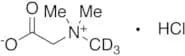
CAS:Purity:95.0%Molecular weight:423.955265108Betaine-d3 Hydrochloride
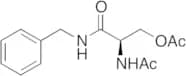
CAS:Controlled Product<p>Applications Betaine-d3 Hydrochloride is a useful gastric acidifier.<br>References Wilcken, D.E., et al.: N. Engl. J. Med., 309, 448 (1983),<br></p>Formula:C52H3H9NO2·ClColor and Shape:White To Off-WhiteMolecular weight:156.63O-Acetyl Lacosamide
CAS:Controlled Product<p>Stability Hygroscopic<br>Applications O-Acetyl Lacosamide is an impurity of Lacosamide (L098500) which is a potent anticonvulsant.<br>References Lees, G., et al.: Brain Res., 612, 190 (1993), Kuo, C., et al.: Mol. Pharmacol., 51, 1077 (1997), Barton, M., et al.: Epilepsy Res., 47, 217 (2001), Beyreuther, B., et al.: Eur. J. Pharmacol., 539, 64 (2006), Beyreuther, B., et al.: CNS Drug Rev., 13, 21 (2007),<br></p>Formula:C14H18N2O4Color and Shape:NeatMolecular weight:278.3037
![7',8'-DIMETHOXY-5'H-SPIRO[PIPERIDINE-4,4'-PYRROLO[1,2-A]QUINOXALINE](/_next/image/?url=https%3A%2Fstatic.cymitquimica.com%2Fproducts%2F10%2Fthumb-webp%2FF534992.webp&w=3840&q=75)







![6-CHLORO-9-[3-(2-CHLOROETHYLAMINO)PROPYLAMINO]-2-METHOXYACRIDINE DIHYDROCHLORIDE](/_next/image/?url=https%3A%2Fstatic.cymitquimica.com%2Fproducts%2F10%2Fthumb-webp%2FF863350.webp&w=3840&q=75)

![(5R,7R)-5-Methyl-4-(piperazin-1-yl)-6,7-dihydro-5H-cyclopenta[d]pyrimidin-7-ol dihydrochloride](/_next/image/?url=https%3A%2Fstatic.cymitquimica.com%2Fproducts%2F10%2Fthumb-webp%2FF623897.webp&w=3840&q=75)
![(R)-5-METHYL-4,7-DIAZASPIRO[2.5]OCTANE 2HCL](/_next/image/?url=https%3A%2Fstatic.cymitquimica.com%2Fproducts%2F10%2Fthumb-webp%2FF331581.webp&w=3840&q=75)


acetic acid](/_next/image/?url=https%3A%2Fstatic.cymitquimica.com%2Fproducts%2F10%2Fthumb-webp%2FF300210.webp&w=3840&q=75)