Carbohydrates and glycoconjugates
Carbohydrates are organic compounds composed of carbon, hydrogen, and oxygen, with a basic structure formed by monosaccharides. These can combine to form disaccharides, oligosaccharides, or polysaccharides, depending on the number of monomeric units. Carbohydrates play a fundamental role in energy storage, cell structure, and cellular communication. Their derivatives are used in pharmaceutical products, such as sweeteners and excipients.
At CymitQuimica, we offer a wide range of carbohydrates and their derivatives for research and industrial applications.
Found 5010 products of "Carbohydrates and glycoconjugates"
Sort by
Purity (%)
0
100
|
0
|
50
|
90
|
95
|
100
Lactose-PAA-biotin
<p>Lactose-PAA-biotin is a biotin linked to lactose by a polyacrylamide linker</p>Purity:Min. 95%Color and Shape:PowderChondroitin disaccharide di-6S
CAS:<p>Chondroitin disaccharide di-6S (CDD6S) is a synthetic, fluorinated oligosaccharide that is used for glycosylation and modification of proteins, polysaccharides, and other biomolecules. It has been shown to be effective in inhibiting the growth of cancer cells by targeting the sugar moiety on cell surface receptors. CDD6S has been modified with methyl groups at various positions on the sugar chain to increase its activity against certain cancers.</p>Formula:C14H21NO15SPurity:Min. 95%Molecular weight:475.38 g/molGlobotriose-sp-biotin
<p>Globotriose-sp-biotin is a custom synthesis that contains a fluorinated, methylated, and modified monosaccharide. It is a synthetic oligosaccharide with glycosylation at the reducing end. Globotriose-sp-biotin can be used in the modification of polysaccharides and complex carbohydrates to improve their bioactivity. This product has a CAS number of 127798-73-5 and is listed as an Oligosaccharide under Glycosylations in the Carbohydrate section.</p>Purity:Min. 95%Color and Shape:PowderMonofucosyllacto-N-hexaose II
CAS:<p>Monofucosyllacto-N-hexaose II is a tetraol that is used as a reagent in the synthesis of enantioenriched and synthetically tetrasaccharidic products. Monofucosyllacto-N-hexaose II can be obtained by the reaction of Grignard reagents with glucose or by stereoselective reduction of an alpha, beta unsaturated ketone. The presence of the glucose residue in Monofucosyllacto-N-hexaose II makes it an acceptor for esterification reactions. This compound has chiral centers due to its two stereogenic centers at C2 and C3, which are both beta positions on the glucose residue. Monofucosyllacto-N-hexaose II also has a free hydroxyl group at C5 that can be esterified to produce chiral esters.</p>Formula:C46H78N2O35Purity:Min. 95%Molecular weight:1,219.1 g/molSafflor Yellow A
CAS:<p>Safflor Yellow A is a natural drug that has been shown to have hypoglycemic effects. It is a potent inhibitor of glucose-6-phosphatase and glucose-6-phosphate dehydrogenase, which are enzymes involved in the conversion of glucose to glycogen. Safflor Yellow A also inhibits neuronal death, as it blocks the enzyme activities that lead to neuronal cell death. This drug has also shown antitumor activity, as it induces apoptosis in tumor cells. Safflor Yellow A also has antihyperlipidemic effects and can be used for the treatment of coronary heart disease. Low doses of this drug have been shown to reduce systolic pressure in rats and improve blood coagulation. The mechanism of action for this drug is not yet known but may involve toll-like receptor 4 signaling pathways or polymerase chain reaction (PCR).</p>Formula:C27H30O15Purity:Min. 95%Color and Shape:PowderMolecular weight:594.52 g/molLacto-N-neodifucohexaose
<p>Neutral difucosylated hexasasaccharide naturally present in human breast milk</p>Formula:C38H65NO29Purity:Min. 75%Color and Shape:PowderMolecular weight:999.93 g/mol(5aS,10aS)-Tetrahydrodipyrrolo[1,2-a:1',2'-d]pyrazine-3,5,8,10(2H,5aH)-tetraone
CAS:<p>The objective of this project is to design a microcontroller-based system that can monitor and diagnose the level of damage in a composite material. The system will consist of an array of sensors, actuators, and microcontrollers that are connected by a wireless network. The sensors will measure the levels of damage at each point within the composite material. The actuators will provide feedback to the sensors, adjusting their frequency and amplitude based on the level of damage detected. Microcontrollers will be responsible for analyzing data from the sensors and diagnosing any faults in the system. A miniaturized dry skin patch could be used as an alternative to traditional wet skin tests for monitoring skin health.</p>Formula:C10H10N2O4Purity:Min. 95%Molecular weight:222.2 g/molHeparin derived dp6 saccharide ammonium salt
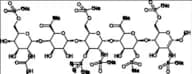
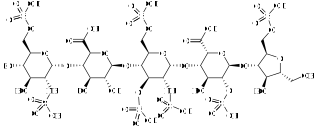
<p>Heparin derived dp6 saccharide ammonium salt is a glycosylation product of heparin. It is a synthetic glycosaminoglycan consisting of alternating units of N-acetylglucosamine and glucuronic acid. This compound is highly water soluble and has been shown to be stable at pH 3-7 for up to 6 hours. The compound has also been subjected to a number of modifications, including methylation, click modification, fluorination, saccharide modification, sugar modification, and oligosaccharide synthesis. The structural formula of this compound can be found in the Chemical Abstracts Service (CAS) number: 234764-56-2 with a molecular weight of 735.81 g/mol. Custom synthesis is available on request.</p>Purity:Approx.75%Color and Shape:PowderMolecular weight:~1800 (Average)Difucosyl-para-lacto-N-hexaose II
CAS:<p>Difucosyl-para-lacto-N-hexaose II is a blood group oligosaccharide</p>Formula:C52H88N2O39Purity:Min. 95%Color and Shape:White Off-White PowderMolecular weight:1,365.25 g/molHeparin derived disaccharide sodium salt
CAS:<p>Heparin derived disaccharide sodium salt is a salt form of heparin. It is a heterogenous mixture of low molecular weight compounds that are composed of sugar residues and sulfation. Heparin derived disaccharide sodium salt has been used for the treatment of thrombocytopenic purpura, thrombotic thrombocytopenic purpura, and other bleeding disorders. This drug also has been used to prevent blood coagulation in patients undergoing surgery.</p>Formula:C12H15NO19S3·Na4Purity:Min. 95%Color and Shape:PowderMolecular weight:665.4 g/molGlobotriaosylsphingosine
CAS:<p>Globotriaosylsphingosine is dramatically increased in plasma of classically affected male Fabry patients and plasma and tissues of Fabry mice. Globotriaosylsphingosine was shown to be an inhibitor of α-galactosidase A activity. Furthermore, exposure of smooth muscle cells, but not fibroblasts, to globotriaosylsphingosine at concentrations observed in plasma of patients promotes proliferation. It was suggested that measurement of circulating globotriaosylsphingosine would be useful to monitor Fabry disease and may contribute to a better understanding of the disorder.</p>Formula:C36H67NO17Purity:Min. 95%Color and Shape:PowderMolecular weight:785.91 g/molTetragalacturonic acid
CAS:<p>Tetragalacturonic acid (α-1,4 galacturonotetraose) is derived from pectin or pectic acid by enzymatic or partial acid hydrolysis (Combo, 2012). It is used inâ¯galacturonic acidâ¯metabolism research as a substrate to identify, differentiate, and characterize endo- and exopolygalacturonase(s), and gluconase(s) (Jayani, 2005). The addition of very short fragments of homogalacturonan, tri-galacturonate, and tetra-galacturonate oligosaccharides restores development in dark-grown, de-etiolated seedling mutants, suggesting that they are unable to generate de-methylesterified pectin fragments. A model of spatiotemporally separated photoreceptive and signal-responsive cell types has been proposed, that contains overlapping subsets of the regulatory network of light-dependent seedling development (Sinclair, 2017).</p>Formula:C24H34O25Purity:(%) Min. 95%Color and Shape:White PowderMolecular weight:722.51 g/mol2-Acetamido-3-O-(2-acetamido-2-deoxy-b-D-glucopyranosyl)-2-deoxy-D-galactopyranose
CAS:<p>2-Acetamido-3-O-(2-acetamido-2-deoxy-b-D-glucopyranosyl)-2-deoxy-D-galactopyranose is a methylated, saccharide, Polysaccharide. It is a custom synthesis of a carbohydrate sugar. It is fluorinated to increase its bioavailability. 2 Acetamido 3 O 2 acetamido 2 deoxy b D glucopyranosyl 2 deoxy D galactopyranose has CAS No. 95673 98 6 and the molecular weight is 524.87 g/mol. It has a purity of >99% and comes in powder form.</p>Formula:C16H28N2O11Purity:Min. 95%Color and Shape:White PowderMolecular weight:424.4 g/mol3'-b-Sialyl-N-acetyllactosamine
CAS:<p>3'-b-Sialyl-N-acetyllactosamine is an oligosaccharide that is synthesized from L-arabinose and 3'-phosphoadenosine 5'-phosphosulfate. It has a high degree of purity and is custom synthesized to order. The CAS number for this product is 210418-18-1.</p>Formula:C25H42N2O19Purity:Min. 95%Color and Shape:White PowderMolecular weight:674.6 g/molTrehalose 6-octanoate
CAS:<p>Trehalose 6-octanoate is a modified form of trehalose that has been synthesized and fluorinated. It is a monosaccharide, which means it is one of the simplest forms of sugar. Trehalose 6-octanoate is an oligosaccharide, which means it is a sugar molecule made up of several smaller sugar molecules. This sugar can be modified to include methyl groups, making it a polysaccharide. Polysaccharides are complex carbohydrates that can often be found in plants or animals. Trehalose 6-octanoate is used in the modification of proteins and lipids for the production of pharmaceuticals and other products.</p>Formula:C20H36O12Purity:Min. 95%Molecular weight:468.49 g/molLacto-N-neofucopentaose
<p>Neutral pentasasaccharide naturally present in human breast milk</p>Formula:C32H55NO25Purity:Min. 90 Area-%Color and Shape:PowderMolecular weight:853.77 g/molGT3-Oligosaccharide
<p>GT3 oligosaccharide (free acid) is a disaccharide (Galβ1,4Glc) with three sialic acid residues (NeuAc) linked α2,8/α2,8/α2,3 to the galactose residue (Ledeen, 2009). The GT3 ganglioside is the carbohydrate moiety in the GT3 ganglioside, which is implicated in type 1 diabetes. GT3 ganglioside is expressed on pancreatic cells and is the target antigen of anti-GM3-antibodies, which contribute to the autoimmune destruction of pancreatic beta cells (Misasi, 1997). GT3 ganglioside is also abundant in lung tissues and the nervous system.</p>Formula:C45H70N3O35Na3Purity:Min. 90%Color and Shape:PowderMolecular weight:1,282.01 g/molZopolrestat
CAS:<p>Zopolrestat (CP 73850) is a potent inhibitor of aldose reductase (IC50 = 3.1 nM).</p>Formula:C19H12F3N3O3SPurity:99.74%Color and Shape:SolidMolecular weight:419.38COR659
CAS:<p>COR659: suppresses alcohol/chocolate intake in rats; enhances GABAB receptor, blocks CB1 receptor.</p>Formula:C16H16ClNO3SPurity:99.75%Color and Shape:SolidMolecular weight:337.82Miglustat hydrochloride
CAS:<p>Miglustat hydrochloride (N-Butyldeoxynojirimycin hydrochloride) is an inhibitor of glucosylceramide synthase and can be used for studies about Type I Gaucher</p>Formula:C10H22ClNO4Purity:99.85%Color and Shape:SolidMolecular weight:255.74