Flavonoids and Polyphenols
Flavonoids are phenolic compounds that contain a structure of 15 carbon atoms, consisting of two aromatic rings linked by a three-carbon bridge. Polyphenols are a broader class of organic compounds containing multiple phenolic groups. Both groups have potent antioxidant properties, allowing them to protect cells from damage caused by free radicals. Flavonoids are commonly found in fruits, vegetables, and tea and are associated with improved cardiovascular health and the prevention of chronic diseases. Polyphenols also have applications in cancer prevention and brain health promotion.
At CymitQuimica, we offer high-quality flavonoids and polyphenols for research in chemistry, pharmacology, and biomedicine.
Found 17012 products of "Flavonoids and Polyphenols"
Sort by
Purity (%)
0
100
|
0
|
50
|
90
|
95
|
100
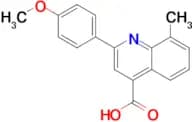
2-(4-methoxyphenyl)-8-methylquinoline-4-carboxylic acid
CAS:Purity:95.0%Molecular weight:293.3219909667969Linarine
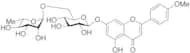
CAS:Controlled Product<p>Impurity Diosmin EP Impurity E<br>Stability Hygroscopic<br>Applications Linarine (Diosmin EP Impurity E) is a naturally occurring flavone glycoside that was identified to possess potential sedative and anticonvulsant properties.<br>References Nugroho, A., et al.: Arch. Pharma. Res., 36, 51 (2013); Jung, H.A., et al.: Arch. Pharma. Res., 35, 1021 (2012); Shen, H.J., et al.: J. Med. Plants. Res., 5, 6555 (2011);<br></p>Formula:C28H32O14Color and Shape:White To Light BeigeMolecular weight:592.545Imperatorin
CAS:Controlled Product<p>Applications Imperatorin (cas# 482-44-0) is a compound useful in organic synthesis.<br></p>Formula:C16H14O4Color and Shape:White To Light BeigeMolecular weight:270.288-ethyl-4-(3-methoxybenzoyl)-1-oxa-4,8-diazaspiro[4.5]decane-3-carboxylic acid
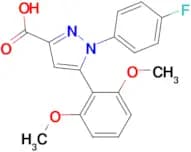
CAS:Purity:95.0%Molecular weight:348.398986816406255-(2,6-DIMETHOXYPHENYL)-1-(4-FLUOROPHENYL)-1H-PYRAZOLE-3-CARBOXYLIC ACID
Purity:90.0%Molecular weight:342.32598876953125Lobetyolin
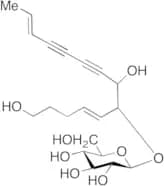
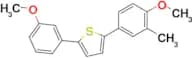
CAS:Controlled Product<p>Applications Lobetyolin is a natural phenolic glycoside found in herbal remedies used in Chinese and Korean medicine. Potential treatment for diabetic complications.<br>References Jang, D. et al.: Arch. Pharm. Res., 33, 875 (2010); Koike, Y. et al.: J. Nat. Med., 64, 245 (2010);<br></p>Formula:C20H28O8Color and Shape:NeatMolecular weight:396.432-(4-Methoxy-3-methylphenyl)-5-(3-methoxyphenyl)thiophene
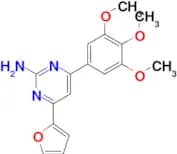
CAS:Purity:95.0%Molecular weight:310.41000366210944-(furan-2-yl)-6-(3,4,5-trimethoxyphenyl)pyrimidin-2-amine
CAS:Purity:95.0%Molecular weight:327.33999633789062-methoxy-N-methyl-4-{9-methyl-3,9-diazaspiro[5.5]undecan-3-yl}aniline
CAS:Purity:97.0%Molecular weight:303.45001220703125Methyl 4′-hydroxy-[1,1′-biphenyl]-3-carboxylate
CAS:Formula:C14H12O3Purity:95.0%Color and Shape:SolidMolecular weight:228.247Ferulic Acid-d3
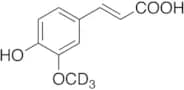
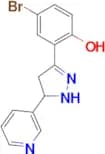
CAS:Controlled Product<p>Applications Labelled Ferulic acid (4-hydroxy-3-methoxycinnamic acid or, in IUPAC nomenclature, 3-(4-hydroxy-3-methoxy-phenyl)prop-2-enoic acid) which is a highly abundant phenolic phytochemical which is present in plant cell walls. It may have significant health benefits through its antioxidant and anti-cancer activity, and may also serve as a precursor in the manufacturing of useful aromatic compounds. Used as an antioxidant.<br>References Smart, M.G., et al.: Aust. J. Plant Physiol., 6, 485 (1979), Chen, C., et al.: J. Food Lipids, 2, 35,1995, Benzie, I., et al.: Anal. Biochem. 239, 70 (1996), Nardini, M., et al.: Food Chem., 79, 119 (2002), Lee, J., et al.: J. Agric. Food Chem., 52, 2647 (2004),<br></p>Formula:C10D3H7O4Color and Shape:Light Beige SolidMolecular weight:197.24-bromo-2-(5-pyridin-3-yl-4,5-dihydro-1H-pyrazol-3-yl)phenol
CAS:Purity:95.0%Molecular weight:318.17401123046875Curcumin
CAS:<p>Applications A natural phenolic compound. Potent anti-tumor agent having anti-inflammatory and antioxidant properties. Induces apoptosis in cancer cells and inhibits phorbol ester-induced protein kinase C (PKC) activity. Reported to inhibit production of inflammatory cytokines by peripheral blood monocytes and alveolar macrophages. Potent inhibitor of EGFR tyrosine kinase and IκB kinase. Inhibits inducible nitric oxide synthase (iNOS), cycloxygenase and lipoxygenase. Easily penetrates into the cytoplasm of cells, accumulating in membranous structures such as plasma membrane, endoplasmic reticulum and nuclear envelope.Curcumin is currently being examined as a possible therapeutic for the treatment of Alzheimers disease. Neuroprotective. Dyes and metabolites.<br>References Srinivasan, et al.: J. Pharm. Pharmacol., 5, 448 (1953), Tu, B., et al.: J .Cell Biol., 164, 341 (2004), Xu, G., et al.: Biochemistry, 44, 9817 (2005), Johnson, J., et al.: Cancer Lett., 255, 170 (2007), Chem. and Eng. News 90(31), 44 (2012)<br></p>Formula:C21H20O6Color and Shape:OrangeMolecular weight:368.38N-[(1S,2S)-2-Amino-1,2-bis(4-methoxyphenyl)ethyl]-4-methylbenzenesulfonamide
CAS:Purity:97%Molecular weight:426.52999877929694-Chloro-1-(4-methoxybenzyl)-1H-imidazo[4,5-c]pyridine-2(3H)-thione
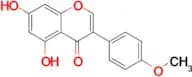
CAS:Purity:95+%Molecular weight:305.77999877929695,7-DIHYDROX -4'-METHOXYISOFLAVONE
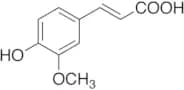
CAS:Purity:95.0%Color and Shape:SolidMolecular weight:284.2669982910156Ferulic Acid
CAS:Controlled Product<p>Applications Widely distributed in small amounts in plants. Used as an antioxidant and food preservative.<br>References Smart, M.G., et al.: Aust. J. Plant Physiol., 6, 485 (1979), Chen, C., et al.: J. Food Lipids, 2, 35,1995, Benzie, I., et al.: Anal. Biochem. 239, 70 (1996), Nardini, M., et al.: Food Chem., 79, 119 (2002), Lee, J., et al.: J. Agric. Food Chem., 52, 2647 (2004),<br></p>Formula:C10H10O4Color and Shape:NeatMolecular weight:194.18



![8-ethyl-4-(3-methoxybenzoyl)-1-oxa-4,8-diazaspiro[4.5]decane-3-carboxylic acid](/_next/image/?url=https%3A%2Fstatic.cymitquimica.com%2Fproducts%2F10%2Fthumb-webp%2FF525693.webp&w=3840&q=75)
![2-methoxy-N-methyl-4-{9-methyl-3,9-diazaspiro[5.5]undecan-3-yl}aniline](/_next/image/?url=https%3A%2Fstatic.cymitquimica.com%2Fproducts%2F10%2Fthumb-webp%2FF519114.webp&w=3840&q=75)
![Methyl 4′-hydroxy-[1,1′-biphenyl]-3-carboxylate](/_next/image/?url=https%3A%2Fstatic.cymitquimica.com%2Fproducts%2F10%2Fthumb-webp%2FF236153.webp&w=3840&q=75)

![N-[(1S,2S)-2-Amino-1,2-bis(4-methoxyphenyl)ethyl]-4-methylbenzenesulfonamide](/_next/image/?url=https%3A%2Fstatic.cymitquimica.com%2Fproducts%2F10%2Fthumb-webp%2FF621125.webp&w=3840&q=75)
![4-Chloro-1-(4-methoxybenzyl)-1H-imidazo[4,5-c]pyridine-2(3H)-thione](/_next/image/?url=https%3A%2Fstatic.cymitquimica.com%2Fproducts%2F10%2Fthumb-webp%2FF633481.webp&w=3840&q=75)