Flavonoids and Polyphenols
Flavonoids are phenolic compounds that contain a structure of 15 carbon atoms, consisting of two aromatic rings linked by a three-carbon bridge. Polyphenols are a broader class of organic compounds containing multiple phenolic groups. Both groups have potent antioxidant properties, allowing them to protect cells from damage caused by free radicals. Flavonoids are commonly found in fruits, vegetables, and tea and are associated with improved cardiovascular health and the prevention of chronic diseases. Polyphenols also have applications in cancer prevention and brain health promotion.
At CymitQuimica, we offer high-quality flavonoids and polyphenols for research in chemistry, pharmacology, and biomedicine.
Found 17015 products of "Flavonoids and Polyphenols"
Sort by
Purity (%)
0
100
|
0
|
50
|
90
|
95
|
100
6-Iodo Diosmin
CAS:<p>Impurity Diosmin EP Impurity D<br>Applications 6-Iodo Diosmin (Diosmin EP Impurity D) is a Diosmin (D485200) impurity.<br></p>Formula:C28H31IO15Color and Shape:Light YellowMolecular weight:734.44Urolithin C
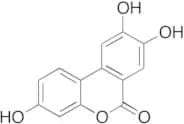
CAS:<p>Stability Hygroscopic<br>Applications Urolithin C is used in biological studies to evaluate the metabolite antioxidant activity.<br>References Ishimoto, H., et. al.: Bioorg. Med. Chem. Lett., 21, 5901 (2011);<br></p>Formula:C13H8O5Color and Shape:NeatMolecular weight:244.2Hyperoside
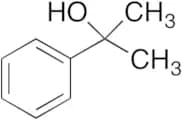
CAS:Controlled ProductFormula:C21H20O12Color and Shape:Light Yellow To YellowMolecular weight:464.382-Phenyl-2-propanol
CAS:<p>Applications 2-Phenyl-2-propanol is an important raw material and intermediate used in organic synthesis, pharmaceuticals, agrochemicals and dyestuff.<br>References Kostjuk, S.V., et al.: Eur. Polym. J., 43, 968-979 (2007); Liu, X., et al.: J. Mol. Catal. A: Chem., 252, 176-180 (2006);<br></p>Formula:C9H12OColor and Shape:Light Yellow To ColourlessMolecular weight:136.19Hydroxy Tyrosol-d4
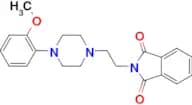
CAS:Controlled Product<p>Stability Light Sensitive<br>Applications Labelled Tyrosol (T947800) metabolite.<br>References Perez-Trujillo, M., et al.: J. Agric. Food Chem., 58, 9129 (2010), Gregus, P., et al.: J. Pharm. Biomed. Anal., 53, 674 (2010), Garcia-Villalba, R., et al.: Anal. Bioanal. Chem., 398, 463 (2010),<br></p>Formula:C8D4H6O3Color and Shape:NeatMolecular weight:158.1882-(2-(4-(2-METHOXYPHENYL)PIPERAZIN-1-YL)ETHYL)ISOINDOLINE-1,3-DIONE
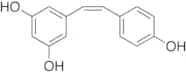
CAS:Purity:95.0%Molecular weight:365.4330139160156cis-Resveratrol
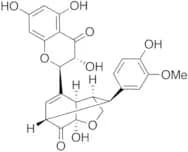
CAS:<p>Stability Light Sensitive<br>Applications Minor constituent of wine, correlated with serum lipid reduction and inhibition of platelet aggregation. Resveratrol is a specific inhibitor of COX-1, and it also inhibits the hydroperoxidase activity of COX-1. It has been shown to inhibit events associated with tumor initiation, promotion and progression.<br>References Powell, R.G., et al.: Phytochemistry, 35, 335 (1994), Jeandet, P., et al.: J. Phytopathol., 143, 135 (1995), Mattivi, F., et al.: J. Agric. Food Chem., 43, 1820 (1995),<br></p>Formula:C14H12O3Color and Shape:NeatMolecular weight:228.24Silydianin
CAS:Controlled Product<p>Applications Silydianin is an active constituent of Silybium marianum and is known the exhibit anti-inflammatory activity which regulates caspase-3 activation which affects cell membranes and acts as a free radical scavenger.<br>References Zlelinska-Przyyjemska, M., et al.: Phytother. Res., 20, 115 (2006); Milan, M., et al.L Anal. Chimica. Acta., 486, 125 (2003); Liu, Y.Z., et al.: Chin. Herb. Med., 4, 237 (2012);<br></p>Formula:C25H22O10Color and Shape:Off-WhiteMolecular weight:482.44Chlorophyllin Copper Trisodium Salt (Technical Grade)
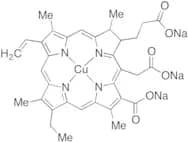
CAS:<p>Applications Chlorophyllin Copper Trisodium Salt, is a water soluble derivative of Chlorophyll (C379880), which has shown to have has been shown to have both anticarcinogenic and antigenotoxic properties.<br>References Grossi, M., et al.: Toxicology Lett., et al.: 214, 235 (2012); Prasad, K., et al.: Curr. Res. Chem., 3, 98 (2011);<br></p>Formula:C34H31CuN4O6·3NaColor and Shape:NeatMolecular weight:724.15Isoferulic Acid 3-O-β-D-Glucuronide
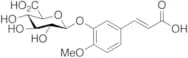
CAS:Controlled Product<p>Applications Isoferulic Acid 3-O-β-D-Glucuronide is the glucuronide conjugate of Isoferulic Acid (H946180). Isoferulic Acid 3-O-β-D-Glucuronide is one of the circulating metabolites in human plasma after coffee consumption.<br>References Fumeaux, R. et al.: Org. Biomol. Chem., 8, 5199 (2010); Redeuil, K. et al.: J. Chrom. A, 1218, 4678 (2011);<br></p>Formula:C16H18O10Color and Shape:NeatMolecular weight:370.313-(Cyclopropylmethoxy)-N-(3,5-dichloropyridin-4-yl)-4-hydroxybenzamide
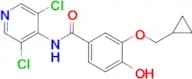
CAS:Purity:95.0%Molecular weight:353.200012207031253-O-(E)-Feruloylquinic Acid
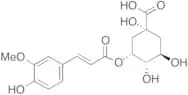
CAS:<p>Applications 5-O-(E)-Feruloylquinic Acid is a phenolic acid with potential antioxidant and antifungal activities. Secondary metabolite in the coffee brewing process.<br>References Matei, M. et al.: J. Agri. Food Chem., 60, 12105 (2012); Dokli, I. et al.: Tetrahedron Asymm., 24, 785 (2013);<br></p>Formula:C17H20O9Color and Shape:NeatMolecular weight:368.34Isovitexin
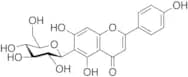
CAS:Controlled Product<p>Applications Isovitexin is known as a flavones, a class of flavonoids. Isovitexin have been studied for their antiradical activities in the process of metabolisms. Isovitexin have also been studied for beneficial effcts against atherosclerosis, osteoporosis and certain cancers.<br>References Cermak, R., et al.: Expert. Opin. Drug. Metab. Toxicol., 4, 17 (2008); Ma, X., et al.: J. Agri. Food. Chem., 60, 10844 (2012); Li, H., et al.: Food. Chem., 135, 2942, (2012);<br></p>Formula:C21H20O10Color and Shape:Light Yellow To YellowMolecular weight:432.38[6]-Shogaol (>90%)
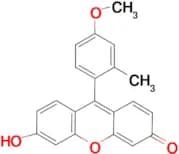
CAS:Controlled Product<p>Applications [6]-Shogaol is an aromatic constituent of ginger and the chain-dehydroxylated analog of [6]-Gingerol. [6]-Shogaol has activity very similar to [6]-Gingerol and produced an inhibition of spontaneous motor activity, antipyretic and analgesic effects, and prolonged hexobarbital-induced sleeping time. [6]-Shogaol also has potent antitussive activity and affected the cortical EEG.<br>References Suekawa, M. et al.: J. Pharm-Dyn., 7, 836 (1984); Yoshikawa, M. et al.: Chem. Pharmac. Bull., 40, 2239 (1992);<br></p>Formula:C17H24O3Purity:>90%Color and Shape:NeatMolecular weight:276.376-HYDROXY-9-(4-METHOXY-2-METHYLPHENYL)-3H-XANTHEN-3-ONE
CAS:Purity:95.0%Molecular weight:332.3550109863281Curcumin
CAS:<p>Applications A natural phenolic compound. Potent anti-tumor agent having anti-inflammatory and antioxidant properties. Induces apoptosis in cancer cells and inhibits phorbol ester-induced protein kinase C (PKC) activity. Reported to inhibit production of inflammatory cytokines by peripheral blood monocytes and alveolar macrophages. Potent inhibitor of EGFR tyrosine kinase and IκB kinase. Inhibits inducible nitric oxide synthase (iNOS), cycloxygenase and lipoxygenase. Easily penetrates into the cytoplasm of cells, accumulating in membranous structures such as plasma membrane, endoplasmic reticulum and nuclear envelope.Curcumin is currently being examined as a possible therapeutic for the treatment of Alzheimers disease. Neuroprotective. Dyes and metabolites.<br>References Srinivasan, et al.: J. Pharm. Pharmacol., 5, 448 (1953), Tu, B., et al.: J .Cell Biol., 164, 341 (2004), Xu, G., et al.: Biochemistry, 44, 9817 (2005), Johnson, J., et al.: Cancer Lett., 255, 170 (2007), Chem. and Eng. News 90(31), 44 (2012)<br></p>Formula:C21H20O6Color and Shape:OrangeMolecular weight:368.38Gallic Acid
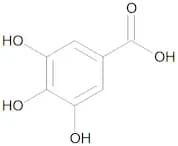
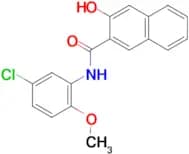
CAS:Controlled Product<p>Applications Gallic Acid exhibits a number of cellular effects including apoptosis and inhibits the growth of calf pulmonary arterial endothelial cell (CPAEC);Also, it is a polyphenol widely found in numerous fruits and vegetables that has been reported to exert anticancer effects, including apoptosis, against cancer cell lines.<br>References Park, W. H.: Mol. Med. Rep., 16, 7805-7812 (2017); Yang, C., et al.: RSC Adv., 8, 12449-12458 (2018)<br></p>Formula:C7H6O5Color and Shape:White To Light BrownMolecular weight:170.12N-(5-Chloro-2-methoxyphenyl)-3-hydroxynaphthalene-2-carboxamide
CAS:Purity:95.0%Color and Shape:SolidMolecular weight:327.760009765625Chloroxylenol
CAS:<p>Applications Chloroxylenol is an antiseptic and germicide. Chloroxylenol is used for mildew prevention. Chloroxylenol is also an antibacterial; antiseptic (topical and urinary).<br>References Heberer, T., et al.: Toxicol. Lett., 131, 5 (2002), Nikolaou, A., et al.: Anal. Bioanal. Chem., 387, 1225 (2007), Focazio, M., et al.: Sci. Total Environ., 402, 201 (2008), Miege, C., et al.: Environ. Pollut., 157, 1721 (2009),<br></p>Formula:C8H9ClOColor and Shape:NeatMolecular weight:156.61





![[6]-Shogaol (>90%)](/_next/image/?url=https%3A%2Fstatic.cymitquimica.com%2Fproducts%2FTR%2Fthumb-webp%2FS357800.webp&w=3840&q=75)