Flavonoids and Polyphenols
Flavonoids are phenolic compounds that contain a structure of 15 carbon atoms, consisting of two aromatic rings linked by a three-carbon bridge. Polyphenols are a broader class of organic compounds containing multiple phenolic groups. Both groups have potent antioxidant properties, allowing them to protect cells from damage caused by free radicals. Flavonoids are commonly found in fruits, vegetables, and tea and are associated with improved cardiovascular health and the prevention of chronic diseases. Polyphenols also have applications in cancer prevention and brain health promotion.
At CymitQuimica, we offer high-quality flavonoids and polyphenols for research in chemistry, pharmacology, and biomedicine.
Found 16999 products of "Flavonoids and Polyphenols"
Sort by
Purity (%)
0
100
|
0
|
50
|
90
|
95
|
100
Curcumin
CAS:<p>Applications A natural phenolic compound. Potent anti-tumor agent having anti-inflammatory and antioxidant properties. Induces apoptosis in cancer cells and inhibits phorbol ester-induced protein kinase C (PKC) activity. Reported to inhibit production of inflammatory cytokines by peripheral blood monocytes and alveolar macrophages. Potent inhibitor of EGFR tyrosine kinase and IκB kinase. Inhibits inducible nitric oxide synthase (iNOS), cycloxygenase and lipoxygenase. Easily penetrates into the cytoplasm of cells, accumulating in membranous structures such as plasma membrane, endoplasmic reticulum and nuclear envelope.Curcumin is currently being examined as a possible therapeutic for the treatment of Alzheimers disease. Neuroprotective. Dyes and metabolites.<br>References Srinivasan, et al.: J. Pharm. Pharmacol., 5, 448 (1953), Tu, B., et al.: J .Cell Biol., 164, 341 (2004), Xu, G., et al.: Biochemistry, 44, 9817 (2005), Johnson, J., et al.: Cancer Lett., 255, 170 (2007), Chem. and Eng. News 90(31), 44 (2012)<br></p>Formula:C21H20O6Color and Shape:OrangeMolecular weight:368.38Gallic Acid
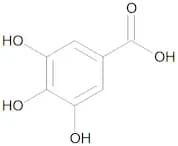
CAS:Controlled Product<p>Applications Gallic Acid exhibits a number of cellular effects including apoptosis and inhibits the growth of calf pulmonary arterial endothelial cell (CPAEC);Also, it is a polyphenol widely found in numerous fruits and vegetables that has been reported to exert anticancer effects, including apoptosis, against cancer cell lines.<br>References Park, W. H.: Mol. Med. Rep., 16, 7805-7812 (2017); Yang, C., et al.: RSC Adv., 8, 12449-12458 (2018)<br></p>Formula:C7H6O5Color and Shape:White To Light BrownMolecular weight:170.12(+)-Pinoresinol (>80% ee)
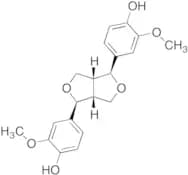
CAS:<p>Applications (+)-Pinoresinol is a lignan found in olive oil and in other plants. This phenolic compound was reported to have antioxidant and anticancer potential.<br>References Owen, R., et al.: Eur. J. Cancer, 36, 1235 (2000); Owen, R., et al.: Food Chem. Toxicol., 38, 647 (2000);<br></p>Formula:C20H22O6Color and Shape:NeatMolecular weight:358.38(E,E)-Bisdemethoxycurcumin
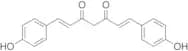
CAS:Controlled Product<p>Stability Light Sensitive<br>Applications Bisdemethoxycurcumin is one of the three major forms of curcuminoids found in the rhizomes of turmeric. Bisdemethoxycurcumin displays antioxidant, anti-inflammatory as well as chemotherapeutic activity. Bisdemethoxycurcumin acts as an inhibitor of human pancreatic α-amylase, a target for type-2 diabetes .<br>References Ponnusamy, S. et al.: Food Chem., 135, 2638 (2012); Hung, C.-M. et al.: J. Agric. Food. Chem., 60, 8427 (2012); Jayaprakasha, G.K. et al.: Food Chem., 98, 720 (2006);<br></p>Formula:C19H16O4Color and Shape:Orange To Dark OrangeMolecular weight:308.33Mixture of p-Digallic Acid and m-Digallic Acid
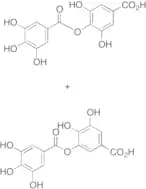
CAS:Controlled Product<p>Stability Hygroscopic<br>Applications Digallic Acid is an intermolecular ester of Gallic acid (G188900), a phenolic acid with antioxidant activity. Gallic acid was found to protect human cells against oxidative damage and showed cytotoxicity against cancer cells. Gallic Acid and its esters also show antiviral and antifungal activities.<br>References Yen, G. et al.: Food Chem., 79, 307 (2002); Chen, C. et al.: Mol. Nutrit. Food Res., 51, 962 (2007); Kratz, J. et al.: Mem. Inst. Oswaldo Cruz, 103, 437 (2008); Osborne, L. et al.: Infect. Immun., 33, 769 (1981)<br></p>Formula:MixtureVisitourWebsiteColor and Shape:NeatMolecular weight:Mixture - Visit our Website(E)-Neochlorogenic Acid
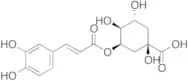
CAS:Controlled Product<p>Applications (E)-Neochlorogenic Acid is an antioxidant compound used in the treatment of oxidative stress and related afflictions.<br>References Wang, J. et al.: Molecules, 19, 21226 (2014); Jimenez-Zamora, A. et al.: LWT-Food Sci. Tech., 61, 12 (2015);<br></p>Formula:C16H18O9Color and Shape:Off-WhiteMolecular weight:354.31Dihydro Ferulic Acid Methyl Ester
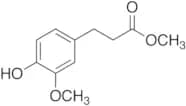
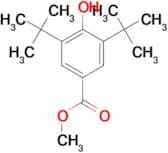
CAS:Controlled Product<p>Applications A protected caffeine metabolite with high antioxidant activity. It is a very sensitive biomarker for the consumption of relatively small amount of coffee.<br>References Buchanan, C., et al.: J. Sci. Food Agric., 71, 459 (1996), Andreasen, M., et al.: J. Agric. Food Chem., 49, 5679 (2001), Poquet, L., et al.: Drug Metab. Dispos., 36, 190 (2008),<br></p>Formula:C11H14O4Color and Shape:NeatMolecular weight:210.23Phloretin
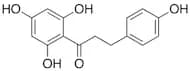
CAS:Controlled Product<p>Applications The aglucon of Phlorizin. A glucose transport inhibitor. Also inhibits protein kinase C and has been shown to inhibit the entry of five enveloped viruses into human fibroblasts.<br>References Constantinescu, S.N., et al.: FEBS Lett., 292, 31 (1991), Mann, J., et al.: Appl. Physiol., 71, 410 (1991), Benga, G., et al.: Eur. J. Cell Biol., 59, 219 (1992), Kitanaka, J., et al.: J. Neurochem., 60, 704 (1993), Wang, X., et al.: Biochem. J., 290, 249 (1993)<br></p>Formula:C15H14O5Color and Shape:Off White SolidMolecular weight:274.27[6]-Shogaol (>90%)
CAS:Controlled Product<p>Applications [6]-Shogaol is an aromatic constituent of ginger and the chain-dehydroxylated analog of [6]-Gingerol. [6]-Shogaol has activity very similar to [6]-Gingerol and produced an inhibition of spontaneous motor activity, antipyretic and analgesic effects, and prolonged hexobarbital-induced sleeping time. [6]-Shogaol also has potent antitussive activity and affected the cortical EEG.<br>References Suekawa, M. et al.: J. Pharm-Dyn., 7, 836 (1984); Yoshikawa, M. et al.: Chem. Pharmac. Bull., 40, 2239 (1992);<br></p>Formula:C17H24O3Purity:>90%Color and Shape:NeatMolecular weight:276.373-O-(E)-Feruloylquinic Acid
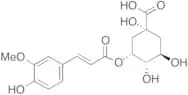
CAS:<p>Applications 5-O-(E)-Feruloylquinic Acid is a phenolic acid with potential antioxidant and antifungal activities. Secondary metabolite in the coffee brewing process.<br>References Matei, M. et al.: J. Agri. Food Chem., 60, 12105 (2012); Dokli, I. et al.: Tetrahedron Asymm., 24, 785 (2013);<br></p>Formula:C17H20O9Color and Shape:NeatMolecular weight:368.342-(3-Methoxyphenyl)malondialdehyde
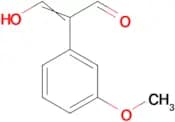
CAS:Formula:C10H10O3Purity:95.0%Color and Shape:SolidMolecular weight:178.187(-)-Riboflavin
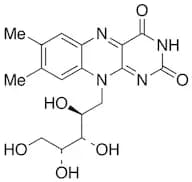
CAS:Controlled Product<p>Stability Hygroscopic<br>Applications (-)-Riboflavin is a nutritional factor found in milk, eggs, malted barley, liver, kidney, heart, leafy vegetables. Richest natural source is yeast. Minute amounts present in all plant and animal cells. Vitamin (enzyme cofactor).<br>References Unna, K., et al.: J. Pharmacol. Exp. Ther., 76, 75 (1942), Rivlin, et al.: N. Engl. J. Med., 283, 463 (1970), Al-Shammary, F.J., et al.: Anal. Profiles Drug Subs., 19, 429 (1990),<br></p>Formula:C17H20N4O6Color and Shape:NeatMolecular weight:376.36Dihydrogenistein
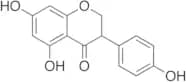
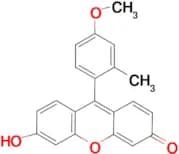
CAS:Controlled Product<p>Stability Hygroscopic<br>Applications Dihydrogenistein is a derivative of Genistein (G350000), a compound that exhibits specific inhibitory activity against tyrosine kinases,including autophosphorylation of epidermal growth factor receptor kinase.<br>References McLaughlin, J.M., et al.: Cancer. Prevent. Res., 5, 496 (2012); Magiera, S., et al.: J. Pharma. Biomed. Anal., 56, 93 (2011);<br></p>Formula:C15H12O5Color and Shape:BeigeMolecular weight:272.256-HYDROXY-9-(4-METHOXY-2-METHYLPHENYL)-3H-XANTHEN-3-ONE
CAS:Purity:95.0%Molecular weight:332.3550109863281



![[6]-Shogaol (>90%)](/_next/image/?url=https%3A%2Fstatic.cymitquimica.com%2Fproducts%2FTR%2Fthumb-webp%2FS357800.webp&w=3840&q=75)