Quinones and Derivatives
Quinones are aromatic compounds containing a benzene ring system with two carbonyl groups in specific positions, forming a cyclohexene structure with oxygen. They are derived from compounds such as anthraquinone and 1,4-benzoquinone, which play important biological roles, including electron transfer in metabolic processes. Quinone derivatives, such as hydroquinones and antirheumatic agents, have applications in the pharmaceutical industry due to their antioxidant, antimicrobial, and anticancer properties. Additionally, quinones are used in the production of dyes and cosmetic products.
At CymitQuimica, we offer quinones and their derivatives for applications in organic chemistry, pharmaceuticals, and the cosmetic industry.
Found 24239 products of "Quinones and Derivatives"
Sort by
Purity (%)
0
100
|
0
|
50
|
90
|
95
|
100
N,N-Bis-desethyl, N-Methyl Entacapone
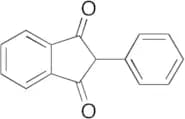
CAS:Controlled ProductFormula:C11H9N3O5Color and Shape:AmberMolecular weight:263.21Phenindione
CAS:Controlled Product<p>Applications Phenindione is a proton pump inhibitor and traditional nonsteroidal anti-inflammatory drug used for acute interstitial nephritis and acute kidney injury.<br> Not a dangerous good if item is equal to or less than 1g/ml and there is less than 100g/ml in the package<br>References Leonard, C.E., et al.: Pharmacoepidemiol. Drug. Safety., 21, 1155 (2012); Moda, T.L., et al.: Bioorg. Med. Chem. Lett., 22, 2889 (2012); Dhareshwar, S.S., et al.: J. Pharma. Sci., 99, 2711 (2010);<br></p>Formula:C15H10O2Color and Shape:NeatMolecular weight:222.24OR-486
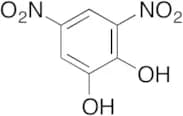
CAS:Controlled Product<p>Applications OR 486 is an anti-inflammatory agent used in the treatment of rheumatoid arthritis and osteoarthritis. Entacapone (E588500) impurity.<br>References Jenei-Lanzl, Z. et al.: Annal Rheum. Dis., 74, 444 (2015); Karlsson, M., et al.: J. Pharm. Biomed. Anal., 10, 593 (1992), Nissinen, E., et al.: Arch. Pharmacol., 346, 262 (1992), Wikberg, T., et al.: Eur. J. Drug Metab. Pharmacokinet., 18, 359 (1993),<br></p>Formula:C6H4N2O6Color and Shape:NeatMolecular weight:200.112-Naphthoic Acid
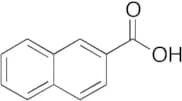
CAS:Controlled Product<p>Applications 2-Naphthalenecarboxylic Acid has been studied for its structure-activity relationship for allosteric NMDA receptor inhibitors for potential development of NMDA receptor modulator agents for a variety of neuropsychiatric and neurological conditions.<br>References Costa, B.M., et al.: Neuropharmacol., 62, 1730 (2012);<br></p>Formula:C11H8O2Color and Shape:NeatMolecular weight:172.187-Hydroxy Warfarin β-D-Glucuronide Disodium Salt
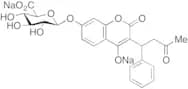
CAS:Controlled Product<p>Applications A glucuronide of monohydroxylated Warfarin metabolite, 7-Hydroxy Warfarin (H996130).<br>References Zielinska, A., et al.: J. Pharmacol. Exp. Ther., 324, 139 (2008);<br></p>Formula:C25H22Na2O11Color and Shape:NeatMolecular weight:544.422-Chloro-1,4-naphthoquinone
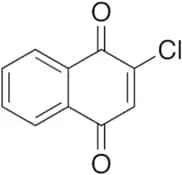
CAS:Controlled Product<p>Stability Moisture Sensitive<br>Applications A substituted naphthoquinones as insecticides and acaricides.<br>References Bhuyan, B., et al.: Cancer., Res., 37, 1057 (1977), Buffinton, G., et al.: Biochem. J., 257, 561 (1989), Hakura, A., et al.: Chem. Res. Toxicol., 7, 559 (1994), , Shimizu, N., et al.: Biol. Pharm. Bull., 20, 168 (1997),<br></p>Formula:C10H5ClO2Color and Shape:NeatMolecular weight:192.6010-Hydroxy Camptothecin-d5
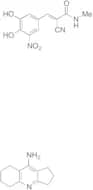
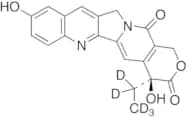
CAS:Controlled Product<p>Applications A labelled Camptothecin derivative; a topoisomerase inhibitor for cancer therapy.<br> Not a dangerous good if item is equal to or less than 1g/ml and there is less than 100g/ml in the package<br>References Wani, M.C., et al.: J. Med. Chem., 29, 2358 (1986), Miller, K.D., et al.: Invest. New Drugs, 22, 69 (2004), Punt, C.J.A., et al.: Eur. J. Cancer, 40, 1332 (2004), Wang, J.-Q., et al.: Bioorg. Med. Chem., 13, 549 (2005),<br></p>Formula:C20H11D5N2O5Color and Shape:NeatMolecular weight:369.38Ethyl (2E)-2-Cyano-3-(3,4-dihydroxy-5-nitrophenyl)prop-2-enoate
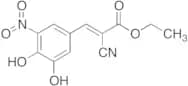
CAS:Controlled ProductFormula:C12H10N2O6Color and Shape:NeatMolecular weight:278.22Adapalene-d6 Methyl Ester
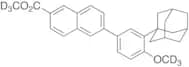
CAS:Controlled Product<p>Applications Labelled Adapalene intermediate, an ester of labelled Adapalene.<br>References Charpentier, B., et al.: J. Med. Chem., 38, 4993 (1995),<br></p>Formula:C29H24D6O3Color and Shape:NeatMolecular weight:432.58Flurochloridone
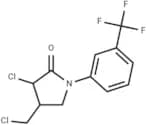
CAS:<p>Flurochloridone (R 40244) is a selective herbicide. Flurochloridone induces apoptosis and is regulated by mitochondrial dysfunction and oxidative stresses.</p>Formula:C12H10Cl2F3NOPurity:99.86%Color and Shape:SolidMolecular weight:312.12Methyl mycophenolate impurity E
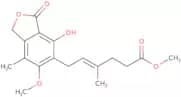
CAS:<p>Methyl mycophenolate impurity E is a reactive, propargylamine-containing, monosodium salt with immunosuppressive properties. It is used in the treatment of cancer by inhibiting the production of white blood cells, which are needed to fight infection. Methyl mycophenolate impurity E has shown antitumor activity and can be used for the treatment of some types of cancer. It is metabolized in vivo to methyl mycophenolate and inhibits protein synthesis by alkylating DNA.</p>Formula:C18H22O6Purity:Min. 95%Color and Shape:White PowderMolecular weight:334.36 g/molEllipticine
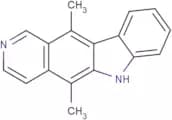
CAS:<p>Ellipticine is a powerful cancer drug with different actions, IC50: 0.27-1.48 μM for leukemia, breast cancer, neuroblastoma, glioblastoma.</p>Formula:C17H14N2Purity:97.26% - 99.88%Color and Shape:SolidMolecular weight:246.31Des[2-[(2-hydroxyethyl)amino]ethyl] mitoxantrone
CAS:<p>Des[2-[(2-hydroxyethyl)amino]ethyl] mitoxantrone is a research and development impurity standard for synthesis. It is a synthetic, high purity compound with a CAS number of 89991-52-6. The chemical is not found in nature and does not have any natural metabolites. Des[2-[(2-hydroxyethyl)amino]ethyl] mitoxantrone has been shown to be metabolized by the liver into various metabolites that have been identified through analysis of urine samples. The metabolite of des[2-[(2-hydroxyethyl)amino]ethyl] mitoxantrone may be used as an analytical standard for HPLC methods.</p>Formula:C18H19N3O5Purity:Min. 95%Molecular weight:357.36 g/molMycophenolic acid lactone - EP
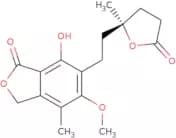
CAS:<p>Mycophenolic acid lactone (MPA) is an analytical standard for HPLC, used as a reference material in drug development. It is also a metabolite of mycophenolate mofetil and mycophenolic acid, which are used to treat immunodeficiency disorders. MPA is not active by itself but it can be converted into the active form, mycophenolic acid, by esterases. MPA has been shown to have anti-inflammatory activities and can inhibit the production of prostaglandins in animals. Mycophenolic acid lactone is a metabolite of drugs that are used for the treatment of immunodeficiency disorders, such as mycophenolate mofetil and mycophenolic acid. The chemical structure of MPA is closely related to that of these drugs and it has been shown to have similar anti-inflammatory properties in animal studies.</p>Formula:C17H20O6Purity:Min. 95%Molecular weight:320.34 g/molCamptothecin
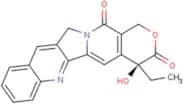
CAS:<p>Camptothecin (CPT) belongs to the alkaloid group of natural products and is a specific DNA topoisomerase I (Topo I) inhibitor (IC50=679 nM) with specificity.</p>Formula:C20H16N2O4Purity:99.52% - 99.88%Color and Shape:Solid PowderMolecular weight:348.35Triacetyl aloe-emodin (impurity A)
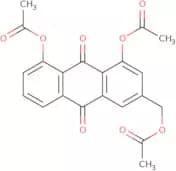
CAS:<p>Triacetyl aloe-emodin (impurity A) is an impurity found in the Triacetyl Aloe-Emodin HPLC standard, which is a drug product. It is not approved for use as a drug and should be used only for research and development purposes. The impurity can be custom synthesized or purchased from a specialty chemical supplier. Impurities are not typically found in the final drug product but can occur during synthesis or purification of the API. This impurity is not present in any pharmacopoeia and has no known biological activity. The CAS number of this impurity is 25395-11-3.</p>Formula:C21H16O8Purity:Min. 95%Molecular weight:396.35 g/molTetrabromobisphenol A
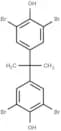
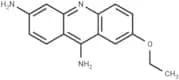
CAS:<p>Tetrabromobisphenol A is an activator of the hepatic interferon pathway in rats.</p>Formula:C15H12Br4O2Color and Shape:SolidMolecular weight:543.87Ethacridine
CAS:<p>Ethacridine acts as an inhibitor of poly (ADP-ribose) glycohydrolase (PARG) and functions as an activator of transcriptional coactivators. It induces apoptosis in thyroid cancer cells and promotes the differentiation of thyroid follicular cells.</p>Formula:C15H15N3OColor and Shape:SolidMolecular weight:253.30Epirubicin
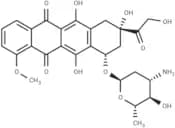
CAS:<p>Epirubicin, a doxorubicin derivative, is an antineoplastic, inhibits topoisomerase, DNA/RNA synthesis, and Foxp3, reducing T cell activity.</p>Formula:C27H29NO11Color and Shape:SolidMolecular weight:543.52Phacolysine
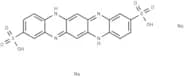
CAS:<p>Phacolysine is a chemical compound. Phacolysine is used in ophthalmologic eye lotions.</p>Formula:C18H10N4Na2O6S2Color and Shape:SolidMolecular weight:488.39



![Des[2-[(2-hydroxyethyl)amino]ethyl] mitoxantrone](/_next/image/?url=https%3A%2Fstatic.cymitquimica.com%2Fproducts%2F3D%2Fthumb-webp%2FID21105.webp&w=3840&q=75)