Sulfonamides and Derivatives
Found 2539 products of "Sulfonamides and Derivatives"
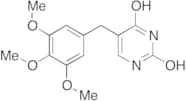
5-(3,4,5-Trimethoxybenzyl)pyrimidine-2,4-diol
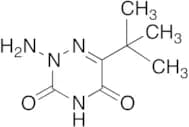
CAS:Controlled ProductFormula:C14H16N2O5Color and Shape:NeatMolecular weight:292.29Metribuzin DK
CAS:Controlled ProductApplications Metribuzin DK is a selective triazine herbicide used in the control of broadleaf weeds. Used in the protection of vegetable and fruit crops. Pesticide.
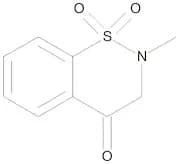
References Xie, Y. et al.: Microchem. J., 133, 468 (2017);Formula:C7H12N4O2Color and Shape:NeatMolecular weight:184.22-Methyl-2H-1,2-benzothiazin-4(3H)-one 1,1-Dioxide
CAS:Controlled ProductApplications 2-Methyl-2H-1,2-benzothiazin-4(3H)-one 1,1-Dioxide is an intermediate used in the synthesis of Amido Methyl Meloxicam (A576790), which is an impurity of Meloxicam (M216100).
Not a dangerous good if item is equal to or less than 1g/ml and there is less than 100g/ml in the package
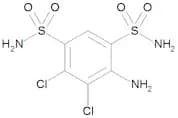
References Lazer, E., et al.: J. Med. Chem., 40, 980 (1997),Formula:C9H9NO3SColor and Shape:NeatMolecular weight:211.244-Amino-5,6-dichloro-1,3-benzenedisulfonamide
CAS:Controlled ProductFormula:C6H7Cl2N3O4S2Color and Shape:NeatMolecular weight:320.173-[4-(2-Pyridylsulfamoyl)phenyl] Sulfasalazine
CAS:Controlled ProductApplications An impurity of Sulfasalazine (S699084).
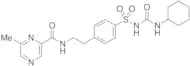
Formula:C29H22N6O7S2Color and Shape:NeatMolecular weight:630.655-Desmethyl-6-methyl Glipizide
CAS:Controlled ProductImpurity Glipizide EP Impurity E
Applications 5-Desmethyl-6-methyl Glipizide (Glipizide EP Impurity E) is a Glipizide (G410225) impurity.
References Hoizey, G., et al.: Clin. Chem., 51, 1666 (2005), Singh, S., et al.: J. Pharm. Biomed. Anal., 41, 1037 (2006),Formula:C21H27N5O4SColor and Shape:NeatMolecular weight:445.54Cantrodifene
CAS:Controlled ProductStability Moisture Sensitive
Applications 4-Isothiocyanato-4'-nitrodiphenyl ether (cas# 19881-18-6) is a useful research chemical.
Not a dangerous good if item is equal to or less than 1g/ml and there is less than 100g/ml in the packageFormula:C13H8N2O3SColor and Shape:NeatMolecular weight:272.27Phthalide
CAS:Controlled ProductApplications Phthalide may be used in scaffolds for the design of high potency monoamine oxidase (MAO) inhibitors.
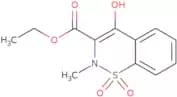
References Li, P.Z., et. al.: Med. Chem. Res., 23, 3624 (2014)Formula:C8H6O2Color and Shape:ColourlessMolecular weight:134.133,4-Dihydro-4-hydroxy-2-methyl-2H-1,2-benzothiazine-3-carboxylic acid ethyl ester 1,1-dioxide
CAS:3,4-Dihydro-4-hydroxy-2-methyl-2H-1,2-benzothiazine-3-carboxylic acid ethyl ester 1,1-dioxide is a synthetic sulfoxide that is used as an antiinflammatory drug. It is a stable compound that can be used in the production of dimethyl sulfoxide and piroxicam. The purity of this compound is greater than 99.5%.Formula:C12H13NO5SPurity:Min. 95%Molecular weight:283.3 g/mol4-Amino-6-chloro-benzene-1,3-disulfonic acid 1-amide 3-ethylamide
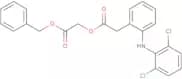
CAS:4-Amino-6-chloro-benzene-1,3-disulfonic acid 1-amide 3-ethylamide is an analytical standard that is used in drug development and as a reference material. It is used to produce the USP/NF standard for HPLC and to develop new drugs. This compound is a metabolite of the drug clonidine hydrochloride. 4-Amino-6-chloro-benzene-1,3-disulfonic acid 1-amide 3-(ethylamide) is also known by its CAS number 166863–9. It has a molecular weight of 328.5 g/mol and it's been approved by the FDA for use in food animals. Impurities found in this compound are: methanol, acetone, formic acid, acetic acid, chloroform and sulfamic acid. This product can be custom synthesized or obtained from natural sources such as plantFormula:C8H12ClN3O4S2Purity:Min. 95%Molecular weight:313.78 g/mol2-[(2,6-Dichlorophenyl)amino]benzeneacetic Acid 2-(carboxymethoxy)-2-oxoethyl ester
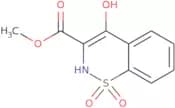
CAS:2-[(2,6-Dichlorophenyl)amino]benzeneacetic Acid 2-(carboxymethoxy)-2-oxoethyl ester is a drug product that belongs to the class of Custom synthesis. It is a metabolite of loratadine, an antihistamine drug. The compound is a metabolite of loratadine, which is an antihistamine drug used for the treatment of allergies. It is produced by the oxidation of loratadine by cytochrome P450 enzymes and can be detected in urine at concentrations up to 5 ng/mL. 2-[(2,6-Dichlorophenyl)amino]benzeneacetic Acid 2-(carboxymethoxy)-2-oxoethyl ester has been shown to be effective in inhibiting the growth of bacteria that are resistant to penicillin and erythromycin.Formula:C18H15Cl2NO6Purity:Min. 95%Molecular weight:412.22 g/molMethyl 4-hydroxy-2H-1,2-benzothiazine-3-carboxylate 1,1-dioxide
CAS:Methyl 4-hydroxy-2H-1,2-benzothiazine-3-carboxylate 1,1-dioxide (MTBC) is a drug target that is a carboxylate. MTBC has been shown to have potent inhibition activity against benzothiazine oxidases. MTBC can be used as an inhibitor of enzymes involved in the biosynthesis of benzothiazines and may be useful for the treatment of diseases such as Parkinson's disease and schizophrenia. The inhibition potential of MTBC has been unraveled through its interaction with peroxidases and other oxidases. In vitro studies have shown that MTBC can inhibit the oxidation of low molecular weight compounds by acting as a scavenger for hydrogen peroxide. This drug also exhibits unsymmetrical dehydration to produce methyl 4-(hydroxyamino)-2H-1,2-benzothiazine 1,1-dioxoate (MTBA), which is anFormula:C10H9NO5SPurity:Min. 95 Area-%Color and Shape:PowderMolecular weight:255.25 g/molHydrochlorothiazide impurity C
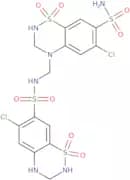
CAS:Hydrochlorothiazide is a sulfonamide that inhibits the activity of the enzyme, angiotensin-converting enzyme (ACE), which is responsible for converting angiotensin I to the potent vasoconstrictor, angiotensin II. It also has antihypertensive effects by blocking the production of aldosterone, which causes sodium retention and leads to high blood pressure. It is a byproduct in reactions with substances such as valsartan. Hydrochlorothiazide may react chemically with other medicines such as ampicillin and cefaclor.
Formula:C15H16Cl2N6O8S4Purity:Min. 95%Color and Shape:White PowderMolecular weight:607.49 g/mol2-(4-(Benzylamino)-2-ethylbutyl)-5,6-dimethoxy-2,3-dihydroinden-1-one hydrochloride
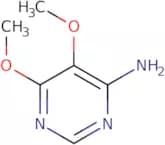
CAS:2-(4-(Benzylamino)-2-ethylbutyl)-5,6-dimethoxy-2,3-dihydroinden-1-one hydrochloride is a drug product used as an analytical standard for HPLC. It is a natural metabolite from the metabolism of lisinopril and other prodrugs. This impurity is found in drugs that are metabolized by cytochrome P450 enzymes including lisinopril, captopril, enalapril and benazepril. The impurity may be present in drugs with a niche market such as captopril and benazepril or drugs with a high purity such as enalapril. 2-(4-(Benzylamino)-2-ethylbutyl)-5,6-dimethoxy-2,3-dihydroinden-1-one hydrochloride is typically synthesized by the reaction of 4-(benzylaminoFormula:C24H31NO3•HClPurity:Min. 95 Area-%Color and Shape:PowderMolecular weight:417.97 g/mol4-Amino-5,6-dimethoxypyrimidine
CAS:4-Amino-5,6-dimethoxypyrimidine is a pyrimethamine derivative that has been used as an antimalarial agent. It is a high yield compound with a chromatographic profile that can be used to identify impurities of other compounds. 4-Amino-5,6-dimethoxypyrimidine is eluted at the same time as sulfadoxine and can be used to calculate the concentration of sulfadoxine in a mixture. It can also be used as a reagent for rp-hplc. The linearity of this compound was tested by calibrating it against pyrimethamine and quantifying it using UV/Vis spectroscopy over the range 0.05 to 1 mg/mL.
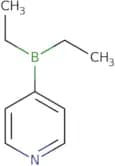
Formula:C6H9N3O2Purity:Min. 95%Molecular weight:155.15 g/mol4-(Diethylboranyl) pyridine
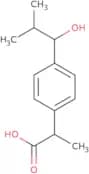
CAS:4-(Diethylboranyl)pyridine is a nucleophilic, anticoagulant drug. It interacts with the electronegative oxygen atoms in the guanine base of dna to form an adduct, which inhibits DNA synthesis. The hexameric cavity of 4-(Diethylboranyl)pyridine contains boron and nitrogen atoms, which are important for its activity. 4-(Diethylboranyl)pyridine also has antibacterial effects against gram-positive bacteria by inhibiting bacterial protein synthesis. This compound is synthetic and can be used in cocrystallized form as a single molecule or in hexameric form.Formula:C9H14BNPurity:Min. 95%Molecular weight:147.03 g/mol1-Hydroxy-ibuprofen - Mixture of diastereoisomers
CAS:Ibuprofen is a nonsteroidal anti-inflammatory drug that is used to treat arthritis, rheumatoid arthritis, menstrual cramps and pain. Ibuprofen is a racemic mixture of two enantiomers, ibuprofen and S (+) -ibuprofen. The dextran sulfate method is an analytical method used to determine the concentration of ibuprofen in biological fluids such as human serum or urine. This test can be done by first treating the sample with trifluoroacetic acid (TFA) to convert ibuprofen to its glucuronide conjugate. The glucuronide conjugates are then deproteinized with hydrochloric acid, which converts them into their corresponding carboxylated derivatives. This conversion allows for the separation of ibuprofen from interfering substances using preparative hplc and quantification using mass spectrometry. Toxicity studies have been conducted on bacteria strains and inflammatory bowelFormula:C13H18O3Purity:Min. 95%Color and Shape:White PowderMolecular weight:222.28 g/molAceclofenac benzyl ester
CAS:Aceclofenac is a nonsteroidal anti-inflammatory drug (NSAID) that belongs to the propionic acid derivative group. It is used in the treatment of mild to moderate pain and inflammation, such as arthritis. Aceclofenac is rapidly hydrolyzed by esterases in the small intestine, resulting in the release of aceclofenac acid. Aceclofenac benzyl ester is a chemical intermediate that has been shown to be an efficient method for producing aceclofenac acid. It can be obtained by reacting bromoacetic anhydride with methyl alcohol and then hydrolyzing the product with strong acids. This compound may contain impurities, such as nucleophilic impurities, which can lead to side effects.
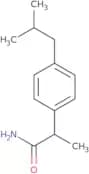
Formula:C23H19Cl2NO4Purity:Min. 95%Molecular weight:444.31 g/molrac-Ibuprofen amide
CAS:Ibuprofen amide is a nonsteroidal anti-inflammatory drug that belongs to the class of amides. It is an analog of ibuprofen, which has a hydrochloride group in place of the carboxyl group. Ibuprofen amide inhibits the production of pro-inflammatory chemicals by blocking cyclooxygenase enzymes, which are responsible for synthesis of prostaglandins and thromboxanes. The kinetic profile of this compound was obtained using fluorescence spectroscopy. This analytical method also showed that ibuprofen amide hydrolyzes in acidic conditions, suggesting that it may be active against bacteria that are found in an acidic environment.Formula:C13H19NOPurity:Min. 98 Area-%Molecular weight:205.3 g/mol


![3-[4-(2-Pyridylsulfamoyl)phenyl] Sulfasalazine](/_next/image/?url=https%3A%2Fstatic.cymitquimica.com%2Fproducts%2FTR%2Fthumb-webp%2FP995810.webp&w=3840&q=75)



![2-[(2,6-Dichlorophenyl)amino]benzeneacetic Acid 2-(carboxymethoxy)-2-oxoethyl ester](/_next/image/?url=https%3A%2Fstatic.cymitquimica.com%2Fproducts%2F3D%2Fthumb-webp%2FID156912.webp&w=3840&q=75)