Metal Salts
In this section, you can find various metal salts, which are compounds characterized by containing both metal and non-metal atoms. Essentially, metal salts are composed of cations that are one or more metal atoms. These salts play a crucial role in numerous chemical reactions and applications, serving as catalysts, reactants, or intermediates in various industrial and research processes. At CymitQuimica, we offer a wide selection of high-quality metal salts to meet your research and industrial needs, ensuring reliable and effective performance in your applications.
Found 2870 products of "Metal Salts"
Sort by
Purity (%)
0
100
|
0
|
50
|
90
|
95
|
100
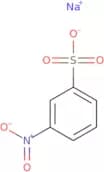
Sodium 3-nitrobenzenesulphonate
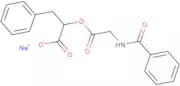
CAS:<p>Sodium 3-nitrobenzenesulphonate is a reactive chemical that can be used in the treatment of wastewater. It reacts with sulfonic acid to form a cross-link between two molecules, which lowers the solubility of the organic compound. This reaction product can then be removed from solution by adding sodium carbonate or sodium citrate to form insoluble salts that are removed from the water by filtration. Sodium 3-nitrobenzenesulphonate is an alternative to chlorine for water treatment because it does not react with ammonia and other nitrogenous compounds.</p>Formula:O2NC6H4SO3NaPurity:Min. 95%Color and Shape:White To Yellow SolidMolecular weight:225.16 g/molO-Hippuryl-DL-b-phenyllactic acid sodium salt
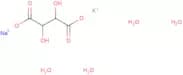
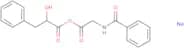
CAS:Please enquire for more information about O-Hippuryl-DL-b-phenyllactic acid sodium salt including the price, delivery time and more detailed product information at the technical inquiry form on this pageFormula:C18H16NNaO5Purity:Min. 95%Molecular weight:349.31 g/molSodium potassium tartrate tetrahydrate
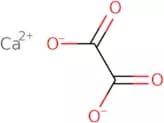
CAS:<p>Sodium potassium tartrate tetrahydrate is a crystal compound made up of potassium and sodium. It is a ferroelectric material that exhibits polarization and piezoelectric properties. The growth rate of these crystals can be controlled by using inhibitors such as protein kinase inhibitors. Sodium potassium tartrate tetrahydrate has been shown to have inhibitory activity against certain enzymes, including proteases and kinases. Additionally, it exhibits dielectric properties and can be used in the production of capacitors and other electronic components.</p>Formula:C4H4KNaO6·4H2OPurity:Min. 95%Color and Shape:White PowderMolecular weight:282.22 g/molCalcium oxalate
CAS:Calcium oxalate is a crystal that can be found in plants and animals. It is used as a model system to study cell death. Calcium oxalate crystals are inert, but when they react with other substances, they create reactive calcium oxalate crystals that can kill cells by caspase-independent cell death. The crystals also cause cell lysis and are a potential candidate for chemoattractant proteins. Calcium oxalates have been shown to induce phase transition at temperatures below the boiling point of water, which may lead to pharmacological treatments for osteoporosis or kidney stones.Formula:CaC2O4Purity:Min. 95%Molecular weight:128.1 g/molSodium 2,3,5,6-Tetrafluoro-4-hydroxybenzenesulfonate
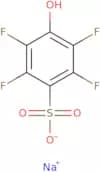
CAS:<p>Sodium 2,3,5,6-Tetrafluoro-4-hydroxybenzenesulfonate is a synthetic compound that is used as a probe for catalytic reactions. It has been shown to be active in the oxidation of glycols and ethylene glycols. This compound is also useful for the tethering of metal atoms or ions. Sodium 2,3,5,6-Tetrafluoro-4-hydroxybenzenesulfonate can be used in catalysis due to its ability to act as an electron donor.</p>Formula:C6HF4NaO4SPurity:Min. 95%Color and Shape:White PowderMolecular weight:268.12 g/molPatent blue V Calcium salt
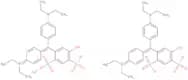
CAS:<p>Patent Blue V calcium salt is a calcium salt of Patent Blue V, which is a light-sensitive dye with an absorption peak at 450 nm. It has been used in analytical chemistry to measure the fatty acid content of oils and fats. Patent Blue V calcium salt has also been used as a reagent in kinetic studies to measure the rate of reactions involving detergent compositions, cationic surfactants, and hydroxyl groups. The lymphatic vessels react to this dye by showing an increase in permeability. The activation energies for these reactions have been determined using kinetic data.</p>Formula:C27H31N2O7S2·5CaPurity:Min. 85.0 Area-%Color and Shape:PowderMolecular weight:582.7 g/molPotassium 4-methoxycinnamate
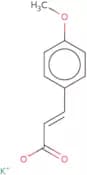
CAS:Potassium 4-methoxycinnamate is a fine chemical that is used as a versatile building block in the synthesis of complex compounds. It can be used in research and as a reagent or speciality chemical. It is also a useful building block for high quality, useful intermediate, and reaction component. Potassium 4-methoxycinnamate can be used as a scaffold to synthesize compounds with diverse applications such as pharmaceuticals, polymers, and agrochemicals.Formula:C10H9O3·KPurity:Min. 95%Molecular weight:216.27 g/molPotassium cyanate
CAS:<p>Potassium cyanate is an active analogue of sodium cyanate. It is used in biochemical research for the preparation of samples and in the study of reactions that involve the formation of carboxylic acid derivatives from primary alkyl halides. This compound was found to be significantly cytotoxic, with a median lethal dose (LD50) at 3,000 mg/kg. The mechanism of action is not known. Potassium cyanate has been shown to inhibit human serum cholesterol levels and reduce atherosclerotic cardiovascular events in animal models, which may be due to its ability to inhibit cholesterol synthesis by inhibiting HMG-CoA reductase activity.</p>Formula:KOCNPurity:Min. 95%Molecular weight:81.12 g/molZinc oxalate dihydrate
CAS:Zinc oxalate hydrate is a skin condition treatment that is made of zinc oxide and oxalic acid. It is used to treat acne, eczema, and psoriasis by inhibiting bacterial growth. The reaction solution is prepared by adding sodium citrate to a solution of vitamin B3 in dextrose. The mixture is heated until the crystals dissolve and then cooled down. The final product has a liquid phase synthesis and contains ZnO, Na2C6H5O7, C6H12O6, and H2O. Other uses for this compound include its use as an antibacterial agent for biomineralization or as a dextrose substitute in the manufacture of cyclic hydrocarbons. This product also has the ability to form nanowires when it is dehydrated under high temperatures.Formula:ZnC2O4•2H2OPurity:Min. 95%Color and Shape:PowderPamidronate disodium pentahydrate
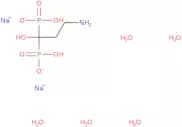
CAS:<p>Farnesyl diphosphate synthase inhibitor</p>Formula:C3H19NNa2O12P2Purity:Min. 95%Molecular weight:369.11 g/molBismuth citrate
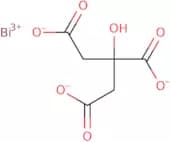
CAS:<p>Bismuth citrate is an antimicrobial agent that is used to treat helicobacter pylori infections. Bismuth citrate may be an alternative to clarithromycin and metronidazole for the treatment of antibiotic-resistant strains of helicobacter. It has been shown to improve duodenal ulcer healing and reduce the incidence of gastric ulcers in a group of patients with duodenal ulcer disease. This drug has also been shown to significantly reduce the incidence of gastric cancer in patients with Helicobacter pylori infection. Bismuth citrate is a polymeric compound that is thought to bind to the bacterial cell wall and inhibit its growth through inhibition of protein synthesis, but this mechanism is not well understood. Bismuth citrate has been used as an antacid for decades, but it does not have any anti-inflammatory properties and should not be used for this purpose.</p>Formula:C6H5BiO7Purity:Min. 95%Color and Shape:PowderMolecular weight:398.08 g/molL-Tyrosine dipotassium
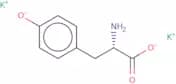
CAS:<p>L-Tyrosine dipotassium salt is a high quality, reagent, complex compound, useful intermediate and fine chemical. It is a useful scaffold that can be used in the synthesis of various important natural products. L-Tyrosine dipotassium salt is a versatile building block that has been widely applied in research on the development of new drugs, such as antiviral agents and antibiotics. L-Tyrosine dipotassium salt can act as a reaction component for many organic reactions. It also has applications in many areas such as medicine, food production, and environmental protection.</p>Formula:C9H11NO3•K2Purity:Min. 95%Molecular weight:259.39 g/molBis(cyclopentadienyl)titanium (IV) dichloride
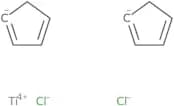
CAS:<p>Bis(cyclopentadienyl)titanium (IV) dichloride is a cationic polymerization catalyst that has been used to produce polyolefins with high molecular weights. It is also an important component of solid catalysts for the production of butadiene and styrene. Bis(cyclopentadienyl)titanium (IV) dichloride is a potent carcinogen in animals and is mutagenic in bacteria. It has been shown to cause cancer in animal models, and has been shown to be mutagenic in bacterial mutation assay tests. Bis(cyclopentadienyl)titanium (IV) dichloride reacts with dimethylformamide and aromatic hydrocarbons to produce photochemical properties that can lead to skin irritation or sensitization. This compound also has hydroxyl groups, which can react with oxidants such as chlorine gas to form chlorohydrins, which are toxic compounds that may be carcinogenic.</p>Formula:C10H10TiCl2Purity:Min. 95%Color and Shape:Red Clear LiquidMolecular weight:248.96 g/molLithium carbonate
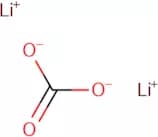
CAS:Controlled ProductLithium carbonate is a salt that contains lithium and carbonate ions. It is used as a mood stabilizer, primarily to treat bipolar disorder. Lithium carbonate is available in three different concentrations: lithium carbonate 5% (Li2CO3), lithium carbonate 10% (Li2CO3), and lithium carbonate 15% (Li2CO3). The optimum concentration of lithium carbonate for the treatment of bipolar disorder is 10%. Lithium has been shown to increase the activity index in combination therapy groups with either mianserin hydrochloride or carbamazepine. Electrochemical impedance spectroscopy has also been used to measure the effect of lithium on human body mass index (BMI).Formula:CLi2O3Purity:Min. 95%Molecular weight:73.89 g/molO-Hippuryl-L-b-phenyllactic acid sodium salt
CAS:Please enquire for more information about O-Hippuryl-L-b-phenyllactic acid sodium salt including the price, delivery time and more detailed product information at the technical inquiry form on this pageFormula:C18H16NNaO5Purity:Min. 95%Molecular weight:349.31 g/mol1,2-Distearoyl-sn-glycero-3-phosphatidic acid·disodium salt
CAS:<p>Please enquire for more information about 1,2-Distearoyl-sn-glycero-3-phosphatidic acid·disodium salt including the price, delivery time and more detailed product information at the technical inquiry form on this page</p>Formula:C39H75Na2O8PPurity:Min. 95%Molecular weight:748.96 g/mol4,4'-Dichlorodiphenylsulfone-3,3'-disulfonic acid disodium salt
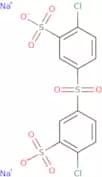
CAS:Please enquire for more information about 4,4'-Dichlorodiphenylsulfone-3,3'-disulfonic acid disodium salt including the price, delivery time and more detailed product information at the technical inquiry form on this pageFormula:C12H6Cl2Na2O8S3Purity:Min. 95 Area-%Color and Shape:White Off-White PowderMolecular weight:491.25 g/molN-Acetoacetylcresidine sulfonic acid sodiumsalt
CAS:<p>Please enquire for more information about N-Acetoacetylcresidine sulfonic acid sodiumsalt including the price, delivery time and more detailed product information at the technical inquiry form on this page</p>Formula:C12H14NNaO6SPurity:Min. 95%Molecular weight:323.3 g/molγ-Polyglutamic acid sodium - MW 800-1500
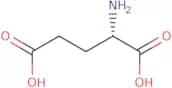
CAS:<p>Polymer of glutamic acid</p>Formula:(C5H9NO3)nPurity:Min. 95%Color and Shape:PowderTrisodium 1,3,6-naphthalenetrisulfonate
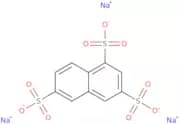
CAS:Trisodium 1,3,6-naphthalenetrisulfonate is a polymer coating that can be used for industrial applications such as water treatment, oil and gas drilling, or textile manufacturing. It has been shown to have a high hydrophobicity and low surface tension. Trisodium 1,3,6-naphthalenetrisulfonate has also been shown to have a ring structure that can interact with other materials. Trisodium 1,3,6-naphthalenetrisulfonate has been observed to form supramolecular structures when in contact with surfactants and other additives. Trisodium 1,3,6-naphthalenetrisulfonate is reactive and can be used as an alternative to chromium plating for the production of plates.Formula:C10H8O9S3•Na3Purity:Min. 95%Color and Shape:White To Reddish Yellow SolidMolecular weight:437.33 g/mol