Metal Salts
In this section, you can find various metal salts, which are compounds characterized by containing both metal and non-metal atoms. Essentially, metal salts are composed of cations that are one or more metal atoms. These salts play a crucial role in numerous chemical reactions and applications, serving as catalysts, reactants, or intermediates in various industrial and research processes. At CymitQuimica, we offer a wide selection of high-quality metal salts to meet your research and industrial needs, ensuring reliable and effective performance in your applications.
Found 2870 products of "Metal Salts"
Sort by
Purity (%)
0
100
|
0
|
50
|
90
|
95
|
100
Phacolysine sodium salt
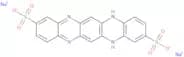
CAS:<p>Phacolysine sodium salt is a drug that activates the choroidal neovascularization receptor. It has been shown to inhibit the growth of tumors by synchronous fluorescence and disulfide bond binding. Phacolysine sodium salt has shown clinical efficacy in the treatment of choroidal neovascularization, with an average success rate of 75%. It has also been shown to be effective in treating other types of cancer, such as prostate cancer. In addition, it has antioxidative properties and can inhibit prostaglandin synthesis. This medicine is sometimes used in combination with ondansetron hydrochloride and benzalkonium chloride for pharmacological treatment.</p>Formula:C18H10N4Na2O6S2Purity:Min. 95%Color and Shape:Red PowderMolecular weight:488.41 g/molZinc trifluoromethanesulfonate
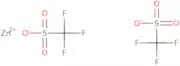
CAS:Zinc trifluoromethanesulfonate is a catalyst that catalyses the reaction of amines with coumarin derivatives, producing an electrochemical impedance spectroscopy. It has been shown to have a redox potential that is higher than ferrocenecarboxylic acid. Zinc trifluoromethanesulfonate has been used in asymmetric synthesis, which involves substituting a hydrogen atom with another atom or group, and in salt metathesis, which is the process of forming new chemical compounds from reactants without using any energy. The zinc trifluoromethanesulfonate can also be activated by light or heat. This makes it possible for this compound to release the corrosive sulfur dioxide gas when heated to high temperatures, producing a synergic effect with other substances such as potassium permanganate (KMnO4).Formula:C2F6O6S2ZnPurity:Min. 95%Color and Shape:White PowderMolecular weight:363.52 g/molEthylenediaminetetraacetic acid tripotassium salt dihydrate
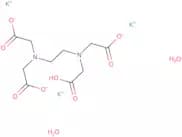
CAS:Ethylenediaminetetraacetic acid tripotassium salt dihydrate is an anticoagulant that can be used as a coagulant for blood samples. It is often used in polymerase chain reactions to synthesize DNA, or to isolate and purify genomic DNA. This compound has ferroelectric properties and can be used as a target cell in optical imaging applications. Ethylenediaminetetraacetic acid tripotassium salt dihydrate is also used in the production of polyurethanes and as a polymerization inhibitor in cinnamon oil.Formula:C10H13K3N2O8·2H2OPurity:Min. 95%Molecular weight:442.54 g/molZinc lactate
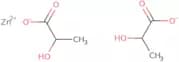
CAS:Zinc lactate is an ionic salt that contains zinc and lactate ions. It is a particle that can be used as an oral supplement to treat zinc deficiency. Zinc lactate is soluble in water, which makes it easy to take orally. The other benefits of this supplement include its ability to reduce the risk of dental cavities and promote wound healing. In addition, zinc lactate has been shown to have antibacterial properties against throat infections and cavity-causing bacteria such as Streptococcus mutans. This product is also beneficial for brain cells due to its ability to remove polyphosphates from neurons, which are toxic substances that accumulate when brain cells are injured or diseased.Formula:C6H10O6ZnPurity:Min. 95%Color and Shape:White PowderMolecular weight:243.52 g/molPotassium ferrocyanide trihydrate
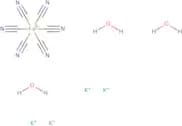
CAS:<p>Potassium ferrocyanide trihydrate is a stable compound that has high resistance to corrosion by acids and bases. It is an inorganic compound that belongs to the class of ferroelectric materials. The crystal structure of potassium ferrocyanide trihydrate is a metastable phase with a very high thermal expansion coefficient. This compound can be synthesized by reacting ethylene diamine with hydrochloric acid and sodium carbonate, followed by adding potassium hydroxide. Potassium ferrocyanide trihydrate can also be produced from potassium malonate, which is prepared from malonic acid and potassium hydroxide in the presence of an aryl halide.</p>Formula:C6FeN6•(H2O)3•K4Purity:Min. 95%Molecular weight:422.39 g/molTianeptine sodium salt
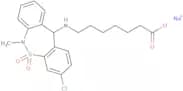
CAS:Controlled Product<p>Full agonist of the μ-opioid receptor (MOR) with Ki of 383 nM. It also weakly agonizes the δ-opioid receptor (DOR) with a Ki >10 μM. Tianeptine has antidepressant effects but can also regulate neuroplasticity in the amygdala and stress-induced release of glutamate. It can generate analgesia and reward, typical opiate-like behavioural effects, but does not induce tolerance or withdrawal.</p>Formula:C21H24ClN2NaO4SPurity:Min. 98.5 Area-%Color and Shape:White Slightly Yellow PowderMolecular weight:458.93 g/molPhosphoramidon sodium
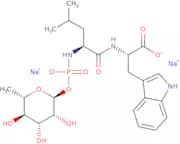
CAS:Phosphoramidon sodium is a chemical inhibitor that is used in wastewater treatment. It has been shown to decrease bronchial reactivity in humans by modulating the activity of peptidases, which are enzymes that break down proteins. Phosphoramidon sodium has also been shown to reduce pain responses in animal models by inhibiting the release of fatty acids from nerve cells. This drug also decreases inflammation and swelling by preventing the production of prostaglandins and leukotrienes.Formula:C23H34N3O10P·xNaPurity:Min. 95%Color and Shape:PowderMolecular weight:587.47 g/molSodium ferriceddha
CAS:<p>Sodium ferriceddha is a chemical compound that belongs to the family of ferrocenes. It has been used in research as a useful building block and reagent, as well as in the synthesis of various compounds. Sodium ferriceddha is a versatile building block that can be used in the synthesis of complex compounds, such as pharmaceuticals, agricultural chemicals, and other specialty chemicals. It can also be used as an intermediate or scaffold for drug discovery.</p>Formula:C18H16FeN2NaO6Color and Shape:PowderMolecular weight:435.16 g/molZinc pivalate
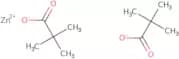
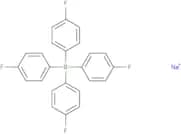
CAS:<p>Zinc pivalate is a coordination complex that has been shown to be an effective metal-based catalyst for amine-mediated cross-coupling reactions. It has also been used as a ligand in the synthesis of metal complexes. Zinc pivalate is soluble in water and its molecular weight is 198.2 daltons. It has two functional groups, carboxylate and formyl group, and can be synthesized by reacting zinc chloride with pivalic acid. The molecule contains a water molecule that acts as a base to deprotonate the carboxylate group on the zinc atom, forming an alcohol group which reacts with amines to produce an aminoglycoside. Zinc pivalate is also capable of forming coordination complexes with palladium, which catalyzes cross-coupling reactions with chlorides under mild conditions.</p>Formula:C5H9O2ZnPurity:Min. 95%Molecular weight:166.5 g/molTetrakis(4-Fluorophenyl)-Borate Sodium (1:1)
CAS:Tetrakis(4-fluorophenyl)borate sodium (1:1) is a solid that is soluble in organic solvents. It has been used as an adsorbent for nuclear waste and organic molecules. Tetrakis(4-fluorophenyl)borate sodium (1:1) has been shown to adsorb hydrophobic molecules such as polycyclic aromatic hydrocarbons, which are difficult to remove from the environment. Tetrakis(4-fluorophenyl)borate sodium (1:1) can be prepared by reacting tetraphenylborate with 4-fluoroboric acid. This reaction produces a mixture of products, of which tetrakis(4-fluorophenyl)borate sodium (1:1) is the most common. Tetrakis(4-fluorophenyl)borate sodium (1:1), like other borate salts, is used in zeolites toFormula:C24H16BF4NaPurity:Min. 95%Molecular weight:414.18 g/mol(1S,2S)-N,N'-Bis(2-acetyl-3-oxo-2-butenylidene)-1,2-dimesitylethylenediaminato Cobalt(II)
CAS:(1S,2S)-N,N'-Bis(2-acetyl-3-oxo-2-butenylidene)-1,2-dimesitylethylenediaminato Cobalt(II) is a catalyst in cycloaddition reactions. It is soluble in organic solvents and has been used as a catalyst for the synthesis of imines and aryl ketones. This compound also catalyzes the reduction of borohydride to form borane.Formula:C32H38CoN2O4Purity:Min. 95%Molecular weight:573.59 g/molCalcium chloride dihydrate
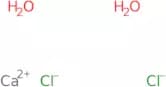
CAS:<p>Calcium chloride dihydrate is a chemical compound that is used in the preparation of buffers, as well as in polymer synthesis and analytical chemistry. It is also used in the treatment of low blood calcium levels, which may occur from chronic kidney failure, malnutrition or malabsorption. Calcium chloride dihydrate has been shown to inhibit the proliferation of various cancer cells, including prostate cancer cells. This inhibition has been shown to be due to its ability to significantly cytotoxic effects on these cells. The cytotoxicity was found to be due to lysosomal membrane permeabilization and Ca2+ influx into the cell leading to apoptosis induction.</p>Formula:CaCl2•(H2O)2Purity:Min. 95%Color and Shape:White Clear LiquidMolecular weight:147.01 g/molCalcium-Like Peptide
CAS:<p>Please enquire for more information about Calcium-Like Peptide including the price, delivery time and more detailed product information at the technical inquiry form on this page</p>Formula:C40H75N9O10Purity:Min. 95%Molecular weight:842.08 g/molRhodium(III) chloride hydrate
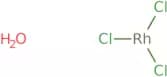
CAS:<p>Rhodium(III) chloride hydrate is a catalyst that is used in the oxidation of aromatic hydrocarbons. It has been shown to have an acidic reaction with hydrochloric acid and is used in the oxidation of benzene, toluene, ethylbenzene, and xylene. Rhodium(III) chloride hydrate has also been shown to be a good catalyst for the production of polycyclic aromatic hydrocarbons from light emitting diodes. This product can be used as an oxidizing agent in organic synthesis reactions. The 6-Fluoro-3-indoxyl-beta-D-galactopyranoside is an antituberculosis drug that belongs to the class of rifamycins. It is the most active of the rifamycins for the treatment of tuberculosis. Rifapentine inhibits bacterial growth by binding to DNA-dependent RNA polymerase, thereby preventing transcription and replication. The high frequency of</p>Formula:RhCl3·xH2OPurity:Min. 95%Molecular weight:209.26 g/molIron(III) trifluoromethanesulfonate
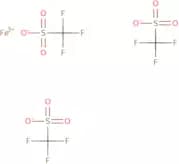
CAS:Iron trifluoromethanesulfonate is an inorganic compound that is used as a catalyst in organic reactions. It is a salt of iron(III) and triflic acid, with the formula Fe(O)(CF). It has been shown to be a cocatalyst for benzofuran derivatives and can be used to synthesize methyl ketones, alkylation products, diarylmethanes, primary alcohols, and cleavage products. Iron trifluoromethanesulfonate can also be used as a control experiment to study reaction mechanisms.Formula:C3F9FeO9S3Purity:Min. 95%Color and Shape:White SolidMolecular weight:503.06 g/molLithium acetoacetate
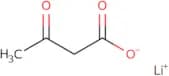
CAS:Lithium acetoacetate is a compound that is used in the treatment of cancer. It is a salt that contains lithium and acetoacetate. Lithium acetoacetate has been shown to be clinically relevant for the treatment of cancer, particularly in patients who have not responded well to other treatments. This drug has also been shown to induce apoptosis in animal cells, which may be due to its ability to produce acid.Formula:C4H6O3•LiPurity:Min. 95%Color and Shape:PowderMolecular weight:109.03 g/molCalcium phosphate
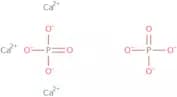
CAS:Calcium phosphate is a white, odorless powder that is used in the production of casein, a protein used to make cheese. In cell culture, calcium phosphate has been shown to have important transport properties and can be used to maintain the pH gradient across the cell membrane. Calcium phosphate has also been shown to reduce renal dysfunction associated with chronic kidney disease. Hydroxyapatite is an important component of bone tissue and its presence in the body can help prevent osteoporosis. Calcium phosphate also has anti-infective properties and can be used as a film-forming polymer or in pharmaceutical dosage forms such as tablets or capsules.Formula:Ca3O8P2Purity:Min. 95%Color and Shape:PowderMolecular weight:310.18 g/molCloprostenol sodium
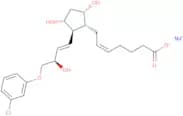
CAS:Cloprostenol sodium is a prostaglandin analogue that is used in veterinary medicine. It is administered intravenously to induce ovulation, improve estrus and fertility, or control luteal function in cows. Cloprostenol sodium has been shown to have a positive effect on the ovulatory process by stimulating the release of endogenous progesterone and estradiol benzoate from the follicle cells. This drug also increases luteal activity by increasing the production of progesterone and inhibiting its metabolism. Cloprostenol sodium has been shown to be effective in inducing ovulation in pregnant women who do not respond to clomiphene citrate (CC) alone. Cloprostenol sodium can also be used for induction of labour in pregnant women with an uncomplicated pregnancy at term, where it is given intravenously or intramuscularly, but intravaginally or orally are not recommended.Formula:C22H28ClNaO6Purity:Min. 95%Color and Shape:White PowderMolecular weight:446.9 g/mol1,9-Dimethyl-methylene blue zinc chloride
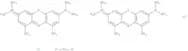
CAS:1,9-Dimethyl-methylene blue zinc chloride double salt is a fluorescent dye that has been used in the study of hyaluronic acid and mesenchymal stem cells. The compound absorbs light at a wavelength of 580 nm, which is the same as the absorption wavelength for hyaluronic acid and mesenchymal stem cells. 1,9-Dimethyl-methylene blue zinc chloride double salt can be used to measure the amount of these compounds in tissues. This dye also shows sensitivity to artifacts such as hemolysis and lipemia, making it useful for research purposes.Formula:(C18H22ClN3S)2•ZnCl2Purity:Min. 95%Color and Shape:PowderMolecular weight:832.11 g/molMercaptoacetic acid sodium salt
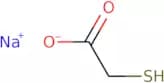
CAS:Mercaptoacetic acid sodium salt (MAS) is an oxidation catalyst that is used to convert ethyl alcohol into acetic acid. It has been shown to be a good catalyst for the oxidation of hydroxyl groups in the presence of metal hydroxides or inorganic acids, such as sodium carbonate. MAS has also been shown to be toxic to human serum and is not recommended for use in humans. The toxicity of MAS may be due to its ability to react with fatty acids and form mercaptans, which are volatile compounds that can cause irritation. Mercaptoacetic acid sodium salt reacts with potassium dichromate and forms mercaptans and other products, which may contribute to its toxicity.Formula:C2H3NaO2SPurity:(Titration) Min. 90%Color and Shape:PowderMolecular weight:114.1 g/mol