Volatile Organic Compound (VOC) Standards
Found 178 products for "Volatile Organic Compound (VOC) Standards".
Nonadecane
CAS:Controlled ProductApplications Nonadecane is a long chain saturated aliphatic hydrocarbon. Nonadecane is found in tar from coal and other forssil organic matter. Nonadecane is used as a fragrance agent in cosmetics and perfumes.
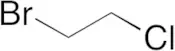
References Youtcheff, J.J. et al.: Org. Geochem., 5, 157 (1983): Etienne, J.J.: Riv. Ital. EPPOS, 15, 418 (1997);Formula:C19H40Color and Shape:NeatMolecular weight:268.521-Bromo-2-chloroethane
CAS:Controlled ProductApplications 1-Bromo-2-chloroethane is a reagent used in the preparation of potent P-glycoprotein inhibitors carrying a polycyclic scaffold.
Not a dangerous good if item is equal to or less than 1g/ml and there is less than 100g/ml in the package
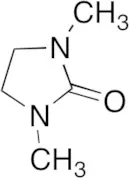
References Bisi, A., et al.: J. Med. Chem, 49, 3049 (2006);Formula:C2H4BrClColor and Shape:NeatMolecular weight:143.411,3-Dimethyl-2-imidazolidinone
CAS:Controlled ProductApplications 1,3-Dimethyl-2-imidazolidone, is a solvent used in various synthetic organic transformations. Studied in the formation of functionally stabilized hydrosilanediyl-transition metal complexes produced photochemically from arylsilanes.
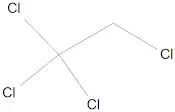
References Mukaiyama, T., et al.: Chem. Lett., 1507 (1980); Seebach, D., et al.: Chem. Ber., 115, 1705 (1982);Formula:C5H10N2OColor and Shape:NeatMolecular weight:114.1461,1,1,2-Tetrachloroethane
CAS:Controlled ProductApplications 1,1,1,2-Tetrachloroethane is a chlorinated hydrocarbon and used as a solvent for cellulose, acetate, fat, waxes, greases, rubber, and sulfur. It is a contaminant in groundwater. 1,1,1,2-Tetrachloroethane can also induce heptotoxicity.Environmental contaminants; food contaminants.
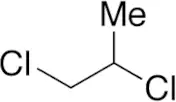
References Lorah, M. M., and Olsen, L. D. Environ. Sci. Technol. 33, 227 (1999); Zheng, R. D., et al.: J Dig Dis. 13, 321 (2012)Formula:C2H2Cl4Color and Shape:NeatMolecular weight:167.851,2-Dichloropropane
CAS:Controlled ProductApplications 1,2-Dichloropropane is a byproduct in the production of epichlorohydrin (E582310), an important industrial chemical, is a bifunctional alkylating agent with the potential to form DNA cross-links.
Not a dangerous good if item is equal to or less than 1g/ml and there is less than 100g/ml in the package
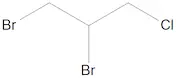
References Stratula, C., et al.: Revista. De. Chimie., 56, 677 (2005); Kaiser, E.W., et al.: J. Phy. Chem., 100, 9788 (1996);Formula:C3H6Cl2Color and Shape:NeatMolecular weight:112.991,2-Dibromo-3-chloropropane
CAS:Controlled ProductFormula:C3H5Br2ClColor and Shape:NeatMolecular weight:236.331,3-Dichloropropane
CAS:Controlled ProductApplications 1,3-Dichloropropane is an intermediate used to prepare analogs of tamoxifen with improved calmodulin antagonism.
Not a dangerous good if item is equal to or less than 1g/ml and there is less than 100g/ml in the package
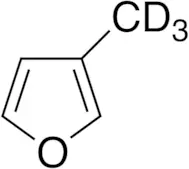
References Hardcastle, I., et al.: J. Med. Chem., 38, 241 (1995);Formula:C3H6Cl2Color and Shape:NeatMolecular weight:112.993-Methylfuran-d3 (1 mg/mL in Methanol)
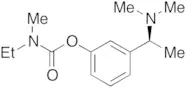
CAS:Controlled ProductFormula:C52H3H3OColor and Shape:Single SolutionMolecular weight:85.12(S)-Rivastigmine
CAS:Applications S-Rivastigmine is an isomer of Rivastigmine ( an acetylcholinesterase inhibitor used in the treatment of neurological disorders such as Alzheimer’s disease.
Not a dangerous good if item is equal to or less than 1g/ml and there is less than 100g/ml in the package
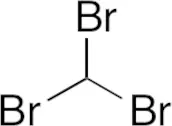
References Howes, L et al.: Drug. Safe., 37, 391 (2014); Shahar, O. et al.: Nucl. Acids Res., 42, 5869 (2014);Formula:C14H22N2O2Color and Shape:NeatMolecular weight:250.34Bromoform
CAS:Controlled ProductApplications Bromoform is a brominated organic solvent, sedative and flame retardant, in the past. Now it is mainly used as a laboratory reagent, for example as an extraction solvent.This compound is a contaminant of emerging concern (CECs)
Not a dangerous good if item is equal to or less than 1g/ml and there is less than 100g/ml in the package
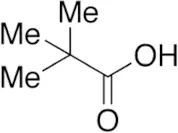
References Haag, W., et al.: Environ. Sci. Technol., 26, 1005 (1992); Giesen, D., et al.: Theoretical Chem. Accounts, 98, 85 (1997); Shvakumar, D., et al.: J. Chem. Theory Compt., 5, 919 (2009)Formula:CHBr3Color and Shape:NeatMolecular weight:252.73Pivalic Acid
CAS:Controlled ProductApplications Pivalic Acid is a metabolite of oral cephem (β-lactam) antibiotics such as S-1108, containing pivaloyl moieties.
Not a dangerous good if item is equal to or less than 1g/ml and there is less than 100g/ml in the package
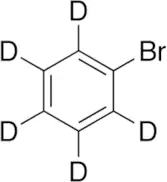
References Mizojiri, K. et al.: Antimicrob. Agents, Chemother. 39, 1445 (1995);Formula:C5H10O2Color and Shape:NeatMolecular weight:102.13Bromobenzene-d5
CAS:Controlled ProductStability Volatile
Applications The labelled version of Bromobenzene (B680145), used as a general reagent in palladium-catalyzed reactions and in the synthesis of Grignard reagents.
Not a dangerous good if item is equal to or less than 1g/ml and there is less than 100g/ml in the package
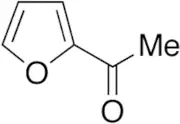
References Miyaura, N. et al.: Synth. Commun., 11, 513 (1981); Nahm, S. et al.: Tetra. Lett., 22, 3815 (1981);Formula:C62H5BrColor and Shape:NeatMolecular weight:162.042-Acetylfuran
CAS:Controlled ProductApplications 2-Acetylfuran is a widely used reagent in manufacturing pharmaceuticals and aroma compounds.
Not a dangerous good if item is equal to or less than 1g/ml and there is less than 100g/ml in the package
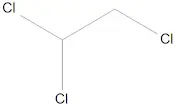
References Bertero, M., et al.: Fuel, 95, 263 (2012); Dang, Q., et al.: J. Medn. Chem., 54, 153 (2011); Candu, N., et al.: Topics. Catalysis., 52, 571 (2009);Formula:C6H6O2Color and Shape:NeatMolecular weight:110.111,1,2-Trichloroethane
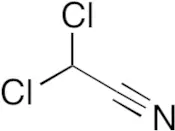
CAS:Controlled ProductFormula:C2H3Cl3Color and Shape:NeatMolecular weight:133.4Dichloroacetonitrile
CAS:Controlled ProductApplications Dichloroacetonitrile is commonly used with gas chromatography-mass spectrometry instrument to evaluate and quantify the common halogenated disinfection by products using the headspace technique.
Not a dangerous good if item is equal to or less than 1g/ml and there is less than 100g/ml in the package
References Montesinos, I., et al.: J. Chromatogr. A., 1310 113 (2013)Formula:C2HCl2NColor and Shape:NeatMolecular weight:109.94Oregon Residual Solvent Mixture 238 1000 µg/mL in Triacetin, Second Source
CAS:Controlled Product- 100-41-4
- 106-42-3
- 106-97-8
- 107-21-1
- 107-83-5
- 108-21-4
- 108-38-3
- 108-88-3
- 109-66-0
- 109-99-9
- 110-54-3
- 110-80-5
- 110-82-7
- 123-91-1
- 141-78-6
- 142-82-5
- 463-82-1
- 60-29-7
- 64-17-5
- 67-56-1
- 67-63-0
- 67-64-1
- 71-43-2
- 74-98-6
- 75-05-8
- 75-09-2
- 75-21-8
- 75-28-5
- 75-83-2
- 78-78-4
- 78-92-2
- 79-29-8
- 95-47-6
- 96-14-0
- 98-82-8
Formula:C4H8O2Color and Shape:MixtureMolecular weight:88.11