Volatile Organic Compound (VOC) Standards
Found 192 products of "Volatile Organic Compound (VOC) Standards"
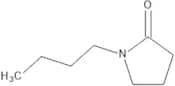
1-Butylpyrrolidin-2-one
CAS:Controlled ProductApplications 1-BUTYLPYRROLIDIN-2-ONE (cas# 3470-98-2) is a useful research chemical.
Formula:C8H15NOColor and Shape:ColourlessMolecular weight:141.214-Isopropylthioxanthone
CAS:Applications 4-Isopropylthioxanthone is a thioxanthone derivative useful as photoinitiators.
References Ginex, T., et al.: Chem. Res. Toxicol., 27, 279 (2014); Reitsma, M., et al.: Toxicol. Sci., 133, 345 (2013);Formula:C16H14OSColor and Shape:Light YellowMolecular weight:254.351,4-Dichlorobenzene-d4
CAS:Controlled ProductApplications 1,4-Dichlorobenzene-d4 is labelled 1,4-Dichlorobenzene (D431875), a versatile building block and a small bioactive molecule, used in various organic synthesis. It is also used as disinfectant, deodorant, and pesticide.
Not a dangerous good if item is equal to or less than 1g/ml and there is less than 100g/ml in the package
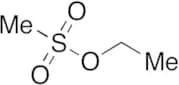
References Fahey, D. R., et al.: Macromolecules, 24 (15), 4242 (1991); Rossberg, M., et al.: Ullmann's Encyclopedia of Industrial Chemistry, (2006);Formula:C6D4Cl2Color and Shape:ColourlessMolecular weight:151.027Ethyl Methanesulfonate
CAS:Controlled ProductStability Moisture Sensitive
Applications Ethyl Methanesulfonate is used in studies as DNA damage specific control of cell death by cryptochrome in p53-mutant Ras-transformed cells.
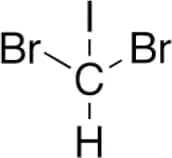
References Lee, J.H., et al.: Cancer Res., 73, 785 (2013);Formula:C3H8O3SColor and Shape:NeatMolecular weight:124.16Dibromoiodomethane (90%)
CAS:Stability Light Sensitive, Volatile
Applications Dibromoiodomethane was found as a disinfection byproducts in European drinking water.
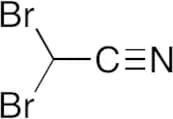
References Jeong, C.H., et al.: Environ. Sci. Technol. 46, 12120 (2012); Krasner, S.W., et al.: Proceed. Water. Qual. Technol. Confer., 1592 (2001);Formula:CHBr2IPurity:90%Color and Shape:Dark Red To Dark BrownMolecular weight:299.73Dibromoacetonitrile
CAS:Controlled ProductStability Light Sensitive
Applications Dibromoacetonitrile is a carcinogenic nitrogenous disinfection byproduct. Dibromoacetonitrile in drinking water was linked to oral cavity cancer in rats and forestomach cancer in mice. In addition, Dibromoacetonitrile may cause oxidative damage in rat brain.
Not a dangerous good if item is equal to or less than 1g/ml and there is less than 100g/ml in the package
References Guo, Z., et al.: Chem. Eng. J. 306, 1180 (2016); Krasner, S. W., et al.: Environ. Sci. Technol. 50, 9583 (2016); Natl Toxicol Program Tech Rep Ser. 544, 1 (2010); Klattisaksiri, P., et al.: Water Res 98, 160 (2016); Sayed, R. H., et al.: Environ Toxicol Pharmacol. 34, 849 (2012)Formula:C2HBr2NColor and Shape:ColourlessMolecular weight:198.84tert-Butyl Methyl Ether
CAS:Applications tert-Butyl Methyl Ether is used in the preparation of gasolines, acting as an oxygenate to improve octane index and combustion efficiency (1). A mutagenic component of the mixtures present in the environment through degredation (2). Drinking water contaminant candidate list 3 (CCL 3) compound as per United States Environmental Protection Agency (EPA), environmental, and food contaminants.
Not a dangerous good if item is equal to or less than 1g/ml and there is less than 100g/ml in the package
References 1. Landmeyer, J. et al.: Ground Water Monit. R. 1998 Nov:18(4) p93-1022. Fayolle, F. et al.: Appl. Microbiol. Biotechnol. 2001 Aug;56(3-4):339-49.Formula:C5H12OColor and Shape:ColourlessMolecular weight:88.15n-Heptane
CAS:Applications n-Heptane is used a component of blended fuel compositions as well as a solvent in organic chemical reactions.
Not a dangerous good if item is equal to or less than 1g/ml and there is less than 100g/ml in the package
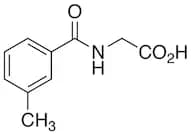
References Ding, Y. et al.: J. Haz. Mat., 271, 82 (2014); Xu, H. et al.: J. Chem. Eng. Dat., 59, 1281 (2014);Formula:C7H16Color and Shape:ColourlessMolecular weight:100.23-Methyl Hippuric Acid
CAS:Controlled ProductApplications Α substituted hippurate analog as substrates and inhibitor of peptidylglycine α-hydroxylating monooxygenase (PHM).
References Kruse, L., et al.: J. Med. Chem., 33, 781 (1990), Jeng, A., et al.: J. Biol. Chem., 272, 14666 (1997), Schally, A., et al.: Horm. Metab. Res., 40, 315 (2008),Formula:C10H11NO3Color and Shape:Off-WhiteMolecular weight:193.2Hippuric Acid
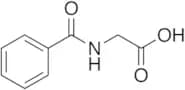
CAS:Controlled ProductApplications N-Benzoylglycine also known as Hippuric Acid is the glycine conjugate of benzoic acid commonly found in ruminant urine. Hippuric acid is synthesized in the liver and its production is greatly increased following consumption of benzoic acid. In itself it does not have a direct biological function, however p-hydroxy-hippurica acid can be used as an inhibitor of Ca2+ ATPase.A possible biomarker of Parkinson’s disease.
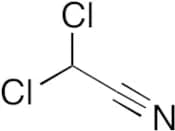
References Jankowski J. T. et. al.: Kidney Int. 78, 84 (2001); Chem. and Eng. News p. 13, Apr. 1, (2019)Formula:C9H9NO3Color and Shape:NeatMolecular weight:179.17Dichloroacetonitrile
CAS:Controlled ProductApplications Dichloroacetonitrile is commonly used with gas chromatography-mass spectrometry instrument to evaluate and quantify the common halogenated disinfection by products using the headspace technique.
Not a dangerous good if item is equal to or less than 1g/ml and there is less than 100g/ml in the package
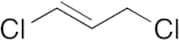
References Montesinos, I., et al.: J. Chromatogr. A., 1310 113 (2013)Formula:C2HCl2NColor and Shape:NeatMolecular weight:109.94trans-1,3-Dichloropropene
CAS:Stability Light Sensitive
Applications trans-1,3-Dichloropropene is used in a biological study to evaluate the fumigant emission and distribution in relation to soil moisture and texture.
Not a dangerous good if item is equal to or less than 1g/ml and there is less than 100g/ml in the package
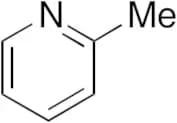
References Qin, R., et al.: Chemosphere, 90, 866 (2013)Formula:C3H4Cl2Color and Shape:Clear ColourlessMolecular weight:110.972-Picoline
CAS:Controlled ProductApplications 2-Picoline is used as a reagent in the synthesis of 2-Picolineborane, a non-toxic alternative to sodium borohydride for the labelling of oligosaccharides.
Not a dangerous good if item is equal to or less than 1g/ml and there is less than 100g/ml in the package
References Renee Ruhaak, L., et al.: Proteomics, 10, 2330 (2010)Formula:C6H7NColor and Shape:NeatMolecular weight:93.131-Bromopropane
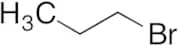
CAS:Controlled ProductStability Volatile
Applications 1-Bromopropane, is used as a solvent and for the cleaning of metal surfaces, removal of soldering residues from electronic circuit boards. It is anticipated to be human carcinogen.
Not a dangerous good if item is equal to or less than 1g/ml and there is less than 100g/ml in the package
References Lingyo Zh., et al.: Toxicology, 304, 76 (2013); Samukawa, M. et al.: Archives Internal Med., 172(16), 1257 (2012);Formula:C3H7BrColor and Shape:NeatMolecular weight:122.99Chlorbutanol Hemihydrate
CAS:Applications Chlorbutanol Hemihydrate acts as a fish anaesthetic, primarily on members of the octopus species. Also used as an ophthalmic antimicrobial preservative agent (1).
References (1) Amin, A. et al.;Pharm. Dev. Tech., 17, 614 (2012)Formula:C4H7Cl3O·H2OColor and Shape:White To Off-WhiteMolecular weight:372.93Methylene Chloride-d2
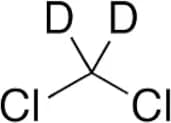
CAS:Controlled ProductStability Volatile
Applications Labelled Methylene Chloride used in organic chemical reactions as a general solvent.
Not a dangerous good if item is equal to or less than 1g/ml and there is less than 100g/ml in the package
References Fulmer, G. et al.: Organometal., 29, 2176 (2010); Kobayashi, M. et al.: J. Porph. Pthalo., 16, 359 (2012);Formula:C2H2Cl2Color and Shape:Colourless LiquidMolecular weight:86.941-Chlorobutane
CAS:Stability Volatile
Applications 1-Chlorobutane is used in biological studies to evaluate the activity of haloalkan dehalogenase from Sphingomonas paucimobilis.
Not a dangerous good if item is equal to or less than 1g/ml and there is less than 100g/ml in the package
References Oakley, A.J., et al.: Biochem., 41, 4847 (2002)Formula:C4H9ClColor and Shape:NeatMolecular weight:92.57Isobutyric Acid
CAS:Controlled ProductApplications Isobutyric acid is used in biological studies to discriminate between the different volatile compounds found in wines and beers.
Not a dangerous good if item is equal to or less than 1g/ml and there is less than 100g/ml in the package
References Dourtoglou, V., et al.: Food Chem., 159, 181 (2014); Webber, V., et al.: Food Chem., 159, 391 (2014)Formula:C4H8O2Color and Shape:ColourlessMolecular weight:88.11Isoflurane
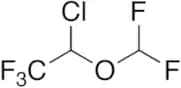
CAS:Applications Isoflurane is a halogenated ether used for inhalational anesthesia. Recent studies suggest that there might be a relationship between administration of isoflurane and postoperative cognitive dysfunction (POCD).
Not a dangerous good if item is equal to or less than 1g/ml and there is less than 100g/ml in the package
References Lewis, M.C. et al.: Med. Hypoth., 68, 484 (2007); Mellon, R.D. et al.: Anesth. Analg., 104, 509 (2007);Formula:C3H2ClF5OColor and Shape:NeatMolecular weight:184.49