Food Industry Standards
Food industry standards are critical reference materials used to ensure the safety, quality, and consistency of food products. These standards are employed in the analysis and testing of foodstuffs, including contaminants, additives, and nutritional components. At CymitQuimica, we provide high-quality food industry standards to support compliance with food safety regulations and quality control measures.
Subcategories of "Food Industry Standards"
- Beverage Standards(7 products)
- Dairy Standards(39 products)
- Food Contact Materials(1,075 products)
- Wine Standards(47 products)
Found 7936 products of "Food Industry Standards"
Sort by
Purity (%)
0
100
|
0
|
50
|
90
|
95
|
100
Hexahydrocoumarin
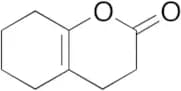
CAS:Controlled Product<p>Applications Hexahydrocoumarin,is the derivative of Coumarin (C755380). It was formerly used as a fragrance ingredient.<br> Not a dangerous good if item is equal to or less than 1g/ml and there is less than 100g/ml in the package<br>References Letizia, C. S., et al.: Food and Chemical Toxicology, 38, S115 (2000);<br></p>Formula:C9H12O2Color and Shape:NeatMolecular weight:152.193-Acetyldeoxynivalenol
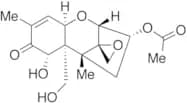
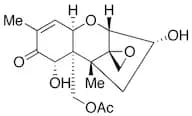
CAS:Controlled Product<p>Stability Appears to decompose in DMSO<br>Applications 3-Acetyldeoxynivalenol is a trichothecene mycotoxin that is produced in a plant-pathogenic fungus, Fusarium graminearum Schwabe.Environmental contaminants; Food contaminants<br> Not a dangerous good if item is equal to or less than 1g/ml and there is less than 100g/ml in the package<br>References Beyer, M., et al.: Int. J. Food. Microbiol., 119, 153 (2007); Schiefer, H.B., et al.: Can. J. Comp. Med., 49, 315 (1985); Mirocha, C.J., et al.: App. Enviro.Microbiol., 55, 1315 (1989);<br></p>Formula:C17H22O7Color and Shape:WhiteMolecular weight:338.35Isosorbide-13C6 5-Mononitrate, 90%
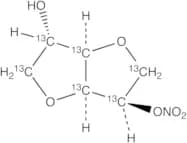
CAS:Formula:C6H9NO6Purity:90%Color and Shape:White to Light Green SolidMolecular weight:197.09Verruculogen
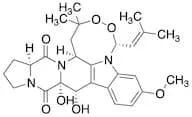
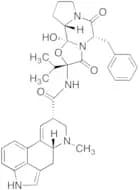
CAS:<p>Applications Verruculogen is a mycotoxin and novel mammalian cell cycle inhibitors produced by Aspergillus fumigatus.<br> Not a dangerous good if item is equal to or less than 1g/ml and there is less than 100g/ml in the package<br>References Cui, C. et al.: Jour. of Ant., 49(6), 527-533, (1996)<br></p>Formula:C27H33N3O7Color and Shape:NeatMolecular weight:511.572-Chloroethanol-1,1,2,2-d4
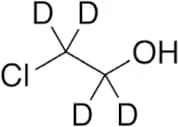
CAS:Controlled Product<p>Applications 2-Chloroethanol is used in the preparation of TTFTT (tetrathiafulvalene-2,3,6,7-tetrathiolate) and important building block in TTF syntheis. In addition, it is used in the synthesis of vinyltriazoles. This is the labeled analog.<br>Dangerous Goods Info This compound is forbidden to ship by air under IATA regulations.<br>References Svenstrup, N. et al.: Synthesis, 8, 809 (1994); Thibault, R. et al.: J. Am. Chem. Soc., 128, 12084 (2006);<br></p>Formula:C22H4ClOHColor and Shape:Colourless OilMolecular weight:84.54Dihydro Artemisinin-d3
CAS:<p>Stability Unstable in Solution<br>Applications The main labelled metabolite of Artemisinin, Arteether, Artemether, Artesunate. An active antimalarial metabolite.<br>References e Vries, P., et al.: Drugs, 52, 818 (1996), Kamolrat, S., et al.: Antimicrob. Agents Chemother., 47, 3795 (2003), Mithwani, S., et al.: Br. J. Clin. Pharmacol., 57, 146 (2004),<br></p>Formula:C152H3H21O5Color and Shape:White to Off-White SolidMolecular weight:287.37Piperonyl Butoxide
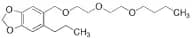
CAS:Controlled Product<p>Applications Insecticide synergist, especially for pyrethroids and rotenone. Useful in cannabis testing kits as a component of pesticide mixes (P698230).<br> Not a dangerous good if item is equal to or less than 1g/ml and there is less than 100g/ml in the package<br>References Gaines, T. B., et al.; Toxicol. Appl. Pharmacol., 14, 515 (1969),<br></p>Formula:C19H30O5Color and Shape:Light Yellow To Light BrownMolecular weight:338.4415-Acetyl Deoxynivalenol (~90%)
CAS:Controlled Product<p>Applications A mycotoxin produced by the fungi Fusarium culmorum and Fusarium graminearum, inhibits protein synthesis.Environmental contaminants; Food contaminants<br> Not a dangerous good if item is equal to or less than 1g/ml and there is less than 100g/ml in the package<br>References Ashraf, A.; et al.: Int. J. Biol. Biotechnol., 4, 391 (2007), Burlakoti, R., et al.: App. Environ. Microbiol., 74, 6513 (2008), Steinmetz, W., et al.: Eur. J. Med. Chem., 44, 4485 (2009), Zhang, Y., et al.: Phytopathol., 99, 95 (2009),<br></p>Formula:C17H22O7Purity:~90%Color and Shape:WhiteMolecular weight:338.35Chlorfenvinphos (E/Z mixture)
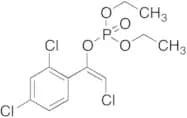
CAS:Controlled Product<p>Stability Moisture Sensitive<br>Applications Chlorfenvinphos is derived from α,2,4-Trichloroacetophenone (T774315), which is a reagent used in the synthesis of isoconazole, a potent anti-fungal agent. Pesticide.<br> Not a dangerous good if item is equal to or less than 1g/ml and there is less than 100g/ml in the package<br>References Dulcevscaia, G. et al.: Polyhed., 52, 106 (2013); Wang, Y. et al.: Bioorg. Med. Chem. Lett., 22, 5363 (2012); Olivieira, B. R., et al.: Environ. Sci. Pollut. R., 22, 11781-11791 (2015)<br></p>Formula:C12H14Cl3O4PColor and Shape:NeatMolecular weight:359.572-Propen-1,1,2,3,3-d5-1-ol
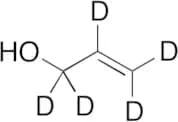
CAS:Formula:C32H5HOColor and Shape:Clear Colourless OilMolecular weight:63.11