APIs for research and impurities
Subcategories of "APIs for research and impurities"
- Aminoacids and derivatives(12,441 products)
- Anthraquinones and derivatives(407 products)
- Benzimidazole and Imidazole Derivatives(10,465 products)
- Benzodiazepine Derivatives(335 products)
- Carbohydrates and glycoconjugates(5,388 products)
- Esters and Derivatives(42,307 products)
- Fatty Acids and Lypidic Derivatives(32,488 products)
- Flavonoids and Polyphenols(17,101 products)
- Free Radicals and Oxidant/Reducing Agents(214 products)
- Ketones and derivatives(2,692 products)
- Natural and semi-synthetic antibiotics(6,411 products)
- Nitriles and Cyano Derivatives(3,070 products)
- Nitrosamines and Derivatives(55 products)
- Nucleosides and Nucleotides(3,492 products)
- Organic Phosphates and Phosphonates(1,205 products)
- Organic Sulphonates and Sulphates(10,452 products)
- Organometallics(4,425 products)
- Others(6,340 products)
- Peptides and Proteins(3,163 products)
- Polymers and Derivatives(100 products)
- Purines and Pyrimidine Derivatives(8,975 products)
- Quinazoline and Quinoline Derivatives(66,221 products)
- Quinones and Derivatives(24,379 products)
- Salts and Derivatives of Active Pharmaceutical Ingredients (API)(92,967 products)
- Steroids and Derivatives(4,987 products)
- Sulfonamides and Derivatives(2,607 products)
- Terpenoids and Derivatives(3,871 products)
- Thiazolidinediones and Thiopyrans(2,755 products)
- β-Adrenergic Compounds(232 products)
Found 66884 products of "APIs for research and impurities"
Bisoprolol impurity K
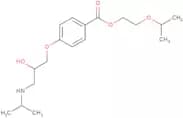
CAS:Bisoprolol impurity K is a drug product that is an analytical standard used for the detection and identification of bisoprolol in pharmaceutical products. It is a synthetic impurity with CAS No. 864544-37-6 that does not have any pharmacological activity. Bisoprolol impurity K is a high purity HPLC standard that can be used to develop analytical methods for the determination of bisoprolol in pharmaceutical products.
Formula:C18H29NO5Purity:Min. 95%Color and Shape:White PowderMolecular weight:339.43 g/molCiprofloxacin impurity A
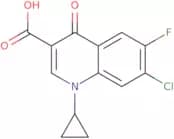
CAS:Ciprofloxacin impurity A is an analog of ciprofloxacin and is a pharmaceutical preparation that belongs to the class of fluoroquinolones. It has been shown to be active against P. aeruginosa and other gram-negative bacteria in wastewater treatment systems. Ciprofloxacin impurity A is activated by ethylene diamine and can be eluted with acidic solvents. It also inhibits tumor cell line growth through adsorption mechanism and is used as a drug for cancer chemoprevention in combination with malic acid.Formula:C13H9ClFNO3Purity:Min. 95%Color and Shape:PowderMolecular weight:281.67 g/molN-[[2'-(2H-Tetrazol-5-yl)[1,1'-biphenyl]-4-yl]methyl]-L-Valine
CAS:N-[[2'-(2H-Tetrazol-5-yl)[1,1'-biphenyl]-4-yl]methyl]-L-Valine is a synthetic, nonstandardized HPLC standard that is used in drug development and metabolism studies. It is not available as a natural product, but can be made synthetically. N-[[2'-(2H-Tetrazol-5-yl)[1,1'-biphenyl]-4-yl]methyl]-L-Valine has the CAS No. 676129-92-3 and impurity standards are available for this compound.
Formula:C19H21N5O2Purity:Min. 95%Color and Shape:PowderMolecular weight:351.4 g/molOlsalazine sodium impurity G
Olsalazine sodium impurity G is an API impurity. It is an important impurity in the production of Olsalazine Sodium, which is a drug for the treatment of inflammatory bowel disease and ulcerative colitis. This compound has been shown to have a high purity level and a pharmacopoeia grade. The CAS number for this compound is 1209-03-9. This compound can be synthesized using organic chemistry methods, or it can be extracted from natural resources such as plants or animal tissues.Formula:C21H14N2O9Purity:Min. 95 Area-%Molecular weight:438.34 g/mol2-Isopropyl-6-propylphenol
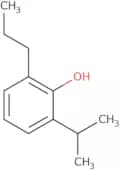
CAS:2-Isopropyl-6-propylphenol is a reactive alkylating agent that reacts with proteins and enzymes. It binds to the hydroxyl group of a protein target, which modifies the activity of the target molecule by introducing a new functional group. 2-Isopropyl-6-propylphenol has been shown to bind to the active site of several enzymes, including human serum albumin and cytochrome P450 reductase. The binding constants for these targets have been determined computationally using an algorithm based on quantum chemical calculations. These values are in good agreement with experimental data obtained from titration calorimetry experiments at different temperatures.
Formula:C12H18OPurity:Min. 95%Color and Shape:Clear LiquidMolecular weight:178.27 g/molN-[(1R)-1-(1-Naphthalenyl)ethyl]carbamic acid 3-[3-(trifluoromethyl)phenyl]propyl] ester
CAS:N-[(1R)-1-(1-Naphthalenyl)ethyl]carbamic acid 3-[3-(trifluoromethyl)phenyl]propyl] ester is a drug product. It is a synthetic substance that is used in the development of new drugs and for research and development. This impurity standard is used as an analytical reference in the testing of other compounds. N-[(1R)-1-(1-Naphthalenyl)ethyl]carbamic acid 3-[3-(trifluoromethyl)phenyl]propyl] ester has been shown to be a metabolite of CAS No. 915979-44-1, which is also known as N-[(2S)-2-[[5-[3-(Trifluoromethoxy)phenoxy]-2-pyridinyl]methyl]-2,5-dioxopyrrolidin-1-yl]-3,
Formula:C23H22F3NO2Purity:Min. 95%Color and Shape:Colorless to yellow liquid.Molecular weight:401.42 g/molBis[N-[2-[[[5-[(dimethylamino)methyl]furan-2-yl]methyl]thio]ethyl]-N'-methyl-2,2-diamino-1-nitroethenyl]methane
CAS:Impurity arising druring the synthesis of ranitidineFormula:C27H44N8O6S2Purity:Min. 95%Color and Shape:Orange PowderMolecular weight:640.82 g/molD-Ser(8)-Semaglutide
D-Ser(8)-Semaglutide is a semaglutide impurity. The amino acid at position 8 has been replaced by the D-form of the amino acid D-serine (D-Ser). Semaglutide impurities are structurally related compounds that arise during synthesis, purification, or storage of semaglutide, a long-acting GLP-1 receptor agonist for managing type 2 diabetes and obesity.Formula:C187H291N45O59Molecular weight:4,113.64 g/molPhytofluene
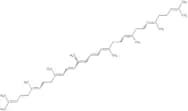
CAS:Phytofluene is a natural compound that has been found to have potential as an anticancer agent. It acts as an inhibitor of cancer cell growth and induces apoptosis, or programmed cell death, in tumor cells. Phytofluene has been shown to inhibit the activity of several important proteins involved in cancer development, including chitinase and heparin-binding protein. It is derived from Chinese medicinal plants and has been used for centuries for its anti-inflammatory and antioxidant properties. In addition to its anticancer effects, phytofluene has also been found to inhibit the activity of kinases in human urine, suggesting a potential role in the treatment of other diseases such as diabetes and cardiovascular disease.Formula:C40H62Purity:Min. 95%Molecular weight:542.9 g/molTopiramate N-methyl impurity
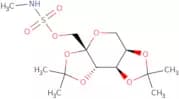
CAS:Topiramate is a drug used to treat epilepsy and weight loss. The N-methyl impurity is a synthetic compound that is an impurity in the drug product. The impurity was synthesized by reacting 4-hydroxybenzaldehyde with methylamine in the presence of triethylamine. It has been shown to be not metabolized, but excreted unchanged in urine.Formula:C13H23NO8SPurity:Min. 95%Color and Shape:Colourless LiquidMolecular weight:353.39 g/mol5-Benzoyl-N-[2-hydroxy-1,1-bis(hydroxymethyl)ethyl]-2,3-dihydro-1H-pyrrolizine-1-carboxamide, racemic
CAS:5-Benzoyl-N-[2-hydroxy-1,1-bis(hydroxymethyl)ethyl]-2,3-dihydro-1H-pyrrolizine-1-carboxamide is a drug product that is used in research and development. It is a synthetic compound with niche applications. It has been shown to be metabolized in animal studies and the metabolism pathways have been elucidated. The analytical impurity standard for this drug product is 5-(benzoylamino)-N-[2-(hydroxymethyl)propanoyl]-2,3,-dihydro-1H-pyrrolizine-1 -carboxamide. This compound can be custom synthesized and also has an HPLC standard available.Formula:C19H22N2O5Purity:Min. 95%Color and Shape:PowderMolecular weight:358.39 g/molBis{2-[(2S-trans)-Methyl 7-chloro-6,7,8-trideoxy-6-[((1-methyl-4-propyl-2-pyrrolidinyl)-carbonyl)amino]-1-thio-L-threo-a-D-galacto-o ctopyranoside]} pyrophosphate
CAS:CAS No. 37450-78-5, drug product, Custom synthesis, High purity, analytical, Metabolism studies, Natural, Drug development, pharmacopoeia, Metabolite, niche, SyntheticFormula:C36H66Cl2N4O15P2S2Purity:Min. 95%Molecular weight:991.91 g/mol(1S)-1-Phenyl-1,2,3,4-tetrahydroisoquinoline
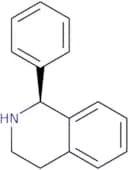
CAS:(1S)-1-Phenyl-1,2,3,4-tetrahydroisoquinoline is a drug used to treat depression. It is an antidepressant drug that inhibits the reuptake of serotonin and norepinephrine in the brain by blocking their transport into the nerve cells. The drug acts as a weak inhibitor of monoamine oxidase (MAO). It also has an effect on bladder function. This compound is synthesized from 1-phenyl-2,5-dihydrothiazole by way of a sequence of reactions that includes the formation of an amine salt via reaction with phosphorus pentoxide and chloroacetic acid followed by conversion to the chloride with thionyl chloride.Formula:C15H15NPurity:Min. 95%Color and Shape:White PowderMolecular weight:209.29 g/molN,N-Dimethyl-3-(1-naphthalenyloxy)-3-(2-thienyl) propanamine tartrate
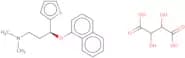
CAS:N,N-Dimethyl-3-(1-naphthalenyloxy)-3-(2-thienyl) propanamine tartrate (DMNPA) is a synthetic compound with the molecular formula C14H17NO. DMNPA is used as an analytical reference standard for the quantification of N,N-dimethyl-3-(1-naphthalenyloxy)-3-(2thienyl) propanamine HCl by HPLC. DMNPA has been shown to be a metabolite of the drug product, where it is formed from oxidation of the parent drug.Formula:C19H21NOS·C4H6O6Purity:Min. 95%Molecular weight:461.53 g/molClarithromycin EP Impurity K
CAS:Clarithromycin EP Impurity K is an impurity standard for Clarithromycin in the form of a crystalline white powder. It is a synthetic compound which has been used as a drug product and as an analytical standard. This compound can be synthesized from erythromycin A, but it is not active against bacteria. Clarithromycin EP Impurity K has been shown to have metabolite properties in animals and humans, including metabolism studies with HPLC standards.
Formula:C30H51NO8Purity:Min. 95 Area-%Color and Shape:PowderMolecular weight:553.73 g/molDi-2-thienylmethanone
CAS:Di-2-thienylmethanone is a pyrazole with an activation energy of about 10.5 kcal/mol. It has been found to be toxic and can cause cell lysis. This molecule has been used in the synthesis of a number of drugs, including thiopental, a barbiturate that is used as an anaesthetic. Di-2-thienylmethanone is also the precursor for the synthesis of fluoroquinolones, which are potent antibacterial agents. The Friedel-Crafts reaction is one way this molecule is synthesized, and it involves the addition of an alkyl halide to an unsaturated double bond. This reaction is named after Charles Friedel and James Crafts who first discovered it in 1877.
Formula:C9H6OS2Purity:Min. 95%Color and Shape:White PowderMolecular weight:194.28 g/mol(RS)-Di-(2-methoxyethyl) 1,4-dihydro-2,6-dimethyl-4-(3-nitrophenyl)pyridine-3,5-dicarboxylate
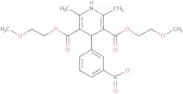
CAS:(RS)-Di-(2-methoxyethyl) 1,4-dihydro-2,6-dimethyl-4-(3-nitrophenyl)pyridine-3,5-dicarboxylate is an impurity standard for the API (Active Pharmaceutical Ingredient) Impurity Standard. It may be used as a reference compound in HPLC analyses of analytical samples. This compound has been evaluated by the National Institute of Standards and Technology (NIST) to be a niche HPLC standard. It is also a metabolite of the drug product Metaxalone.Formula:C21H26N2O8Purity:Min. 95%Color and Shape:Slightly Yellow PowderMolecular weight:434.44 g/molOlmesartan medoxomil
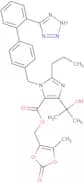
CAS:Olmesartan is a drug that belongs to the class of angiotensin II receptor antagonists. It is used for the treatment of high blood pressure, heart failure, and kidney disease. The therapeutic effect of olmesartan can be increased by concomitant use with other drugs if it is being used as a combination therapy. This drug interacts with many other drugs, including diuretics and ACE inhibitors. Drugs that are known to interact with olmesartan include furosemide, hydrochlorothiazide, amiloride, spironolactone, triamterene, chlorothiazide and quinethazone. Blood sampling is often required during therapy in order to monitor the efficacy of this drug.
Formula:C29H30N6O6Purity:Min. 95%Color and Shape:White PowderMolecular weight:558.59 g/mol2-Amino-5,6-dichloro-3(4H)-quinazoline acetic acid ethyl ester hydrobromide
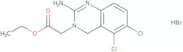
CAS:2-Amino-5,6-dichloro-3(4H)-quinazoline acetic acid ethyl ester hydrobromide is a drug development impurity that belongs to the group of API impurities. It is an impurity standard for HPLC and also appears as a metabolite in animal studies. This compound has been shown to have a high purity and can be used as a custom synthesis or analytical standard. 2-Amino-5,6-dichloro-3(4H)-quinazoline acetic acid ethyl ester hydrobromide is also an impurity in the drug product called "NOVOQUINOL". The compound has been found to be an intermediate in metabolism studies.Formula:C12H14BrCl2N3O2Purity:Min. 95%Color and Shape:PowderMolecular weight:383.07 g/mol

![N-[[2'-(2H-Tetrazol-5-yl)[1,1'-biphenyl]-4-yl]methyl]-L-Valine](/_next/image/?url=https%3A%2Fstatic.cymitquimica.com%2Fproducts%2F3D%2Fthumb-webp%2FIT106480.webp&w=3840&q=75)
![N-[(1R)-1-(1-Naphthalenyl)ethyl]carbamic acid 3-[3-(trifluoromethyl)phenyl]propyl] ester](/_next/image/?url=https%3A%2Fstatic.cymitquimica.com%2Fproducts%2F3D%2Fthumb-webp%2FIN58184.webp&w=3840&q=75)
![Bis[N-[2-[[[5-[(dimethylamino)methyl]furan-2-yl]methyl]thio]ethyl]-N'-methyl-2,2-diamino-1-nitroet…](/_next/image/?url=https%3A%2Fstatic.cymitquimica.com%2Fproducts%2F3D%2Fthumb-webp%2FIB57852.webp&w=3840&q=75)

![5-Benzoyl-N-[2-hydroxy-1,1-bis(hydroxymethyl)ethyl]-2,3-dihydro-1H-pyrrolizine-1-carboxamide, race…](/_next/image/?url=https%3A%2Fstatic.cymitquimica.com%2Fproducts%2F3D%2Fthumb-webp%2FIB58063.webp&w=3840&q=75)