APIs for research and impurities
Subcategories of "APIs for research and impurities"
- Aminoacids and derivatives(12,440 products)
- Anthraquinones and derivatives(407 products)
- Benzimidazole and Imidazole Derivatives(10,464 products)
- Benzodiazepine Derivatives(335 products)
- Carbohydrates and glycoconjugates(5,388 products)
- Esters and Derivatives(42,306 products)
- Fatty Acids and Lypidic Derivatives(32,486 products)
- Flavonoids and Polyphenols(17,100 products)
- Free Radicals and Oxidant/Reducing Agents(214 products)
- Ketones and derivatives(2,692 products)
- Natural and semi-synthetic antibiotics(6,409 products)
- Nitriles and Cyano Derivatives(3,070 products)
- Nitrosamines and Derivatives(55 products)
- Nucleosides and Nucleotides(3,492 products)
- Organic Phosphates and Phosphonates(1,205 products)
- Organic Sulphonates and Sulphates(10,451 products)
- Organometallics(4,425 products)
- Others(6,340 products)
- Peptides and Proteins(3,164 products)
- Polymers and Derivatives(100 products)
- Purines and Pyrimidine Derivatives(8,975 products)
- Quinazoline and Quinoline Derivatives(66,222 products)
- Quinones and Derivatives(24,379 products)
- Salts and Derivatives of Active Pharmaceutical Ingredients (API)(92,942 products)
- Steroids and Derivatives(4,987 products)
- Sulfonamides and Derivatives(2,607 products)
- Terpenoids and Derivatives(3,860 products)
- Thiazolidinediones and Thiopyrans(2,755 products)
- β-Adrenergic Compounds(231 products)
Found 66875 products of "APIs for research and impurities"
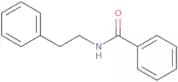
N-(2-Phenethyl)benzamide
CAS:N-(2-Phenethyl)benzamide (NPEB) is a molecule that belongs to the group of reactive molecules. It has been shown to be toxic to gram-positive bacteria, such as Staphylococcus aureus and Bacillus subtilis, but not gram-negative bacteria such as Escherichia coli. NPEB also has been shown to have locomotor activity in animals, which may be due to its ability to inhibit the mitochondrial electron transport chain and inhibit ATP production. NPEB's biological properties are well characterized. FTIR spectroscopy showed that this molecule has an amide functional group and is a small molecule with a molecular weight of 176.4 g/mol. This molecule was also found to be able to bind to mitochondria in animals.Formula:C15H15NOPurity:Min. 97 Area-%Color and Shape:PowderMolecular weight:225.29 g/molRitonavir Impurity G
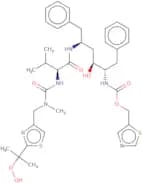
CAS:Ritonavir is a protease inhibitor that prevents HIV from replicating. It binds to the active site of the protease enzyme and inhibits its activity, which prevents the conversion of viral proteins into their respective functional forms. Ritonavir impurity G is a metabolite that is not present in the final drug product. This impurity standard has been characterized by HPLC and NMR spectroscopy.Formula:C37H48N6O7S2Purity:Min. 95%Molecular weight:752.9 g/molOmeprazole impurity F and G
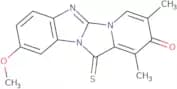
CAS:Omeprazole is a proton pump inhibitor that inhibits the H+/K+-ATPase enzyme in gastric parietal cells. Omeprazole impurity F and G are metabolites of omeprazole. Omeprazole impurity F is a metabolite of omeprazole that forms by oxidation of the methylthio group in omeprazole to form a sulfoxide. Omeprazole impurity G is formed by hydrolysis of the methylthio group in omeprazole to form an alcohol. The purity of this product is high and can be custom synthesized based on customer's needs. It is also available as an HPLC standard or as an API impurity for use in metabolism studies.Formula:C16H13N3O2SPurity:Min. 95%Color and Shape:Red PowderMolecular weight:311.36 g/molN-Nitroso-N-methyl-4-aminobutyric acid
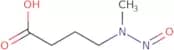
CAS:N-Nitroso-N-methyl-4-aminobutyric acid (NMBA) is a solid with a low melting point which has been identified as a potentially carcinogenic component of both tobacco and tobacco smoke. NMBA is also one of a number of nitrosamine impurities which have been found to be present in angiotensin II receptor blocker (ARB) drugs used to treat high blood pressure.
Formula:C5H10N2O3Purity:Min. 98 Area-%Color and Shape:Slightly Yellow PowderMolecular weight:146.14 g/molN-Acetyldesloratadine
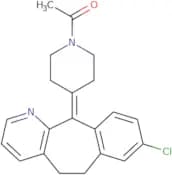
CAS:N-Acetyldesloratadine is a second generation antihistamine that has high affinity for histamine H1 receptors. It is an orally active drug that is used to treat allergic rhinitis, chronic idiopathic urticaria, and pruritus. N-Acetyldesloratadine has been shown to inhibit platelet aggregation in vitro and in vivo. This activity may be due to the drug's ability to bind with high affinity to histamine receptor sites on the membranes of platelets, thereby inhibiting the binding of adenosine diphosphate (ADP) to its receptor site. N-Acetyldesloratadine also inhibits the release of serotonin from mast cells and basophils in vitro.Formula:C21H21ClN2OPurity:Min. 95%Molecular weight:352.9 g/molO3-Desethyl apremilast
CAS:O3-Desethyl apremilast is an experimental drug product that belongs to the class of drug products. This drug product has been shown to be a natural, synthetic and analytical impurity in API. It is also an impurity standard for HPLC analysis. O3-Desethyl apremilast can be used in research and development, as well as niche applications in the pharmaceutical industry.
Formula:C20H20N2O7SPurity:Min. 95%Color and Shape:PowderMolecular weight:432.45 g/molRemdesivir nucleoside monophosphate
CAS:Remdesivir is a nucleoside monophosphate that inhibits the HIV-1 reverse transcriptase and HIV-1 protease. This drug is used to treat human immunodeficiency virus (HIV) and acquired immune deficiency syndrome (AIDS). Remdesivir blocks the viral life cycle by preventing the production of new viruses. It also has an affinity for polymerase and phosphatase, which are enzymes necessary for viral replication. Remdesivir is uncharged, so it can be taken orally.
Remdesivir does not work against all strains of HIV, but it does inhibit some strains more than others.Formula:C12H14N5O7PPurity:Min. 95%Color and Shape:PowderMolecular weight:371.24 g/mol6-Chloro-4-(2-chlorophenyl)-2-quinazolinecarboxaldehyde
CAS:6-Chloro-4-(2-chlorophenyl)-2-quinazolinecarboxaldehyde is a colorimetric reagent that can be used to detect Cl. It has been shown to react with Cl in the presence of an acidic solution and produce a red color. The reagent is stable in organic solvents, such as chloroform, but decomposes in water. 6-Chloro-4-(2-chlorophenyl)-2-quinazolinecarboxaldehyde is also used to detect chloride by titrimetric or polarographic methods.Formula:C15H8Cl2N2OPurity:Min. 95%Color and Shape:Off-White PowderMolecular weight:303.14 g/molCalcipotriol EP Impurity H
Calcipotriol EP Impurity H is an impurity found in calcipotriol EP. It is a metabolite of calcipotriol EP, which is the active ingredient in Dovonex. Calcipotriol EP Impurity H can be detected by HPLC with a retention time of 11.5 minutes and its purity can be determined by UV spectroscopy at 254 nm with a purity of >98%. Calcipotriol EP Impurity H can also be synthesized from natural or synthetic sources.Formula:C54H78O5Purity:Min. 95 Area-%Color and Shape:PowderMolecular weight:807.19 g/mol4-[2'-(7''-Deazaguanine)ethyl]benzoic acid N-hydroxysuccinimide ester
CAS:4-[2'-(7''-Deazaguanine)ethyl]benzoic acid N-hydroxysuccinimide ester is a useful intermediate in the synthesis of 7''-deazaguanine, which is a key building block in the synthesis of DNA. 4-[2'-(7''-Deazaguanine)ethyl]benzoic acid N-hydroxysuccinimide ester is a versatile building block that can be used in the synthesis of complex compounds. It has been shown to react with amines, sulfonyl chlorides, and epoxides to form amides, sulfonamides, and epoxy amines respectively. The CAS number for this compound is 204257-65-8.Formula:C19H17N5O5Purity:Min. 95%Molecular weight:395.37 g/molD-Val(10)-Semaglutide
D-Val(10)-Semaglutide is a semaglutide impurity. The amino acid at position 10 has been replaced by the D-form of the amino acid D-valine (D-Val). Semaglutide impurities are structurally related compounds that arise during synthesis, purification, or storage of semaglutide, a long-acting GLP-1 receptor agonist for managing type 2 diabetes and obesity.Formula:C187H291N45O59Molecular weight:4,113.64 g/molRiboflavin EP Impurity C
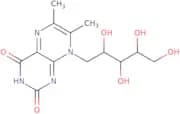
CAS:Riboflavin EP Impurity C is a synthetic compound that is used as an impurity standard in the manufacture of Riboflavin-5'-Phosphate. Riboflavin EP Impurity C is also a metabolite that can be found in human urine, and is used to study metabolism.Formula:C13H18N4O6Purity:90%MinColor and Shape:PowderMolecular weight:326.31 g/molFluticasone furoate impurity F
Fluticasone furoate impurity F is a synthetic, high-purity, pharmacopoeia grade drug product. It has been developed for research and development purposes only. Impurity standard: Fluticasone furoate impurity F is a metabolite of fluticasone furoate. Synthetic: Fluticasone furoate impurity F is a synthetic compound that has been custom synthesized to meet your requirements. Drug Development: Fluticasone furoate impurity F has been developed as a drug product to be used in the development of new drugs. Metabolism Studies: Fluticasone furoate impurity F can be used in metabolism studies and analytical determinations.END>>Purity:Min. 95%Methyl 2-disazobenzoate hydrochloride
CAS:Methyl 2-disazobenzoate hydrochloride is a drug product that is used as an HPLC standard and as a metabolite in the development of drugs. It has been found to be naturally occurring and is a research and development metabolite. Methyl 2-disazobenzoate hydrochloride is also an impurity of API, which can be quantified in analytical studies. It is a synthetic compound with CAS No. 35358-78-2 and it can be used to manufacture high purity pharmaceuticals. Methyl 2-disazobenzoate hydrochloride has been shown to have niche pharmacological effects, such as anti-inflammatory activities.Formula:C8H7N2O2ClPurity:Min. 95%Molecular weight:198.61 g/molD-Thr(5)-Semaglutide
D-Thr(5)-Semaglutide is a semaglutide impurity. The amino acid at position 5 has been replaced by the D-form of the amino acid D-threonine (D-Thr). Semaglutide impurities are structurally related compounds that arise during synthesis, purification, or storage of semaglutide, a long-acting GLP-1 receptor agonist for managing type 2 diabetes and obesity.Formula:C187H291N45O59Molecular weight:4,113.64 g/mol1-Acetate 4-methanesulfonate 1,4-butanediol
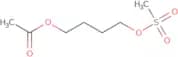
CAS:1-Acetate 4-methanesulfonate 1,4-butanediol (1AMB) is a precursor to the hematopoietic stem cell factor G-CSF. It is a white or yellow crystalline powder that is soluble in water and has a sweet taste. The compound can be used as an additive for food products and pharmaceuticals, but it may also cause toxic effects on the liver and other tissues. 1AMB has been shown to have cytotoxic and hepatotoxic effects in animals, so appropriate animal studies should be conducted before using this substance in humans.Formula:C7H14O5SPurity:Min. 95%Color and Shape:Clear Colourless To Pale Yellow LiquidMolecular weight:210.25 g/molRemdesivir impurity 2
Remdesivir impurity 2 is an analytical standard used in the development of drugs. It is a metabolite found in the drug Remdesivir. It is a natural product that can be synthesized or isolated from natural sources. Remdesivir impurity 2 is soluble in water and acetonitrile, and it has a melting point of 80-81 degrees Celsius. It has a molecular weight of 208.3 g/mol and CAS number 249712-00-1. This compound is not listed on the current edition of the USP Pharmacopoeia.Formula:C19H19N5O4Purity:Min. 95%Molecular weight:381.39 g/molChlorthalidone impurity H
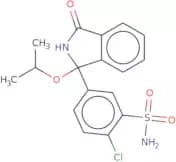
CAS:Chlorthalidone impurity H is an impurity standard for chlorthalidone. It is a synthetic chemical and its CAS number is 2200280-98-2. It has the molecular formula C14H14ClN4O4S, molecular weight of 336.36 g/mol, and melting point of 174°C. Chlorthalidone impurity H is soluble in water and ethanol, but insoluble in ether or chloroform. It can be used as an analytical standard for HPLC and as an API impurity in the pharmacopoeia. This drug can also be used in drug development, natural product synthesis, metabolism studies, and drug product manufacturing.Formula:C17H17ClN2O4SPurity:Min. 95%Color and Shape:White To Off-White SolidMolecular weight:380.85 g/mol

![D-[Ala]18-Tirzepatide](/_next/image/?url=https%3A%2Fstatic.cymitquimica.com%2Fproducts%2F3D%2Fthumb-webp%2FIA11851.webp&w=3840&q=75)


![4-[2'-(7''-Deazaguanine)ethyl]benzoic acid N-hydroxysuccinimide ester](/_next/image/?url=https%3A%2Fstatic.cymitquimica.com%2Fproducts%2F3D%2Fthumb-webp%2FFD20837.webp&w=3840&q=75)


![[D-Phe6]-Tirzepatide](/_next/image/?url=https%3A%2Fstatic.cymitquimica.com%2Fproducts%2F3D%2Fthumb-webp%2FIP11027.webp&w=3840&q=75)