APIs for research and impurities
Subcategories of "APIs for research and impurities"
- Aminoacids and derivatives(12,440 products)
- Anthraquinones and derivatives(407 products)
- Benzimidazole and Imidazole Derivatives(10,464 products)
- Benzodiazepine Derivatives(335 products)
- Carbohydrates and glycoconjugates(5,388 products)
- Esters and Derivatives(42,306 products)
- Fatty Acids and Lypidic Derivatives(32,486 products)
- Flavonoids and Polyphenols(17,100 products)
- Free Radicals and Oxidant/Reducing Agents(214 products)
- Ketones and derivatives(2,692 products)
- Natural and semi-synthetic antibiotics(6,409 products)
- Nitriles and Cyano Derivatives(3,070 products)
- Nitrosamines and Derivatives(55 products)
- Nucleosides and Nucleotides(3,492 products)
- Organic Phosphates and Phosphonates(1,203 products)
- Organic Sulphonates and Sulphates(10,451 products)
- Organometallics(4,425 products)
- Others(6,340 products)
- Peptides and Proteins(3,164 products)
- Polymers and Derivatives(100 products)
- Purines and Pyrimidine Derivatives(8,974 products)
- Quinazoline and Quinoline Derivatives(66,217 products)
- Quinones and Derivatives(24,378 products)
- Salts and Derivatives of Active Pharmaceutical Ingredients (API)(92,894 products)
- Steroids and Derivatives(4,987 products)
- Sulfonamides and Derivatives(2,607 products)
- Terpenoids and Derivatives(3,860 products)
- Thiazolidinediones and Thiopyrans(2,755 products)
- β-Adrenergic Compounds(231 products)
Found 66870 products of "APIs for research and impurities"
beta-Epoxyabiraterone acetate
CAS:Beta-Epoxyabiraterone acetate is a synthetic and natural metabolite of abiraterone that is used as an API impurity in the synthesis of abiraterone acetate. The drug product is a niche compound with CAS No. 52464-96-6. The Metabolite is an impurity found in the synthesis of beta-epoxyabiraterone acetate. Drug development research and development, analytical methods, and pharmacopoeia are all involved in the production of this compound.Formula:C26H33NO3Purity:Min. 90 Area-%Color and Shape:White Off-White PowderMolecular weight:407.55 g/mol(5α)-17-(3-Pyridinyl)androst-16-en-3-one
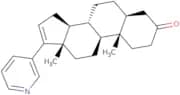
CAS:Controlled Product(5α)-17-(3-Pyridinyl)androst-16-en-3-one is a natural metabolite of testosterone that is produced in the liver. It has been identified as an impurity in API, which can be found in drugs used for the treatment of high blood pressure and prostate cancer. (5α)-17-(3-Pyridinyl)androst-16-en-3-one is not active as a drug itself, but it can be used as a standard to study the metabolism of testosterone and other steroids.Formula:C24H31NOPurity:Min. 98 Area-%Color and Shape:White PowderMolecular weight:349.51 g/molN-Methyl zonisamide
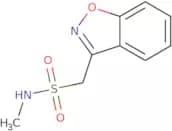
CAS:N-Methyl zonisamide is a drug that is an impurity in Zonisamide. It is an analog of the drug and has been used as a research and development standard for Zonisamide. N-Methyl zonisamide can be synthesized from the corresponding nitrobenzene, aminobenzene, and formaldehyde. The synthesis can be performed by converting nitrobenzene to aminobenzene with sodium hydroxide in methanol, followed by conversion to N-methyl zonisamide with formaldehyde in ethanol. Pharmacopoeia standards for this compound are available from Sigma Aldrich, which can be purchased from our website.Formula:C9H10N2O3SPurity:Min. 95 Area-%Color and Shape:PowderMolecular weight:226.25 g/mol2-Hydroxybenzimidazole
CAS:2-Hydroxybenzimidazole is a benzimidazole compound that is used in the treatment of nervous system diseases. It has been shown to have anti-inflammatory properties and can be used in the treatment of syncytial virus infection. 2-Hydroxybenzimidazole inhibits the production of reactive oxygen species and nitric oxide, which are involved in neurodegenerative disorders. The mechanism of action for 2-Hydroxybenzimidazole involves the formation of hydrogen bonds with hydroxyl groups on proteins. It also has been shown to reduce locomotor activity and increase sleep time in mice, which may be due to inhibition of acetylcholine release from cholinergic neurons.Formula:C7H6N2OPurity:Min. 97.5 Area-%Color and Shape:Off-White PowderMolecular weight:134.14 g/molN,N-Dimethyl-2-(1-phenyl-1-(pyridin-2-yl)methoxy)ethanamine
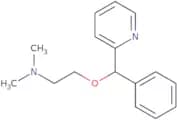
CAS:Controlled ProductN,N-dimethyl-2-(1-phenyl-1-(pyridin-2-yl)methoxy)ethanamine is a drug impurity that is produced as a result of the metabolism of the drug 1-[(2R)-2-phenylethyl]pyrrolidin-2-one. It is an analytical standard and an impurity in pharmaceutical products. It has been shown to be metabolized by CYP3A4, CYP1A2, and CYP2C19 and excreted unchanged in urine.Formula:C16H20N2OPurity:Min. 95%Color and Shape:Brown Clear LiquidMolecular weight:256.34 g/mol3-(3-Fluoro-4-(4-morpholinyl)phenyl)-5-(hydroxymethyl)oxazolidin-2-one
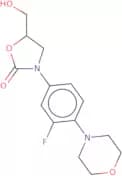
CAS:3-(3-Fluoro-4-(4-morpholinyl)phenyl)-5-(hydroxymethyl)oxazolidin-2-one is a synthetic compound with research and development, impurity standard, custom synthesis, drug product, synthetic, high purity and pharmacopoeia applications. It is an impurity standard for the production of 3-[3-fluoro-4-(4-morpholinyl)phenyl]-5-(hydroxymethyl)oxazolidin-2-one hydrochloride (CAS No. 513068-96-7). This compound has been synthesized in order to study the metabolism of this metabolite. Metabolism studies have indicated that 3-(3-fluoro-4-(4-morpholinyl)phenyl)-5-(hydroxymethyl)oxazolidin-2 one is rapidly metabolized to form 3-[3-[(1S)-1,2,2Formula:C14H17FN2O4Purity:Min. 95%Molecular weight:296.29 g/molrac-Diacetolol
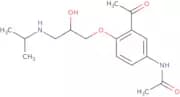
CAS:Rac-Diacetolol is a racemic mixture of two isomers, (+) and (-), of acebutolol. Rac-Diacetolol is used to treat bowel disease, chronic oral inflammation and cardiac arrhythmias. It is also used as an experimental solubility probe in the study of the interactions between drugs and biological membranes. Rac-Diacetolol has been shown to have a low affinity for cytochrome P450 enzymes, which are responsible for metabolizing many drugs in the body. Rac-Diacetolol has been found to reduce plasma concentrations of PCSK9 antibody in patients with inflammatory bowel disease. The drug also has anti-inflammatory properties that may be due to its inhibition of prostaglandin synthesis.
Formula:C16H24N2O4Purity:Min. 95%Color and Shape:PowderMolecular weight:308.37 g/mol5-Aminolevulinic acid hexyl ester hydrochloride
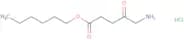
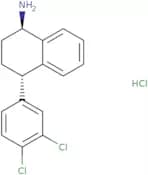
CAS:5-Aminolevulinic acid hexyl ester hydrochloride is a cytotoxic drug that inhibits the growth of cancer cells. It is used to diagnose and treat certain cancers, including squamous cell carcinoma, skin cancer, and some types of lung cancer. 5-Aminolevulinic acid hexyl ester hydrochloride can be used in conjunction with fluorescein angiography to detect blood vessels in the skin or other tissues. This drug has also been shown to have anti-inflammatory properties that may be useful for the treatment of autoimmune diseases.Formula:C11H22NO3ClPurity:Min. 95%Color and Shape:White PowderMolecular weight:251.75 g/mol(1R,4S)-N-Desmethyl sertraline hydrochloride
CAS:Sertraline metaboliteFormula:C16H16Cl3NPurity:Min. 95%Color and Shape:PowderMolecular weight:328.66 g/mol2,3,4-Trimethoxybenzyl alcohol
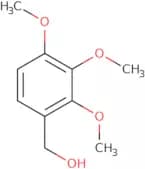
CAS:2,3,4-Trimethoxybenzyl alcohol is a photooxidant that is used in pharmaceutical formulations. It has a catalytic effect on the photooxidation of trifluoroacetic acid and is used for the production of fluoroquinolones. It can also be used to produce other pharmaceutical compounds such as antibiotics and anti-cancer drugs. 2,3,4-Trimethoxybenzyl alcohol is found in small quantities in many natural products such as fruits and vegetables. It has been shown to have potential impurities including 4-methoxybenzaldehyde and selectivity modifiers.Formula:C10H14O4Purity:Min 96.5%Color and Shape:Clear LiquidMolecular weight:198.22 g/mol3-[Benzyl(methyl)amino]-1-phenylpropan-1-one
CAS:3-[Benzyl(methyl)amino]-1-phenylpropan-1-one is a glycol that has been optimized for synthesis. It is used in research to prepare nitrates, which are stoichiometric reagents. Dimethylformamide and dioxane are reagents that can be used for this purpose. The yields of 3-[Benzyl(methyl)amino]-1-phenylpropan-1-one depend on the irradiation time, so it is important to maximize this variable. Phase extraction can be used to purify the product after irradiation. 3-[Benzyl(methyl)amino]-1-phenylpropan-1-one may act as a receptor modulator by binding to G protein coupled receptors and activating them or inhibiting their activation. This drug has also been shown to inhibit the production of nitric oxide, which is an important mediator in inflammation and vascular diseases such as hypertension and atherosclerosis.Formula:C17H19NOPurity:Min. 95%Color and Shape:PowderMolecular weight:253.34 g/molBiotin impurity C 2HCl
CAS:Biotin impurity C 2HCl is an analytical standard impurity in drug product. It is a bivalent form of biotin, which is a natural amide with the chemical formula C 20 H 27 ClN 2 O 4 S. It has been synthesized and characterized as a custom synthesis. The purity of this compound meets the requirements of pharmacopoeia.Formula:C9H16N2O2SCl2Purity:Min. 95%Molecular weight:287.21 g/mol5-(2-Cyclopropyl-1-(3-fluorophenyl)-2-oxoethyl)-4,5,6,7-tetrahydrothieno[3,2-c]pyridin-2-yl acetate
CAS:5-(2-Cyclopropyl-1-(3-fluorophenyl)-2-oxoethyl)-4,5,6,7-tetrahydrothieno[3,2-c]pyridin-2-yl acetate is a substance that is used as a reference in high performance liquid chromatography (HPLC) methods. It is used to validate the method in accordance with the International Conference on Harmonisation of Technical Requirements for Registration of Pharmaceuticals for Human Use (ICH). The substance is also known as prasugrel hydrochloride and it is used as an antiplatelet agent.Formula:C20H20FNO3SPurity:Min. 95 Area-%Color and Shape:Slightly Yellow PowderMolecular weight:373.44 g/molEpirubicin impurity G
CAS:Epirubicin impurity G is a synthetic research and development impurity standard that is used in the manufacture of drug products, as well as in the development of new drugs. Epirubicin impurity G is a metabolite of epirubicin and has been shown to be an active inhibitor of DNA synthesis. Epirubicin impurity G may also have potential as an analytical standard for HPLC analysis.Formula:C54H58N2O22Purity:Min. 95%Molecular weight:1,087 g/molApixaban Impurity 2
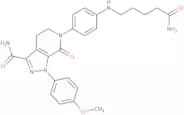
CAS:Apixaban impurity 2 is a drug product that is used as an impurity standard in the research and development of drugs. It is also used as a synthetic intermediate in the synthesis of other drugs. Apixaban impurity 2 has been shown to be pharmacologically active, with the ability to inhibit bacterial growth by binding to DNA-dependent RNA polymerase. This compound is not toxic to mammalian cells at high concentrations, but has been shown to have some effects on the central nervous system, including depression of spontaneous motor activity and decrease in locomotor activity. Apixaban Impurity 2 is soluble in acetone and chloroform, but insoluble in water. The molecular weight of this compound is not known, but it can be determined using HPLC. Apixaban Impurity 2 has CAS number 2187409-01-2 and its molecular formula is C21H22N2O4S.Formula:C25H28N6O4Purity:Min. 95%Color and Shape:PowderMolecular weight:476.53 g/mol(RS)-Isopropyl 2-methoxyethyl 1,4-dihydro-2,6-dimethyl-4-(2-nitrophenyl)pyridine-3,5-dicarboxylate
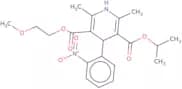
CAS:(RS)-Isopropyl 2-methoxyethyl 1,4-dihydro-2,6-dimethyl-4-(2-nitrophenyl)pyridine-3,5-dicarboxylate is a drug product with an analytical purpose. This compound is metabolized by the liver and excreted in the urine. It has been shown that this compound is not present in natural sources. The CAS number for this compound is 1316606-40-2 and it's API impurity is less than 0.0001%. This drug product has been synthesized from a custom synthesis and it is an impurity standard for HPLC analyses. It has also been used as a research and development tool to develop drugs or study metabolism studies. This compound is pure enough to be used as a pharmacopoeia standardFormula:C21H26N2O7Purity:Min. 95%Molecular weight:418.44 g/molDi-2-thienylmethanone
CAS:Di-2-thienylmethanone is a pyrazole with an activation energy of about 10.5 kcal/mol. It has been found to be toxic and can cause cell lysis. This molecule has been used in the synthesis of a number of drugs, including thiopental, a barbiturate that is used as an anaesthetic. Di-2-thienylmethanone is also the precursor for the synthesis of fluoroquinolones, which are potent antibacterial agents. The Friedel-Crafts reaction is one way this molecule is synthesized, and it involves the addition of an alkyl halide to an unsaturated double bond. This reaction is named after Charles Friedel and James Crafts who first discovered it in 1877.
Formula:C9H6OS2Purity:Min. 95%Color and Shape:White PowderMolecular weight:194.28 g/molDapagliflozin Impurity 30
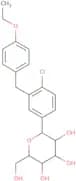
CAS:Dapagliflozin Impurity 30 is a natural impurity found in the drug Dapagliflozin. It is an analytical standard used for HPLC quantification of dapagliflozin, and it can be used as a pharmacopoeia reference material or research and development material. Dapagliflozin Impurity 30 is synthesized by using a custom synthesis protocol. The CAS number for this compound is 1373321-04-0.Formula:C21H25ClO6Purity:Min. 95%Color and Shape:PowderMolecular weight:408.9 g/molCeftazidime impurity G
CAS:Please enquire for more information about Ceftazidime impurity G including the price, delivery time and more detailed product information at the technical inquiry form on this page
Formula:C11H14N4O5SPurity:Min. 95%Color and Shape:PowderMolecular weight:314.32 g/molD-Ser(8)-Semaglutide
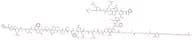
D-Ser(8)-Semaglutide is a semaglutide impurity. The amino acid at position 8 has been replaced by the D-form of the amino acid D-serine (D-Ser). Semaglutide impurities are structurally related compounds that arise during synthesis, purification, or storage of semaglutide, a long-acting GLP-1 receptor agonist for managing type 2 diabetes and obesity.Formula:C187H291N45O59Molecular weight:4,113.64 g/mol


![3-[Benzyl(methyl)amino]-1-phenylpropan-1-one](/_next/image/?url=https%3A%2Fstatic.cymitquimica.com%2Fproducts%2F3D%2Fthumb-webp%2FIB158700.webp&w=3840&q=75)

![5-(2-Cyclopropyl-1-(3-fluorophenyl)-2-oxoethyl)-4,5,6,7-tetrahydrothieno[3,2-c]pyridin-2-yl acetate](/_next/image/?url=https%3A%2Fstatic.cymitquimica.com%2Fproducts%2F3D%2Fthumb-webp%2FIC168303.webp&w=3840&q=75)