APIs for research and impurities
Subcategories of "APIs for research and impurities"
- Aminoacids and derivatives(12,334 products)
- Anthraquinones and derivatives(404 products)
- Benzimidazole and Imidazole Derivatives(10,446 products)
- Benzodiazepine Derivatives(334 products)
- Carbohydrates and glycoconjugates(5,049 products)
- Esters and Derivatives(42,251 products)
- Fatty Acids and Lypidic Derivatives(32,415 products)
- Flavonoids and Polyphenols(17,083 products)
- Free Radicals and Oxidant/Reducing Agents(213 products)
- Ketones and derivatives(2,401 products)
- Natural and semi-synthetic antibiotics(6,382 products)
- Nitriles and Cyano Derivatives(3,068 products)
- Nitrosamines and Derivatives(55 products)
- Nucleosides and Nucleotides(3,480 products)
- Organic Phosphates and Phosphonates(1,201 products)
- Organic Sulphonates and Sulphates(10,433 products)
- Organometallics(4,421 products)
- Others(6,305 products)
- Peptides and Proteins(3,148 products)
- Polymers and Derivatives(100 products)
- Purines and Pyrimidine Derivatives(8,948 products)
- Quinazoline and Quinoline Derivatives(66,032 products)
- Quinones and Derivatives(24,363 products)
- Salts and Derivatives of Active Pharmaceutical Ingredients (API)(80,551 products)
- Steroids and Derivatives(4,955 products)
- Sulfonamides and Derivatives(2,595 products)
- Terpenoids and Derivatives(3,848 products)
- Thiazolidinediones and Thiopyrans(2,753 products)
- β-Adrenergic Compounds(231 products)
Found 57830 products of "APIs for research and impurities"
5-(4-Methoxyphenyl)-3-methyl-1-oxa-3-azaspiro[5.5]undecane
CAS:5-(4-Methoxyphenyl)-3-methyl-1-oxa-3-azaspiro[5.5]undecane is an analytical standard used in HPLC and GC. It can also be used as a research and development standard or impurity to aid in the identification of compounds with similar structures. 5-(4-Methoxyphenyl)-3-methyl-1-oxa-3-azaspiro[5.5]undecane has a purity of 99% and a melting point of 80°C. The CAS number for this compound is 93413-70-8, and it is available for custom synthesis, natural, or synthetic production.
Formula:C17H25NO2Purity:Min. 95%Molecular weight:275.39 g/molBenzathine ampicillin
CAS:Benzathine ampicillin is a penicillin antibiotic that belongs to the group of β-lactam antibiotics. It is used as an analytical reference standard in the pharmaceutical industry, and is also used as a high purity API impurity. Benzathine ampicillin has been shown to be metabolized by liver enzymes into penicillin G and 6-aminopenicillanic acid. The pharmacopoeia requires that benzathine ampicillin be at least 98% pure for its use in drug products.
Formula:C48H58N8O8S2Purity:Min. 95%Molecular weight:939.20 g/molRef: 3D-IBA27675
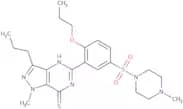
Discontinued productPropoxyphenyl thiosildenafil
CAS:Propoxyphenyl thiosildenafil is a linker that has been synthesized from the amino acid sildenafil. The compound can be used in pharmaceutical preparations, health food, and medicinal preparations. It is also used as an additive to prepare the desired drug. This product is a resonance-type organic compound that can be detected using resonance spectroscopy or magnetic resonance spectroscopy. The compound has a molecular weight of 348.08 g/mol and a boiling point of 440°C at 760 mmHg pressure.
Formula:C23H32N6O3S2Purity:Min. 95%Molecular weight:504.7 g/molRef: 3D-EUA07387
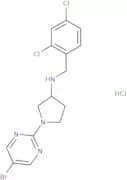
Discontinued productLy 2389575 hydrochloride
CAS:Ly 2389575 hydrochloride is a drug product for the treatment of rheumatoid arthritis, psoriatic arthritis, and plaque psoriasis. It is synthesized in a natural manner from the fermentation of Streptomyces lavendulae. The compound has been shown to be metabolized through a number of metabolic transformations including hydrolysis by esterases or glucuronidases, oxidation by cytochrome P450 enzymes, reduction by glutathione reductase, or conjugation with glucuronic acid. Ly 2389575 hydrochloride also specifically binds to markers expressed at high levels in Mycobacterium tuberculosis strains (e.g., ESX-1 secretion system protein) and inhibits cell growth in culture.
Formula:C15H16BrCl3N4Purity:Min. 95%Molecular weight:438.6 g/molRef: 3D-KKB10409
Discontinued product8-[[(1,1-Dimethylethyl)dimethylsilyl]oxy]-1-octen-4-ol
CAS:Please enquire for more information about 8-[[(1,1-Dimethylethyl)dimethylsilyl]oxy]-1-octen-4-ol including the price, delivery time and more detailed product information at the technical inquiry form on this page
Formula:C14H30O2SiPurity:Min. 95%Molecular weight:258.47 g/molRef: 3D-PNA56366
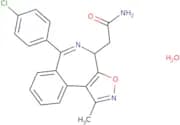
Discontinued productCPI 0610
CAS:CPI 0610 is a medicinal compound that acts as a potent inhibitor of protein phosphorylation. It has been shown to inhibit the cell cycle and promote apoptosis in Chinese hamster ovary cells. CPI 0610 is an effective inhibitor of kinase activity in cancer cells, leading to decreased tumor growth and increased survival rates. In preclinical studies, CPI 0610 has demonstrated efficacy against a wide range of cancers, including breast, prostate, and lung cancer. This inhibitor has also been shown to be effective in human cancer cell lines, making it a promising candidate for future cancer therapies.
Formula:C20H18ClN3O3Purity:Min. 95%Molecular weight:383.8 g/molRef: 3D-VYC72614
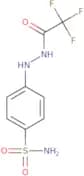
Discontinued productCelecoxib hydraziney
CAS:Celecoxib hydrazine is an inhibitor of protein kinases that has been shown to have anticancer properties. It is an analog of celecoxib, a non-steroidal anti-inflammatory drug (NSAID) that is commonly used to treat pain and inflammation. Celecoxib hydrazine has been shown to induce apoptosis in human cancer cells and inhibit the growth of tumors in mice. This compound has potential as a medicinal agent for the treatment of cancer, and urine samples from Chinese patients with cancer have been found to contain high levels of this compound. Celecoxib hydrazine acts on specific kinases in the body, which are involved in various cellular processes such as cell cycle regulation and signal transduction. Its ability to selectively inhibit these kinases makes it a promising candidate for targeted therapy against cancer.
Formula:C8H8F3N3O3SPurity:Min. 95%Molecular weight:283.23 g/molRef: 3D-QLB28081
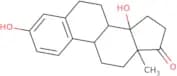
Discontinued product3,14-Dihydroxy 14β-estra-1,3,5(10)-trien-17-one
CAS:Controlled ProductPlease enquire for more information about 3,14-Dihydroxy 14β-estra-1,3,5(10)-trien-17-one including the price, delivery time and more detailed product information at the technical inquiry form on this page
Formula:C18H22O3Purity:Min. 95%Molecular weight:286.4 g/molRef: 3D-PAA96403
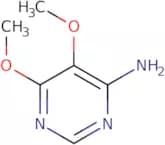
Discontinued product4-Amino-5,6-dimethoxypyrimidine
CAS:4-Amino-5,6-dimethoxypyrimidine is a pyrimethamine derivative that has been used as an antimalarial agent. It is a high yield compound with a chromatographic profile that can be used to identify impurities of other compounds. 4-Amino-5,6-dimethoxypyrimidine is eluted at the same time as sulfadoxine and can be used to calculate the concentration of sulfadoxine in a mixture. It can also be used as a reagent for rp-hplc. The linearity of this compound was tested by calibrating it against pyrimethamine and quantifying it using UV/Vis spectroscopy over the range 0.05 to 1 mg/mL.
Formula:C6H9N3O2Purity:Min. 95%Molecular weight:155.15 g/molRef: 3D-IA34066
Discontinued product1-Phenyl-1,2,3,4-tetrahydro-isoquinoline
CAS:1-Phenyl-1,2,3,4-tetrahydro-isoquinoline is a synthetic compound which has been used as a lead compound for the development of drugs with dopamine β-hydroxylase inhibitory activity. In vitro studies have shown that 1-phenyl-1,2,3,4-tetrahydro-isoquinoline inhibits human serum dopamine β-hydroxylase and can be used to study the possible role of this enzyme in Parkinson's disease. This drug is racemized in the body and has been found to be effective against Parkinson's disease in rats. It is also an enantiomer that has industrial applications for the production of polyurethane foam insulation coatings.
Formula:C15H15NPurity:Min. 95%Color and Shape:PowderMolecular weight:209.29 g/molRef: 3D-IP14816
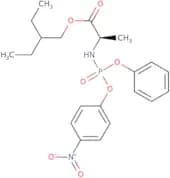
Discontinued productRemdesivir impurity 5
CAS:Remdesivir impurity 5 is a metabolite that is generated in the body following metabolism and excretion of remdesivir. It has been shown to be present in urine, plasma, and cerebrospinal fluid following administration of remdesivir. Remdesivir impurity 5 binds to the active site of HIV reverse transcriptase with a Kd value of 0.5 nM. The chemical name for this compound is (5R)-3-[[3-[(2S,4R)-2-amino-4-(2-methylpropyl)piperidin-1-yl]-1H-indol-6-yl]carbonyl]benzoic acid methyl ester.
Formula:C21H27N2O7PPurity:Min. 95%Molecular weight:450.42 g/mol4,7-Dihydro megestrol acetate
CAS:4,7-Dihydro megestrol acetate is a drug product that has been custom synthesized for research and development purposes. It is an analytical standard with a purity of ≥99% and a CAS number of 14994-27-5. Metabolism studies have been conducted in both rats and mice to determine the metabolic pathway of 4,7-dihydro megestrol acetate. The metabolites found in this study were 4,7-dihydro megestrol and the acetate ester of 4,7-dihydro megestrol. Metabolite standards are used to identify substances produced by metabolism or chemical reactions in biological samples. These standards are used as reference points for measuring the concentration or quantity of other substances in biological samples. Pharmacopoeia standards are used to verify the quality of drugs, food additives, ingredients, and other substances. They also serve as reference points for identifying impurities in substances that may be harmful
Formula:C24H34O4Purity:Min. 95%Molecular weight:386.50 g/molRef: 3D-PAA99427
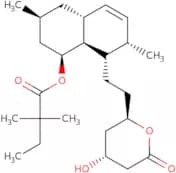
Discontinued productSimvastatin impurity K
Simvastatin impurity K is a research and development substance that is used for the synthesis of drug products. This compound is custom synthesized, and its CAS number is 607-33-0. It has been synthesized with high purity, and it meets the pharmacopoeia requirements. Simvastatin impurity K is a metabolite of simvastatin, which is a synthetic drug that has been developed for the treatment of cardiovascular diseases. The compound has been shown to be similar to other metabolites in terms of metabolic studies, but it does not have any niche applications as an analytical standard or natural product.
Formula:C25H40O5Purity:Min. 95%Molecular weight:420.58 g/molRef: 3D-IS45166
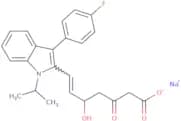
Discontinued product3-Keto fluvastatin sodium
CAS:3-Keto fluvastatin sodium is a high purity, analytical, API impurity, HPLC standard, Drug development, niche, drug product and Impurity standard. 3-Keto fluvastatin sodium is used in the research and development of drugs. It is also used in the analysis of pharmaceuticals and other chemicals. 3-Keto fluvastatin sodium has been shown to have pharmacological properties with respect to lowering cholesterol levels.
Formula:C24H23FNNaO4Purity:Min. 95%Molecular weight:431.4 g/molRef: 3D-GDC64317
Discontinued productFluocortolone Impurity 4
CAS:Fluocortolone Impurity 4 is a drug product that is custom synthesized to meet the high purity requirement of analytical standards. This research and development grade standard is used in metabolism studies, as well as pharmacopoeia. Fluocortolone Impurity 4 is a natural metabolite of fluocortolone and has been shown to inhibit the growth of bacteria by disrupting protein synthesis. It can be found in the urine, feces, and plasma of humans. Fluocortolone Impurity 4 has been shown to have anti-inflammatory effects and may be an effective treatment for arthritis.
Purity:Min. 95%2-[[[3-Methyl-4-(methylthio)-2-pyridinyl]methyl]sulfinyl]-1H-benzimidazole
CAS:2-[[[3-Methyl-4-(methylthio)-2-pyridinyl]methyl]sulfinyl]-1H-benzimidazole is a synthetic, nonsteroidal anti-inflammatory drug. It is soluble in methanol and ethanol, not soluble in water. The impurity standard of 2-[[[3-Methyl-4-(methylthio)-2-pyridinyl]methyl]sulfinyl]-1H-benzimidazole is 3-[2-[(3,4,5-trimethoxyphenyl)amino]-1H-benzimidazolium methyl sulfate].
Formula:C15H15N3OS2Purity:Min. 95%Molecular weight:317.43 g/mol3-(2-Fluorophenyl) ezetimibe
CAS:3-(2-Fluorophenyl) ezetimibe is an impurity of the drug product Ezetimibe. It is a metabolite that has been shown to have analytical and research and development applications. 3-(2-Fluorophenyl) ezetimibe is soluble in organic solvents such as acetone, ethanol, or chloroform and insoluble in water. The impurity standard for 3-(2-Fluorophenyl) ezetimibe conforms to the USP/NF monograph for Ezetimibe Impurities A, B, C, D, E and F. The CAS number for this impurity is 1798008-25-9.
Formula:C24H21F2NO3Purity:Min. 95%Molecular weight:409.40 g/molRef: 3D-YWC00825
Discontinued productMesulergine hydrochloride
CAS:Mesulergine hydrochloride is a drug that inhibits the dopamine and serotonin receptors. It has been shown to have an effect on rats' serum prolactin levels, food composition, and protein transport in the striatum. Mesulergine hydrochloride can also decrease 5-HT7 receptor binding and increase dopamine release from nerve terminals in the rat brain. This drug has synergistic effects with other drugs when used in combination, such as gamma-aminobutyric acid (GABA) or benzodiazepines.
Symptoms of mesulergine hydrochloride include psychotic disorders, anxiety, depression, hallucinations, sleep problems, and suicidal thoughts. These symptoms may be due to mesulergine's effect on 5-HT2C receptors.Formula:C18H27ClN4O2SPurity:Min. 95%Molecular weight:399 g/molRef: 3D-XCA78612
Discontinued productMinocycline EP Impurity H
CAS:Please enquire for more information about Minocycline EP Impurity H including the price, delivery time and more detailed product information at the technical inquiry form on this page
Formula:C23H25N3O7Purity:Min. 95%Molecular weight:455.47 g/molN-Acetyl N-descarboxyethyl retigabine d4
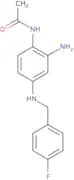
CAS:N-Acetyl N-descarboxyethyl retigabine (D4) is a pharmaceutical drug that is used for the treatment of epilepsy. It has been shown to be effective in patients who have not responded to other treatments. D4 binds to voltage-gated potassium channels and inhibits their opening, which leads to a decrease in neurotransmitter release from nerve cells. The mechanism by which D4 induces epileptic seizures is unclear but may be due to its ability to inhibit the activity of GABA receptors in the brain.Formula:C15H16FN3OPurity:Min. 95%Molecular weight:273.3 g/molRef: 3D-EJA97068
Discontinued product
![5-(4-Methoxyphenyl)-3-methyl-1-oxa-3-azaspiro[5.5]undecane](/_next/image/?url=https%3A%2Fstatic.cymitquimica.com%2Fproducts%2F3D%2Fthumb-webp%2FIM28679.webp&w=3840&q=75)

![8-[[(1,1-Dimethylethyl)dimethylsilyl]oxy]-1-octen-4-ol](/_next/image/?url=https%3A%2Fstatic.cymitquimica.com%2Fproducts%2F3D%2Fthumb-webp%2FPNA56366.webp&w=3840&q=75)

![2-[[[3-Methyl-4-(methylthio)-2-pyridinyl]methyl]sulfinyl]-1H-benzimidazole](/_next/image/?url=https%3A%2Fstatic.cymitquimica.com%2Fproducts%2F3D%2Fthumb-webp%2FIM21229.webp&w=3840&q=75)