APIs for research and impurities
Subcategories of "APIs for research and impurities"
- Aminoacids and derivatives(12,322 products)
- Anthraquinones and derivatives(402 products)
- Benzimidazole and Imidazole Derivatives(10,404 products)
- Benzodiazepine Derivatives(327 products)
- Carbohydrates and glycoconjugates(5,049 products)
- Esters and Derivatives(42,242 products)
- Fatty Acids and Lypidic Derivatives(32,380 products)
- Flavonoids and Polyphenols(17,075 products)
- Free Radicals and Oxidant/Reducing Agents(212 products)
- Ketones and derivatives(2,399 products)
- Natural and semi-synthetic antibiotics(6,336 products)
- Nitriles and Cyano Derivatives(3,068 products)
- Nitrosamines and Derivatives(55 products)
- Nucleosides and Nucleotides(3,455 products)
- Organic Phosphates and Phosphonates(1,195 products)
- Organic Sulphonates and Sulphates(10,422 products)
- Organometallics(4,418 products)
- Others(6,274 products)
- Peptides and Proteins(3,142 products)
- Polymers and Derivatives(99 products)
- Purines and Pyrimidine Derivatives(8,907 products)
- Quinazoline and Quinoline Derivatives(65,750 products)
- Quinones and Derivatives(24,344 products)
- Salts and Derivatives of Active Pharmaceutical Ingredients (API)(81,166 products)
- Steroids and Derivatives(4,928 products)
- Sulfonamides and Derivatives(2,569 products)
- Terpenoids and Derivatives(3,838 products)
- Thiazolidinediones and Thiopyrans(2,753 products)
- β-Adrenergic Compounds(228 products)
Found 58526 products of "APIs for research and impurities"
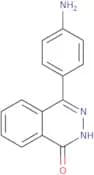
4-(4-Aminophenyl)phthalazin-1(2H)-one
CAS:4-(4-Aminophenyl)phthalazin-1(2H)-one is an antibacterial drug that belongs to the class of amide and minimise. It has a constant, synthetic, and chalcone profile. 4-(4-Aminophenyl)phthalazin-1(2H)-one has been shown to have antiplatelet activity in animals. This drug also inhibits the production of proinflammatory cytokines such as IL-6, IL-8, and TNFα by human monocytes. This drug also has antidiabetic properties and a safety profile similar to other nonsteroidal anti-inflammatory drugs.
Formula:C14H11N3OPurity:Min. 95%Molecular weight:237.26 g/molRef: 3D-GFA74153
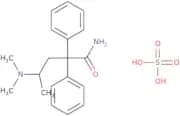
Discontinued productAminopentamide sulfate
CAS:Aminopentamide sulfate is a pharmaceutical dosage form that is a polymeric matrix containing glycol ether, fatty acid ester, and glycol ester. It is used as a local anesthetic to numb the skin and other tissues. Aminopentamide sulfate can be administered topically or by injection into the body. It has been shown to have therapeutic effects on animals with pain-related conditions such as arthritis and neuropathy. The intramolecular hydrogen bonds in aminopentamide sulfate are thought to be formed between the carbonyl group of atropine sulfate and the hydroxyl groups of benzimidazole derivatives. These functional groups form hydrogen bonds with fatty alcohols in the matrix, which may help stabilize it.
Formula:C19H26N2O5SPurity:Min. 95%Molecular weight:394.5 g/molRef: 3D-VAA70177
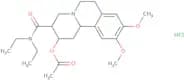
Discontinued productBenzquinamide hydrochloride
CAS:Controlled ProductBenzquinamide hydrochloride is a cardiac diagnostic agent that is used in the diagnosis of coronary artery disease. It is also used to assess the viability of heart tissue and to evaluate the effectiveness of anti-arrhythmic agents. Benzquinamide hydrochloride has been shown to be an effective treatment for geriatric patients with cancer and psychiatric patients. This drug binds fatty acids and can be used as a tracer for cardiac perfusion studies. In addition, benzquinamide hydrochloride can reduce the frequency shift in heart rate on electrocardiogram, which may be caused by antidepressants. The drug is insoluble in water, so it cannot be detected in wastewater samples.
Formula:C22H33ClN2O5Purity:Min. 95%Molecular weight:441 g/molRef: 3D-AAA11369
Discontinued product1-(4-((2,4-Dimethylphenyl)thio)phenyl)piperazine hydrobromide
1-(4-((2,4-dimethylphenyl)thio)phenyl)piperazine hydrobromide is a synthetic drug that has been used in the research and development of drugs. It is a metabolite of 1-(4-((2,4-dimethylphenyl)thio)-phenyl)piperazine (1DMPP). The impurity standard for 1-(4-((2,4-dimethylphenyl)thio)-phenyl)piperazine hydrobromide is 0.5% (w/w). It has been shown to be effective in metabolism studies.Purity:Min. 95%Omeprazole Impurity 65
Impurity 65 is an impurity of Omeprazole, a drug used to treat gastroesophageal reflux disease and peptic ulcer. Impurity 65 is a metabolite of Omeprazole that can be found in the drug product at a concentration up to 0.5%. It has been shown to have anti-inflammatory effects and can be used as a research and development standard for HPLC analysis. Impurity 65 is also used as an impurity standard in the USP pharmacopoeia and other pharmacopoeias around the world.
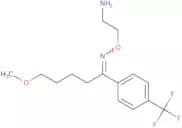
Formula:C17H17N3O4Purity:Min. 95%Molecular weight:327.33 g/mol(Z)-Fluvoxamine - EP
CAS:Controlled Product(Z)-Fluvoxamine-EP is a drug product that is used as an analytical standard. It is a synthetic metabolite of fluvoxamine, which is a drug used for the treatment of depression. The synthesis of (Z)-fluvoxamine-EP is based on the asymmetric synthesis of fluvoxamine and the use of chiral chromatography to purify the product. This synthetic process allows for the production of high-purity (Z)-fluvoxamine-EP with a purity greater than 99%.
Formula:C15H21F3N2O2Purity:Min. 95%Molecular weight:318.33 g/molRef: 3D-IF23523
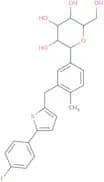
Discontinued productEpi-canagliflozin
CAS:Epi-canagliflozin is a drug product that is manufactured by HPLC. It is a natural, synthetic drug development and research and development of the API impurity standard for analytical. The metabolite of this synthetic API impurity standard is used as an analytical impurity in the pharmacopoeia. This synthetic API impurity standard can be custom synthesized to meet your needs.
Formula:C24H25FO5SPurity:Min. 95%Molecular weight:444.5 g/molRef: 3D-PNC59087
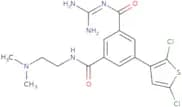
Discontinued productFR183998
CAS:FR183998 is an anticancer drug that is derived from Chinese urine. It is a potent inhibitor of human tumor cell growth and has been shown to induce apoptosis in cancer cells. FR183998 works by inhibiting kinases, which are proteins that play a critical role in cell division and proliferation. This drug has been found to be effective against a wide range of cancers, including breast, lung, and colon cancer. Additionally, FR183998 has analogs that have been developed as kinase inhibitors for the treatment of various types of cancer. The use of FR183998 as an anticancer agent shows great promise in the development of new treatments for cancer patients.
Formula:C17H19Cl2N5O2SPurity:Min. 95%Molecular weight:428.3 g/molRef: 3D-PJA44020
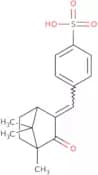
Discontinued productBenzylidene camphor sulfonic acid
CAS:Benzylidene camphor sulfonic acid is a non-volatile, oil-soluble, water-insoluble, white solid. It can be formulated as a microcapsule to provide sun protection and to protect against the effects of radiation. Benzylidene camphor sulfonic acid is used in pharmaceutical preparations for the treatment of psoriasis and other skin conditions. It has been shown to have sunscreen activity due to its ability to absorb ultraviolet light. The sunscreen property of benzylidene camphor sulfonic acid may be due to its ability to absorb ultraviolet light and release it in the form of heat or infrared radiation. Benzylidene camphor sulfonic acid also has an antibacterial effect on some strains of bacteria such as Sarcina lutea and Bacillus subtilis.
Formula:C17H20O4SPurity:Min. 95%Molecular weight:320.4 g/molRef: 3D-GCA03958
Discontinued productAmoxicillin EP Impurity L
CAS:Amoxicillin EP Impurity L is an impurity standard for amoxicillin. It is a synthetic compound that is used to ensure the quality of amoxicillin drug products. Amoxicillin EP Impurity L has been shown to be metabolized through a number of metabolic transformations, including hydrolysis by esterases or glucuronidases, oxidation by cytochrome P450 enzymes, reduction by glutathione reductase, or conjugation with glucuronic acid. This impurity has also been shown to have anti-inflammatory properties and may be due to its inhibition of prostaglandin synthesis.
Formula:C24H29N5O7S2Purity:Min. 95%Molecular weight:563.65 g/molRef: 3D-IA180686
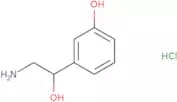
Discontinued productrac-Norphenylephrine hydrochloride
CAS:Controlled ProductRacemic norphenylephrine hydrochloride is a sympathomimetic amine. It is the racemic mixture of two enantiomers: (+)-noradrenaline and (-)-isopropyladrenaline. Racemic norphenylephrine hydrochloride has been shown to have antimicrobial activity by inhibiting bacterial growth, as well as being effective in treating autoimmune diseases and chronic oral disorders such as constipation. Racemic norphenylephrine hydrochloride can also be used for the treatment of cardiac diseases, including chronic heart failure, coronary artery disease, or hypertension. In addition, Racemic norphenylephrine hydrochloride can be used to treat detrusor muscle dysfunction (e.g., urinary incontinence).
Formula:C8H12ClNO2Purity:Min. 95%Molecular weight:189.64 g/molRef: 3D-IN27563
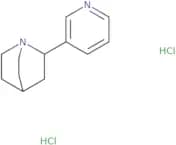
Discontinued productRjr 2429 dihydrochloride
CAS:Rjr 2429 dihydrochloride is a tumor promoter that has been shown to induce tumor growth in tissues and in cell culture. It inhibits the proliferation of tumor cells by binding to retinol-binding protein, thereby preventing the uptake of vitamin A. Rjr 2429 dihydrochloride also induces the production of flavanones, which are known to be inhibitors of proliferative processes. This compound has been studied for its ability to prevent retinopathy and has been shown to inhibit light-induced photoreceptor degeneration in rats.
Formula:C12H18Cl2N2Purity:Min. 95%Molecular weight:261.19 g/molRef: 3D-WQB41853
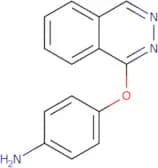
Discontinued product4-(Phthalazin-1-yloxy)aniline
CAS:4-(Phthalazin-1-yloxy)aniline is an analog of cyclin-dependent kinase (CDK) inhibitors that has shown promising anticancer activity. It inhibits the activity of CDKs, which are enzymes involved in regulating cell division and proliferation. This compound has been tested on Chinese hamster ovary cells and has demonstrated potent antiproliferative activity against various cancer cell lines. 4-(Phthalazin-1-yloxy)aniline induces apoptosis in tumor cells, leading to their death. This compound may be a potential candidate for the development of novel anticancer drugs that target CDKs and promote tumor cell death. Additionally, this compound can be detected in urine samples, making it a useful biomarker for cancer diagnosis and monitoring.
Formula:C14H11N3OPurity:Min. 95%Molecular weight:237.26 g/molRef: 3D-ZFA36540
Discontinued product1-[2-[2-Hydroxy-3-[[2-hydroxy-3-[2-(3-phenylpropanoyl)phenoxy]propyl]-propylamino]propoxy]phenyl]-3-phenylpropan-1-one
CAS:Arbidol is a drug molecule that interacts with protease enzymes. It has been shown to inhibit human erythrocyte chymotrypsin, trypsin, and elastase. Arbidol is also able to inhibit the growth of bacteria such as Staphylococcus aureus, Escherichia coli, and Pseudomonas aeruginosa. The molecular modelling of arbidol suggests that it binds to the active site of the enzyme by blocking hydrophobic pockets on the surface of the enzyme. The conformational change in the protease enzyme activates arbidol's binding site for an extended period of time. This prolonged interaction prevents substrate from binding to the catalytic site of the enzyme and inhibits its activity.
Formula:C39H45NO6Purity:Min. 95%Molecular weight:623.78 g/molRef: 3D-IP63820
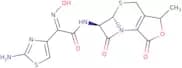
Discontinued productCefdinir impurity E
CAS:Cefdinir impurity E is a research and development, impurity standard, custom synthesis, drug product, synthetic, high purity, pharmacopoeia, drug development and analytical standard. CAS No. 946573-41-7 is the metabolite of cefdinir. It is used to study metabolism of cefdinir in vitro and in vivo. HPLC standards are available for this compound.
Purity:Min. 95%Pravastatin 6-oxo Impurity
CAS:Pravastatin 6-oxo Impurity is an impurity of Pravastatin, a drug used in the treatment of high cholesterol. The impurity has been identified through analytical methods and is characterized by HPLC analysis. This substance has been shown to be present in at least 0.1% of the drug product and may be present as a result of incomplete synthesis or a side-reaction during synthesis.
Formula:C23H34O7Purity:Min. 95%Molecular weight:422.51 g/mol1,4-Bis[(tetrahydro-2-furanyl)carbonyl]-piperazine
CAS:1,4-Bis[(tetrahydro-2-furanyl)carbonyl]-piperazine is a synthetic drug product. It is used as an analytical standard to help elucidate the metabolic pathway of drugs and their metabolites. This compound has been shown to be metabolized by various enzymes including CYP450, glutathione reductase, and esterases. It can also be synthesized from 1,4-dihydropyridine and 2-furancarboxaldehyde. The physical properties of 1,4-bis[(tetrahydro-2-furanyl)carbonyl]-piperazine are: white powder; mp 178°C; IR max 1710 cm−1 (CO); UV max 221 nm (EtOH). The impurities in this product are: 1-(2H)-Quinolinone (CAS No. 2467-94-1) which may have a maximum concentration
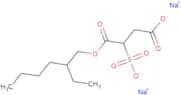
Formula:C14H22N2O4Purity:Min. 95%Molecular weight:282.34 g/molDisodium monooctyl sulfosuccinate
CAS:Disodium monooctyl sulfosuccinate (DSMS) is a sodium-based surfactant that is used as an excipient in tablets and capsules. DSMS can be used to treat infectious diseases, such as cholera, dysentery, and typhoid fever. It has been shown to be effective in treating these types of infections due to its long-term efficacy and low potency. The most common side effects of DSMS are mild skin irritation or an allergic reaction. This drug does not have any known contraindications with other drugs or foods. It is also biocompatible with a variety of polymers and fatty acids.
Formula:C12H20Na2O7SPurity:Min. 95%Molecular weight:354.33 g/molRef: 3D-LDA87853
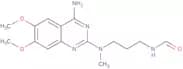
Discontinued productN-(4-Amino-6,7-dimethoxyquinazol-2-yl)-N-methylpropylenediamine formamide hydrochloride
CAS:N-(4-Amino-6,7-dimethoxyquinazol-2-yl)-N-methylpropylenediamine formamide hydrochloride is an impurity in the synthesis of N-(4-amino-6,7-dimethoxyquinazol-2-yl)-N'-methylpropylenediamine formamide hydrochloride. It is a white solid that can be used as an analytical reference standard for HPLC. It has been detected in the urine of people taking this drug and can be used to identify the presence of this drug in urine samples.
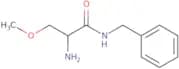
Formula:C14H17N5O2·HClPurity:Min. 95%Molecular weight:323.78 g/mol(2S)-2-Amino-3-methoxy-N-(phenylmethyl)propanamide
CAS:Please enquire for more information about (2S)-2-Amino-3-methoxy-N-(phenylmethyl)propanamide including the price, delivery time and more detailed product information at the technical inquiry form on this page
Formula:C11H16N2O2Purity:Min. 95%Molecular weight:208.26 g/molRef: 3D-ZTA53478
Discontinued product

![1-[2-[2-Hydroxy-3-[[2-hydroxy-3-[2-(3-phenylpropanoyl)phenoxy]propyl]-propylamino]propoxy]phenyl]-…](/_next/image/?url=https%3A%2Fstatic.cymitquimica.com%2Fproducts%2F3D%2Fthumb-webp%2FIP63820.webp&w=3840&q=75)
![1,4-Bis[(tetrahydro-2-furanyl)carbonyl]-piperazine](/_next/image/?url=https%3A%2Fstatic.cymitquimica.com%2Fproducts%2F3D%2Fthumb-webp%2FIB63853.webp&w=3840&q=75)