APIs for research and impurities
Subcategories of "APIs for research and impurities"
- Aminoacids and derivatives(12,335 products)
- Anthraquinones and derivatives(405 products)
- Benzimidazole and Imidazole Derivatives(10,445 products)
- Benzodiazepine Derivatives(335 products)
- Carbohydrates and glycoconjugates(5,027 products)
- Esters and Derivatives(42,247 products)
- Fatty Acids and Lypidic Derivatives(32,404 products)
- Flavonoids and Polyphenols(17,087 products)
- Free Radicals and Oxidant/Reducing Agents(213 products)
- Ketones and derivatives(2,404 products)
- Natural and semi-synthetic antibiotics(6,391 products)
- Nitriles and Cyano Derivatives(3,068 products)
- Nitrosamines and Derivatives(55 products)
- Nucleosides and Nucleotides(3,454 products)
- Organic Phosphates and Phosphonates(1,202 products)
- Organic Sulphonates and Sulphates(10,437 products)
- Organometallics(4,422 products)
- Others(6,295 products)
- Peptides and Proteins(3,148 products)
- Polymers and Derivatives(100 products)
- Purines and Pyrimidine Derivatives(8,955 products)
- Quinazoline and Quinoline Derivatives(66,023 products)
- Quinones and Derivatives(24,356 products)
- Salts and Derivatives of Active Pharmaceutical Ingredients (API)(79,878 products)
- Steroids and Derivatives(4,978 products)
- Sulfonamides and Derivatives(2,598 products)
- Terpenoids and Derivatives(3,849 products)
- Thiazolidinediones and Thiopyrans(2,753 products)
- β-Adrenergic Compounds(230 products)
Found 57127 products of "APIs for research and impurities"
Ref: 4Z-P-0252
Discontinued productGemcitabine EP Impurity A (Cytosine, Lamivudine EP Impurity E)
CAS:Formula:C4H5N3OMolecular weight:111.10Ref: 4Z-G-2614
Discontinued productRef: 4Z-P-0453
Discontinued productAflatoxin B1 8,9-Epoxide
CAS:Controlled ProductFormula:C17H12O7Purity:>80%Color and Shape:NeatMolecular weight:328.27Atropine impurity D
Atropine impurity D is a drug product that is an analytical standard for the metabolism studies of atropine. It is a natural API that belongs to the group of drugs and has CAS number 72-48-0. This drug has been synthesized from the synthetic process and then purified by HPLC. The purity of this drug exceeds 99%. Atropine impurity D is used as an impurity standard in pharmacopoeia, research and development, and drug development.
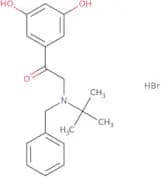
Purity:Min. 95%Terbutaline impurity D
CAS:Controlled ProductTerbutaline Impurity D is a synthetic drug with the CAS number 94109-61-2. This product has been developed as an impurity standard for Terbutaline, which is a drug product that has been approved by the United States Pharmacopoeia (USP). Terbutaline Impurity D can be used to study the metabolism of Terbutaline in animals. It is also used to develop new drugs by chemists and other scientists.
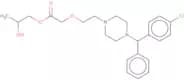
Formula:C19H23NO3Purity:Min. 95%Molecular weight:313.39 g/molCetirizine propanediol ester impurity
Cetirizine is a drug product that is metabolized to cetirizine propanediol ester. This impurity has been identified in the drug and is not expected to cause any adverse effects in humans. Cetirizine propanediol ester can be synthesized and purified through high-purity, analytical, and natural methods. The pharmacopoeia defines cetirizine propanediol ester as a metabolite of cetirizine. It can also be used as an impurity standard for HPLC analysis.
Formula:C24H31ClN2O4Purity:Min. 95%Molecular weight:446.97 g/molNLRP3i
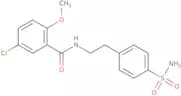
CAS:NLRP3i is a molecule that is orally administered and has been shown to have anti-inflammatory effects in the heart. NLRP3i reduces pro-inflammatory cytokines and protects against cardiac dysfunction in mice with chronic kidney disease. It also protects against heart failure caused by ischemia reperfusion. This drug has been shown to be effective as a therapy for cancer, with some patients being resistant to chemotherapy, although it is not yet approved for this use.
Formula:C16H17ClN2O4SPurity:Min. 95%Molecular weight:368.84 g/molRef: 3D-FC155783
Discontinued product(3R)-3-Amino-1-[5,6-dihydro-3-(trifluoromethyl)-1,2,4-triazolo[4,3-α]pyrazin-7(8H)-yl]-4-(2,3,6-trifluorophenyl)-1-butanone
CAS:Please enquire for more information about (3R)-3-Amino-1-[5,6-dihydro-3-(trifluoromethyl)-1,2,4-triazolo[4,3-α]pyrazin-7(8H)-yl]-4-(2,3,6-trifluorophenyl)-1-butanone including the price, delivery time and more detailed product information at the technical inquiry form on this page
Formula:C16H15F6N5OPurity:Min. 95%Molecular weight:407.31 g/molRotigotine Impurity 7
CAS:Rotigotine Impurity 7 is an impurity that has been identified in the synthesis of rotigotine. Rotigotine Impurity 7 is a synthetic compound with a CAS number of 1229620-82-9. It is intended for use as an analytical standard and as a component in the manufacture of rotigotine, which is indicated for the management of Parkinson's disease. This product has not been tested in animals or humans, and it should be handled with care.
Formula:C21H28ClNO2SPurity:Min. 95%Molecular weight:393.97 g/molMemantine impurity IV
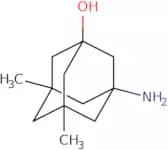
CAS:Memantine impurity IV is a hydrolysis product of memantine. It appears as a white to off-white powder and has a molecular weight of 198.1 g/mol. Memantine impurity IV is an intermediate in the production of memantine and is therefore not used for any other purpose. The compound contains hydroxy groups, hydroxy, alcohols, and bridgehead groups which are efficient at hydrolyzing to form amino acids.
Formula:C12H21NO·HClPurity:Min. 95%Color and Shape:White PowderMolecular weight:231.76 g/mol11-Fluoro desloratadine
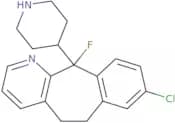
CAS:11-Fluoro desloratadine is a metabolite of the antihistamine, loratadine. It has shown to be an analytical standard for HPLC, and impurity standard for pharmacopoeia. 11-Fluoro desloratadine is typically synthesized by reacting loratadine with fluorinating reagent such as N-fluorosuccinimide (NFSI) in the presence of a base catalyst such as sodium methoxide. 11-Fluoro desloratadine is also found in breast milk at concentrations of up to 1.2% of total loratadine concentration, which has been attributed to incomplete metabolism or passive transfer from mother to child.
Formula:C19H20N2ClFPurity:Min. 95%Color and Shape:PowderMolecular weight:330.83 g/molRef: 3D-IF46257
Discontinued productDicyclopropylamine
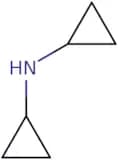
CAS:Dicyclopropylamine is a molecule that has been clinically developed as a drug. It is an inhibitor of the enzyme tyrosinase, which is involved in the production of melanin, and has been shown to have anti-cancer properties. Dicyclopropylamine hydrochloride has been shown to be effective against aliphatic hydrocarbons such as hexane and cyclohexane, as well as aromatic compounds such as benzene and toluene. This drug can also bind to coordination complexes with high kinetic energy, which may be useful for tumor treatment. Dicyclopropylamine hydrochloride can be used for the clinical treatment of human epidermoid carcinoma.
Formula:C6H11NPurity:Min. 95%Molecular weight:97.16 g/mol15-O-Demethyl Tacrolimus
CAS:Tacrolimus is a macrolide that is used as an immunosuppressive drug. It has been shown to bind to the FK-binding protein, which in turn inhibits calcineurin. This prevents the release of IL-2, TNF-α and other cytokines. The immunosuppressive effects of tacrolimus have been evaluated using analytical methods such as coefficients, affinity, and monitoring techniques such as immunoassays and agglutination. These techniques are used to evaluate the plasma concentration of tacrolimus. Tacrolimus also binds to proteins in the blood samples and can be detected by turbidimetric or electrochemiluminescence immunoassay reagents.
Formula:C43H67NO12Purity:Min. 95%Molecular weight:789.99 g/molPirtenidine
CAS:Pirtenidine is a potent and selective kinase inhibitor that has been shown to inhibit the activity of cyclin-dependent kinases. It has demonstrated promising results in preclinical studies as an anticancer agent, inducing apoptosis in cancer cells. Pirtenidine is an analog of protein kinase inhibitors, which have been used to treat various types of tumors. It has been found to be effective against human cancer cell lines and has shown significant tumor growth inhibition in animal models. Pirtenidine has also been reported to be a potent urine inhibitor of Chinese hamster ovary cells, making it a promising candidate for the treatment of urinary tract cancers.
Formula:C21H38N2Purity:Min. 95%Molecular weight:318.5 g/molRef: 3D-DEA92327
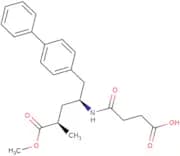
Discontinued productSacubitril methyl ester
CAS:Sacubitril methyl ester is a drug product that belongs to the group of angiotensin receptor blockers. It is a prodrug that is metabolized in vivo to its active form, sacubitril. Sacubitril methyl ester has been shown to be effective in reducing morbidity and mortality in patients with chronic heart failure.
Formula:C23H27NO5Purity:Min. 95%Color and Shape:PowderMolecular weight:397.47 g/molRef: 3D-IS181150
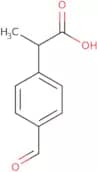
Discontinued product2-(4-Formylphenyl)propionic acid - Racemic
CAS:2-(4-Formylphenyl)propionic acid is a racemic mixture of 2-formylphenylacetic acid and 4-formylphenylacetic acid. This compound is used in the treatment of bacterial infections and inflammation. It is an organic solution that can be injected, administered orally, or applied topically. The 2-(4-formylphenyl)propionic acid has been shown to have anti-inflammatory properties, but also has side effects such as skin irritation when it is applied topically. This drug can also cause nausea, vomiting, and diarrhea when administered orally.
Formula:C10H10O3Purity:Min. 95%Color and Shape:White PowderMolecular weight:178.18 g/molRef: 3D-IF27430
Discontinued product2-Methoxy-5-sulfamoylbenzoic acid
CAS:2-Methoxy-5-sulfamoylbenzoic acid (2MSBA) is a reactive compound that reacts with the proton of vancomycin to form a dianion. This reaction is reversible and can be catalyzed by chloride ions. 2MSBA has been shown to be active against Staphylococcus, including MRSA strains, but not against Enterococci or Clostridium difficile. 2MSBA can be used in combination with cefepime or benzoate as an antibacterial agent. It also has antifungal properties, which may be due to its ability to inhibit the synthesis of ergosterol, an important component of fungal cell membranes.
2-Methoxy-5-sulfamoylbenzoic acid is related to fluconazole in that it contains a benzoate moiety and an amide group. These structural features confer antibacterial and antifFormula:C8H9NO5SPurity:Min. 95%Molecular weight:231.23 g/molRef: 3D-IM145487
Discontinued productN-Desmethyl trimeprazine
CAS:N-Desmethyl trimeprazine is a synthetic compound, which is an impurity of the drug product. It is not active and does not possess any biological activity. It is a metabolite of the parent drug, Trimeprazine. N-Desmethyl trimeprazine has been studied for its pharmacological properties and metabolism in the body, but no conclusive results have been found. The chemical structure and purity of N-Desmethyl trimeprazine are not listed in the USP or BP. This compound can be custom synthesized on request.
Formula:C17H20N2SPurity:Min. 95%Molecular weight:284.40 g/molRef: 3D-XAA73204
Discontinued product


![1-{4-[(4-methyl-1,4-diazepan-1-yl)methyl]phenyl}methanamine](/_next/image/?url=https%3A%2Fstatic.cymitquimica.com%2Fproducts%2F10%2Fthumb-webp%2FF518958.webp&w=3840&q=75)



![(3R)-3-Amino-1-[5,6-dihydro-3-(trifluoromethyl)-1,2,4-triazolo[4,3-α]pyrazin-7(8H)-yl]-4-(2,3,6-tr…](/_next/image/?url=https%3A%2Fstatic.cymitquimica.com%2Fproducts%2F3D%2Fthumb-webp%2FIA183166.webp&w=3840&q=75)