APIs for research and impurities
Subcategories of "APIs for research and impurities"
- Aminoacids and derivatives(12,440 products)
- Anthraquinones and derivatives(407 products)
- Benzimidazole and Imidazole Derivatives(10,464 products)
- Benzodiazepine Derivatives(335 products)
- Carbohydrates and glycoconjugates(5,388 products)
- Esters and Derivatives(42,306 products)
- Fatty Acids and Lypidic Derivatives(32,486 products)
- Flavonoids and Polyphenols(17,100 products)
- Free Radicals and Oxidant/Reducing Agents(214 products)
- Ketones and derivatives(2,692 products)
- Natural and semi-synthetic antibiotics(6,409 products)
- Nitriles and Cyano Derivatives(3,070 products)
- Nitrosamines and Derivatives(55 products)
- Nucleosides and Nucleotides(3,492 products)
- Organic Phosphates and Phosphonates(1,203 products)
- Organic Sulphonates and Sulphates(10,451 products)
- Organometallics(4,425 products)
- Others(6,340 products)
- Peptides and Proteins(3,164 products)
- Polymers and Derivatives(100 products)
- Purines and Pyrimidine Derivatives(8,974 products)
- Quinazoline and Quinoline Derivatives(66,217 products)
- Quinones and Derivatives(24,378 products)
- Salts and Derivatives of Active Pharmaceutical Ingredients (API)(92,894 products)
- Steroids and Derivatives(4,987 products)
- Sulfonamides and Derivatives(2,607 products)
- Terpenoids and Derivatives(3,860 products)
- Thiazolidinediones and Thiopyrans(2,755 products)
- β-Adrenergic Compounds(231 products)
Found 66870 products of "APIs for research and impurities"
3-[Methyl(phenylmethyl)amino]-1-phenyl-1-propanone hydrochloride
CAS:Nisoxetine is a norepinephrine (NE) reuptake inhibitor that is used as an antidepressant. It has been shown to be a potent and selective NE reuptake inhibitor with a high affinity towards the NE transporter in rat brain synaptosomes, with potency several times higher than that of tricyclic antidepressants. Nisoxetine's major advantage over other antidepressants is its high efficiency, which makes it suitable for large-scale production. The synthesis of nisoxetine involves two steps: 1) reaction of 3-[methyl(phenylmethyl)amino]-1-phenyl-1-propanone hydrochloride with toluene to form the corresponding methyl ester and 2) hydrogenation of the methyl ester to form nisoxetine. This synthesis is efficient, stable, and chiral due to the use of bimetallic catalysts.Formula:C17H19NO•HClPurity:Min. 95%Color and Shape:PowderMolecular weight:289.8 g/molCaspofungin impurity C
Caspofungin impurity C is a high-purity, chromatographically pure, caspofungin impurity. It was isolated by chromatography and was found to have a retention time of 12.5 minutes on the chromatogram. The impurity is thought to be an organic compound with a molecular weight of 437.2 and may be due to the presence of an acetyl group or hydroxyl group.Purity:Min. 95%N-Acetyldesloratadine
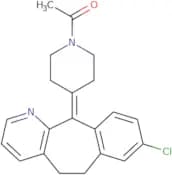
CAS:N-Acetyldesloratadine is a second generation antihistamine that has high affinity for histamine H1 receptors. It is an orally active drug that is used to treat allergic rhinitis, chronic idiopathic urticaria, and pruritus. N-Acetyldesloratadine has been shown to inhibit platelet aggregation in vitro and in vivo. This activity may be due to the drug's ability to bind with high affinity to histamine receptor sites on the membranes of platelets, thereby inhibiting the binding of adenosine diphosphate (ADP) to its receptor site. N-Acetyldesloratadine also inhibits the release of serotonin from mast cells and basophils in vitro.Formula:C21H21ClN2OPurity:Min. 95%Molecular weight:352.9 g/mol6-Methylene progesterone acetate
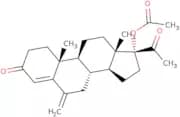
CAS:Controlled Product6-Methylene progesterone acetate is a polymerase chain inhibitor that inhibits the synthesis of viral and cellular DNA. It was first isolated from infected cells in tissue culture and has been shown to inhibit the growth of a wide range of viruses, including rabies, herpes simplex, herpes zoster, cytomegalovirus, varicella-zoster virus, and vesicular stomatitis virus. 6MPAA also blocks the production of gene products in mammalian cells by preventing RNA synthesis. This drug can be used as an antiviral agent for treatment of enteritis caused by rotavirus infection. 6MPAA binds to gp2 protein on the surface of virus particles and prevents this protein from interacting with polyclonal antibodies or monoclonal antibodies to prevent antibody response.
Formula:C24H32O4Purity:Min. 95%Color and Shape:PowderMolecular weight:384.51 g/mol2-Acetamido-7-[[2-(acetyloxy)ethoxy]methyl]-6,7-dihydro-1H-purin-6-one
CAS:2-Acetamido-7-[[2-(acetyloxy)ethoxy]methyl]-6,7-dihydro-1H-purin-6-one is a drug development impurity that is manufactured by the pharmaceutical company. This impurity has been shown to be a metabolite of the drug.Formula:C12H15N5O5Purity:Min. 95%Color and Shape:White to off-white solid.Molecular weight:309.28 g/molEthyl 3-(dimethylamino)-2-(4-methoxyphenyl)propanoate
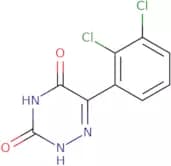
CAS:Ethyl 3-(dimethylamino)-2-(4-methoxyphenyl)propanoate is an impurity standard for drug product. It is a high purity, API impurity, HPLC standard and niche chemical that is found in the CAS No. 323176-93-8. This compound is used in drug development and analytical research. It is a synthetic compound that can be custom synthesized, natural or found in research and development.Formula:C14H21NO3Purity:(%) Min. 95%Color and Shape:Clear Viscous LiquidMolecular weight:251.32 g/mol6-(2,3-Dichlorophenyl)-1,2,4-triazine-3,5(2H,4H)-dione
CAS:6-(2,3-Dichlorophenyl)-1,2,4-triazine-3,5(2H,4H)-dione is a chlorinating agent that converts alcohols to alkyl chlorides. It is used for the conversion of diazotizable aromatic compounds to diazo compounds. This compound has been shown to be neuroprotective in animal models and provides protection against glutamate excitotoxicity. 6-(2,3-Dichlorophenyl)-1,2,4-triazine-3,5(2H,4H)-dione also reacts with nitrite ions to form the corresponding nitroso derivatives. These derivatives can cause DNA damage and are mutagenic. 6-(2,3-Dichlorophenyl)-1,2,4-triazine-3,5(2H,4H)-dione has been shown to react with aminoguanidine to produce a chromatFormula:C9H5Cl2N3O2Purity:Min. 95%Color and Shape:PowderMolecular weight:258.06 g/molN-[(1R)-1-(1-Naphthalenyl)ethyl]carbamic acid 3-[3-(trifluoromethyl)phenyl]propyl] ester
CAS:N-[(1R)-1-(1-Naphthalenyl)ethyl]carbamic acid 3-[3-(trifluoromethyl)phenyl]propyl] ester is a drug product. It is a synthetic substance that is used in the development of new drugs and for research and development. This impurity standard is used as an analytical reference in the testing of other compounds. N-[(1R)-1-(1-Naphthalenyl)ethyl]carbamic acid 3-[3-(trifluoromethyl)phenyl]propyl] ester has been shown to be a metabolite of CAS No. 915979-44-1, which is also known as N-[(2S)-2-[[5-[3-(Trifluoromethoxy)phenoxy]-2-pyridinyl]methyl]-2,5-dioxopyrrolidin-1-yl]-3,
Formula:C23H22F3NO2Purity:Min. 95%Color and Shape:Colorless to yellow liquid.Molecular weight:401.42 g/molMethyl 2-[[3-trifluoromethyl)phenyl]amino]benzoate
CAS:Methyl 2-[[3-trifluoromethyl)phenyl]amino]benzoate is a bifunctional modulator of androgen receptors. It is a competitive inhibitor of the androgen receptor with an IC50 of 16 nM. Methyl 2-[[3-trifluoromethyl)phenyl]amino]benzoate has been shown to have weak binding affinity for the human androgen receptor, but it is not soluble in water and will require further research before it can be used clinically.Formula:C15H12F3NO2Purity:Min. 95%Color and Shape:Pale yellow to yellow solid.Molecular weight:295.26 g/molKeto bisoprolol hydrochloride
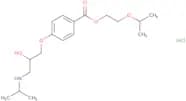
CAS:Please enquire for more information about Keto bisoprolol hydrochloride including the price, delivery time and more detailed product information at the technical inquiry form on this pageFormula:C18H30ClNO5Purity:Min. 95%Molecular weight:375.9 g/molOlanzapine ketolactam
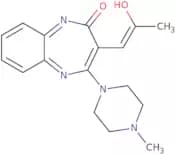
CAS:Olanzapine Ketolactam is a drug product that can be custom synthesized. It has a purity of at least 98% and is identified by its CAS number, 1017241-34-7. The metabolite of Olanzapine ketolactam is olanzapine N-oxide, which can be found in the urine of patients who have taken Olanzapine ketolactam. Metabolism studies have been conducted on this drug product to determine how it may affect the body. This drug product is also used in natural or synthetic drug development, pharmacopoeia, and analytical research.
Formula:C17H20N4O2Purity:Min. 95%Color and Shape:PowderMolecular weight:312.37 g/mol5-Chloro-N-[[(5R)-2-oxo-3-[4-(3-oxo-4-morpholinyl)phenyl]-5-oxazolidinyl]methyl]-2-thiophenecarboxamide
CAS:5-chloro-N-[[(5R)-2-oxo-3-[4-(3-oxo-4-morpholinyl)phenyl]-5-oxazolidinyl]methyl]-2-thiophenecarboxamide (CTP) is a potent inhibitor of the cytochrome P450 enzyme CYP3A4. CTP has been shown to inhibit the metabolism of midazolam, an important drug for general anesthesia and sedation, in a study investigating the interaction between CYP3A4 inhibitors and midazolam. Ketoconazole, another inhibitor of CYP3A4, inhibited the metabolism of midazolam in vitro as well. In addition, CTP was shown to be a substrate for CYP2D6 and CYP1A2 in vitro.Formula:C19H18ClN3O5SPurity:Min. 95%Color and Shape:White PowderMolecular weight:435.88 g/molSitagliptin keto amide impurity
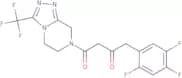
CAS:Sitagliptin Keto Amide Impurity is a research and development impurity standard that has been shown to be an impurity in the drug product Sitagliptin. It is a synthetic, analytical impurity that has been shown to be present in the drug product at 0.1% of the total weight. This impurity is soluble in water and ethanol, but insoluble in ether, chloroform, benzene, and dichloromethane. The CAS number for this compound is 764667-65-4. Sitagliptin Keto Amide Impurity can be used as an analytical reference material or as a pharmacopoeia reference standard for HPLC analysis of sitagliptin keto amide and its metabolites.
Formula:C16H12F6N4O2Purity:Min. 95%Color and Shape:Slightly Yellow PowderMolecular weight:406.28 g/mol5-Ethenyl-2-oxo-3-pyrrolidinecarboxylic acid
CAS:Please enquire for more information about 5-Ethenyl-2-oxo-3-pyrrolidinecarboxylic acid including the price, delivery time and more detailed product information at the technical inquiry form on this pageFormula:C7H9NO3Purity:Min. 95%Molecular weight:155.15 g/mol2,2-Bis(N-(a,a,a-trifluoro-m-tolyl)antranililoxi)diethylether
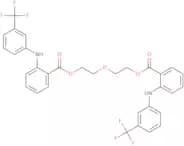
CAS:2,2-Bis(N-(a,a,a-trifluoro-m-tolyl)antranililoxi)diethylether is a natural compound that is an impurity in the drug 2,2-Bis(N-(a,a,a-trifluoro-m-tolyl)antranilic acid). It has been used as an analytical reference material and as a standard for HPLC. The synthesis of this compound has not been reported. It has been shown to be metabolized by hydrolysis to form 2-(4'-aminophenyl)-3H-[1]benzopyran and benzeneacetic acid. 2,2-Bis(N-(a,a,a-trifluoro-m-tolyl)antranililoxi)diethylether is also known as bis(4'-aminophenyl)-3H-[1Formula:C32H26F6N2O5Purity:Min. 95%Color and Shape:Slightly Yellow Yellow Clear LiquidMolecular weight:632.55 g/mol2,3-Dichlorobenzoic acid
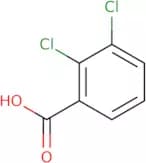
CAS:2,3-Dichlorobenzoic acid is an organic compound that belongs to the class of carboxylates. It is used as a drug substance in the treatment of mycobacterial infections. 2,3-Dichlorobenzoic acid has been shown to have antimicrobial activity against Mycobacterium tuberculosis and other mycobacteria. The sensitivity index for this compound was determined using a chromatographic method with human erythrocytes as the test organism. 2,3-Dichlorobenzoic acid displays its antibacterial activity by inhibiting protein synthesis and cell division. This drug also forms crystalline solids that are soluble in organic solvents such as chloroform or benzene.Formula:C7H4Cl2O2Purity:Min. 95%Color and Shape:PowderMolecular weight:191.01 g/mol3,3'-(3,6-Dihydropyrazine-2,5-diyl)dipropanoic acid
CAS:3,3'-(3,6-Dihydropyrazine-2,5-diyl)dipropanoic acid (DPPA) is a potent metal chelator that can be used in the treatment of cancer. DPPA binds to metal ions and prevents their access to vital cellular components such as DNA and proteins. This agent has been shown to inhibit the growth of carcinoma cells in culture. It also has an effect on the synthesis of demyelination, which may account for its ability to prevent reactive oxygen species from damaging DNA. DPPA is a strong inhibitor of mitochondrial function and at high concentrations it damages mitochondria by releasing hydrogen peroxide into the cell cytoplasm. The release of hydrogen peroxide causes catalase to become active, leading to cell death.Formula:C10H14N2O4Purity:Min. 95%Molecular weight:226.23 g/molN-[4-Amido-3-(trifluoromethyl)phenyl-3-[(4-fluorophenyl)-(R,S)-sulphinyl]-(R,S)-2-hydroxy-2-methylpropanamide
CAS:N-[4-Amino-3-(trifluoromethyl)phenyl-3-[(4-fluorophenyl)-(R,S)-sulphinyl]- (R,S)-2-hydroxy-2-methylpropanamide is a sulfoxide that was designed to inhibit cancer cell proliferation. It has been shown to have anticancer activity in different models. The synthesis of this compound begins with the chlorination of 4-aminophenol, which produces 4-(chloromethyl)benzenesulfonyl chloride. This is then reacted with (R,S)-α-(4-Fluorophenyl)acetic acid and the resulting product is purified by column chromatography to give N-[4-(chloromethyl)phenyl]-3-[(4-fluorophenyl)(R,S)-sulphinyl]propaneamide. The final step in the synthesis is achieved by reacting the amideFormula:C18H14F4N2O3SPurity:Min. 95%Color and Shape:White To Off-White SolidMolecular weight:414.37 g/molDefluoro atorvastatin calcium
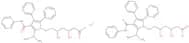
CAS:Defluoro atorvastatin calcium is a bulk drug that has been approved to be used as an adjunct to diet to reduce elevated cholesterol levels in adults. Defluoro atorvastatin calcium is the desfluoro-enantiomer of atorvastatin, which is a statin that inhibits the enzyme HMG-CoA reductase. This enzyme catalyzes the conversion of HMG-CoA to mevalonic acid, which is an early step in the synthesis of cholesterol. The fluoro group on defluoro atorvastatin calcium is not expected to have any significant effect on its potency or metabolic pathways and any impurities are not expected to have any therapeutic effect.Formula:C66H70CaN4O10Purity:Min. 95%Color and Shape:White PowderMolecular weight:1,119.36 g/mol
![3-[Methyl(phenylmethyl)amino]-1-phenyl-1-propanone hydrochloride](/_next/image/?url=https%3A%2Fstatic.cymitquimica.com%2Fproducts%2F3D%2Fthumb-webp%2FIM58070.webp&w=3840&q=75)

![2-Acetamido-7-[[2-(acetyloxy)ethoxy]methyl]-6,7-dihydro-1H-purin-6-one](/_next/image/?url=https%3A%2Fstatic.cymitquimica.com%2Fproducts%2F3D%2Fthumb-webp%2FIA58280.webp&w=3840&q=75)

![N-[(1R)-1-(1-Naphthalenyl)ethyl]carbamic acid 3-[3-(trifluoromethyl)phenyl]propyl] ester](/_next/image/?url=https%3A%2Fstatic.cymitquimica.com%2Fproducts%2F3D%2Fthumb-webp%2FIN58184.webp&w=3840&q=75)
![Methyl 2-[[3-trifluoromethyl)phenyl]amino]benzoate](/_next/image/?url=https%3A%2Fstatic.cymitquimica.com%2Fproducts%2F3D%2Fthumb-webp%2FIM58092.webp&w=3840&q=75)
![5-Chloro-N-[[(5R)-2-oxo-3-[4-(3-oxo-4-morpholinyl)phenyl]-5-oxazolidinyl]methyl]-2-thiophenecarbox…](/_next/image/?url=https%3A%2Fstatic.cymitquimica.com%2Fproducts%2F3D%2Fthumb-webp%2FIC71688.webp&w=3840&q=75)

![N-[4-Amido-3-(trifluoromethyl)phenyl-3-[(4-fluorophenyl)-(R,S)-sulphinyl]-(R,S)-2-hydroxy-2-methyl…](/_next/image/?url=https%3A%2Fstatic.cymitquimica.com%2Fproducts%2F3D%2Fthumb-webp%2FIA58276.webp&w=3840&q=75)